
2 Breathing Techniques to Improve Your Running

2 Breathing Techniques to Improve Your Running

By Coach Adolfo Salgueiro

A few months ago I bumped into a challenge with one of my coached runners. As soon as she reached mile 3 or 4, she got a side stitch. It didn’t matter what we tried with the timing on her nutrition or her fluid intake. Come that point, boom! Stitch! We needed to attack this problem and fast. Before it became a psychological issue.

I consulted with a few coaches I know, and they gave me their suggestions and home remedies. While we found a couple of things to temporarily remedy the nagging stitch, they were not the permanent solution we were looking for.

While researching the issue I came across a book from 2013 called “Running on Air: The revolutionary Way to Run Better by Breathing Smarter”, by Bud Coats and Claire Kowalchik. This was a publication of Runner’s World Magazine, published by Rodale.

The book goes into details about many things that are not necessarily related to breathing. So, since this is not a book review, I am skipping them. But it does go into detail on the science and mechanics of breathing and breathing while running in layman terms. To my trainee, there were two specific aspects that not only made the difference, but solved the problem:

 

Breathing Techniques

Breathing from the belly and doing in in an add-number pattern may help you improve you running. Worth giving it a try (image from pexels.com)

1-   DIAPHRAGMATIC BREATHING

Known colloquially as “belly breathing”, involves engaging the stomach, abdominal muscles, and diaphragm, which means actively pulling the diaphragm down with each inward breath. Compared with coastal breathing, it helps the lungs fill more efficiently.

I cannot teach you diaphragmatic breathing in a few paragraphs, but I can tell you that I’ve been doing it for over 20 years, and it has worked for me beautifully. It also helps you strengthen the diaphragm, located beneath your lungs, which is the major muscle of the respiration process. It contracts and flattens when you inhale, creating a a vacuum effect that pulls air into the lungs. A stronger diaphragm means more air, more air means more oxygen for your body to burn, and less side stitches.

Regardless of your preferred type of breathing, a strong diaphragm will help you breath better, relax, meditate, improve digestion, and provide you the obvious running benefits that more oxygen in your system can offer.

If you want to learn more about diaphragmatic breathing, its benefits and strengthening exercises, click here for a YouTube video from the UCLA Integrative Digestive and Health Wellness Program, which can help you get started.

2 – RHYTHMIC BREATHING

I have been breathing on a 3/2 count (inhale for 3 steps and exhale for 2) for about 5 years, and the benefits have been tangible. I don’t even think about it anymore, it just happens. In my personal experience, it works better than the 2/2 I did for years. Once I got my hands on this book, I understood why, and it made sense.

It is because “the greatest impact stress of running occurs when the foot strikes the ground at the beginning of exhalation and also that core stability is at its lowest during exhalation”.

Based on this, it is easy to understand that by breathing on an odd count, you will be alternating sides each time you are at your weakest while hitting the ground. Think of it this way: In one mile, you will be hitting about 750 times on each side instead of 1500 on the same one. Multiply this by the number of miles you run in a week, a month, or a year, and if you are not breathing on an odd number count, my suggestion is you better start thinking about it, today.

How do you do it? Just do it. Three in, two out. It will be weird at first, but with time, it will feel more natural and within a couple of weeks you won’t even notice it anymore.

As for rhythmic breathing, there is plenty more to learn than what four paragraphs can tell you. So, if you are interested, this is a good book where to get started.

As for my trainee, she read the book, she started strengthening her diaphragm, breathing in a 3/2 pattern, and finished not one but two half marathons with a time beyond our wildest expectations. Oh! And no more side stitches.


My Case on Behalf of Glucosamine

My Case on Behalf of Glucosamine

By Coach Adolfo Salgueiro

 Before we get started, I am disclosing I am not a doctor, and I am not giving medical advice. What you are about to read is just my personal experience mixed with light internet research.

Glucosamine

Glucosamine and chondroitin are popular supplements used to treat osteoarthritis. About 6.5 million adults, or 2.6 percent of the population, have used one or both products

I’ve had issues with my left knee for a long time. It kept me from running for many years. It has always been my weakest link. But just like millions of runners, upon the recommendation of someone who I can no longer remember, I started taking glucosamine many years ago, and somehow, it kept the pain at bay and allowed me to keep running consistently for many years. This is my story, and I am sticking to it.

When I decided to give marathoning another try, as I was eyeing the New York City Marathon, I asked my doctor about Glucosamine. He told me there were no conclusive studies proving that it worked or that it didn’t. His professional recommendation was that if I thought it was beneficial to me, to keep taking it. If not, then don’t bother.

Glucosamine is not cheap. A bottle of the good stuff can go from $40-$50 for a few months’ supply. So, when it was time to replenish the stash, with cash in short supply at that particular time of the month and with the recent lecture from my doctor, I decided to skip it. A couple of weeks later, my knee started to hurt and other joints felt stiffer. How could this be? There was no proof! I ran to the drugstore, got my glucosamine and a week later, the pain was gone. This is all the research I need.

Glucosamine

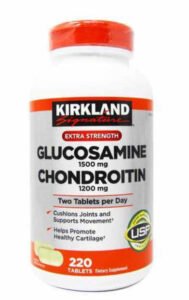
This is the brand I use and the results have been stellar. I don’t need much more research than that.

Then I thought: Of course! Why in the world would a drug company invest time, effort and millions of dollars researching the benefits of glucosamine when every drug store carries ten over-the-counter options from which you can purchase as many as you want, whenever you want? This is no moneymaker. No reason to invest just for the pure pursuit of knowledge. It works for me, and this is all I need to know. I am the research paper my doctor was unable to quote.

Glucosamine has been around since 1876. It is manufactured by processing a polymer from the shells of shellfish, shrimp, lobsters and crabs. It also comes from other animals such as cows and pigs. Newer versions made from fungi and fermented corn have been brought to market to cater the needs of vegetarian consumers.

Glucosamine is a dietary supplement, not a prescription drug. Because of regulations, in the US it is marketed as a supplement to support the structure and function of the joints. It is also directed to people with osteoarthritis. Tests have shown that you can consume up to 1500 mg per day with no adverse effects.

Glucosamine pills usually include a compound named chondroitin. According to WebMd, chondroitin is a substance that occurs naturally in the connective tissues of people and animals. As a supplement in higher doses than is found naturally, chondroitin is also a popular treatment for osteoarthritis.

Arthritis.org states that “glucosamine and chondroitin are popular supplements used to treat osteoarthritis. According to one estimate, 6.5 million adults, or 2.6 percent of the population, have used one or both products”.

Both glucosamine and chondroitin are usually found in healthy cartilage and have anti-inflammatory properties. “They also have some cartilage-protecting effects through a variety of different mechanisms,” says Chris D’Adamo, PhD, director of Research & Education at the University of Maryland School of Medicine Center for Integrative Medicine.  

Glucosamine and chondroitin protect cells called chondrocytes, which help maintain cartilage structure. In theory, these supplements have the potential to slow cartilage deterioration in the joints, and to reduce pain in the process. 

Sounds good to me!

I take the Kirkland brand with 1500 mg of glucosamine with 1200 mg of chondroitin, and it has worked for me. If I ever forget to take it for a few days or if my resupply delays, my body promptly reminds me. Once again, what additional research do I need?

Please don’t take medical advice from me. I am not a doctor, nor I wish to be one. Glucosamine with chondroitin works for me. If you have joint issues, I suggest you check with a real doctor and then give it a try.

7 Running Myths

7 Running Myths

By Coach Adolfo Salgueiro

As running becomes more popular and there is more money to be invested and made in the sport, snake oils and other bogus claims permeate the popular culture and get hold of our running ethos. While some explanations made sense in the 1920s or the 1980s, science has developed and progressed enough to prove, adjust or disprove most of our understanding on these concepts and their application to running.

These are seven myths that once were held as running gospel that today, no longer apply. Of course, this is not a comprehensive list, it is just a handful of the most prevalent myths of our day and age.

1.      Carbo loading before a race or long run: The carbs we consume throughout the day are metabolized by the body into glycogen, which is the go-to fuel burnt by the body for energy. The amount of glycogen our bodies can story is finite, and it is stored in the liver and muscles. Muscles don’t borrow from each other, so, that 3rd or 4th serving of pasta the night before a race does nothing for you. Actually, it will adversely affect you because your body will be spending energy digesting food it won’t need to produce energy the next morning and you may also need a potty break to unload all that unneeded food you consumed last night.

Running Myths

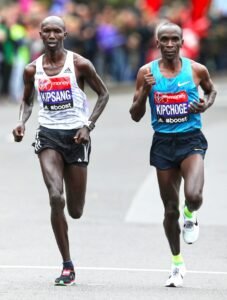
You don’t have to look like a Kenyan to be a runner. You only have to run.

2.      I don’t have a runner’s body, therefore, I can’t be a runner: You don’t have to look like a Kenyan to be successful runner. You may not win the Boston Marathon, but you don’t need it to be a considered a runner. There is one and only one parameter to measure your worthiness of being labeled as a runner: you must run. Skinny, overweight, tall, short, young, old, male, female, or in-between. It doesn’t matter. If you run, you are a runner.

 3.      The 10% rule: According to many experts and training gurus, you should never increase your mileage run more than 10% week over week. This is an urban myth from the 1980’s not based on science.  It is a guideline, not a rule. According to University of Houston Coach Steve Magness, this theory has been tested a couple of times and there was no decrease on injury rate based on this guideline, which is what this parameter is supposed to control. The amount of mileage an athlete can increase will depend on what their body structure and level of fitness are able to withstand, and this can change over time.

 4.      Only fast running will make you fast: It is intuitive to think that to run fast you need to train running fast. And fast running is an important part of the equation. But to maintain your speed during a long run, you need to train your aerobic system and teach your body to burn fat as fuel, which can only be done by not taxing the body into only using the immediate sources of energy (glycogen). No one is stating you only need to run slow, but you do need to make slow running part of your training to run fast.

 5.      Stretch before you run: Cold static stretching is not recommended when your muscles are unready for such a movement. It is a recipe for injury. Dynamic warm up moves such as lunges, leg swings, jogging in place and hip openers will get your muscles warmed up, your heart rate elevated and your core temperature ready for action. Stretching after your workout could be beneficial but it is not required. If it feels good, go for it .Personally, it makes me feel better, so I do it.

 
Running Myths

What may have made sense in the 1980s regarding the 10% rule or carbo loading, has already been disproved by science, yet the myths are still holding strong.

6.      If you have energy for a fast final kick, you didn’t give your all: When we kick at the end of a race to shave off a few seconds off the clock, push for that PR or pass that last few runners, it is not because we did not give our all out there. According to the Central Governor Theory by Tim Noakes, once the brain realizes we are almost there and it will not run out of resources, it unleashes the reserves. Therefore, usually, nobody dies at the end of a race. So feel free to kick at the end if you have it in you. It is your brain is giving you permission to do so.

 7.      VO2Max is the end-all measurement of performance: As popular as this measurement has become thanks to our Garmin watches giving us constant updates, what it measures is the maximum amount of oxygen our bodies can handle at maximum effort. If we don’t know what it means and what we can do with it, it becomes useless. And, by the way, VO2Max cannot be measured by an algorithm in your watch. So don’t overthink this one.

Did I miss anything?

The Basics About Electrolytes

The Basics About Electrolytes

By Coach Adolfo Salgueiro

Electrolytes

Table salt is the most basic and cheapest way to keep your electrolytes in balance, but there is still much more to it than that.

As runners, we’ve all heard the term “electrolytes”. We know they are key to our success and most likely they are at fault when we bonk during a long run on a hot day. We know that Gatorade has them. We know we better replenish them lest we get into trouble. As Robb Wolf, co-founder of LMNT Hydration well put it: “Electrolytes can mean the difference between feeling like a champ and feeling like garbage”.

But… do we know what they are? Do we know what they do? There hast to be more than one of them since the word is plural, so, which ones are they?

According to Medlineplus.gov, “Electrolytes are minerals in your body that have an electric charge. They are in your blood, urine, tissues, and other body fluids. Electrolytes are important because they help balance the amount of water in your body, balance your body\’s acid/base (pH) level, move nutrients into your cells, move wastes out of your cells and make sure that your nerves, muscles, heart, and brain work the way they should.”

As you can see, you don’t need to be much of a scientist to realize these are important elements to keep well stocked and balanced within your body, not only during long runs but during your daily life.

Your body can and should take in electrolytes during the day through the foods and drinks you consume. You don’t need to drink Pedialyte all day to keep them topped off.

Electrolytes

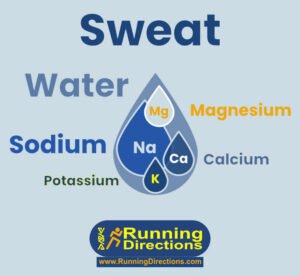
As you can see in this graphic, there is way much more than water in your sweat.

We need to be careful with electrolytes as we may run into trouble not only if we run low, but we can also break homeostasis if we consume too much of them. Have you ever washed an electrolytes tablet with Gatorade in the latter part of a long run? Believe me, you don’t want to know.

It all has to do with the delicate balance of water your body requires to function properly. Tipping such balance either way will affect the electrolyte concentration and could have you either dehydrated or overhydrated. None of these options are good.

The key electrolytes to keep your eye on, are:

Sodium and chloride: maintain fluid balance and nerve function.
Potassium: prevents cramping.
Calcium and magnesium: control muscle contraction and heart rhythm.
Phosphate: Used as a building block for the substances used by the cells for energy, cell membranes and DNA

According to hydration experts, during your running the most common electrolytes you sweat are sodium (Na) and chloride (Cl). These are the two elements that form common table salt (NaCl). This comes to show that replenishing basic electrolytes can be as basic and cheap as having a plan to do so before you get into trouble. Other elements like potassium, magnesium and calcium are sweated in lesser amounts but shouldn’t be overlooked.

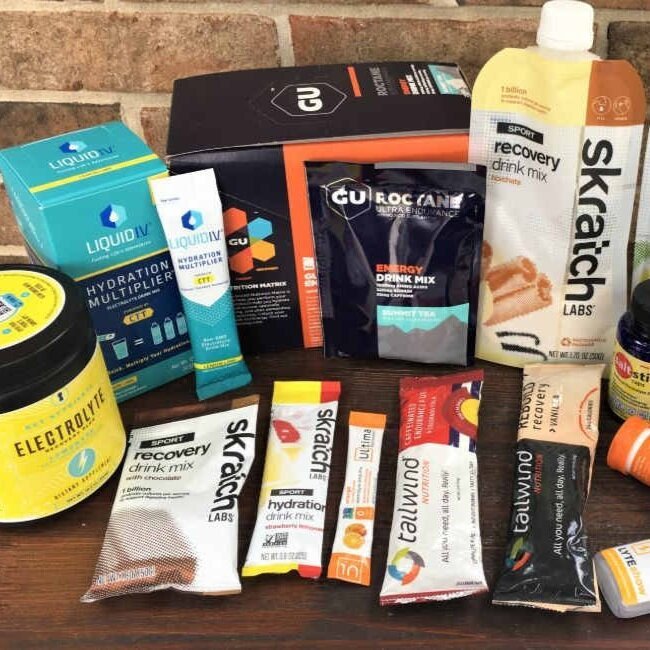
There are many electrolyte options in the market to keep yourself properly hydrated and balanced throughout your day and long runs. Personally, I am not a fan of Gatorade because of the excess sugar, which causes a spike as soon as you ingest it, but it is followed by a crash. That is why I no longer take it even during races.

My electrolyte choice for the last couple of years has been the Nuun tablet. I also consume Hammer Endurolytes as an alternative and they both have worked like a charm for me. I have also experimented with Generation UCan hydration with solid results but no longer use it. Coconut water is amazing but since it is not easy to carry around and it is not offered during races, I had to stop using it.

None of these products endorses me. There are plenty of other options in the market. The ones I mentioned are based on my individual experience. Visit your local running store and ask for help, they should be able to offer you choices based on what type of runner you are.

Keep yourself hydrated and your electrolytes well balanced so you can safely enjoy the countless benefits of a long run.

Running with a Mask in Times of Pandemic

Running with a Mask in Times of Pandemic

By Coach Adolfo Salgueiro

Before we get started, I must remind everyone that I am not an infectious medicine specialist. If you want scientific advice, I recommend you listen and follow what Dr. Anthony Fauci has to say regarding Covid-19. With this disclaimer out of the way, the following are my thoughts on running with a mask during times of pandemic.

Running with a Mask

By trial-and-error we will find what works best of us individually (Photo by cottonbro from Pexels)

Eight months or so into the Covid-19 pandemic, and four after the economy was inevitably reopened, we’ve returned to our group activities such as work, extended family and exercising with as much caution as possible. Social distancing keeps being the new norm, hugs and kisses have been replaced to fist and elbow bumps, and masks have become a political issue. As runners, we’ve had to adjust to this new reality in order to keep moving forward and to keep the social aspect of our sport alive. The uncomfortableness of wearing a mask is a small price to pay.

According to Certified Personal Trainer Timothy Lyman in a recent article in Runner’s World Magazine,  “Running with a mask, or any other type of face covering, is inherently more difficult because you have to work harder to get the same amount of air into your lungs”. Of course this will vary depending on the type of are wearing.

Getting used to running covering your nose and mouth requires time, commitment and training. Figuring out what mask works better for you, when is the best time to have it on or just available for immediate use, are part of such training. Knowing in what situations you should or should not wear it has also been a trial-and-error endeavor.

The same article in Runner’s World states that: As a general rule, a mask is necessary if you’re running in a populated area where you’re likely to encounter other people. If you’re running alone in an area where you won’t encounter others or come within 6 feet (at a minimum) of others, it’s likely not necessary. But keep in mind that wearing a face covering is not a substitute for physical distancing—make sure to still keep at least six feet of distance between yourself and others while running.

Through my personal experience running over 600 miles during the pandemic, what I’ve figure out is that even though I may not need a mask when I run alone, I rather have one because inevitably I will cross paths with strangers that either do not care to help you create the safe distance or, you meet them in places where it is just impossible to separate. Therefore, I always run with a cloth mask on my chin or neck, which I can immediately access to cover my face when required. It has worked so far for me and I recommend it.

Running with a Mask

It is important to keep your social distance even if you are running with your buddies (check how I have a mask on my neck ready to be used at a moment’s notice) – Photo by Ted Sassi.

In my two running groups, we all use face coverings until we start. As for running together, we try to stay close enough to keep the social aspect of running alive but separate enough to adhere to the protocols. The post-run cafĂŠ-con-leche or beers, are strictly held outdoors.

For group running, Dr. Jennifer Marin, from @Obesalud, recommends not running one behind the next but keeping a diagonal formation with 5-meter (15 feet) of separation. This is an interesting, overcautious suggestion, worth looking into.

An important consideration is that, regardless of the type of mask you wear, you need to go out of your way to keep it clean and disinfected. The constant breathing will dampen it and thus less effective. I you don’t wash it; it will attract microorganisms that you will be breathing in and may negate the benefits of wearing a mask in the first place. So make sure you keep several of them in your running bag so you can rotate them appropriately.

Yes, running with a mask is a pain in the ass. No questions about it. But a worse option is having Covid-19. So suck it up, get used to the discomfort, wear a mask like a good citizen and keep on running with your buddies.

Skip to content