So, Tell Me About Your VO2Max

So, Tell Me About Your VO2Max

By Coach Adolfo Salgueiro

It is interesting when you with your running buddies and they start bragging about their VO2Max number. ā€œMine is 41ā€, says Runner #1. ā€œMine is currently at 39 but it has been going up for the last 3 weeksā€, comes back Runner #2. ā€œI am down to 43 but have been up to 44 as recently as last monthā€, chimes in the Runner #3. Funny thing is that if you ask any of them what VO2Max is, you can pretty much bet that none of them will know.
VO2Max

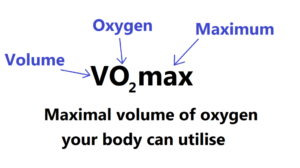
These are the elements that conform VO2Max (British spelling used here)

VO2Max stands for the maximum (Max) volume (V) of oxygen (O2) that your body can utilize at maximum effort. It is obvious that the more oxygen your body can handle, the more efficient it is and the faster you should be able to run. Eliud Kipchoge has been measured at 75 while the fittest of my readers most likely be under 50.

VO2Max is measured as an absolute rate in liters of oxygen per minute (L/min) or as a relative rate in in milliliters of oxygen per kiloĀ of body massĀ per minute (ml/kg/min).Ā Yes, this is a little bit technical, well, more than a little bit. The point here is to understand that if you can barely grasp the concept and how this parameter is measured, you shouldn’t make it your end-all factor to measure your progress, let alone your value as a runner.

The VO2Max is a valuable tool if you know what you are looking at. But lately it has become overemphasized, primarily because watches now flash the number as if it were a badge of honor.
VO2Max

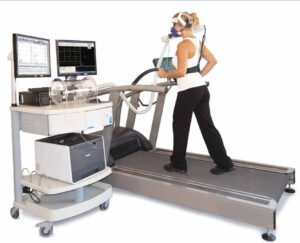
Unless your watch can be hooked to this machine, it cannot measure your VO2Max

VO2Max is tested in a specialized lab. While on a treadmill, with a mask covering your nose and mouth, while running to exhaustion, the machinery measures how much oxygen goes into your body and how much oxygen comes out. The difference between the two numbers while at maximum effort, is the maximum amount of oxygen your body can process at such speed, thus, your VO2Max. Your watch cannot measure this, regardless of how sophisticated and expensive it is.

In conclusion, VO2Max may work or not, I am not a sports scientist nor have read enough to know the extent of its reach. But what I do know is that it is not the end-all parameter to measure your progress or success. To me, a PR on my next 5K or marathon seems a much better way. And, once again, it CANNOT be measure by an equation on your watch.

It is not in the scope of this blogpost to advocate for or against VO2Max. It is not either to explain the science and value of the parameter, which, of course, does have a value.

If you want to learns more about the subject and are ready for a deep technical read, Steve Magness, head coach for the University of Houston, and an authority on the science of running, has a few articles on this, which I highly recommend. You can click on the links below to access them:
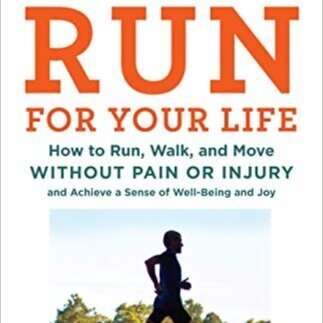
Book Review: Run for Your Life

Book Review: Run for Your Life

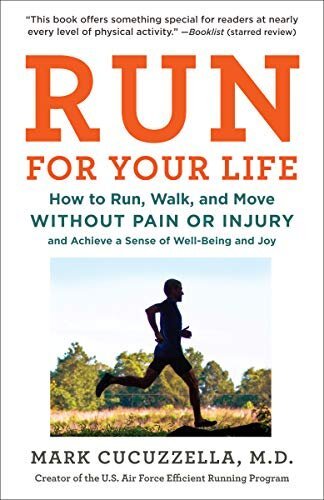
Run for Your LifeBook Author: Mark Cucuzzella
Review by Coach Adolfo Salgueiro

I read about Mark Cucuzzella for the first time through mentions on another book I have read a couple of years ago. To the author he seemed to know what he was talking about. Then, in the Marathon Training Academy podcast I heard an interview of the author about his ā€œRun for Your Lifeā€ book and I knew I had to read it. It took a bit longer than I wanted to get my hands on it but once I got it, I consumed it with passion.

Cuccuzzella is a doctor and a runner who is passionate about both. His bio on Google Books reads as follows: Dr. Mark Cucuzzella, Air Force Reserve lieutenant colonel, practices family medicine in Ranson and Martinsburg, West Virginia. He is a professor at the West Virginia University School of Medicine and conducts Healthy Running Medical Education courses. He has run competitively for almost four decades, with more than one hundred marathon and ultramarathon finishes, and he continues to compete as a national-level masters runner with an active streak of thirty straight years under a three-hour marathon. Cucuzzella owns the first minimalist running and walking store, Two Rivers Treads, in his hometown of Shepherdstown, West Virginia.

The book is divided into three parts and an Appendices section. The parts are: Before the Starting Line, The Body in Motion and Running is for Everyone. Each one touches in form a different perspective, the importance, the right way, and the approach to human movement so you can do it smarter, stronger and springier. This book is as much for sub-3 marathoners as it is for walkers wanting to complete their first 5k.

Run for Your Life

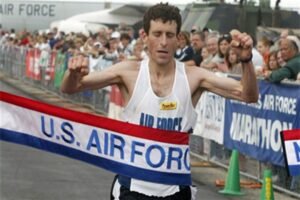
Dr. Cucuzzella has run sub-3 marathons for 30 years in a row

Each one of the 19 chapters concludes with a short section of drills to address what was taught in the previous pages. Such drills are not just strengthening or stretching exercises, but approaches, mental exercises or adjustments in your mechanics, your approach to exercise on your everyday life. It also has a companionship website where the recommended exercises and drills are explained in video format and additional scientific resources are available.

Dr. Cucuzzella is a firm proponent of the minimalist shoe. He gives a scientific-based explanation on why this is the way to go, as well as the right way to transition there. As interesting and well supported as his theory is, I don’t see myself switching to a minimalist shoe anytime soon, although it has made me reassess my selection of footwear, which I have already discussed with the manager of my local running store.

Part II was the key section of the book for me. It is about the science of running. The part the brain controls, the engine that builds endurance, nutrition, recovery, injury prevention, flexibility; how to make your muscles, tendons and ligaments work on your behalf and biomechanics of our gait. His explanation is so well adjusted for non-doctor readers and so solidly and convincingly based on science, that I have already adopted a few of his recommended adjustments and have seen amazing improvements on my step, which are confirmed in the way my running shoes have started wearing out.

This book is worth the money and the time invested in reading it. It is not about how many miles to run on Saturday and how many 400 reps you need to do on Wednesday. Once you are done with the book, make sure to keep it handy because it will become a consultation volume for years to come.

I someone knows Dr. Cucuzzella, please send him a big thank you on my behalf. There are many great running books out there. This is certainly one of them.

Skip to content