A few years ago, in a Facebook group I belonged to, someone asked for recommendations on what to include in a kit for a 5K she was putting together for some community center. “A tech shirt”, said someone. “A good bag that you can actually use after the race”, stated someone else. “A travel mug with the race logo,” chimed in a 3rd person. As asked, I added my 2 cents: “A pair of custom-made running shoes delivered to my door by Eliud Kipchoge himself”.
And I was not being facetious. I was expressing how much I would love for Eliud Kipchoge to personally hand-deliver a pair of custom-made running shoes as part of that 5K. The point was that you may include whatever you want in a race kit, it is just a matter of cost.
For those of us who have been competing for a few decades, races where you only got a bib and traffic control were commonplace. Races with medals, tech shirts, expos, and celebrity participation were the exception. Or they were the exclusive domain of races with a major sponsor, the New York City Marathon, or similar events.
In a recent Runner’s World Newsletter, they stated that “veterans of the first running boom in the late 1970s and early 1980s love to recount the simplicity of that era’s races. ‘Someone would draw a line in the road, yell ‘Go!’, and then hand you a popsicle stick with your place as you finished. Entry fees were a dollar or two. The post-race party was a tailgate at someone’s station wagon.”
Even the convenience of registering online adds to the price of a race (Photo Pexels)
Now we complain if the medal looks cheap, if hydration has no options, if there is no entertainment along the way, if all we get is a banana, if the race shirt design is not to our liking, if there are no finish line professional pictures, if the race kit has only a handful coupons, etc. All great options—but they cost money, and you have to pay for them.
When you have water, Gatorade, or multiple flavors of gels every two miles, understand that it is part of the $80 for 10K or $150 for a half marathon you ponied up. When you go out of your way to thank all police officers for being there, don’t forget you paid for their time. This is when you should be mad at a crappy medal, a cotton race shirt, not having a banana, or them cramming age groups every 10 years.
According to that same RW post, “a RunSignup’s 2023 report found that the average 5K cost $29.90. Half marathons in the $100 range are now typical. And in December, 1,000 runners will get boutique treatment (personal fluids, pacers, indoor warmup space, etc.) at The Marathon Project in exchange for a $500 entry fee. Even allowing for inflation and exaggeration, races cost relatively much more than in days of yore. What gives?”
There are always cheap race organizers. The ones who charge premium prices yet don’t have crowd control and mix hundreds of runners with regular space users, such as a beach boardwalk. Sure, there are the ones that accommodate a half marathon within the confines of a public park, don’t have police control in place, get you a cheap generic award, and have no qualms about overcharging you. You should not participate in those races.
Look. I am not saying “the old times were better”. I am not here to advocate the return of the $15 Boston Marathon. The point here is to understand that you get what you pay for. When racing is labeled as a charity event it is because funds are being raised for a noble cause, not because sponsors want to subsidize your racing ego. So, there are two clear options:
A – Treat every local 5K as if it were a World Marathon Major celebration and demand what you pay for if you don’t get it.
B – Accept a no-frills race at a no-frills price and then don’t go complaining on Tik Tok about how crappy the medal was.
Do you think race fees are justified? Drop your thoughts in the comments below!
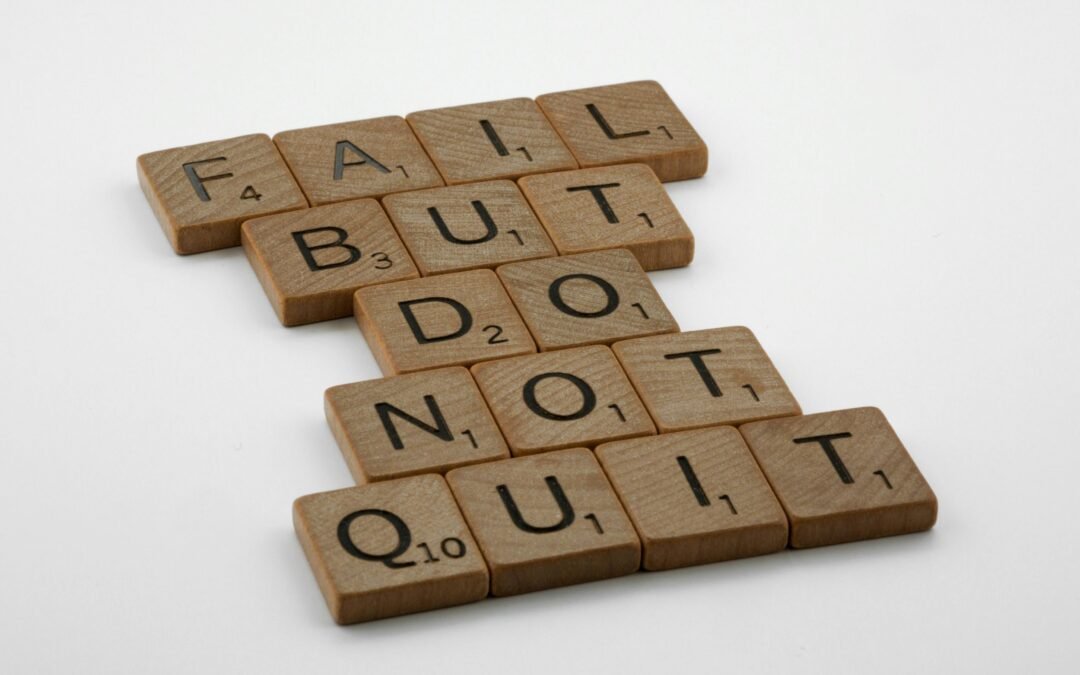
All of us runners have been there. And if you haven’t, keep running, and you will: missing the PR we trained for, walking on a run we thought we were supposed to excel in, being beat by that one person who can’t even keep up with us in training, selling ourselves a valid excuse for what just happened. We have just failed!
Sure, failure sucks. There is no other way to put it or sell it to ourselves or to our friends. But it doesn’t have to be final. It critical to your growth as a runner. And as a person.
It happens, learn your lessons and move forward. (Photo: Polina Zimmerman, Pexels)
There is an excellent quote by Jimmy Dugan, played by Tom Hanks in the movie A League of Their Own, when one of the players tells him she’s no longer enjoying baseball because it has become too hard: “It’s supposed to be hard. If it weren’t hard, everyone would do it. The hard…is what makes it great!”
So, how do we embrace something that sucks, hurts and yet could be beneficial, and make it the cornerstone of our running growth? I suggest these steps:
1 – Accept your feelings: Don’t suppress your emotions after the failure. Don’t put a façade for your buddies. These feelings are normal, healthy and must be worked through your system so they may be processed.
2—Step away from guarded mode: Okay, you failed. So what? Is your wife going to leave you? Are your friends disowning you? You have processed your emotions and accepted what happened. It is time to stop dwelling on it and move forward.
3 – Find the lessons to be learned: What happened? Why? Was it an external factor or was it something under your control? What will you do differently next time? Identify the factors that contributed to the failure and strategize on how not to allow this to happen again. If it was your error, own it.
4 – Embrace the failure: Now that you know what happened, why, and how to avoid it next time, it is time to focus on your next objective. You have accepted that a flop does not reflect your value as a person. Even if you missed the Olympic gold medal, it is an opportunity for growth. The runner who hasn’t failed, just hasn’t run enough.
5 – Enrich yourself by what you’ve learned: A long time ago, I heard someone (I can’t recall who) say that “what you get when you don’t obtain what you originally set out for, is experience”. Make this experience part of your narrative. Share your story with others letting them know that setbacks are a natural obstacle in the path to success.
I have compiled a list of failure-related quotes by people from all walks of life. These quotes corroborate that failure can only become a permanent mark in your life when you keep dwelling on it or learn nothing from it.
Tak advantage of the opportunity (Photo: Brett Jordan, Pexels)
► “I have not failed. I’ve just found 10,000 ways that won’t work” – Thomas Edison.
► “Some sessions are stars, and some are stones, but in the end, they are all rocks and we build upon them” – Chrissie Wellington, four-time World Ironman Champion.
► “A bad run is better than no run” – Unknown.
► “Ever tried. Ever failed. No matter. Try again. Fail again. Fail better” – Samuel Beckett, Playwright, novelist, Nobel laureate.
► “Relish the bad training runs. Without them it’s difficult to recognize, much less appreciate, the good ones” – Pat Teske, Resilience expert, health advocate, coach.
►”We all have bad days and bad workouts, when running gets ugly, when split times seem slow, when you wonder why you started. It will pass”– Hal Higdon, legendary running writer.
► “There will be days you don’t think you can run a marathon. There will be a lifetime of knowing you have” – Unknown.
► “Get over it – If you have a bad workout or run a bad race, allow yourself exactly 1 hour to stew about it, then move on” – Steve Scott, former U.S. record holder in the mile.
► “If you never have a bad day, you’re probably doing something wrong; if you never have a ‘good’ day, you’re definitely doing something wrong” – Mark Remy, Runner’s World.
Let’s start by stating something basic that even veteran runners tend to forget: The Marathon is a 99% aerobic event. Yes, even Ekiud Kipchoge and the East Africans who run around him run the marathon as an aerobic endeavor.
Having a solid aerobic base to sustain continuous action for 26.2 miles is one of the keys to a successful marathon. And when I state “successful,” I don’t mean setting a PR; I mean finish. Sure, we all know someone who has finished a marathon without training, but those are outliers, and most of those go through a sufferfest during their race. So,don’tt take any cues from them.
Race at 100% but only train at 80% (Photo Pexels)
Your aerobic base is the cornerstone of your long-distance running journey. Think of it as a pyramid’s broad, solid foundation, supporting the peak over which speed and performance are built.
Developing an aerobic base requires time, work, and patience. It covers hundreds, if not thousands, of miles and comes from years of engaging in activities that keep your heart rate elevated for long periods. Many runners achieve this base through previous activities in sports like soccer or swimming, while others have honed it just by running over the years. A strong aerobic base is essential to improving your speed and excelling in endurance events.
Running beyond the correct rate of perceived effort, performing all your long runs at race pace every single week or running your repetitions and intervals with all your might are not conducive to developing a solid aerobic base. It is counterproductive and not only won’t make you faster in the long run, it may lead to injury.
The aerobic base can be developed by: • Running consistently • Learning where your conversational pace lies • Accepting you must go slow to run fast • Trusting the process
As your aerobic base develops, you will: • Become a more efficient runner • Become a faster runner • Improve the rate of lactate removal • Improve muscle and energy output
Train at 80%, Race at 100%
Running every rep at max effort is not conducive to sustainable running (Photo: Caique Araujo, Pexels)
I firmly believe you shouldn’t go all out on your training runs, drills, and reps. Since your body needs to recover to realize the adaptations of your efforts and still keep the training moving forward, ending a rep or a training session on the verge of collapse is not the best practice. When you do so, you put your body through extreme stress, which will require a longer period of recovery. It would be best if you ended the rep knowing you could have gone even faster. Finish the workout knowing you could have gone an extra rep or two is a better strategy.
When you train for a race, that effort is in the future; you are working towards that goal. This means you train at today’s fitness level, not at the level you expect to be at race time. Focus on the prize.
Once race day is here, after a tapering period during which you are recovered and ready to go, you give it your all on race day. You are not saving anything for tomorrow. You invested your mind, body, and resources through a test of fitness and will. Then, you cross the finish line at the edge of your endurance limit.
In Conclusion
Running slow is counterintuitive. It feels weird when you know you could be running faster. It takes practice to go slow. Anyone can run itself to the ground by sprinting every day and racing their training runs. There is no merit in that. What takes guts is to accept that you must be patient, play the long game, and be willing to defer your gratification so you can enjoy your running for a very long time.
Sure, these are fundamental concepts for most runners, but we all need to be reminded of the obvious at one point or another to remain grounded during a difficult training cycle.
Feel free to like this post or leave a comment in the box below.
If you raced during the GPS watch era, you must have experienced the doubt of considering a race was mismeasured. Typically, it is a matter of not taking tangents or weaving around slower runners as you move. Big, established races rarely mess up this, but it does happen occasionally. The 1981 world record by Alberto Salazar was denied because the NYC Marathon proved to be 152.4 meters (500 feet) short when remeasured.
As unsatisfying as it may be, some times race directors make mistakes measuring the course. Even in the NYC Marathon (Pexels)
Let’s get something clear: Your GPS watch is not the authority that certifies a course. Your GPS gives you an approximation, a guideline. No one is going to launch a ballistic missile or set up an oil rig in the North Sea based on the latest Garmin data on your wrist. The technology is amazing, sure, but it is not intended to be military-grade.
No serious race will measure its course with a Garmin. Maybe a local small, local 5k, but nothing beyond that. I once met a runner who just came from the 2022 Berlin Marathon and complained she missed her PR because the course was long. I did not want to get into an argument with someone I barely knew, but if the course is good enough for Eliud Kipchoge to set a world record, it should be ok with you who ran just for fun.
Racecourses can run long or short. I read once that there are acceptable margins of error for them to go long, but not short. Last weekend I participated in a half marathon, and when I got to mile 12.5, with just one kilometer to go, I decided to push. It was the longest kilometer of my life. The course was long, per my GPS, by 0.5 miles. Many runners complained online that their watches were long from 0.4 to 0.7 miles. This is fishy, for sure. A few tenths here or there are normal. Or, if you run through a downtown with a canyon of high-rises, like the start of Chicago or the end of the Miami Marathon, then it is all out of whack. But that was not the case here.
If you are interested in the procedures to measure and certify a racecourse, you can check the certifications procedure manual by USA Track and Field (USTAF) by clicking here.
So, what happens to my PR?
As far as I know, there are no established rules to govern this anomaly. I only speak by what, based on my experience of 100+ races, I would, and do:
If I know the course is short, I will not take it as a PR. It is lying to myself. The first time I won my age group in a 5K was on a short course. As soon as I finished, I realized I lowered my previous mark by 1+ minute. I knew it was not possible. I took my age group win and gladly display my medal at home, but I won’t consider it my PR. I haven’t even gotten close to that one again.
If a race is long, then too bad! I do not adjust my PR. I would take it if I established one despite the extra distance, but I won’t adjust it to where I crossed the half-marathon mark, or to the best 10K during my 10.5K run. The official records won’t adjust. If I am 100% sure the course was long, then I would try again.
The leading peloton at the 2017 Venice Marathon realized they’ve screwed up and the local wins.
Additional considerations
This may be a stretch for this blog post, but, since we are talking about racecourses, there is another point to consider. As a runner, it is my responsibility to know the path of my race. If you make a wrong turn, there is no time adjustment. If you cut the course (hopefully unintentionally), then it is for you to own the mistake and certainly not adjust a PR based on what it could have been.
Most of my readers won’t be leading the pack in a race, but if you do, make sure you pay attention to your course. In 1994, German Silva was leading the NYC Marathon with half a mile to go when he followed the TV truck leaving the course. He turned around and was able to save the victory. Not so lucky were six runners in the leading peloton of the 2017 Venice Marathon, who followed the lead motorcycle after it made a wrong turn, opening the door for an Italian winner and a conspiracy theory.
I would like to know what your experiences with mismeasured racecourses and screwed PRs are. Let me know in the box below.
AUTHOR’S NOTE: Between the time this article was written and the time it was published, the organization of the mismeasured race that prompted this post sent an email acknowledging the error, apologizing, and vowing it won’t happen again.
May 2024 bring you countless injury-free miles and PRs in all your distances.
As a brand new year appears into our calendars, with 52 weekends primed for long runs with friends, six Abbott Marathon Majors to be completed by some of the runners we know, if not ourselves, and countless races in all distances anticipating for us to register; it comes that time to figure out what we want to paint on that virgin canvas so 10 or 12 months from now, we are not regretting a wasted running year.
Improving your sleep will help you in more ways than a PR or a BQ (Photo: Ketut Subiyanto, Pexels)
Your 2024 running goals should be set in an individual and feasible fashion. It is about what Is realistic for you and what you alone are willing and able to do. Running a sub-3 marathon if you’ve never gone sub-4 is not impossible but it may be a recipe for disappointment or injury for most runners. Improving 10 minutes in your half marathon or 5K PR may be achievable but depending on where you stand. Going from a 2:40 half to a 2:30 one is one thing. Improving the same 10 minutes in 5K if your PR is 22 would make you a world-record holder. So, let’s be realistic about our goals.
If you haven’t thought about it yet, here are eight quick ideas for you to consider before we get too deep into the year. This way you can hit the ground running:
1. 1000 Miles: A feasible distance for any consistent runner. It only requires 4.8 miles a day, four times a week during 50 of the 52 weeks of the year. If you already run 1000 every year, then set your sights on 1500, or 2000.
2. Choose your goal race, now: Not just select it, register for it, and let everybody know. Set up a road map so you’ll know how to get from where you are to where you want to be and to be there in time. It doesn’t guarantee you’ll succeed, but it will put success within your reach.
3. Pick up one PR to set: Sure, we want them all, but a 5K and a marathon are two different animals and requires separate training plans. So, pick one distance where to focus and make sure everything you do is in service of that specific goal.
4. Upgrade your sleep: Sleep is better for restoration than your entire recovery toolkit multiplied by three. Be initiative-taking and intentional about it. Make sleeping a priority in your everyday life. Its benefits will go beyond a PR or a BQ.
Don’t let streght training be the neglected aspect of your running (Photo Andrea Piaquadio, Pexels)
5. Strength training: For every mile you run, you’re pounding your musculoskeletal system with 3-5 times your weight, about 800-900 times per leg. If you don’t prepare your bones, muscles, tendons, and ligaments for such a vicious workload, they will inevitably break down. Translation: You will get injured.
6. Don’t just run: The constant percussion this sport places on our bodies requires us scheduling time to repair and restore, more of it as we age. Incorporating one or two days a week of yoga, swimming, Pilates, biking, elliptical or any other non-impact exercise will make you a more resilient runner.
7. Keep a running log: Beyond Garmin, Runkeeper or Strava and the slew worthless or irrelevant parameters they measure for us, writing down your daily activity either by hand or on a spreadsheet will noticeably improve your understanding of what you are doing. Give it a shot.
8. Learn about running: Knowledge is always an advantage. You can delve into the history of the sport, the science of what happens to your body when you run, or biographies of its greatest icons. Pick up one book or two and make sure you finish them before December 31st.
I hope these ideas assist you in shaping the running year to be. This way, come December, you can brag about your victories, PRs and improvements, instead of setting up for a 2025 in which to redeem yourself.