8 Tips for Out-of-Town Racing

8 Tips for Out-of-Town Racing

By Coach Adolfo Salgueiro

 As the fall racing season gets into full swing, the Marathon Majors are ready to finally return (sans Tokyo) and runners are excited to stand at starting lines, again, many of us are ready to reward ourselves with a race beyond the boundaries of our immediate area. Exploring the great cities of the world; or celebrating for a few days, sipping margaritas at the beach; or discovering the less traveled paths in lesser-known parts of the world, is always a bonus for our efforts.

But traveling to a race, especially if it is your goal race, doesn’t come without its challenges. It requires planning and additional preparation. If something doesn’t go according to plan, and it will, the chances of fixing it on-the-fly diminish considerably.

Out-of-Town Racing

Always carry your race-day gear in your carry-on. You don’t want a lost luggage derailing your race (Photo: Pexels.com)

So, if you are setting out to a running/travel adventure, these are a few tips that will help you perform the best at your race while getting the most out of your trip:

1.      Do not check your running gear: If traveling by plane, whatever you are wearing on race day, goes in your carry-on. The last thing you need is lost luggage derailing your race plans. You don’t want to run with brand new shoes purchased at the expo or borrowed short.

 2.      Run first, be a tourist later: Take care of the running portion of your trip, first. Don’t arrive too much in advance before the race. Save the tourist plans for after the race. This way you will be well rested at the starting line, and ready to enjoy as much alcohol and unhealthy food as you want.

 3.      Plan your pre-race meals: Never take your food intake for granted. Make sure that what you need eat it is available nearby. It happened to me once, that after identifying the restaurant I wanted in Philadelphia, I went pre-race night, and I needed a reservation.  If you are staying at a relative’s house, make sure you let them know exactly what you need to eat and at what time.

 4.      Know how you are getting to the starting line: Do not improvise. Plan for the wort-case scenario. If you are taking a cab, know the phone number and confirm they provide service at the time you need it. Have a B plan in case there are no Ubers available. If you are taking public transportation, have the tickets purchased in advance. If a relative is driving you, be aware of any road closures due to the race

 5.      Make sure family and companions understand why you are there: If you are traveling with family or friends, make sure they understand that the first few days is all about you and your race. You are the protagonist. Everything else can wait until you cross the finish line. Remind them you wouldn’t be in Berlin, or Buenos Aires or New York if it weren’t for the marathon. 

Out-of-Town Racing

Preparing for time-zone changes is one of the biggest challenges for out-of-town races (Photo: Pexels.com)

6.      Prepare to adjust for time changes: Never underestimate jet lag and time zone difference. They can screw your sleep and derail your race. Find out in advance how to adjust to the time zone in which you will be competing. Research what are the best ways to adjust to the number of time zones you need to adjust. There are plenty of online resource for this.

 7.      Pack for any weather: Remember you are not home, so you can’t just go back to your closet to pick up something. Be prepared for any weather changes and don’t rely 100% on your phone weather app. It is always better to bring back something unused than to need that pair of gloves you left at home. 

8.       Don’t do anything you wouldn’t do at home: Pre-race is not the time to be adventurous. Trying new, exotic foods; white water rafting, Segway tours, or running a beautiful trail when all you know is the asphalt. Those are recipes to guarantee a bad race. Hold all thar for after the finish line.

Any other recommendations from your experience travelling to races?

Cardiac Health and Running

Cardiac Health and Running

By Coach Adolfo Salgueiro

As athletes, especially as runners, we are usually very fit people. It doesn’t matter if you weigh 120 pounds and look like a Kenyan world-record holder or if you are on the 200+ or 250+ side of the scale with an overhanging gut. Being fit does not mean being healthy, and it doesn’t mean you have a heart disease vaccine.

In the 1982 New York City Marathon, when my dad ran his first 26.2, a French runner collapsed and died. He told us that he passed this guy in the middle of the ruckus, which made it to all the newspapers next day. It must have been quite an impression on a 16-year-old kid, for 39 years later I am telling you this story.

Just a couple of weeks ago, a 24-year-old runner passed away from a cardiac issue during the Montreal Half Marathon. Unfortunately, this is one of the handful of cases that happen every year, where a fit athlete goes out for a run and, sadly, doesn’t comes back.

Cardiac Health

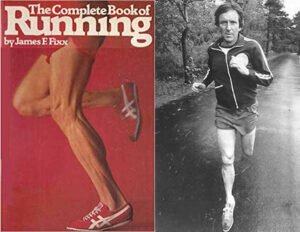
Jim Fixx wrote one of the most influential books in the history of running, yet he passed away from a cardiovascular issue, suddenly, at age 52.

If the father of the running boom in the United States is Frank Shorter, the Godfather must be Jim Fixx, author of the mega 1977 best seller “The Complete Book of Running”. In a pre-internet, pre-Google era, this book popularized access to the knowledge of the sport, including the cardiovascular benefits of jogging and running. This guru went for a run on July 20, 1984, at age 52, and died of a fulminant heart attack. He was in great shape, but his autopsy revealed he had atherosclerosis, with one artery blocked 95%, a second 85%, and a third 70%. His father had died at age 43 of a second heart attack.

During the Marathon Trials for the 2008 Beijing Olympics, Ryan Shay, a 28-year-old, high-performance athlete with a 2:14 PR, collapsed 5.5 miles into the race and was pronounced dead 40 minutes later. Autopsy report said: “Cardiac arrhythmia due to cardiac hypertrophy with patchy fibrosis of undetermined etiology”. Whatever that means, it doesn’t sound good.

But there have been many cases of runners luckier than Fixx and Shay. One of the most active and fit guys you will ever meet is Dave McGillivray. You may know him as the Boston Marathon Race Director since 2001. His athletic accolades include running across the United States, (3,452 miles) in 80 days, running the Boston Marathon every year since 1973, 9-time Hawaii Ironman finisher and has participated in over 1000 organized races. Yet, in October 2018, at age 63, underwent triple bypass surgery. His family cardiac history was against him, regardless of how fit he was. He is one of the lucky ones that is telling his story.

Cardiac Health

Ryan Shay, a young marathoner with a 2:14 PR, passes away suddenly at the 2008 Olympic Trials.

These are just three relevant cases from many that time and time again prove that just because you are fit, doesn’t necessarily mean you are cardio-vascularly healthy. These are two concepts that are not inclusive.

And there is a reason I bring up this subject, today. And it is because of my personal experience, which I would be dishonest if I did not share with my readers. Two years ago, during my yearly medical check-up, my doctor told me that even though a stress test wouldn’t do much for me because I was a fit marathoner, I should do it anyway “because you never know”. And guess what? you do. A congenital issue in my arteries was discovered. Unoxygenated blood was recirculating while bypassing the lungs, which created such a stress for my heart it could have provoked a heart attack. Fast-forward two years, and on June 23, 2021, I underwent open heart surgery to fix the issue. This “unneeded” stress test potentially saved my life. Now, very shortly, I should be cleared to run again.

The moral of this story is to make sure that you understand that even though you keep an active and healthy lifestyle, you are not immune to the genetics of your ancestors, cardiac birth defects or the sequels of your unhealthy habits prior to your active life. Get checked up. You never know. I am proof of it.

NOTE: If you are having or had a cardiovascular issue and you are an athlete, one of the best support resources I’ve found is the Cardiac Athletes Facebook group. I invite you to check it out.

Keeping a Running Logbook

Keeping a Running Logbook

By Coach Adolfo Salgueiro

Maybe because I started running way before personal computers and the internet were ubiquitous. Or because I am a visual person. Or because I am just traditional. I like to keep track of my sporting activities in a written log. For years I handwrote in a 3-ring binder and, as the technology progressed, I set up a spreadsheet that has been constantly changing as I learned more about the wonders of MS Excel.

These days, with Garmin, Strava, TrainingPeaks, RunKeeper, and many, many more, you just forget about it, and someone keeps track for you. And they do so with more parameters than you will ever need, know what to do with, or care for. I do believe it is inevitable that any “serious” runner will end up with a GPS watch and an online account, and that is a good thing. But at the same time I believe that so much data, uploaded up there in the cloud, where you can access but small portions of it at a time, is not necessarily better. Yes, well into the 21st Century, I advocate for a written running log.

Running Logbook

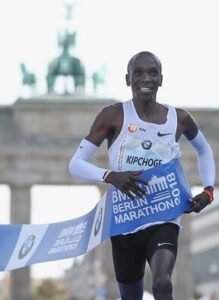
World Record holder Eliud Kipchoge has been keeping a handwritten running log since he turned professional

Eliud Kipchoge, —yes, that Eliud Kipchoge— has kept a had written, yearly running log since he became a professional runner. He records in every single workout as detailed as possible, also adding things and thoughts from outside the running world that may help his training. “When you write, then you remember”, he says. If it works for Kipchoge, maybe you should give some thought.

There are multiple ways to keep track of your activity. You can do it by hand in an appointment book, a 3-ring binder, or a notebook. There are also a variety of journals on sale specifically designed for this purpose. In your computer you can develop an Excel sheet to track what is important to you, or you can just write in your entries in a Word (or equivalent) document. Google has spreadsheets and documents that are accessible in your desktop computer and phone. The options, these days, are limitless.

It is important to take your time to write or type something into your journal, purposefully, so you can internalize it, meditate on it, and visualize. Your GPS watch doesn’t record your thoughts.

Your entries can be arranged, based on the platform where you keep them: daily, weekly, or monthly. My personal preference is monthly because it allows me to review a bigger segment of my training in a single glance. Since I developed my Excel sheet, I have added weekly totals, monthly and yearly totals, pace average, heart rate, temperature, humidity, cross training, and much more.

Why do we keep track?

  • Because when we get in a rut (and you will), you can go back to when you were doing great and check what worked for you back then.

  • Because when you are training for your goal race you can glance your entire training without thumbing through hundreds of single entries in Strava or Garmin.

  • Because when you decide to change GPS watch brand, or want to change your online tracking platform, you won’t lose the data in your account.

  • Because when you are looking for a specific piece of data you can flip a page or two instead of combing through thousands upon thousands of data entries that were not designed with your needs in mind.

  • Because you can store it by year, month or whatever parameter works for you so data will be easily accessible when you need to consult it.

  • Because it creates a spectacular database that will become your frame of reference to get you from where you are today to where you want to be, tomorrow.

Running Logbook

Handwritten logbooks or computer spreadsheets can become as elaborate or a simple as your individual needs.

If by any chance I have persuaded you to give a running log a try, start right away. Now! Write down date, mileage, time and specific, detailed notes of each workout. If you did a particular mobility exercise or weightlifting routine that made you feel good, write it down. If you ran with someone who helped you get the best out of your ability, write it down. If the temperature or humidity became a pro or a con on your run, write it down. If you started with a new pair of shoes, write it down. If you feel any parameters become key in every workout, start tracking them.

The key to the usefulness of your log is the quality and trustworthiness of the data. If you fail to do your entries after each training, if you don’t keep good notes on why it went great or why you bonked, if you are just guessing your mileage and time, if you are lying to yourself, if you misplace your logs in your home or computer; then you are better off not wasting your time.

Think of all the benefits I’ve enumerated and check for yourself if they have any merits.

 
The Case for Urinals at Starting Lines

The Case for Urinals at Starting Lines

By Coach Adolfo Salgueiro

I visited The Netherlands for my birthday, a few years ago, and of course I looked for a race. I was going to be in The Hague, and God smiled at me with the Den Haag Marathon on the exact same weekend I planned to arrive. I ran the half. It was an unbelievable experience. The most beautiful course in one of the prettiest and quaintest cities I’ve ever visited.

But one of the memories that has endured from my experience in the Den Haag race is kind of weird. The urinals at the starting area, which was in a public park. Yes, urinals. And not just at the starting line but also in many public places around town and as permanent structures throughout several cities in The Netherlands.

Urinals at starting lines

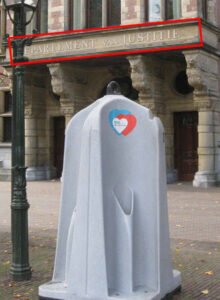
Public urinal in front of the Department of Justice in Den Haag, The Netherlands.

While waiting for the gun to go off at Den Haag, I saw these weird rigid plastic structures. They were on top of a square shaped base, maybe 4 feet to a side, about 7 feet tall, each side bisected with a wall, which created four “cubicles”. Each space had a “V” shaped opening at about 3 feet high at the innermost corner. They looked like… No!!… It can’t be!!!… But they were! They were urinals and weirdest of all, men were actually urinating in them, leaving the port-a-potty facilities for those males with “bigger needs” and women.

As you may imagine, I did not take pictures of people using these artifacts, but I did take a picture of an exact one, at a later date, this one in a square surrounded by restaurants, bars and located right in front of the Department of Justice (See accompanying image). It was there 24/7 for people (men) visiting their favorite watering holes to “take care of business” without resorting to the unsanitary and illegal option of going against the walls, cars, trees or bushes. Very pragmatic, like most Dutch solutions.

I know this may be a weird topic for this forum, but I assume we are all adults and we can discuss the issue with some degree of maturity. And, since every runner has at least a handful of port-a-potty horror stories during their racing career, I wanted to make the case in favor of the use of urinals for races in the United States.

THE MATH

Let’s set up a case study with a mid-size race of 3000 runners. Let’s assume a 50-50 split on the binary genders (1500 each). And let’s assume for this example the race director calculated a port-a-potty for each 75 participants, for a total of 40. If 75% of people use the facilities pre-race (2,250) and let’s say one third of them (563) are in line at any given time before the gun goes off, this means an average line of 19 people per door. Assuming an average time of 3 minutes per use, the average waiting time is 57 minutes per user. We’ve all been there and if not, we haven’t raced enough.

Now, let’s say this same race director decides to be pragmatic and exchange just five traditional port-a-potties with 4-corner urinals placed at an appropriate location in the starting area. For this example let’s say 75% of the male users (844) are using the facilities only for urination. Then, the overall population of runners using the port-a-potties has been reduced from 2,250 to 1,406, which at 35 doors and the exact parameters of usage as before, the average runner will be waiting in line for 40 minutes. Does it sound like still a long wait? I’ll take it. It is 30% shorter. It is a start.

 THE SOLUTION

Urinals at starting lines

There is a solution to this problem. Do we have the maturity to solve it?

I don’t assume to be speaking for all male runners, but I believe I am for a vast majority. Let’s face it, most of us at some point have found a tree, a bush or a wall to relieve ourselves while waiting at the starting area of a race. And while there, very likely have witnessed females crouching with their shorts half down doing the same and for the same reason as us. And let’s come clear here, there is nothing sexy or sexual about adults exposing themselves to take care of business before a race. I haven’t experienced the first sexual frenzy in such situation. So let’s grow up and find a solution. There is one and it has been in use in Europe for years.

A difference between the Dutch and the Americans is that the former are extremely pragmatic in the solutions to their public issues while the latter are still embarrassedly prudish with anything related to sexual organs, even if they are being used for purposes other than procreation or related fun-driven activities. While the municipality of Amsterdam installed urinals around the bar areas once they figured out a substantial percentage of drowned men in the canals were found drunk and with their fly open, in the USA we would face a “Today Show exclusive investigation on the immorality of urinals in foot races”, reported by non-runners, despite the fact that it will ameliorate a big problem within this industry.

The use of port-a-potties is as part of a race as complaining of nagging injuries with your friends. None of them are going away anytime soon. There is a solution out there. Can we grow up and use it? Or are we to prudish to implement it?

Any thoughts?

 
The Power of Being Constant

The Power of Being Constant

By Anthony Reed *

Editor’s Note:  This is a posting from Mr. Reed in our RCAA Coaches Group. I requested, and obtained, his permission to repost it here. I believe it shows the power of remaining constant and relentlessly moving forward towards your lifetime goals and its compounding results.


Life-Long Goal Setting: Maintaining a three miles per day in average.

 
Being Constant

The Great Wall Marathon, China (Photo courtesy of Anthony Reed)

Many runners focus on various goals, such as running 100 miles per month. Today (6/6/21), during a 15-mile run, I finally logged over 47,000 miles over 42 years.

 In 1976, I set a lifetime goal to average three miles of running per day as a way of avoiding insulin. My primary goal was to run about 90 miles/month and the secondary goal was at least 100 miles per month. Also, I only wanted to run only three or four days per week. I’m a very firm believer in “everything in moderation”.

 I was diagnosed as pre-diabetic in 1963 and was told that I’d be on insulin by the 1970’s. I started running as a way to avoid this prediction. In the mid-1970’s, a co-worker lost his sight due to glaucoma, had his foot and leg amputated, and died to complications from diabetes. I don’t believe he was more than 50 years old. I was scared to death.

 I’ve maintained a handwritten running journal since 1979. The detailed, monthly data is summarized in an Excel workbook. Here’s a brief analysis of 509 months of running.

RUNNING DATA

 – Averaged 3.03 miles/day over 509 months.

Being Constant

Antarctica Marathon (Photo courtesy of Anthony Reed)

– Ran 5,359 days (34.6%) out of a possible 15,496 days. As a father and husband, I wanted to keep running simple, fun, flexible, and injury-free. Thus, I felt that running everyday would put undue pressure on me. So, I opted to run only 3 or 4 days a week.

 – I was not perfect. I failed to reach my primary monthly goal 40% of the time, including 29 months of not running a single mile. However, I never lost sight of my goal AND my reason for achieving it. I wanted to live past 50, keep my eyesight, not have any limbs amputated, and not be on insulin. The money saved from paying for insulin was used to travel around the world and finish marathons on seven continents (completed in 2007) and fifty States (completed in 2013).

 – Longest streak of reaching at least 100 miles per month was 21 months; from June 1985 through February 1987. Averaged 148.7 miles/month.

 – Longest streak of not reaching primary goal was 29 months; from August 1990 through December 1992. Averaged 60.74 miles/month.

 – Maximum miles in one month: 200.13 in January 1986 over 17 days of running.

RACING DATA

 – Fastest races: Marathon – 3:36:45 (1984); 20-Miler – 2:35:54 (1987); Half marathon – 1:34:11 (1985); 10K – 41:31 (1983) [BTW – These PB’s were run while weighing about 195 pounds at six feet tall, which wasn’t easy.]

 – Completed 226 races between 1979 and 2018 (averaged 5.3 races/year).

 – Averaged 2.3 marathons/year between 1982 and 2000. Only one marathon (Chicago) of my first 42 marathons was outside of Texas, which included 15 Cowtown Marathons (Ft. Worth) and 15 Dallas Marathons (formerly White Rock). You have an entire lifetime to run marathons, so take it easy on the racing, especially if you\’re just beginning.

 – Completed 131 marathons between 1982 and 2018 (averaged 3.5 marathons/year).

 – Longest monthly streak: 15 marathons between February 2012 and January 2013.

 By keeping focused on a lifetime AVERAGE, it took the stress off everyday living and goal setting. Next month, I’ll turn 66 and am still not on insulin.


* Anthony Reed is the National Black Marathoners Association Co-Founder & Executive Director. He is the author of the book “From the Road Race to the Rat Race” which was published in September 2020.

 The National Black Marathoners’ Association (NBMA) is the country\’s oldest and largest, not-for-profit organization of Black American distance runners. It is open to everyone, regardless of athletic ability or previous marathon experience. Objectives are to:
¡       Encourage Black Americans and others to pursue a healthy lifestyle through long distance running and walking.
¡       Serve as a vehicle for Black American distance runners across the nation to meet in mass at a single marathon.
¡       Recognize the accomplishments of Black American distance runners.
¡       Provide scholarships to deserving high school boy and girl distance runners.

For more information about the National Black Marathoner’s Association, you can click here.


Fours PRs, a BQ and a 62 Minute Marathon Improvement

Fours PRs, a BQ and a 62 Minute Marathon Improvement

By Coach Adolfo Salgueiro

As a coach, you put the same emphasis and hard work on every athlete that passes through your programs. You make sure to provide every single one of them with all the tools at your disposal to get the best out of their individual capabilities during their quest to achieve their goals. Yet, every so often, a special runner shows up at your door, just by chance, and blows your mind. For me, this runner is Yolmer Garcia, 45. A Venezuelan native currently residing in Pompano Beach, Florida.

Improvement

A committed athlete with a personalized training program. Results speak for themselves.

I met Yolmer just by chance. We both ran at the Pompano Beach Airpark trail and from crossing paths on a regular basis, just started giving each other the “runner’s hi”. Then, when we coincided at the parking lot, we exchanged pleasantries and talked running. Two and a half years later, not only we have become good friends, but he has also exceeded all my expectations. As the title of this post reveals, he has improved leaps and bounds, and he is just getting started.

When I met him, sometime in late 2018, he was just a guy who loved running. With a ton of natural talent but no plan beyond running whatever he felt his body allowed him on any particular day. He had a few half marathons around 1:42. Not only he wanted to run a marathon, but he had already registered for Miami 2019 and was going to do it, rain-or-shine.

His first marathon was quite an adventure, given we only had 10 weeks prior to race day. We focused exclusively on distance. No time for speed. He had to go with whatever he had already built. He completed the race in a competent 4:16:31. Not bad at all, but not close to his potential as a runner. Plenty of space for improvement.

As he finished the “Light at the End of the Tunnel Marathon” in North Bend, WA., on June 13, 2021, he has improved his half marathon time to 1:31:15 and lowered his marathon time 62:15, since his maiden journey into the 26.2 monster.

Yolmer was lucky enough to get into the New York City Marathon for November 2019. We set up a 20-week training program with all the necessary elements. A PR was a given, it was a matter of by how much. Unfortunately, he had severe leg cramping as he crossed from Bronx to Manhattan and his finishing time suffered considerably. Still, he finishes in 3:54:36, a 21:55-minute PR. An amazing performance regardless, and gutsy given the circumstances.

Improvement

Hal Marathon PR has come down from 1:42 to 1:31

The redeeming race was Miami 2020. A plan was set to build on endurance so he could set a comfortable PR. We wanted to focus on having a more enjoyable experience through which he could build the confidence that he is able to finish strong and without cramping. Despite a bumpy last month, when life and work got in the way of training, Yolmer was able to set a 10:30 PR, finishing in 3:43:36 without cramping. Awesome, but still not within his potential.

As races resumed after the Covid pandemic, we worked on speed to tune him up for the best half marathon time we could get. He ran 1:32 in Space Coast, 1:33 in the Miami virtual and his current PR of 1:31 in A1A Ft. Lauderdale. Then it was time for the Tunnel Marathon in Washington State.

Training was not without its challenges. South Florida is flat, at sea level and with little trails to recreate race conditions. Yet, we did the best we could with what we had available. Because Yolmer is registered for Berlin in September, our main focus was on making sure he had the distance so he could finish strong and then set up a solid speed program to fine tune a BQ. Training was solid and a PR was expected. As a coach I would have been happy with a 3:30. We must have done something right, because he PR’d and BQ’d with 3:14:01, a 29:35 improvement from his previous. Now, this is within his running potential!

From Miami 2019 to Tunnel 2021, Yolmer has improved his marathon PR by over 62 minutes (2:25 per mile), with PRs in each one of his races. And he hasn’t run his fastest marathon yet. Now that he has BQ’d, the next step in his progression is a sub-3 marathon, which I have no doubt he has the conditions to achieve. It is just around the corner. Maybe even closer that he or I think. In Berlin 2021? We will give it our best shot.

Skip to content