
The Journey of a Six-Star Finisher

The Journey of a Six-Star Finisher

By Starr Davis

Editorial note: Last week we talked about the Abbott World Marathon Majors Series. This week, my friend Starr Davis tells her account of achieving the milestone despite some physical problems she encountered along her journey.

For me, 2018 was the year of comebacks. In October 2017, I began having hip issues. Surgery was recommended to remove a bone spur and repair/replace the labrum. My surgeon and I decided because I had amazing marathons ahead of me, we would postpone surgery until after I finished them. Then, he would be able to repair any additional damage. We weren’t sure if this would end my running career. From October through December 2017, I ran the Chicago, Marine Corps, Berlin and Havana marathons, plus a 50K Ultra Marathon.

Six-Star Finisher

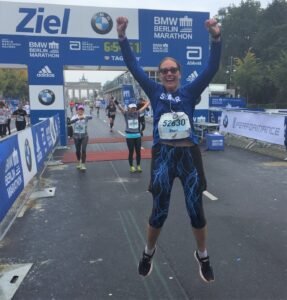
Starr at the iconic finish line of the Berlin Marathon.

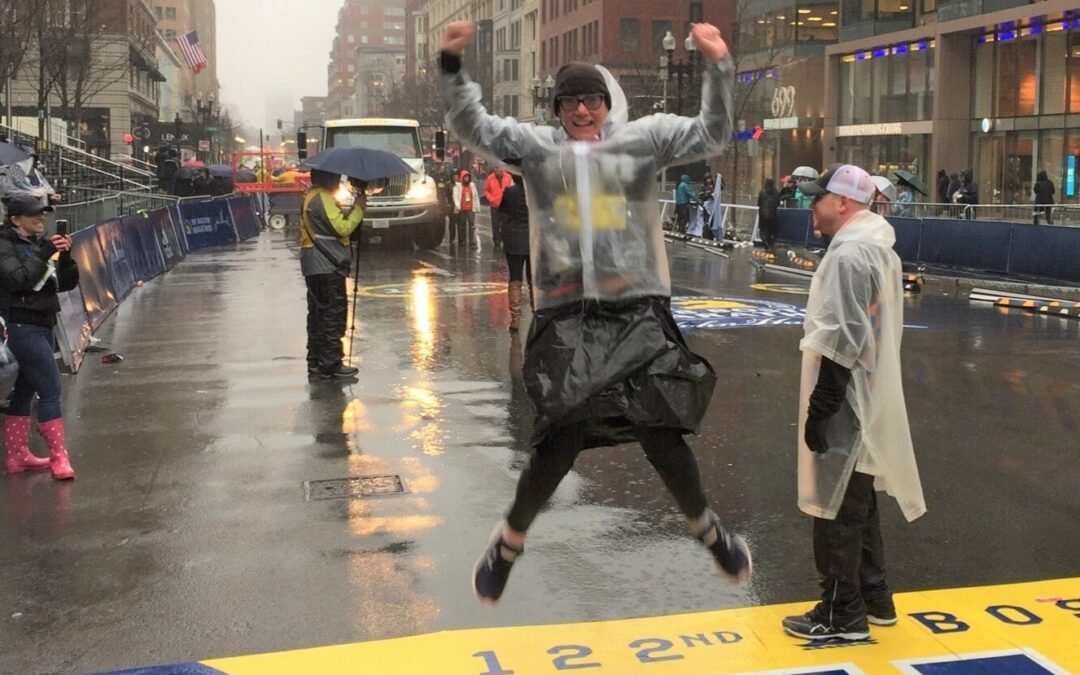
Still postponing surgery, in April 2018, I was able to complete both the Boston and London Marathons. Boston was a challenge as temperatures were in the 30’s with constant rain.  I wound up in 11 medical tents with hypothermia symptoms. However, because I had raised $6500 for charity from friends and I knew this was my one opportunity to do Boston, I finished the race.

Six days later, I ran the London marathon. The temperature was in the 80s. Between the contrast in weather and my hip, I wound up walking the marathon from mile 8. But I was totally overjoyed to complete two races in 6 days.

Three weeks later, I had hip surgery. I was truly fortunate that it was not as major as anticipated—the labrum wasn’t torn but had a bone spur sticking out of it that was labor intensive to remove. Of course, when I woke up, my first question was “when can I run?” I had been offered a sponsorship race entry to the NYC Marathon in November, and I really wanted to do it. I was told that running it would be impossible, but I should be able to walk it.

Six-Star Finisher

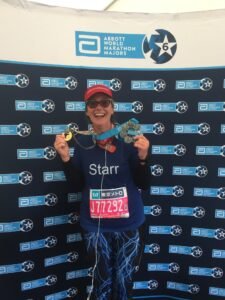
Receiving the coveted Six Starr medal after finishing Tokyo in 2019

Twenty-four weeks after surgery, I was able to walk the NYC marathon. My body had done so much better than I expected. There were hours and hours of therapy and minimal training. I feel so blessed to have been able to have the “perfect” conditions. I was joking with doctors that Boston was too cold and wet; London was too hot and finally, New York was “just right.” He has now nicknamed me “Goldilocks.”

I ran the Tokyo Marathon just March 3rd of this year, and it was epic, albeit miserable race conditions. It was 43 degrees with constant rain—but it was 8 degrees warmer than Boston and rain was coming straight down instead of at an angle.

Let’s focus on the good things. After Tokyo, I became an Abbott World Marathon Majors Six Star Finisher. What does that mean?  I am one of 4,989 people in the world who have successfully completed the six major world marathons: Berlin, Chicago, New York, Boston, London and Tokyo.  Of these finishers, 1,376 are women and 929 are from the USA.  I’m so over the moon that I was able to successfully complete this, especially as a 50-year old who overcame crazy health challenges.

That stretch of 19 months of running was amazing for me—they’ve given me the opportunity to meet amazing new people, travel to great locations and most importantly, change my attitude of what can be accomplished. I have changed my eating habits and developed a better relationship with myself. It’s amazing what running some miles can do for you.

Starr Davis is a lifelong educator who has a passion for helping others grow in their career. She earned the coveted Six-Starr medal in 2019. She lives in South Florida and is a newly retired marathon runner.

The Abbott World Marathon Majors Series

The Abbott World Marathon Majors Series

By Coach Adolfo Salgueiro

Most of my readers may already know about the Abbott World Marathon Majors Series. After all, if you are reading this, most likely you are a runner and may have even completed at least one of the races, if not more. But for those who don’t know about it, or just would like to refresh their knowledge on the subject, I am hereby writing this quick blogpost.

The Abbott World Marathon Majors was established in 2006 with the five, highest-profile races in the globe: New York City, Berlin, Boston, London, Chicago, Then, in 2013, the Tokyo Marathon was added. It is a championship-style group of races in which the Marathon World Championship is awarded. Each series consists on seven races, starting and ending with the same race and then moving on to the next one. The series also includes the Olympic Marathon and the IAAF World Championship on the years those take place. The last completed series was the XII, which started in Berlin 2018 and finished in Berlin 2019. Series XIII has been crippled by Boston going virtual, Berlin and New York cancelled, and London hanging by a thread. Not sure what will the World Marathon majors do about it.

Abbott World Marathon Majors

Abbott Laboratories is the title sponsor for the World Marathon Majors Series

The 12 Abbott World Marathon Major Series have been won 11 times by a Kenyan and one by an Ethiopian on the men’s side, and 8 times by a Kenyan, three by a German and one by and Ethiopian on a Women’s side. The current champions are Eliud Kipchoge and his compatriot Brigid Kosegi on the female side. Five runners have won more than one series, with Kipchoge leading the way with four.

But 99.9% of the runners will never, ever get close to scoring a single point on the Abbott World Marathon Major rankings, so what is it in it for them? Abbott has developed a successful marketing campaign in which by crossing the line of any of their runs, you earn what is known as “a star”. Once you complete all six, then you earn the “The Six-Star Medal”, a commemorative piece to memorialize your cumulative achievement. It is one of the most coveted medals in the sport, since it is something you can’t purchase, and it requires an immense investment of time, effort, and money.

Obtaining the Six-Star medal is not about just having the resources to travel to all six destinations or being physically able to complete six marathons. Marathoning has become so popular in the last decade and the Abbott World Marathon Major Series has become so big, that securing a spot in the races is usually the first obstacle for may runners. For Boston you need to qualify and only the faster times get to the starting line, unless you raise funds for charity, which has challenges of its own. London is extremely popular and hitting that lottery could be as difficult as hitting the Power Ball. For New York, Tokyo and Chicago, there are usually over 100 wanna-runs for each spot available. It is said the “easiest” lottery to hit is Berlin, but if that is the perception, more and more runners will gravitate towards that one, making it tougher to hit a spot.

Having earned the Six-Star medal usually makes you a celebrity in your local running community. Fellow runners want to take pictures with you and your medals. It is a cool think to have in your hand. A friend of mine got hers and brought it to our local running store. You feel like you are holding an Olympic medal. It is that cool.

Next week I will post the experience of an actual Six-Star Medal member, Starr Davis, who overcame a series of physical obstacles to earn her medal. Hopefully, you will earn yours, soon and tell us all about it.

For more information on the Abbott World Marathon Majors Series, visit their website by clicking here.

Abbott World Marathon Majors

These are the six World Marathon Majors. How many Stars do you have so far?

So, Tell Me About Your VO2Max

So, Tell Me About Your VO2Max

By Coach Adolfo Salgueiro

It is interesting when you with your running buddies and they start bragging about their VO2Max number. “Mine is 41”, says Runner #1. “Mine is currently at 39 but it has been going up for the last 3 weeks”, comes back Runner #2. “I am down to 43 but have been up to 44 as recently as last month”, chimes in the Runner #3. Funny thing is that if you ask any of them what VO2Max is, you can pretty much bet that none of them will know.

VO2Max

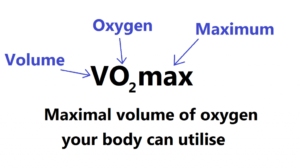
These are the elements that conform VO2Max (British spelling used here)

VO2Max stands for the maximum (Max) volume (V) of oxygen (O2) that your body can utilize at maximum effort. It is obvious that the more oxygen your body can handle, the more efficient it is and the faster you should be able to run. Eliud Kipchoge has been measured at 75 while the fittest of my readers most likely be under 50.

VO2Max is measured as an absolute rate in liters of oxygen per minute (L/min) or as a relative rate in in milliliters of oxygen per kilo of body mass per minute (ml/kg/min). Yes, this is a little bit technical, well, more than a little bit. The point here is to understand that if you can barely grasp the concept and how this parameter is measured, you shouldn’t make it your end-all factor to measure your progress, let alone your value as a runner.

The VO2Max is a valuable tool if you know what you are looking at. But lately it has become overemphasized, primarily because watches now flash the number as if it were a badge of honor.

VO2Max

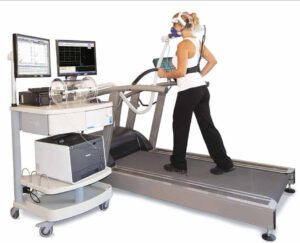
Unless your watch can be hooked to this machine, it cannot measure your VO2Max

VO2Max is tested in a specialized lab. While on a treadmill, with a mask covering your nose and mouth, while running to exhaustion, the machinery measures how much oxygen goes into your body and how much oxygen comes out. The difference between the two numbers while at maximum effort, is the maximum amount of oxygen your body can process at such speed, thus, your VO2Max. Your watch cannot measure this, regardless of how sophisticated and expensive it is.

In conclusion, VO2Max may work or not, I am not a sports scientist nor have read enough to know the extent of its reach. But what I do know is that it is not the end-all parameter to measure your progress or success. To me, a PR on my next 5K or marathon seems a much better way. And, once again, it CANNOT be measure by an equation on your watch.

It is not in the scope of this blogpost to advocate for or against VO2Max. It is not either to explain the science and value of the parameter, which, of course, does have a value.

If you want to learns more about the subject and are ready for a deep technical read, Steve Magness, head coach for the University of Houston, and an authority on the science of running, has a few articles on this, which I highly recommend. You can click on the links below to access them:

The Trap of Information Overload

The Trap of Information Overload

By Coach Adolfo Salgueiro

Information Overload

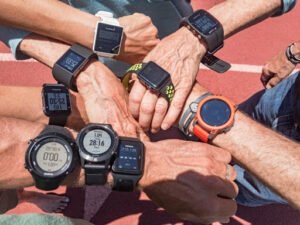
GPS watches are great, but not all the info is needed right away

Let’s start by stating that I see nothing wrong with being on Strava, having an Instagram account to share your runs or checking Facebook every so often to see what your running buddies are up to. It is great to live in a time when, via social media, we can still be in contact with people we haven’t seen in 30 years, or keeping in touch with that cousin that moved to another country and you rarely have the chance to see anymore.

It is great to being able to make social media acquaintances even though you never met them in person. In my case, I follow a Dutch marathoner named @mistermarathon on Instagram and he followed me back. When I visited Amsterdam, he took me for a running tour of the city, we had coffee and had a great talk. A few years later he visited Florida and even though I was injured and couldn’t run, we met for coffee and had another great conversation. That is awesome.

Now, there must be a limit. The data overload from social media, from our watches, from WhatsApp groups and from measuring up with strangers, is stealing the joy from a considerable portion of the running universe. And the main reason we run is because we like it. So, if something is stealing our joy, it must go or, at least, its presence must be adjusted.

Yes, a pre-run picture with your buddies is cool, but if you missed it, you can still run. Forgetting to charge your watch is not an excuse to skip a scheduled training. Checking your favorite elite runner on Strava and trying to match their trainings is a recipe for injury. Thinking that an ultrarunner in Germany or Australia or Argentina is your buddy because he likes your posts on a regular basis is the prelude for a letdown. Wanting to run from New York to Los Angeles because so-and-so did it, is insane.

It starts with regulating the consumption of information we get from our GPS watches. It is wonderful to have all the information you can possibly want at the flip of your wrist. But, with certain exceptions dictated by a specific segment of your training program, the usefulness of such information is relatively innocuous. It is just a reflection of what you are doing, not what you are doing and definitely not your worth as an athlete. You don’t have to pause the watch because you are at a red light or because you stopped 10 seconds to say hi to another runner. You don’t have to check your cadence every mile unless you are specifically working on it. And don’t get me started on VO2Max, that’s for another post. I think you get the point.

I am amazed by the data the website I synch my watch to, can provide. Most of it is great for analysis of my training, progress and to keep historical data. The more I use Strava, the more my mind gets blown away on what it can do, but I don’t follow people I don’t know. I only follow runners I train, so I can see what they are doing, this way, I can coach them better. If I want to know what a friend is doing, I call him or text him. I don’t need to know what Eliud Kipchoge is doing every day and compare him to my progress. I don’t need kudos on my run from 50 runners I don’t know.

Information OverloadTheodore Roosevelt, the 26th President of the United States, once said that “comparison is the thief of joy”, and I agree 100% with him. Of course, we can’t avoid it all the time, it is part of our human nature. But if we want to get joy out of OUR running, we need to concentrate in what WE are doing and what WE can control. We need to center OUR running life, in OUR progress, OUR failures, OUR injuries, OUR parameters.

Most of the data is useless at the time we are running. It is afterwards that we can learn something from it and adjust. If you list the top-10 reasons why you run, I doubt that “to show up my Mary in Strava” or “to have more Instagram followers than Jimmy”, or “to improve my likes on Facebook” makes the list. Let’s go back to basics. Take advantage of the tools that technology provides but don’t be a slave to them.  

Training Adjustments for the Summer Months

Training Adjustments for the Summer Months

By Coach Adolfo Salgueiro

 As summer approaches rapidly in the northern hemisphere, days are becoming hotter and humidity is ramping up with the passing of each day. We became accustomed to the mild spring (even if most of it was indoors due to the current world circumstances) and now we need to adjust to the harsh reality of the hot weather.

Training Adjustments

This Heat Index Chart by the National Weather Service, clearly explains the correlation between temperature and humidity. Be aware of it during your summer training. For a better view, click on the image to expand it.

When we run in hot weather, we get exhausted quicker and we must take precautions to avoid bad experiences or, even worse, dealing with dehydration and/or the dreaded heat stroke. Some situations could lead to permanent damage to the body or even, in severe cases, to death.

Adjusting to running in the heat is not just about drinking more water. It is about understanding the processes that will allow you to continue with your training in a safe way. Also, equally important, allowing you to recover quickly so you can keep going.

I have compiled 10 tips for you to be able to run safe during the summer. Especially if you are new to the activity or new to an area where heat is one of the considerations as you lace up your running shoes. These are by no means the end-all precautions to take, but it is a start.

 1.      Slow Down – Running in the heat is not the same as running in comfy weather. Your body is exerting itself at a higher rate to maintain the same level of perceived effort. You will need to run at a slower pace to keep the level of perceived effort. Make peace with this reality and keep moving forward.

2.      Plan your hydration needs ahead of time – Plan your route around places where water is plentiful. If that is not possible, plant water in your route, ahead of time. Remember to consume water before you become thirsty. Once you are thirsty, it may be too late to avoid dehydration

3.      Don’t overdo it with the water – With water intake is not about the-more-the-merrier. Hyponatremia is a life-threatening condition in which too much water in your body dilutes the amount of sodium in the blood. Keep yourself hydrated through your day and make sure your urine is lightly colored.

4.      Dress appropriately – Dress in light colors, which reflect mor light, thus deflect the heat. Avoid long sleeves, long pants, of outfits designed to sweat in excess.

5.      Stay connected– Well into the 21st Century is so easy to keep yourself connected while running. Carry your mobile phone during your runs and let someone know where you are and when are you expected to be back. You an also let a loved one track you in real time.

6.      Be aware of the effect of humidity – If you train in a region of high humidity, make sure you understand that displacing a saturated mass of air requires more effort than doing so with a drier, lighter one. This means additional effort to maintain the same pace as when it is dryer. Make sure to account for this difference. Make peace with it.

7.      Adjust your training schedule – If you are training for a fall marathon, make sure you are flexible on your schedule so you can switch that long run or that speed session to another day or time. Don’t be so strict that you end up hurting yourself because you refuse to push a difficult session for tomorrow.

8.      Opt for shady routes – Be smart with your routes. Plan accordingly, making sure there is plenty of shade, and places to stop should you need it.

9.      Don’t try to be a hero – Do not be afraid of stopping, cutting the run short, taking refuge in a shady place, asking for help, or calling it a day if you feel dizzy. Not only you will live to run another day, but your recovery process will be much easier, and you will be able to be back running, sooner.

Training Adjustments

Chart from www.weather.gov. For a better view, click on the image to expand it.

10.   Differentiate heat exhaustion from heat stroke – Being spent because of heat is one thing, heat stroke is quite different and also life threatening. Make sure you learn the symptoms so you may avoid tragedy. Please get familiarizes with the graphic below, which is borrowed from The US National Weather Service.

Conclusion

Running in the summer months is perfectly doable, but you have be smart. Plenty of people from hot and humid climates participate in great autumn races all over the world. New York, Berlin and Chicago, just to name the World Marathon Majors. The key is to plan ahead, be smart and always err on the side of caution, so you will live to run another day.

Squats for Runners

Squats for Runners

By Coach Adolfo Salgueiro

In last week’s post, guest blogger Amanda Long was recalling her challenge to complete 100 Squats daily for 30 consecutive days. If you didn’t read it yet, you can do so by clicking here and then return to today’s post. As you may recall, the first thing she did before starting the challenge was to document herself on what is the way to properly perform a squat. The squat is a great exercise that every runner should add to their repertoire, but, same as with all physical activity, it needs to be practiced properly so injuries can be avoided.

Squats for Runners

The squat is a multi-joint exercise that works on hamstrings, glutes, quadriceps and hips, which power and control your stride

I’ll start by stating that I am not a physical therapist or a doctor of any kind, so I am not offering medical advice here. But one of the advantages of living well into the 21st Century is that Google and YouTube are at our fingertips so we can obtain recommendations by qualified personnel when it comes to mostly every activity in life.

First order of business is recognizing there is more than one type of squat. We are only interested here in squat for runners. The thing to understand is that as a runner you only need a certain amount of strength training. Twice a week is sufficient since you are not training to become a power lifter.

The squat is a comprehensive exercise perfect to help you maintain strong legs, able to sustain the constant pounding through mils on end on the asphalt. It is a multi-joint exercise that works on hamstrings, glutes, quadriceps and hips, which power and control your stride. The stronger and more flexible you become, the better you will run and the less likely to get injured you will be. If that weren’t enough, you could also become a faster runner.

While squats can be done with a variety of weights, it is important that novices start using just their body weight. Three sets of 10 as part of your strength routine, or after running, are a good way to start. The key, as with any exercise, is maintaining the proper posture throughout the series of movements that comprise a squat. Last thing we need is getting injured while getting stronger to avoid injury.

According to an article published by Runner’s World on January 19, 2019, the sequence for a proper squat is as follows: “Start standing with feet just wider than hip-width apart, toes pointed slightly out, and hands clasped at chest for balance. Initiate the movement by sending your hips back first, then bend knees to lower down as far as possible while keeping your chest lifted. You should lower down until thighs are at least parallel to floor. Press through heels and engage glutes to return back to the starting position.”

There are numerous YouTube videos teaching the proper way of performing a squat. I can’t recommend one over the other. So, when researching, make sure you look for a reputable source, hopefully a physical therapist or a strength coach. Make sure you pick up a video for runners, not for bodybuilders. And make sure not to overdo it. 100 a day is not for everybody and certainly not for beginners.

The two videos I personally liked the best are the ones below, but feel free to search the ones that work for you. Also, to get additional information on the benefits of squats for runners, I invite you to read a Runners World article on the subject, published in January 2019, by clicking here.


Skip to content