
by Coach Adolfo Salgueiro | Feb 2, 2021 | Coaching, Exercises, List, Science
By Coach Adolfo Salgueiro
As running becomes more popular and there is more money to be invested and made in the sport, snake oils and other bogus claims permeate the popular culture and get hold of our running ethos. While some explanations made sense in the 1920s or the 1980s, science has developed and progressed enough to prove, adjust or disprove most of our understanding on these concepts and their application to running.
These are seven myths that once were held as running gospel that today, no longer apply. Of course, this is not a comprehensive list, it is just a handful of the most prevalent myths of our day and age.
1. Carbo loading before a race or long run: The carbs we consume throughout the day are metabolized by the body into glycogen, which is the go-to fuel burnt by the body for energy. The amount of glycogen our bodies can story is finite, and it is stored in the liver and muscles. Muscles don’t borrow from each other, so, that 3rd or 4th serving of pasta the night before a race does nothing for you. Actually, it will adversely affect you because your body will be spending energy digesting food it won’t need to produce energy the next morning and you may also need a potty break to unload all that unneeded food you consumed last night.
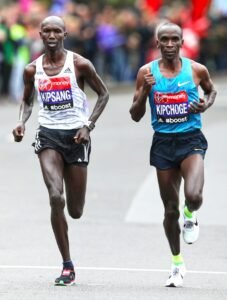
You don’t have to look like a Kenyan to be a runner. You only have to run.
2. I don’t have a runner’s body, therefore, I can’t be a runner: You don’t have to look like a Kenyan to be successful runner. You may not win the Boston Marathon, but you don’t need it to be a considered a runner. There is one and only one parameter to measure your worthiness of being labeled as a runner: you must run. Skinny, overweight, tall, short, young, old, male, female, or in-between. It doesn’t matter. If you run, you are a runner.
3. The 10% rule: According to many experts and training gurus, you should never increase your mileage run more than 10% week over week. This is an urban myth from the 1980’s not based on science. It is a guideline, not a rule. According to University of Houston Coach Steve Magness, this theory has been tested a couple of times and there was no decrease on injury rate based on this guideline, which is what this parameter is supposed to control. The amount of mileage an athlete can increase will depend on what their body structure and level of fitness are able to withstand, and this can change over time.
4. Only fast running will make you fast: It is intuitive to think that to run fast you need to train running fast. And fast running is an important part of the equation. But to maintain your speed during a long run, you need to train your aerobic system and teach your body to burn fat as fuel, which can only be done by not taxing the body into only using the immediate sources of energy (glycogen). No one is stating you only need to run slow, but you do need to make slow running part of your training to run fast.
5. Stretch before you run: Cold static stretching is not recommended when your muscles are unready for such a movement. It is a recipe for injury. Dynamic warm up moves such as lunges, leg swings, jogging in place and hip openers will get your muscles warmed up, your heart rate elevated and your core temperature ready for action. Stretching after your workout could be beneficial but it is not required. If it feels good, go for it .Personally, it makes me feel better, so I do it.

What may have made sense in the 1980s regarding the 10% rule or carbo loading, has already been disproved by science, yet the myths are still holding strong.
6. If you have energy for a fast final kick, you didn’t give your all: When we kick at the end of a race to shave off a few seconds off the clock, push for that PR or pass that last few runners, it is not because we did not give our all out there. According to the Central Governor Theory by Tim Noakes, once the brain realizes we are almost there and it will not run out of resources, it unleashes the reserves. Therefore, usually, nobody dies at the end of a race. So feel free to kick at the end if you have it in you. It is your brain is giving you permission to do so.
7. VO2Max is the end-all measurement of performance: As popular as this measurement has become thanks to our Garmin watches giving us constant updates, what it measures is the maximum amount of oxygen our bodies can handle at maximum effort. If we don’t know what it means and what we can do with it, it becomes useless. And, by the way, VO2Max cannot be measured by an algorithm in your watch. So don’t overthink this one.
Did I miss anything?
by Coach Adolfo Salgueiro | Jan 26, 2021 | Guest Perspective, Opinion, Reflection
By Michael D’Aulerio*
 You may not understand what’s about to take place. There’s a great deal of wear and tear coming your way.
Ups and downs, countless miles, and a whole lot of struggle.
However, I can promise you that if you stick with me . . . in the end . . . when you are completely broken, worn down, and beaten . . . when layer upon layer comes off . . . a funny thing happens.
With less, you will feel more.
…and you will experience a profound wholeness that you never knew existed, safe and enclosed, back in your original little box.
It’s going to be a beautiful struggle of a journey, but a journey worth taking.
Will it be easy? No, every step can be a painful step to the finish.
But will it be worth it?
YES, every step of the way . . .
With much love and gratitude,
~The One from Above You, Running with You, Every Step of the Way
Published in this blog with permission from the author.
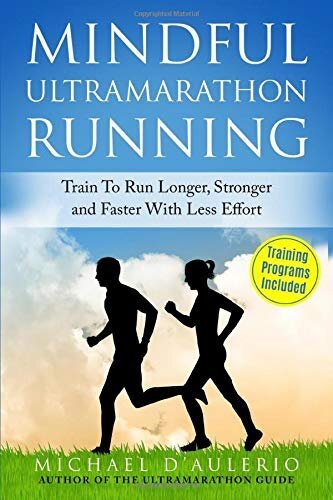
A passage from his new book “Mindful Ultramarathon Running”.
* Michael D’Aulerio is an accomplished ultrarunner and author. A dad, husband, sales professional, a brand ambassador athlete, and has completed over 50 ultras. You can follow him in Instagram at @longrunliving.

by Coach Adolfo Salgueiro | Jan 19, 2021 | Article, Science
By Coach Adolfo Salgueiro
One of the rituals of my running group after our regular Saturday long run, is to have a coffee at a local Colombian bakery, located right in front of where we park to meet. We specifically chose that spot because of the great coffee this bakery serves. This is how we kick start the social side of our weekend and one of the elements that keep bringing our runners back. A couple of weeks ago I ran with a friend and the end I offered to buy her coffee, but she said she was detoxing from caffeine, so she would pass.
This had me thinking about the relationship between running and caffeine. Is it good? Is it bad? How much is too much? When should we consume it, or not?
I found an article by Pamela Misevich Bede, from March 2015, in the Runner’s World archives. The author’s credentials in dietetics seemed solid enough to take her word on the issue.

Caffeine is the most widely available stimulant of the central nervous system in the world. It is legal and unregulated almost everywhere.
Before we get started, I want to state that while researching for this post I did not find any studies or articles by experts stating caffeine and running don’t mix. Quite the contrary, they pair pretty well. As usual, you need to follow your doctor’s instructions. If you shouldn’t be consuming caffeine for any reason, do not change that indication just because you are going for a run.
Caffeine is the most widely available stimulant of the central nervous system in the world. It is legal and unregulated almost everywhere. It is naturally found in the leaves and fruits of plants such as coffee, cacao and tea. You can also find it in soft drinks, energy drinks, gels, pills and many other products.
The benefits of consuming caffeine before and during your run go beyond just a jolt of energy to get you started and/or keep you moving. “Caffeine has a number of physiologic effects that can help improve athletic performance” says Misevich Bede. “It is rapidly absorbed in the gastrointestinal tract and is a mild stimulant that affects multiple organ systems”.
The benefits of using caffeine to stimulate your run include improvement of mental alertness, boosting of pain tolerance, enhancement of fat use as fuel (which extends the use of your finite storage of glycogen), and a possible increment in speed, among others.
But beware. You need to know how this additional stimulus affects your systems before you go overboard, especially during a race. Caffeine consumption can also cause gastrointestinal issues, headache, jitters, heartburn and increased urination, among others. So trial-and-error to figure out what works for you is a must. And, as always. what works for your friends is not necessarily what works for you.

An 8 Oz cup of black tea has 30-80 mg of caffeine while a Starbucks espresso shot has about 75 mg. A cup of green tea has about 35-60mg/8oz.
According to the aforementioned article, 3-6 6mg/kg body weight (1.3-2.75 mg/lb.) is recommended for endurance exercise. It is important to note that with caffeine, more is not necessarily better. A higher dose does not correlate with better performance. Also, it is more effective if you abstain from caffeine consumption a few days before your running activity, but don’t forego your morning cup of coffee if you can’t function without it.
Since the mg/kg measuring unit is difficult gauge, put it in perspective by knowing an 8 Oz cup of black tea has 30-80 mg, depending on the brand and type, while a Starbucks espresso shot has about 75 mg. A cup of green tea has about 35-60mg/8oz.
Many runners depend on a mid-run consumption of caffeinated products to maintain their performance. Fortunately for them, running consumable products such as gels, gummies, beans and sports drinks, all have “spiked” options. They usually carry from 25-100 mg per serving. It is key to understand how much a serving is, so you don’t overdose, and thus, end up running for the bushes or with gastrointestinal discomfort.
There is nothing shady or illegal with a mid-run pick-me-upper. Most, if not all professional runners, openly use it. If you are not used to consuming caffeine but still want to reap its benefits with a mid-run pick-up, make sure you start with the smallest dose available, so you know how your body will respond. Once your body gets used to it, then figure out how much is enough. What works best for you, not for your friends.
And then, if you want to enjoy your post-run coffee with your buddies on a Saturday morning, I know of a great Colombian bakery in Dania Beach, Florida, and an amazing running group that I can recommend you.
by Coach Adolfo Salgueiro | Jan 12, 2021 | Announcement, Coaching
The athlete’s name is found multiple times in the Guinness Book of World Records
Foultips.run is pleased to announce it has reached an agreement to train 12-time world record breaker Carlos Coste to his first ultramarathon. The Venezuelan-born athlete is training to participate in the Zion 50K race, which will take place through the Southern Utah desert, this upcoming April 10th, 2021. This will be his first ultramarathon race.
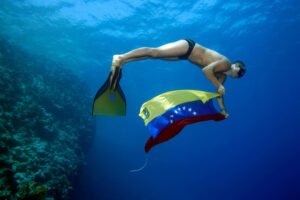
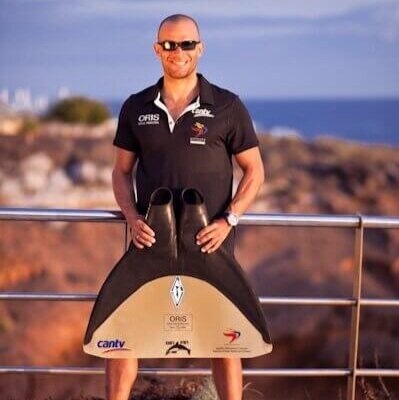
Coste is a world class athlete in the sports of apnea and freediving (Photos courtesy of Carlos Coste).
Coste, 44, is known worldwide for his superhuman feats as a freediver. He started training in apnea and free divining in 1996 and promptly broke several Venezuelan national records. In 2002 he broke into the world scene with his first couple of world records. In October 2003, he became the first human to achieve a free immersion dive of more than 100 meters (328 ft.), when he went down 101 meters (331 ft.). This was certified as an AIDA and Guinness World Records. In 2004 he became the first freediver to pass 100 meters (102 m/334 ft.) in Constant Weight, a record he later expanded to 105 meters (344 ft.) in 2005. After rewriting the record book in the sport, in November 2010 he broke another Guinness World Record in the Yucatan Caves, with 150 meters (492 Ft) of Dynamic Apnea at the Dos Ojos Cenote.
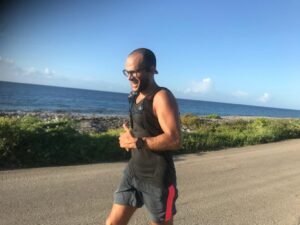
He wants to run for the rest of his life while combining his new found passion with the sports that made him a household name. (Photos courtesy of Carlos Coste)
“I discovered my passion for trail running about two years ago”, stated Coste, “and, in addition to my freediving career, I would like to run on a regular basis for the rest of my life. I contacted Coach Adolfo [Salgueiro] to help me improve my endurance and skills without risking injury. His blog has connected me to new concepts, as well as his knowledge and passion for the sport.”
There are many challenges to this particular training program, especially because the athlete lives at sea level in the Caribbean island of Bonaire, while the race will start at an altitude of 3500 feet (1067 mts) and will reach a maximum elevation of 5500 (1676 mts). The difference in weather between both locations will also be a test of wills.
“It is a big challenge to train an athlete of Carlos’ pedigree, especially for this race”, said Foultips.run Head Coach, Adolfo Salgueiro. “We want to make sure he can compete at the same high standards he is used to. At the same time, he needs to be trained in a safe and sustainable way so he can finish his race satisfied with his results and injury free”.
You can follow Coste’s training and progress via his Instagram account (@carloscoste1) and by Strava . For more information on his athletic achievements, you can visit his website at https://deepseabonaire.com.
Adolfo Salgueiro is the head coach at Foultips.run. He currently helps runners, both in person and online, achieve their running goals, from 5K to ultra-marathons. He is certified by the Road Runners Club of America as one of only seven Level II coaches in the State of Florida and one of only two in South Florida. If you want to contact Coach Adolfo, click here.
by Coach Adolfo Salgueiro | Jan 5, 2021 | Article, List, Reflection
By Coach Adolfo Salgueiro
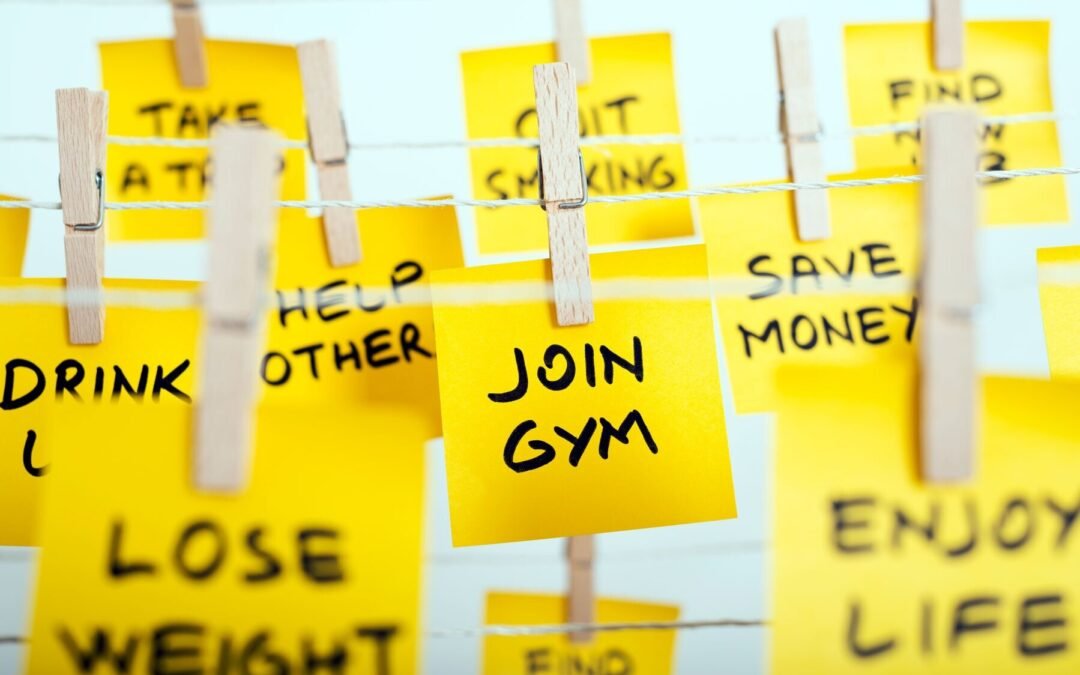
Based on where you are in your running life, your goals for a new year will vary. While for some people, making it to 1000 miles may seem like an insurmountable goal, others have been accomplishing this distance year in and year out. Some athletes break 1:30 in the half marathon on a bad day, others struggle to go sub-3.

Making achievable New Year resolutions is the key to keep your athletic goals relevant.
The point here is that to set up your running goal, or goals, for this brand-new year, it must be done in an individual and feasible fashion. These goals can’t be compared with what your friends are doing or what you were able to do when you were a young runner; and they can’t be so out-of-touch that you will be off track at the first sign of trouble or the first day when life gets on the way. Also, you don’t want to get injured because of overstress.
If you haven’t etched in stone your running goals for 2021, or if you haven’t thought about them yet, do so, now. This is what will keep you focused, especially while it is uncertain if and when normal racing will return.
The following goals ideas you may consider:
1 – 1000 Miles – Depending on where you are in your running life, one thousand miles could be a challenging yet achievable Goal. You can also set your eyes on 1500, 2000 or 3000. The key is to break it down in small chunks so you can visualize it. I.E. For 1000 miles, this is just 83.33 miles per month, or 4.8 a day if you run 4 times a week (way less if you include a long run one of those days). Last year, over 1000 members of the 1K Club made it to the 1000 mark. If you have never done it, this may be a great goal for the year.
2 – One more day of activity per week – If you don’t want to focus your running year on counting mileage, adding another day to your training is a good way to increase your activity. If you run only 3 times a week, that 4th day becomes feasible. If you run 5 or 6, this may not be a goal for you, but you can always add a yoga class, a cross training session or an easy, long recovery walk to your week. The key is to increase your activity if you feel you can fit it in without sacrificing your recovery.
3 – Strength training – It is the most neglected part of every training cycle. When we are focused in our training and our work or personal life gets on the way, strength training is the first aspect of the program to be sacrificed. As runners, we pound on our musculoskeletal system on a daily basis. Consider that every in mile you dump 3-4 times your weight into each leg, about 800 times. This is about 2500 times per leg, per 5K. If we don’t prepare our bones, muscles, tendons and ligaments to take on the workload, they will break down, and you will be rehabbing instead of running.

Sleeping 7-8 hours a night will improve both your athletic and your personal life (Photo: Pexels.com)
4 – Specific Distance PR – This goal can be handled in two ways. A) You can set up your sights and training on one specific distance where you feel confident performing and go for your best time, ever; or B) you can get out of your comfort zone and pick up a distance where you don’t feel confident and go for it. If you’ve been chasing the elusive Sub-2 half marathon or sub-3:30 marathon, you have a full year to make it happen. Or, if you dislike the 5K because it is too short or too fast; or if you are afraid of what lies beyond the mythical 13.1, then you have a few challenges right there.
5 – Sleep more – It may sound odd that sleeping more is part of a running goals list for a new year, but sleep is one of the most overlooked aspects of recovery, and thus, training. It is also the one that may take you down, if not with an injury, at least by robbing you of your chance of peak performance. In our society, lack of sleep has become a worthless badge of honor, while in reality (and science), our sleeping time is key to our recovery both as athletes and as functional human beings. The benefits of a hard workout are not seen once you finished, the body needs to repair itself and adapt to the stress we just put it through. This doesn’t happen with an easy 5-miler on 5 hours of sleep. The body heals itself and flushes the day’s metabolic waste while we sleep. So, 7-8 hours a night is part of your daily training and a worthwhile running goal for 2021.
Of course, these are not the only athletic goals you may set up for 2021. They are just ideas to help you define what you would like to achieve this year.
What are your running goals for 2021?