by Coach Adolfo Salgueiro | Aug 2, 2022 | Coaching, Science
By Coach Adolfo Salgueiro
As a running coach, athlets often ask me about weekly mileage. How many miles should I run if I want to complete a marathon? Can I only increase my mileage by up to 10% a week? Why can so-and-so run XX miles a week and I am running only half of that? Am I losing fitness if I lower my mileage for recovery purposes for a week or two? And many, many more.
The right mileage is as individual as each runner. There is not one number that applies to everybody (Photo: Pexels)
Well, the answer to all these questions is the same. It happens to be the same answer to most running questions: It depends.
They key for any runner looking to improve on their times, distance, pace or fitness is to understand that the main goal should be based on performance, not on a pre-set number of miles. It is a matter of achieving your objectives while remaining healthy and injury-free. I recently read that you should run in between “as much as you can get away with and as little as you can get away with”. Genius!
The appropriate mileage for a runner is as individual as each athlete. It depends on a series of variables which need to be dialed appropriately so progress won’t be hindered, and injuries may stay away from the equation. Such variables are:
Goals: Before you figure out what is the right mileage for you, set up your goal. If you want to run your first or your best 5K, you will not run the same mileage as if you were training for a marathon. At the same time, a marathoner may need to run 100+ miles per week if he wants to run 2:20, while that number is a prelude to severe injury for a runner trying to break 4-hours in the same distance.
Age: Even the elites slow down as they age. They still run more than you or me, but they require more recovery in between vigorous efforts. What you could do in your 20s or 30s no longer applies in your 50s or 60s and you must accept it as part of the aging process. Look forward to competition in your age group and to be the best you can be at whatever stage of your life you’re currently at.
Experience: If you have been running for 30 years, your body is adjusted to a certain pounding on its bones and soft tissues. This alone will allow you to run longer. Not because you are holier than thou, but because you have adapted. Understand that not because you have adapted, your body can take unlimited mileage, so don’t overdo it either.

Miles are dictated by the interaction of many variables, such as goal, pace, experience and injuries, among others (Photo: Mikhail Nilov, Pexels)
Pace: Most runners want to run as fast as we can. We would love to set up PRs in every race, but that’s a chimera. So, we adapt to reality. Running slow is the key to running faster, for many physiological reasons that are beyond the scope of this post. Understand that the long run is about spending more time on your feet, pounding the surface, not about running faster. The sooner you’ll grasp and accept this concept, the faster you’ll be running.
Injuries: Certain injuries will require you to stop running altogether. For days, weeks or even months. Others will force you to reduce your mileage but not necessarily stop. Be smart and make sure you understand what your body is communicating. A shorter mileage today may be the key to avoiding zero-mile months down the road because you overdid it and now you are injured.
The 10% Rule: This is an urban myth. This is not a magic number, not even a well-reasoned percentage. If you are an experienced runner and your body has done it recently, you can increase that mileage by as much as you can tolerate it. If you are coming off 10 years on the couch eating Doritos and drinking Coke, it is advisable to take it easier. Less than 10% per week.
Sure, there is always the freak of nature that hit the gene lottery and can do whatever they want, for as long as they want at whatever pace they want, with little to no recovery time. Yes, they exist, but those are outliers. Do not compare yourself to them. It would be like comparing yourself to Eliud Kipchoge and not understanding why you can’t run a sub-2 marathon. So, be smart.
The essentials for a solid running plan are flexibility and adaptability. It must be dynamic. The best is always an individual plan, personalized just for you. But it is understandable that this is not in everybody’s reach. Generic plans downloaded from the internet may be ok, but are dime-a-dozen, with the key operating word being “generic”. If you are to use one of these, make sure you are not so rigid that you’ll end up hurt because you did too much or undertrained at the starting line because you did too little.
by Coach Adolfo Salgueiro | Mar 1, 2022 | Book Review
By Michael P Connelly
Reviewed by Coach Adolfo Salgueiro
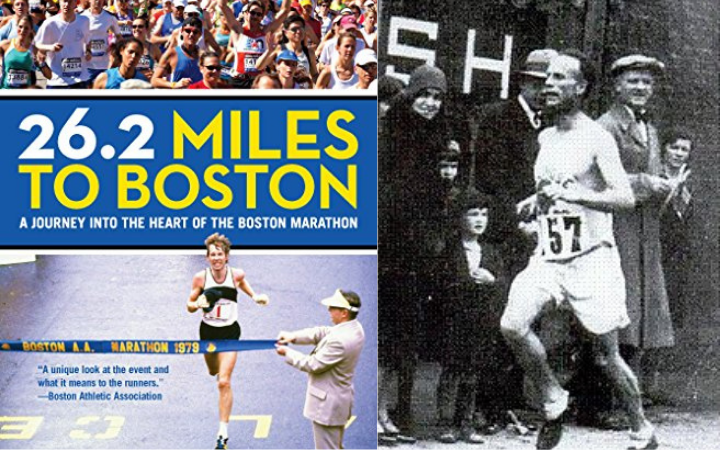
“The beauty of the Boston Marathon is the way each mile takes a life of its own and has its own personality”. This is the first line of the Mile 13 chapter of the book 26.2 Miles to Boston, and it reflects the spirit of the book. The allure and the charisma of the Boston Marathon doesn’t need much explanation in a running blog. It is more than just one of the Majors. It is more than the oldest of marathons. It is royalty among foot races. It is the Mount Olympus of running achievements.
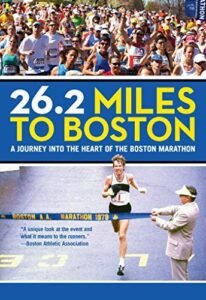
You don’t have to be a Boston veteran to enjoy this wonderful book about the race.
Ran yearly since 1897, it is the most iconic and prestigious marathon. Qualifying for Boston is either the goal or the dream of most runners, even if they know they will never accomplish it. The course is hallowed ground both for those who aspire to run it one day and to those who have ran it 50+ times.
Michael P. Connelly (not to be confused with Michael Connelly, author of detective and crime fiction novels) is a lifelong Bostonian, who has focused his writings on the local sports scene. He finished the race in 1996, so he speaks from first-hand experience. The premise of the book is to move the reader along the route in a fluid and linear fashion, mimicking the race.
Originally published in 2014, Connelly goes mile by mile through each nook, cranny, obstacle and topographical feature of the road that will take a runner from Hopkinton to Boston, as he/she goes through eight cities. The rich history of the race, its traditions, lore, highlights and iconic participants are expertly interwoven throughout the story. The rich history of the Commonwealth of Massachusetts and each one of the eight municipalities is well researched and told in an enjoyable manner.
From the foreword by four-time champion Bill Rodgers to the post-race celebration, the author guides you through every bit of history that has built the Boston Marathon legend through the 117 years until the writing of the book. This upcoming April 16h will be the 126th edition of the race.
Because the book was published in 2014, it touches briefly on the 2013 bombing. A few references are sprinkled here and there and, after the 26th mile, the story is divided into “385 Yards of Treachery”, where the author expands on the episode, and “385 Yards of Triumph”, where he exalts images of success that have highlighted the finish line area throughout the decades. Not sure if this happened because the book was written prior to the 2013 and he had to adjust, or because the author refused to let this tragedy become the protagonist of the race’s rich history. Regardless of the reason, I believe this was the right call.
Beyond the geography, the history and the landmarks, the author choses to expand one topic per mile. These include unknowns surging on early leads, the contribution of international runners, human stories, cheaters, great performances and performers, unethical tactics, etc.
Mile 5 goes in detail through the story of female inclusion in the race, which goes beyond the 1968 Kathrine Swtizer/Jock Semple tackle. Mile 8 delves into the rich history of cheating in this race, which starts in 1909 with Howard Pearce and climaxes in 1980 with Rosie Ruiz. Mile 9 goes into the addition of handicapped athletes and details the birth of Team Hoyt. Mile 11 expands on the war years and here you learn amazing tidbits, such as the fact that the 1918 race was a relay for military teams.
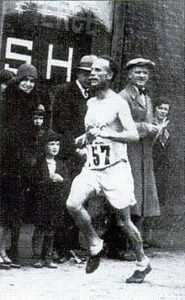
Seven-Time Boston Marathon Champion, Clarence DeMar.
The book peaks at Miles 19 with the Newton Hills and Heartbreak Hill at Mile 20. “The fibs the runners told themselves on the flats of Framingham are meeting the truth on the hills of Newton”, the author explains. His description is so vivid that even if you haven’t been there, you can feel the pain and the agony of the 700-yard uphill stretch as if you were struggling through it yourself.
I haven’t run the Boston Marathon, yet I was able to enjoy this book immensely. I am sure that for someone preparing for the race it will be a powerful addition to their training plan. This way they can understand what they’ll go though and enhance their Boston experience. At the same time, I assume that for someone who has ran the race, it could mean a lot more given their firsthand experience on the course.
26.2 Miles to Boston is a beautifully written book, worth the investment in time and money. It can be enjoyed by anyone who understands the meaning of the Boston Marathon to the running community.

by Coach Adolfo Salgueiro | Jan 25, 2022 | Article, Coaching, Personal, Reflection
By Coach Adolfo Salgueiro
On Sunday, January 16th, I participated in the 50th anniversary edition of the Chevron Houston Marathon. I want to start by stating that it was one of the most amazing experiences I’ve had in 40+ years of racing. From the organizational perspective, the race is at the same level of any big-city event. It is up there with any Major. On the personal side, it was uplifting. From the coaching side, it was memorable.
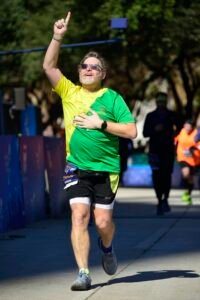
About to cross the finish line with a hand in my heart and the other one thanking The One who made this miracle possible
I knew the event’s center of operations was the George R. Brown Convention Center, which is huge. I never expected it to take the entire place. The execution of the bib pick up was flawless even though a bit more signage would have been welcome for the sake of out of-towners, such as me. I did not visit the expo, though. Friends told me it was a smaller version, given the Covid reality of the world.
Running morning was cold, cold, cold. Thirty-six degrees when we left our Airbnb. But we were able to find refuge, toilets and a place to rest while we waited for our corrals to open. Everything was so well organized and orderly that your only worry was walking to the start. The whole shebang was taken care of for you.
The course was flat, sans an overpass and two, minor underpasses. We ran through beautiful areas of the city and crowd support was solid without being overwhelming. There were so many port-a-pots throughout the race that I never saw a waiting line. There were even urinals at the starting line, first time I’ve seen this in the US. I stopped about mile 14, not because I had to but as a preemptive measure, just because I could and there were no lines.
Last mile, back in downtown, was stunning. Lots of fans and photographers lining up to welcome back the runners. After picking up our spectacular finisher’s medal, we went into the Convention Center to get our finisher’s shirt and food bag. The only unflattering thing I have to say about the race is the shirt. It was a cheapy fabric, fits poorly and the design was nothing to write home about.
I fully recommend this event to anyone interested in a big-city race. This is a Marathon-Major-like organization without the Marathon Major label nor price tag.
COACHING EXPERIENCE
I had a wonderful experience with my four coached athletes in the race. All three marathoners set PRs even though two of them contracted Covid just three weeks before the race. This hindered their expectations and the size of their PRs, but they both achieve their A-Goals through courageous performances. The half marathoner was able to cross the finish line strong, healthy and with a big smile on his face. His goal was finishing after a long hiatus, and that was accomplished, too.
All runners trusted the process, followed their training diligently and executed their race plans to the tee. Thus, the results.
There is nothing more satisfying for a coach than one of your runners telling you: “Thank you. I couldn’t have done it without you”. Even though it sounds (and it is) self-serving, it reminds you that, even though they all had in them the ability to achieve what they just did, your guidance made a difference in this runner’s race. And that is priceless.
MY RACE
On the personal side, I was able to complete the Houston Marathon (my 11th), just 207 days after open-heart surgery. I trained with a race/walk protocol that allowed me to make this a reality, despite having time for just two long sessions (16 and 17 miles). Yet, in just four months, I was able to complete the race in 5:16:45. The time is nothing special, but on my race, time was irrelevant. It was all about crossing the finish line.
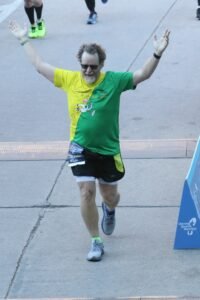
Even though it was my 11th marathon, this finish line was special.
The chilly weather was helpful. I ran the first 7 miles biting an 11 pace, and from there started my walk/run protocol of .18/.82 (weird splits, sure, but it was where, after much practice, I felt more comfortable). I reached miles 16, 18 and 20, tired but strong. Legs started to hurt reaching miles 21 and 22 and after the walking break for Mile 23, the legs just stop firing. I tried to restart the running, but it wasn’t happening. I ran some quick math and realized that if I restarted now, I could go sub-5, but the legs were shot. Then I realized that being at Mile 23, 30 weeks after OHS, was miracle enough and I wasn’t going to let the clock dictate the terms of my happiness or what God was allowing me to do. So I walked most of the last 5K with a big smile, never resenting the time lost or wondering why I didn’t go for the half.
I crossed the finish line with teary eyes and a couple of seconds later, I hear the unmistakable screams of my beautiful wife welcoming me. Unfortunately, she was on the other side of the street, and it would take about an hour for me to hug her. But the fact that she witnessed the miracle of my finish, firsthand, uplifted my spirit.
Houston was a spectacular experience in every sense of the phrase. As a runner, as a coach and as the protagonist of something improbable. Because what I personally accomplished is so unlikely that it can only be explained by the divine intervention of God, through me. This is what proves that it is a miracle. Sharing it with my friends from the No-Club Runners multiplied tenfold the experience.
I can’t wait to see what’s next!
by Coach Adolfo Salgueiro | Jan 18, 2022 | Article, Personal, Reflection
Orange Bowl 1983
By Coach Adolfo Salgueiro
I’ve written about my first marathon in bits and pieces throughout this blog, but I’ve never written anywhere about my entire recollection of that 1983 Orange Bowl Marathon. This upcoming January 22nd will be the 39th anniversary of my race. So, before my memories keep fading away, I better put all I can recall into paper (or digital format).
I was a 17-year-old high school senior living in Caracas, Venezuela. I always kept active by running, practicing karate, baseball, soccer, tennis, hiking, swimming, biking and whatever came along. Running a marathon was a goal somewhere on the backburner, but, thanks to my dad, I got the chance to fulfill it earlier than expected.
I believe we arrived in Miami the day before the Saturday race. We stayed in a hotel in downtown and went to a spacious hotel ballroom nearby, to pick up our bibs. I remember being blown away by the technology of the day, when my bib was printed before my eyes, instead of being ready ahead of time. I don’t recall an expo, but that doesn’t mean it wasn’t there. I read, maybe in that day’s Miami Herald, that none other than the legendary Bill Rodgers was the favorite to win.
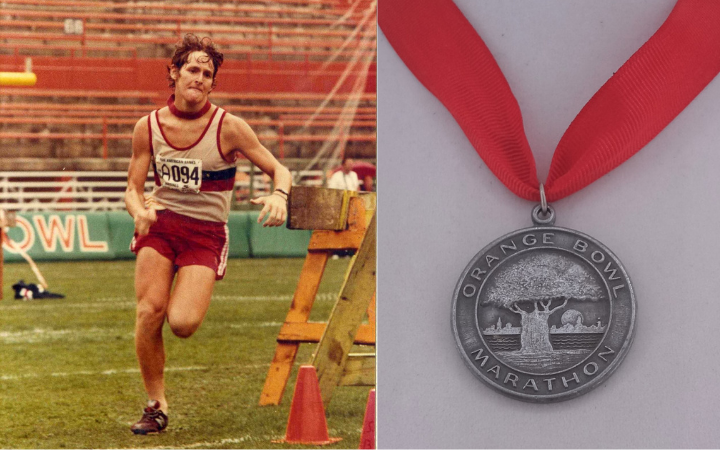
This is the only picture I have from the race, but it is one of the best running pictures ever taken of me. Check out the detail of the untied shoe with no socks, to which I make reference, later in the post.
I also recall my dad buying me a Casio stopwatch, so I could keep track of my marathon time. I had that Casio for years. I don’t remember how I lost it or when it broke, but I’ve seen it in pictures from the early 90s.
On race morning we met with the Venezuelan runners, most of them where my dad’s buddies, at the hotel lobby. The one thing I vividly remember was asking for a coffee at the hotel bar and getting a gigantic cup of black, diluted, disgusting American coffee. At home, a small cup of good coffee with a generous amount of milk would start off the day.
One of the runners had rented a sports car and somehow, more people than was safe crammed inside for a short drive to the majestic (at lease in my eyes) Orange Bowl Stadium. This is where the Miami Dolphins, who were playing the Super Bowl next week, held their home games.
Before time chips, you had to present yourself and your bib to the organizers, so they knew you were at the starting line. Somehow, we could not find the registration table. We were looking for it like crazy until we realized this was going to be based on the honor system.
I recall nothing about the starting gun, crossing the starting line or conversations along the way. I do remember, though, my dad constantly reining me in because I was going too fast. He also reminded me to take water every so often, as the humidity was exceedingly high.
My dad has one indelible memory of the race. After a rainy patch along the way, we found ourselves running next to a woman with a drenched, white outfit that left nothing to the imagination. At 17 and with raging hormones, I couldn’t but get distracted by the magnificent side show. My dad had to bring me back to the race at hand. There is no marathon talk in my household where this story doesn’t come up.
The course had two in-and-out segments (Coral Way and Coconut Grove). Both times, as we were going in, the pack led by Bill Rodgers, was coming out. For a 17-year-old kid from Caracas, seeing the legendary Bill Rodgers, running in the same race within a few meters from each other, was the highlight of the event. It was the equivalent of participating in the same Monaco Gran Prix with Niki Lauda or playing in Veterans Stadium, side-by-side with Mike Schmidt. It was that improbable.
Sometime during the Covid lockdown of 2020, my friend Starr Davis invited me to participate on a Zoom call with Rodgers. At the end, I had the chance to asked him what he remembered form the 1983 Orange Bowl. Surprisingly, he recalled a lot. Starr recorded the interaction with her cellphone. I invite you to check the video, which I have included right here.
Most of my memories of the 1983 Orange Bowl Marathon are from the last 7.2 kilometers (4.5 miles). I recall them vividly because I suffered miserably. My dad and I agreed to run together for 35 kilometers (21.8 miles), and from there, each one would run his own race. By kilometer 35.1 he had already left me in the dust. I slowed down and started walking. I was drenched, tired, hungry, and questioning what the fuck was I doing there, instead of being at home in Caracas, maybe getting ready to play baseball with my buddies.
At one point, it had to be closer to the end, I took my shoes off and started walking on my socks. The shoes were heavy, and I considered just tossing them to the side, but then I thought of my dad getting upset, as they were the shoes he let me borrow, so I decided to keep them. Wise choice.
A friend of my dad, the late Jose Ortega, saw me close to the end and ran a bit with me with words of encouragement. I promised him I would finish so I discarded my socks, put on the shoes, which I did not tie, and started running. The next memory I have is of my dad and some Venezuelan runners at the entrance of the stadium, cheering me on. As I hit the grass, I started sprinting like crazy. To this day I can’t figure out how my shoes didn’t fly off my feet. Check them in the accompanying picture. Not only untied, but open at the top.
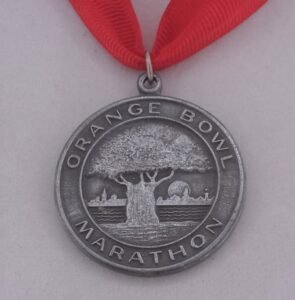
37 years later, I got my hands on a medal from the race
I lifted my arms as I crossed the finish line and, one way or another, I found my dad and collapsed. My first thought was: “When are we doing the next one?”
I knew my time was around 4:11 but I did not know for sure. I wouldn’t find until months later when I got my finisher’s certificate in the mail, that my official time was 4:11:11. I also got a proof of one picture in case I wanted to order it. It is the only image I have from the entire experience. Thank God is one of the best pictures ever taken of me running.
In those days, medals were not ubiquitous or for everybody, and I did not get one. In September 2020 I found one on eBay and jumped on it. If you care to read about the 37-year medal saga you can check the blog post I wrote about it by clicking here.
Sorry if this blogpost ran longer than usual, but I am trying to recall as much as I can. Yes, I could have waited until next year, the 40th anniversary, but by then, I may forget something else. And I can always repost.

by Coach Adolfo Salgueiro | Nov 9, 2021 | Article, Reflection
By Coach Adolfo Salgueiro
When set up to prepare for a race, we usually do so with a specific goal in mind. Maybe it is a PR. Maybe we want to go under a certain arbitrary round time like a Sub-4 marathon, a sub-1:45 half or a sub-50 10K. Maybe, given a certain personal issue, just finishing in one piece is the objective. They are all valid goals worth pursuing.
But life can and usually gets on the way of our perfect plans. Stars may not align on race day and then your car breaks down on the way to your race or there’s a traffic accident that makes you miss the start. Or it was too hot and humid, or you started too fast when you should have known better. It happens. So, what to do?
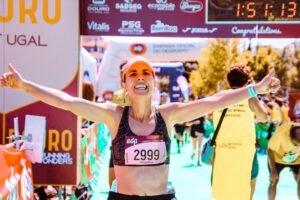
Sometimes, achieving goals B, C or D can still mean a successful race (Foto: Pexels)
It may sound obvious, but in the midst of the frustration, runners don’t know how to react and adjust. So I will spell it out in a direct manner: Set up A, B, C and even D goals for your races. And if your race doesn’t go as planned, sometimes it is good to have a back-up race to fall on to.
I follow a sub-elite runner in Instagram, who ran the recent Boston Marathon. In his post-race recap he said how his objectives kept changing throughout the race. His main goal was giving it his all to go sub-2:30, but as the miles went by, he realized this was not going to happen, so he decided to settle for a PR. In the 28th Km (17th mile), he suffered cramps that forced him to slow down. He ran some math in his head and realized he could still go Sub 2:40. At the end, 2:40:31 was his time. His final assessment was that despite not accomplish any of his preset goals, he wasn’t upset because he gave it all he had for the day. And he also knows this is not his last race.
This is the epitome of setting up multiple goals and completing a solid race despite facing multiple obstacles throughout. It is about learning to face and overcome those issues on the fly. It is about conquering what we are unable to control and yet, conquering those obstacles.
Just as it happens with the performance in a single competition, there are times that even the best prepared runners, or Goals R, S and T can’t cover a disappointment. When that happens, embrace the failure, learn your lessons, and move on to, or set up, your back-up race.
Back Up Races
It is not only a bad race that needs redemption. Sometimes circumstances beyond your control get in the way and derail your plans in a catastrophic manner. A second chance to perform is what will save the time, effort, money, and emotion you have invested in your training.
A few weeks ago, one of my trainees was on the plane to the Berlin Marathon. Door closed. Seatbelt fastened. Pre-flight instructional video played. But then… just like that… they kicked everyone out of the plane. The flight was cancelled. The only alternative given by the airline would put him in Berlin on Saturday at 5PM, with barely any time to pick up his bib and rest to make it to the starting line.
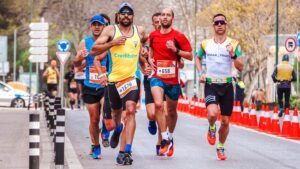
Make sure you live to race anothe day, by being smart before you tackle the marathon agian, after a debacle. (Photo: Pexels)
This runner was lucky enough that had enter several Marathon Major lotteries and hit two of them. So, despite the frustration, at least he had Chicago, two weeks later. The plan had been to push in Berlin and coast for fun in Chicago. Now, the plan is to push in Chicago, even though the taper was extended to 4 weeks. Notwithstanding the disaster, he was able to put his training to effective use and ran 3:24. Below his expectations but solid enough for his abilities and given the circumstances.
Even though having two marathons lined up worked for this runner, this time, it was circumstantial. Having a marathon to fall onto is not necessarily the best strategy. A marathon requires a level of commitment and effort that for most runners it requites just all you’ve got. So, having another marathon in store just in case, in a few weeks, may mess you up subconsciously and may alter your subconsciously because you know you have another race coming up, so you can play it safe, or run too fast and crash.
My recommendation is that if you need to pick another marathon because you missed your goal race, there are plenty or marathons to fall back to. You won’t lack for options, so you don’t need to plan ahead. But, if you had a crappy marathon and need to redeem yourself, be smart, recover properly and reassess where you are and where you want to be eventually before doing something foolish and getting hurt.
You can run multiple 5Ks to make up for a bad one. You can run another half marathon or two, or three, to make up for a bad race. The marathon is a different animal.