
The Power of Being Constant

The Power of Being Constant

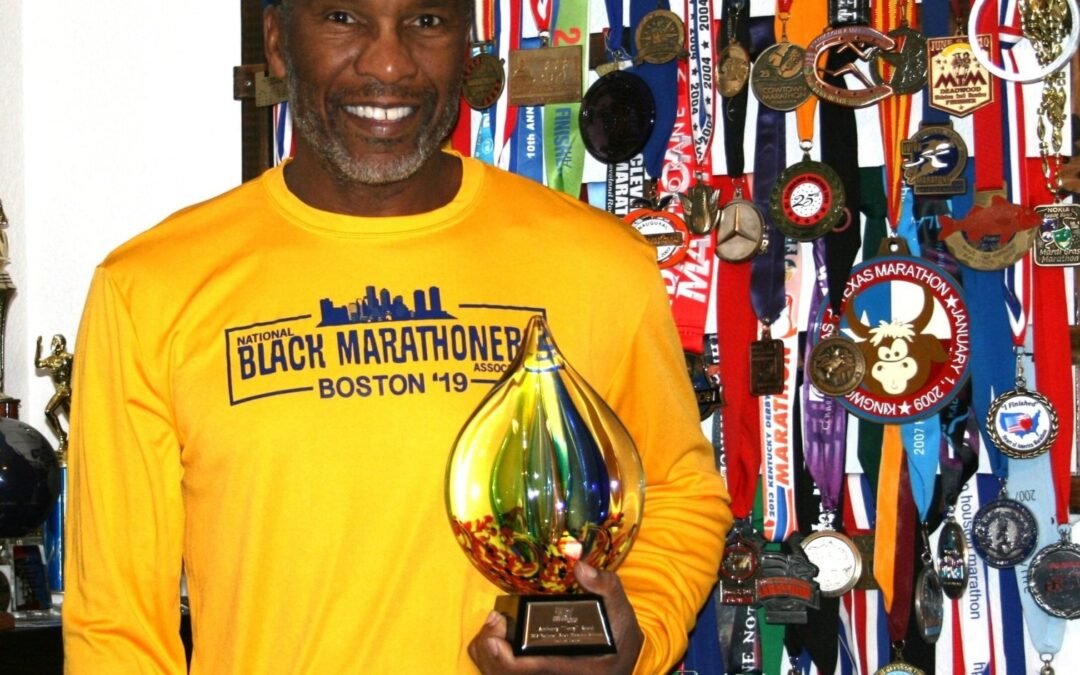
By Anthony Reed *

Editor’s Note:  This is a posting from Mr. Reed in our RCAA Coaches Group. I requested, and obtained, his permission to repost it here. I believe it shows the power of remaining constant and relentlessly moving forward towards your lifetime goals and its compounding results.


Life-Long Goal Setting: Maintaining a three miles per day in average.

 
Being Constant

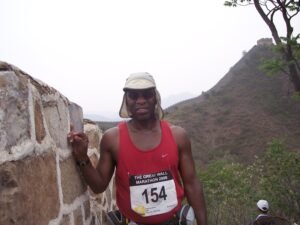
The Great Wall Marathon, China (Photo courtesy of Anthony Reed)

Many runners focus on various goals, such as running 100 miles per month. Today (6/6/21), during a 15-mile run, I finally logged over 47,000 miles over 42 years.

 In 1976, I set a lifetime goal to average three miles of running per day as a way of avoiding insulin. My primary goal was to run about 90 miles/month and the secondary goal was at least 100 miles per month. Also, I only wanted to run only three or four days per week. I’m a very firm believer in “everything in moderation”.

 I was diagnosed as pre-diabetic in 1963 and was told that I’d be on insulin by the 1970’s. I started running as a way to avoid this prediction. In the mid-1970’s, a co-worker lost his sight due to glaucoma, had his foot and leg amputated, and died to complications from diabetes. I don’t believe he was more than 50 years old. I was scared to death.

 I’ve maintained a handwritten running journal since 1979. The detailed, monthly data is summarized in an Excel workbook. Here’s a brief analysis of 509 months of running.

RUNNING DATA

 – Averaged 3.03 miles/day over 509 months.

Being Constant

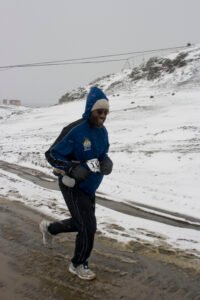
Antarctica Marathon (Photo courtesy of Anthony Reed)

– Ran 5,359 days (34.6%) out of a possible 15,496 days. As a father and husband, I wanted to keep running simple, fun, flexible, and injury-free. Thus, I felt that running everyday would put undue pressure on me. So, I opted to run only 3 or 4 days a week.

 – I was not perfect. I failed to reach my primary monthly goal 40% of the time, including 29 months of not running a single mile. However, I never lost sight of my goal AND my reason for achieving it. I wanted to live past 50, keep my eyesight, not have any limbs amputated, and not be on insulin. The money saved from paying for insulin was used to travel around the world and finish marathons on seven continents (completed in 2007) and fifty States (completed in 2013).

 – Longest streak of reaching at least 100 miles per month was 21 months; from June 1985 through February 1987. Averaged 148.7 miles/month.

 – Longest streak of not reaching primary goal was 29 months; from August 1990 through December 1992. Averaged 60.74 miles/month.

 – Maximum miles in one month: 200.13 in January 1986 over 17 days of running.

RACING DATA

 – Fastest races: Marathon – 3:36:45 (1984); 20-Miler – 2:35:54 (1987); Half marathon – 1:34:11 (1985); 10K – 41:31 (1983) [BTW – These PB’s were run while weighing about 195 pounds at six feet tall, which wasn’t easy.]

 – Completed 226 races between 1979 and 2018 (averaged 5.3 races/year).

 – Averaged 2.3 marathons/year between 1982 and 2000. Only one marathon (Chicago) of my first 42 marathons was outside of Texas, which included 15 Cowtown Marathons (Ft. Worth) and 15 Dallas Marathons (formerly White Rock). You have an entire lifetime to run marathons, so take it easy on the racing, especially if you\’re just beginning.

 – Completed 131 marathons between 1982 and 2018 (averaged 3.5 marathons/year).

 – Longest monthly streak: 15 marathons between February 2012 and January 2013.

 By keeping focused on a lifetime AVERAGE, it took the stress off everyday living and goal setting. Next month, I’ll turn 66 and am still not on insulin.


* Anthony Reed is the National Black Marathoners Association Co-Founder & Executive Director. He is the author of the book “From the Road Race to the Rat Race” which was published in September 2020.

 The National Black Marathoners’ Association (NBMA) is the country\’s oldest and largest, not-for-profit organization of Black American distance runners. It is open to everyone, regardless of athletic ability or previous marathon experience. Objectives are to:
·       Encourage Black Americans and others to pursue a healthy lifestyle through long distance running and walking.
·       Serve as a vehicle for Black American distance runners across the nation to meet in mass at a single marathon.
·       Recognize the accomplishments of Black American distance runners.
·       Provide scholarships to deserving high school boy and girl distance runners.

For more information about the National Black Marathoner’s Association, you can click here.


Book Review – Today We Die A Little

Book Review – Today We Die A Little

Written by Richard Askwith
Reviewed by Coach Adolfo Salgueiro 

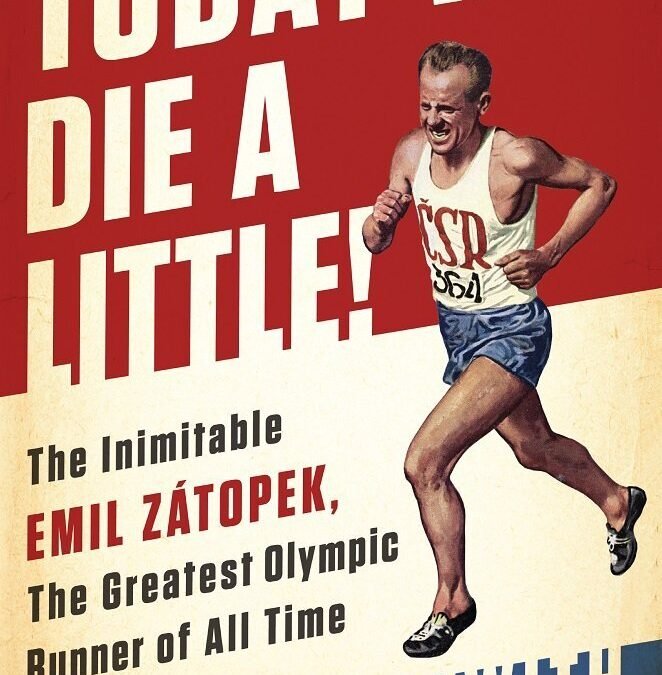
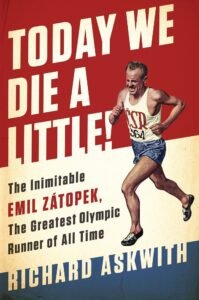
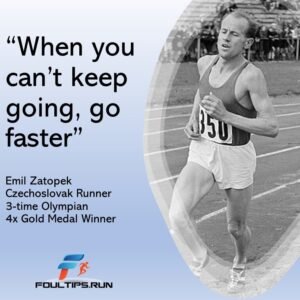
While the running heroes of the latest generations may be Usain Bolt, Ryan Hall or Eliud Kipchoge, to their grandparents, most likely, there was no greater running hero than Czechoslovakian Emil Zatopek. If you know anything beyond just his name, is that he is the only person in Olympic history to win the 5,000, 10,000 and Marathon, and he did it all in the same games: Helsinki 1952.

Today We Die A Little“Today We Die a Little” is a comprehensive biography published in 2016 by author, Richard Askwith, who has also published a few other sports books, most of them on running. A self-confessed Zatopek admirer, he delves into a quest to find as much first-hand information on his subject so he can figure out how to separate the man from the myth.  During the narrative he explains his process and his sources, so it becomes easier to establish what and how much goes beyond mythology.

What I liked from this book is that it establishes Emil as a real person, beyond the accolades and the world records. It spends plenty of time on his family background and the political situation that surrounded his childhood, which eventually becomes an inescapable part of his personal history. His first steps into foot racing happen as a teenager and little by little, defeat by defeat, he starts figuring out his talent until he becomes the Emil Zatopek we know. It is then that the Czechoslovakian communist regime figures out they have a propaganda tool at their disposal and begin to exploit it in every possible way.

Zatopek was a household name before Helsinki 1952. These Olympics were just the summit of his career. After doubling in the 5 and 10 thousand, he decided on a whim to give the marathon a shot, which he had never run. Not only did he win, but he also established his third Olympic Record of the games.

Emil is well known for the fierceness of his training. The book spends a good portion digging into his method and the reason behind it, which was more art than science based. He would run full-out 400-meter repeats relentlessly, almost every day. It is said that he would run up to 50 of them on a single session. Emil was big on recovery and took walks or easy runs around the woods, many times with his wife, Olympic champion Dana Zatopkova. But the constant hammering of his body and the frequency of his racing was too much, even for the most gifted of athletes, so his career fizzled out way sooner than if he had managed it with contemporary methods of rest and recovery.

Today We Die A LittleAs stated earlier, Zatopek’s life went beyond the track, and given his notoriety and propaganda value for the communist regime in his country, he became an army officer with way more privileges than the norm. Even though at times he was outspoken and fought for what he thought right; his position was never undisputed. He took all the advantages and privileges he could from the regime, until he no longer was useful to them.
Emil had to work an impossible balance act to please both his admirers and his government. There were the ones that wanted him to be the face of the oppressive regime and the ones who needed his celebrity to speak against it. Such an act was so difficult to pull off that he paid for it dearly. At the author well puts it: “It is not as if Emil went un-judged in his lifetime, either: by the Communist who thought he had betrayed them and by the anti-Communists who thought he had betrayed them”.

In his sundown years, he was still an Olympic hero and was invited to many events and sports meets as a goodwill ambassador. At home he was ostracized and hidden from public view, but overseas the government still displayed him as a national treasure, while surrounding him with chaperones that made sure he did not say anything inappropriate while his wife stayed home as a hostage, making sure he didn’t defect.

I really enjoyed this book. Very well researched, very well written and a story very well told. Beyond Emil Zatopek’s life, this story takes you to a period in the history of our planet that most of us in the western world, 70 o 80 years later, may have already forgotten. This is a good read which I recommend to any runner interested in learning about one of the biggest glories of our sport.


One Year Without Missing a Day

One Year Without Missing a Day

By Patrick O’Dea

EDITOR’S NOTE: Patrick is a 66-year-old runner who participates in both of my running groups in the Fort Lauderdale area. Last year he decided to extend his running into an everyday activity, putting together a streak that now covers 365 days and counting. What follows, below, is his own account of his start in the sport and how he became a streaker. As someone who has ran hundreds of miles with him, I can attest on how much he has improved during this last year, proving that a well-managed life can allow for this type of endeavors.


Hello from a fellow runner who has not missed one day of running in the last 365 days.  My name is Patrick O\’Dea and South Florida has been my home since 1979. I grew up in Ireland and graduated from college there.  I followed my brother Stephen to Miami, and I am still here.  Why? You can only handle so much wind and rain in one lifetime.  Ireland may have 40 shades of green according to Johnny Cash, but it takes lots of rain to keep it that way. 

One Year Without Missing A Day

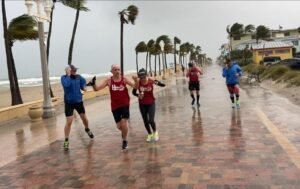
Back in November 2020, Patrick, Nohra and Ted (all in the red singlets) ran the Virtual Marine Corps Marathon during a Hurricane Watch.

I came in search of sunshine and adventure and I\’m glad I did.  I spent most of the last 40+ years as an educator, especially at St. Thomas Aquinas High School, here in Fort Lauderdale.

Now I am enjoying a slower pace, learning a little Spanish and Irish, serving on my condo board, and on the board of two Irish cultural organizations. I volunteer at St. Sebastian Church and I just finished a Leadership program with the City of Fort Lauderdale. I also run every single day.

I got seriously involved in running about eight years ago.  Three factors got me going: 

1 – My friend and school colleague Orestes, needed runners for a faculty team for the Mercedes Benz Corporate Run. 
2 – Orange Theory just opened a gym in my backyard. 
3 – New Year\’s resolution.

All three kicked in at the same time, and I am still running. 

What has kept me going is the wonderful community of runners that I am privileged to be a part of four times a week.  Every Tuesday and Thursday, we meet at Runners Depot, our local running store, for a 5-mile run, or we run bridge-repeats over the 17 Street Causeway Bridge, “our local hill” in a flat area.  On Saturdays and Sundays, we meet at our favorite Colombian bakery and we run the Hollywood Broadwalk. I have also run with several local groups, which motivates me to run faster.

So far, I have finished 3 marathons including the Marine Corps virtual last year with Norha and Ted, during a Hurricane Watch, no less.  Yes, we are crazy!  I also ran the Marabana, with Orestes and a handful of buddies, during a torrential downpour in La Habana, Cuba. Maybe the rain is following me from Ireland.  Both are memorable events in my running career.  I would love to run the real Marine Corps Marathon, one day. It’s a cool way to see a great city.

One Year Without Missing A Day

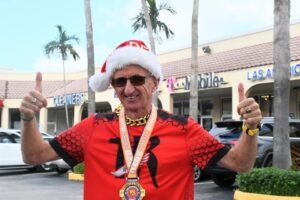
Patrick with his 2020 1K Medal at his favorite Saturday Morning post-run breakfast joint.

I have met my 365 goal, already but I want to achieve 1,000 miles this year ASAP. I am amazed by runners who have already done it in 2 or 3 months!  Unbelievable! 

What really keeps me running every day is my local running family, where we are there for each other in good times and bad.  I appreciate their support and encouragement and I am blessed to be part of an amazing group of people who talk the talk and walk the walk.  That is what gets me up before dawn every Saturday and Sunday.

During my 365-day streak, I felt a great sense of accomplishment, and I am proud of my achievement.  I never felt like quitting as I had come too far to throw in the towel.  Even now, I run every day and want to continue as long as I feel good.  I am blessed that I have no pains and aches as I run to keep up with my younger friends.  I have no special diet and I take a handful of vitamins every day.  My advice to aspiring runners:  Just do it!  Lace up your sneakers, put one foot in front of the other and let’s go!  See you on the asphalt. 

Let\’s run! 

 
Tears and Running

Tears and Running

By Coach Adolfo Salgueiro

Tears are the reflection of the extreme emotions of our lives. We shed them out of love when our kids are born but also when a loved one passes away. We shed them out of joy over a personal accomplishment or when we enjoy someone else’s triumph, graduation or wedding; but also when we share our frustrations, failures, or broken hearts with those closest to us. Tears of joy are so ubiquitous that they even have their own emoji.

When it comes to running, it is no different. Why would it be?

Tears and Running

Crying on the last few meters of the 2022 Houston Marathon, 7 months after open-heart surgery.

When I was 17, I went to Kilometer 30 (Mile 19) of the 1982 Caracas Marathon, where my dad was going to run in a friend. What I experienced there was so overwhelming, that on a whim, I jumped in and ran the last 12 Km (about 7.5 miles) to the finishing area. The tears I witnessed, changed my life.

I saw grown-up men crying out of frustration when they could not run any longer and had to walk. I saw every type of emotion reflected in the faces and bodies of those I passed. And I saw tears of joy as runners approached the finish line with smiles covering their faces. I was hooked. I had to experience those extremes. I didn’t know when, but I knew that one day I would run a marathon myself. That day came sooner than later, when I finished my first marathon a few weeks later, but that is a story for another day.

If I teared up or cried during my first life as a runner, I honestly don’t remember. Maybe since I was still a teenager, I thought I was invincible, and running marathons in the 3:30 range, or better in the near future, would last forever. Who knows? My first knee operation, in 1986, gave me a reality check.

I was training for the 1986 Caracas Marathon, trying to approach the 3-hour mark, when I hit my knee and ended up under the knife just 6 weeks prior to the race. I cried out of frustration when I saw my two training partners finishing in 2:56 and 3:04. But that is life.

The first time I vividly remember crying while running, was as I crossed the finish line of the 2012 Philadelphia Marathon. It was my first marathon since December 1985. A 26-year hiatus. Since then, not only I had two left-knee surgeries, but after the one in 2004, at age 39, I asked the doctor if he thought I could ever complete another marathon. He told me, in no uncertain terms, to forget it. It was not going to happen.

So, as I approached the finish line through the Benjamin Franklin Parkway, on that cold November day in Philadelphia, as I was praying in thanks to God for giving me this remarkable opportunity, I started feeling a knot in my throat. Once I was able to distinguish the finish line in front of me, tears started running down my cheeks. When I hugged my wife a few yards after the end, I was openly sobbing. This feeling was beyond anything I could have ever imagined.

I have cried again on the asphalt. I did so at the finishing of the Den Haag Half marathon, my first running half after three years of racewalking. I also cried at the start of the New York City Marathon in 2017, still trying to grasp that I was there again after 32 years, ready to absorb the experience. I shed some tears at a small 5K in late 2019, my first competition after a heart procedure. And I hope I can cry some more, soon. It can only mean I am alive, overcoming obstacles and still running.

I would love to hear your crying-while-running-stories. You can share them in the comment section, below.

The Inspirational Story of Marie Bartoletti

The Inspirational Story of Marie Bartoletti

 By Marie Bartoletti

My name is Marie Bartoletti. I am a proud daughter, mother, girlfriend, and athlete. I have done many things in my life, including the completion of 500 marathons.

Marie Bartoletti

Marie finished the 2021 A1A Marathon on February 14th, 2021, in 4:38:26, her 500th.

I was born on August 2nd, 1957 in Kalamazoo, Michigan, into a large family with four brothers and two sisters. I grew up playing sports and having fun with my siblings. I’ve always had a passion for running and athletics. In my lifetime, I have extended this passion to many areas. I have been a physical education teacher and coach of all types. I have hiked, biked, and ran all over the world, even been on a Wheaties box!

 I have also faced a great deal of struggles. On November of 2015, I had a massive stroke. This has disrupted my life in so many ways but has only pushed me to be stronger. It has been a long recovery process and I take so much pride in my ability to continue overcoming these struggles every day.

 The side effect of the stroke I was most concerned with, was the loss in my ability to speak. It appeared I could understand everything but not respond with my words. This hit me extremely hard as I am a very social, outgoing person. I began to do rigorous therapy and continue to work on my speech to this day.

 The doctors were shocked to find out that I required no physical therapy after my stroke. I was able to complete all the challenges they tasked me with in the hospital. I was so thankful to find this out.  After having already lost so much of my speech ability, I feared losing my physical talents as well. I continued to persevere through these struggles and remain passionate about everything I do.  

 I have run in 181 marathons since my stroke.  This is something that gives me great pride because I enjoy competing in marathons very much!

  My first marathon was Pittsburgh, on May 7th of 1995. This race taught me my first real lessons about how to run marathons. I finished in 4:01:48. My biggest mistake was that I neglected to drink water in preparation for the race. Even throughout the race I turned down fluids. I was in terrible pain and completely worn down after this experience. I committed to never running another marathon again. Clearly that did not stick.

 
Marie Bartoletti

Marie’s inspirational story is written in this book. Directions on how to acquire it are at the bottom of this post.

My next marathon was in South Bend, Indiana. This was the town in which my mother was born, and my brother Tom, lived. I started the trend of traveling for marathons early, this was number two. Throughout the next few years, I continued to run marathons while also competing nationally in tennis, another passion of mine. Fast forward to 2005, I had traveled to Hawaii to achieve my goal of running a marathon in each state. This marathon also was my 50th. In the running world this is called my titanium marathon. I was able to check off both boxes with one race.

  I have gone through many injuries including operations on my bunions, broken ankles, and several concussions. Through each of these injuries I have learned perseverance. Remarkable instances in my life were my 300th and 500th marathons. They both took place at the A1A Marathon in Ft Lauderdale, Florida, on 2/15/2015 and 2/14/2021. 200 races and almost exactly six years apart.

 The 500th marathon, earlier this year, was a major accomplishment for me. I have gone through so much and I was so excited to achieve such a remarkable feat. In 2019 I published a book that tells my life story. I explain how I have persevered through so much and continue to be strong every day. This book is titled “Perseverance: How a Determined Athlete Tenaciously Overcame a Stroke”. I have sold numerous copies due to how inspirational people have found my journey.

 I would have not been able to do any of this without the support of my amazing family and friends. I have two lovely sons who have given me beautiful grandchildren. I am so thrilled to watch them grow up as well. My boyfriend, John, was present when my stroke occurred and has been essential to my recovery throughout the years. I am a devout Catholic and I pray to God and thank him every day for these blessings in my life.

 My 500th marathon was a very prideful moment, but I am most proud of the beautiful life that I am fortunate enough to live every day.

Editor’s Note: This blogpost is just a quick snapshot of Marie’s inspirational story. To find more about it, you can purchase her book by sending $23.75 to:
Marie Bartoletti
5495 Library Rd Apt 20
Bethel Park, PA 15102

2022 UPDATE: During the Miami Half Marathon, I caught up with Marie at about Mile 6. She was pacing the marathon. I have never met her in person. I approached her and as soon as I said hi, she knew who I was. It was a heartwarming experience do exchange a few words during an actual race.

Skip to content