7 Additional Bad Running Habits to Quit

7 Additional Bad Running Habits to Quit

By Coach Adolfo Salgueiro

Back in September of 2020, we published a post titled “7 Bad Running Habits to Quit”. I was surprised by the response it got, but especially how so runners identified themselves, including myself, as being guilty of one or more of these bad habits.

The more I thought about the list, and the more feedback I got, the more I realized there were plenty of missing bad habits that were not mentioned in the previous posting. Of course, neither that list nor this one, or the combination of both, is meant to be a comprehensive one, nor the final word on the subject.

So these are 7 additional bad running habits to quit:

Bad Running Habits

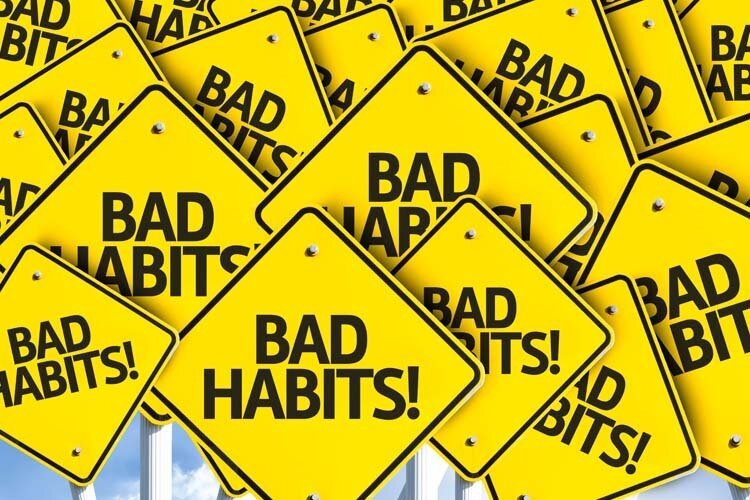
No runner is immune to bad habits. We always have to be on the lookout to avoid them

1.      Allowing fear of failure to derail your goals: Failure is inevitable. If we learned something from it, it will always be worthwhile. Always remember that when we don’t obtain what we originally were looking for, we gain experience, which can be used in the future, making future goals attainable, feasible and possible. Coach Steve Magness puts it this way: “Making failure something that isn’t big and scary, but something that leads to growth, goes a long way in helping dissipate the fear surrounding it”.  So, never fear failure. Embrace it.


2.      Running too hard on easy days: This is the cardinal sin of running. For some reason, most runners have a Superman complex that make them (or us, since I am included) believe that they are indestructible. An easy recovery run is not scheduled because your coach hates you. It is there to get the oxygen/nutrient rich blood circulating through your muscles so they can recover quicker, and you can then go for another enjoyable, hard session sooner while avoiding injury.

3.      Pushing for Results instead of letting them happen: When your program states 8×800 at 3:45; or a 30 -minute tempo run at 9:30/mile; these are guidelines. Nothing else. Of course, we all want to hit our targets and they are there for a reason. But we need to know when to quit. There is nothing to gain on a bad day by pushing on the last couple of repeats and needing a week to recover. We must know our bodies enough to understand where the fine line between being a badass and doing something stupid, lies.

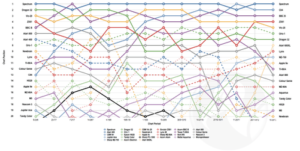
4.      Controlling every parameter through your watch: Science fiction writers from just 25-years ago could not even imagine what wrist watches can do, today.  We still call them watches only because they are on our wrist. They are advanced computers. They measure pulse, oximetry, quality of sleep, recovery, resting heart rate, route, etc. And if that wasn’t enough, they can even tell us time. As great as all this is, we can’t become slaves to the graphs and let them overtake our training. They are but guidelines to consider, not the Gospel of running.
 

Bad Running Habits

Complicated graphics you can’t even understand are not going to make you a better runner. Concentrate on a few parameters you can control and understand.

5.      Thinking the unsexy stuff is worthless: Our training program will often call for easy recovery miles, or for an easy long run on a day we know we can push, or a foam rolling session, or a day off when we are still feeling strong. But never underestimate the importance of the boring stuff. It is there for a reason. To help you recover, to make you stringer, to make you versatile, to make you patient, to avoid injuries. All worthy qualities in a runner.

6.      Focusing on a system instead of the whole person: Anaerobic work, hill repeats, tempo runs, the weekend long run, or lactate threshold runs are staples of a well-balanced training program. But none of them work individually and this is not the time to look for personal bests. All parts all need to work as a well-tuned machine to provide the results you are training for. It is not in your best interest to set up a 5K PR in a tempo run when you are training for a marathon. Remember that the whole is always better than the sum of the parts.

7.      Believing that only running can make you a better runner: Cross training is basic for our running. If the only thing you do is run, you will most likely suffer overuse injuries.  If running is our main sport, such cross training needs to be in support of our running. Yoga, strength training, core workouts, stretching, biking, swimming, etc., can be beneficial by providing aerobic capacity, strength, flexibility or core stability. If you want to be the CrossFit champion in your gym, a marathon may not the best option at this point.

In the future I will most likely publish “7, Even More, Bad Running Habits to Quit”. Let me know if you want to contribute with one of them by leaving a comment, below.


10 Guidelines on Runners Etiquette

10 Guidelines on Runners Etiquette

By Coach Adolfo Salgueiro

After years of running, 100+ races and thousands of miles under my soles, I have all developed my very personal running habits. Just as you have developed yours. Some good, some bad, some questionable. At the same time, we have all established our running pet peeves.

Even though there is nothing written, there are some basic guidelines that every runner must keep to be part of an ever-improving running community. One where friends and strangers can be proud of being a part of. Some are to keep us safe, some to make the running experience more fulfilling and some to have more enjoyable races.

These are my 10 basic guidelines on running etiquette:

  1. Runners Etiquette

    Slow runners are no less of an athlete than fast runner. Each group needs to be aware and respectful of the other (Photo Pexels)

    Be mindful of other runners around you: It doesn’t matter if you are fast, slow, walker or if you are so tired you are crawling. Most of the time you are not the only person on the road, so you need to be aware of other runners. The last thing you want is to get injured, so make sure you are not the one responsible for someone else getting injured.

  2. Respect slower runners: Both in training and in races, you will cross paths with slower runners. The fact they can’t run as fast as you, doesn’t make them less of an athlete. No need to be rude or discourteous. Be aware and respectful of the fact they are also putting their best effort forward.

  3. Respect faster runners: Just as you expect to be respected as a slow runner, if you are in this category you must respect the presence of runners faster than you. Don’t crowd the corners, don’t take the inside lane on the track, don’t clog the path by running side-by-side with too many people and be aware of your surroundings when stopping to walk.

  4. Acknowledge other Runners: Nobody expects you to stop what you are doing or change your pace to say hi to a stranger. But as runners, I think we all agree that acknowledging each other’s presence is the most basic form of good running etiquette. Tip your hat, make eye contact, nod, grunt, lift your arm or say an audible “hey”.

  5. Don’t interfere while taking selfies: They have become ubiquitous in running. If there is no selfie, it didn’t happen. We get it! You can take all the running selfies you want as long as it doesn’t interfere with other runners, especially during a race. Go to the side of the road, get out of the way and then knock yourself out with as many selfies your phone can handle. But always remember that your selfie is not another moving runner’s priority.

  6. Just because you isolate with your headphones doesn’t mean I am not there: it is your prerogative to run with headphones. If it provides you with a better experience, go for it. But it is your responsibility to be aware of your surroundings, not mine. I don’t know if you are wearing them or not so don’t expect anyone to be on the lookout for you while isolated.

  7. Do not stop abruptly at water stations: I am not sure where this walk-break at water stops trend began. This is a place where lots of moving people congregate simultaneously, many eyeing the same cup of liquid, and it is usually very slippery. If you need to stop, take your water, move out of the way, check your surroundings, and then stop. It is basic, common sense.

  8. Carry your own trash: Even when running we usually produce trash. At races, your entry fee includes trash pick up at water stop, but when training, it is not the case. Just as you carried your gel or your water bottle with you, make sure you carry their byproduct trash until you find the proper way to dispose of it. During a race, this is the water stop.

  9. Act like an adult when it comes to bodily functions: They are inevitable when you are running. Burping, snot rockets, spitting and farting are commonplace and a normal part of a healthy functioning body, especially when running. Don’t make anyone feel bad. Be mature and just let it go. Because it is a matter of time before it is your turn.

  10. Respect your membership in WhatsApp and Facebook groups: Most runners are in more than one social media group, and most groups have way too many people to keep track of multiple conversations. Limit your interactions to group related postings so your group can become relevant. I bet you are member of plenty of other groups where you share your non-running memes, jokes and political commentary.

Anything I missed? What is your running pet peeve?

7 Running Myths

7 Running Myths

By Coach Adolfo Salgueiro

As running becomes more popular and there is more money to be invested and made in the sport, snake oils and other bogus claims permeate the popular culture and get hold of our running ethos. While some explanations made sense in the 1920s or the 1980s, science has developed and progressed enough to prove, adjust or disprove most of our understanding on these concepts and their application to running.

These are seven myths that once were held as running gospel that today, no longer apply. Of course, this is not a comprehensive list, it is just a handful of the most prevalent myths of our day and age.

1.      Carbo loading before a race or long run: The carbs we consume throughout the day are metabolized by the body into glycogen, which is the go-to fuel burnt by the body for energy. The amount of glycogen our bodies can story is finite, and it is stored in the liver and muscles. Muscles don’t borrow from each other, so, that 3rd or 4th serving of pasta the night before a race does nothing for you. Actually, it will adversely affect you because your body will be spending energy digesting food it won’t need to produce energy the next morning and you may also need a potty break to unload all that unneeded food you consumed last night.

Running Myths

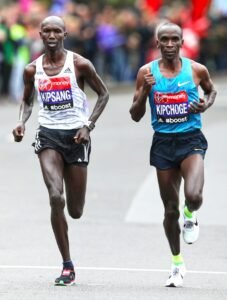
You don’t have to look like a Kenyan to be a runner. You only have to run.

2.      I don’t have a runner’s body, therefore, I can’t be a runner: You don’t have to look like a Kenyan to be successful runner. You may not win the Boston Marathon, but you don’t need it to be a considered a runner. There is one and only one parameter to measure your worthiness of being labeled as a runner: you must run. Skinny, overweight, tall, short, young, old, male, female, or in-between. It doesn’t matter. If you run, you are a runner.

 3.      The 10% rule: According to many experts and training gurus, you should never increase your mileage run more than 10% week over week. This is an urban myth from the 1980’s not based on science.  It is a guideline, not a rule. According to University of Houston Coach Steve Magness, this theory has been tested a couple of times and there was no decrease on injury rate based on this guideline, which is what this parameter is supposed to control. The amount of mileage an athlete can increase will depend on what their body structure and level of fitness are able to withstand, and this can change over time.

 4.      Only fast running will make you fast: It is intuitive to think that to run fast you need to train running fast. And fast running is an important part of the equation. But to maintain your speed during a long run, you need to train your aerobic system and teach your body to burn fat as fuel, which can only be done by not taxing the body into only using the immediate sources of energy (glycogen). No one is stating you only need to run slow, but you do need to make slow running part of your training to run fast.

 5.      Stretch before you run: Cold static stretching is not recommended when your muscles are unready for such a movement. It is a recipe for injury. Dynamic warm up moves such as lunges, leg swings, jogging in place and hip openers will get your muscles warmed up, your heart rate elevated and your core temperature ready for action. Stretching after your workout could be beneficial but it is not required. If it feels good, go for it .Personally, it makes me feel better, so I do it.

 
Running Myths

What may have made sense in the 1980s regarding the 10% rule or carbo loading, has already been disproved by science, yet the myths are still holding strong.

6.      If you have energy for a fast final kick, you didn’t give your all: When we kick at the end of a race to shave off a few seconds off the clock, push for that PR or pass that last few runners, it is not because we did not give our all out there. According to the Central Governor Theory by Tim Noakes, once the brain realizes we are almost there and it will not run out of resources, it unleashes the reserves. Therefore, usually, nobody dies at the end of a race. So feel free to kick at the end if you have it in you. It is your brain is giving you permission to do so.

 7.      VO2Max is the end-all measurement of performance: As popular as this measurement has become thanks to our Garmin watches giving us constant updates, what it measures is the maximum amount of oxygen our bodies can handle at maximum effort. If we don’t know what it means and what we can do with it, it becomes useless. And, by the way, VO2Max cannot be measured by an algorithm in your watch. So don’t overthink this one.

Did I miss anything?

20 Book Recommendations for Runners (Part 2)

20 Book Recommendations for Runners (Part 2)

By Adolfo Salgueiro

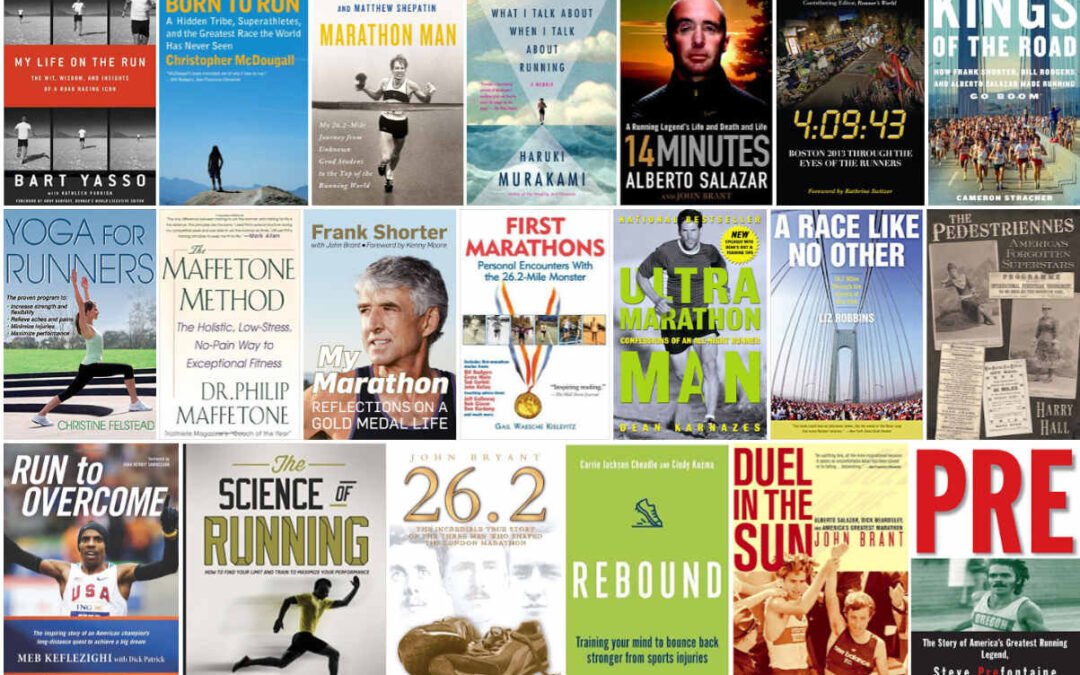
As a compliment of last week’s post, today I conclude my list of 20 book recommendations for runners. If you haven’t read Part 1 of this blogpost, please click here to do so. This way you won’t miss half of this list.


Book recommendationsIt is important to note that this is a very person list and at no time I am claiming it to be a comprehensive. I  have not read everything there is to read about running and I am aware there are very important books, such as Kathrine Switzer’s Marathon Woman, or The Lore of Running, by Tim Noakes, which is still on my “to read” list.

But if you are looking to learn more about our sport, its history, how to get better, and its most relevant figures and events, this list could be a good tool to get you started.

My 11 through 20 recommendations are as follows:

11 – Ultramarathon Man, by Dean Karnazes – The classic book that launched Karnazes celebrity runner career. You will finish the book inspired to lace up and run 100 miles into the horizon.

12 – Duel in the Sun, by John Brant: A detailed recap of the phenomenal 1982 Boston Marathon, where Alberto Salazar and Dick Beardsley fought step-by-step until the final yard.

13 – My Marathon, by Frank Shorter: The inspirational autobiography of a running icon, how he became an Olympic champion and the inspiration for the first running boom.

14 – A Race Like No Other, by Liz Robins: A must read for anyone about to run the New York City Marathon or even if you already ran it. The best book on the subject.

15 – Marathon Man, by Bill Rodgers: An autobiography of one of the most influential runners in history. His triumphs, defeats, personal struggles and legacy, told in a first-person detailed account.

16 – 4:09:23, by Hal Higdon: a blow-by-blow account of the 2013 Boston Marathon bombing, the perpetrators, the runners, the heroes, the scarring and redemption from a tragedy.

17 – What I Talk About When I Talk About Running, by Haruki Murakami: A successful and world-renowned writer tells us about his relationship with running and how it has influenced his life.

18 – First Marathons, by Gail Waesche Kislevitz: A collection of accounts of runners facing the 26.2 monster for the very first time. Inspiring reading even if you are a veteran of the distance.

19 – The Maffetone Method, by Phil Maffetone: The quintessential book to understand the concept of running slow so you can run fast.

20 – Yoga for Runners, by Christine Felstead: I firmly believe in the benefits of yoga for all runners, thus, the title states everything else you need to know.

20 Book Recommendations for Runners (Part 1)

20 Book Recommendations for Runners (Part 1)

By Coach Adolfo Salgueiro

We all run because we love it. If not, we would be doing something else. But there is always a secondary reason why we do so, which is usually as powerful as the aforementioned “because we love it”. It could be health, weight control, self-improvement, social interaction, test against yourself, getting away from a chaotic life, not murdering your boss, etc.

Book RecommendationsRunning is as simple as it gets: one foot in front of the other… Go! But in order to realize that secondary reason, an inquisitive and relentless mind should be always on the lookout for additional knowledge. Information that will allow for understanding of what is happening within the body, the story of those who came before us, the newest training techniques, the latest gear improvements, etc. Even if you have a coach to guide you through the process, it is always good to be prepared, to be inquisitive and ask the right questions. Problem solved: grab a book.

Through my years as an avid reader I have consumed scores of running books. I am aware I haven’t read everything and still have important books that are still in my “to read” pile.

I compiled a list of 20 running books that I have read, and, in no particular order, I recommend to my readers. Here are the first ten. The remaining 10 will be published next week. Click here to check them out.

1 – Born to Run, by Christopher McDougall: An indispensable read for anyone interested in understanding how the human body was built to run, told through superb storytelling.

2 – Kings of the Road, By Cameron Stracher: How the first running boom came to be after Frank Shorter’s Olympic gold medal in 1972 and the birth of the New York City Marathon as we know it.

3 – The Pedestriennes, by Harry Hall: Before the Boston Marathon and ultrarunning, long distance walking was the craze. This book captures the uniqueness of this story.

4 – Pre, by Tom Jordan: A basic biography of the amazing Steve Prefontaine and his short, yet intense life. Not the definitive biography but a good one for getting to know the man behind the legend.

5 – Run to Overcome, by Meb Keflezighi: Meb’s first autobiography guides you from his early life in Eritrea though his Olympic medal and other triumphs. It doesn’t include the latter portion of his career.

6 – My Life on the Run, Bart Yasso: An autobiography of one of the most influential runners of the last 50 years. Lots of cool and weird stories from a running icon.

7 – 26.2, by John Bryant: The story of the London 1908 Olympic Games, its protagonist and how the marathon distance was finally established.

8 – Rebound, by Carrie Jackson Cheadle & Cindy Kuzma: Eventually, most runners get injured. This book is an important read both before or during and injury.

9 – 14 Minutes, By Alberto Salazar: Regardless of what you may think of him after his suspension, his place in running history is undeniable and his story of life, death and life again is amazing.

10: The Science of Running, by Steve Magness: If you want to geek out and dig deep into the science of what happens inside your body when you train, this is the book for you.


Skip to content