
7 Running Myths

7 Running Myths

By Coach Adolfo Salgueiro

As running becomes more popular and there is more money to be invested and made in the sport, snake oils and other bogus claims permeate the popular culture and get hold of our running ethos. While some explanations made sense in the 1920s or the 1980s, science has developed and progressed enough to prove, adjust or disprove most of our understanding on these concepts and their application to running.

These are seven myths that once were held as running gospel that today, no longer apply. Of course, this is not a comprehensive list, it is just a handful of the most prevalent myths of our day and age.

1.      Carbo loading before a race or long run: The carbs we consume throughout the day are metabolized by the body into glycogen, which is the go-to fuel burnt by the body for energy. The amount of glycogen our bodies can story is finite, and it is stored in the liver and muscles. Muscles don’t borrow from each other, so, that 3rd or 4th serving of pasta the night before a race does nothing for you. Actually, it will adversely affect you because your body will be spending energy digesting food it won’t need to produce energy the next morning and you may also need a potty break to unload all that unneeded food you consumed last night.

Running Myths

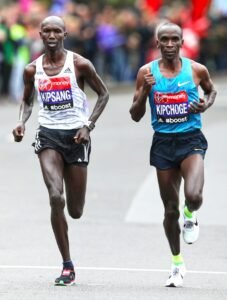
You don’t have to look like a Kenyan to be a runner. You only have to run.

2.      I don’t have a runner’s body, therefore, I can’t be a runner: You don’t have to look like a Kenyan to be successful runner. You may not win the Boston Marathon, but you don’t need it to be a considered a runner. There is one and only one parameter to measure your worthiness of being labeled as a runner: you must run. Skinny, overweight, tall, short, young, old, male, female, or in-between. It doesn’t matter. If you run, you are a runner.

 3.      The 10% rule: According to many experts and training gurus, you should never increase your mileage run more than 10% week over week. This is an urban myth from the 1980’s not based on science.  It is a guideline, not a rule. According to University of Houston Coach Steve Magness, this theory has been tested a couple of times and there was no decrease on injury rate based on this guideline, which is what this parameter is supposed to control. The amount of mileage an athlete can increase will depend on what their body structure and level of fitness are able to withstand, and this can change over time.

 4.      Only fast running will make you fast: It is intuitive to think that to run fast you need to train running fast. And fast running is an important part of the equation. But to maintain your speed during a long run, you need to train your aerobic system and teach your body to burn fat as fuel, which can only be done by not taxing the body into only using the immediate sources of energy (glycogen). No one is stating you only need to run slow, but you do need to make slow running part of your training to run fast.

 5.      Stretch before you run: Cold static stretching is not recommended when your muscles are unready for such a movement. It is a recipe for injury. Dynamic warm up moves such as lunges, leg swings, jogging in place and hip openers will get your muscles warmed up, your heart rate elevated and your core temperature ready for action. Stretching after your workout could be beneficial but it is not required. If it feels good, go for it .Personally, it makes me feel better, so I do it.

 
Running Myths

What may have made sense in the 1980s regarding the 10% rule or carbo loading, has already been disproved by science, yet the myths are still holding strong.

6.      If you have energy for a fast final kick, you didn’t give your all: When we kick at the end of a race to shave off a few seconds off the clock, push for that PR or pass that last few runners, it is not because we did not give our all out there. According to the Central Governor Theory by Tim Noakes, once the brain realizes we are almost there and it will not run out of resources, it unleashes the reserves. Therefore, usually, nobody dies at the end of a race. So feel free to kick at the end if you have it in you. It is your brain is giving you permission to do so.

 7.      VO2Max is the end-all measurement of performance: As popular as this measurement has become thanks to our Garmin watches giving us constant updates, what it measures is the maximum amount of oxygen our bodies can handle at maximum effort. If we don’t know what it means and what we can do with it, it becomes useless. And, by the way, VO2Max cannot be measured by an algorithm in your watch. So don’t overthink this one.

Did I miss anything?

20 Book Recommendations for Runners (Part 2)

20 Book Recommendations for Runners (Part 2)

By Adolfo Salgueiro

As a compliment of last week’s post, today I conclude my list of 20 book recommendations for runners. If you haven’t read Part 1 of this blogpost, please click here to do so. This way you won’t miss half of this list.


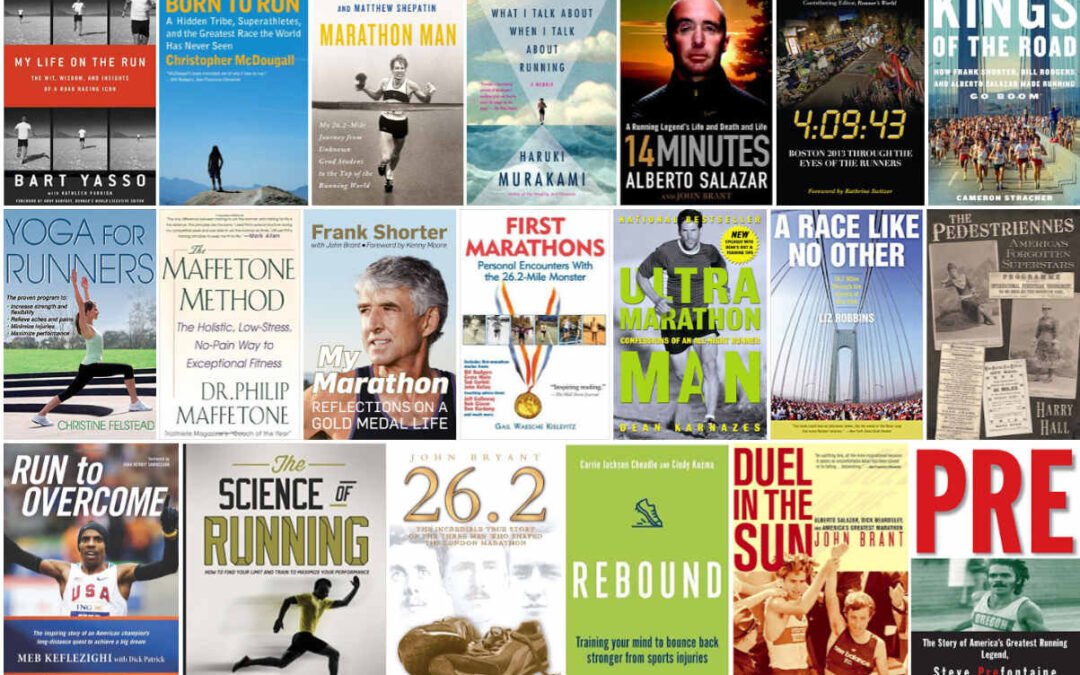
Book recommendationsIt is important to note that this is a very person list and at no time I am claiming it to be a comprehensive. I  have not read everything there is to read about running and I am aware there are very important books, such as Kathrine Switzer’s Marathon Woman, or The Lore of Running, by Tim Noakes, which is still on my “to read” list.

But if you are looking to learn more about our sport, its history, how to get better, and its most relevant figures and events, this list could be a good tool to get you started.

My 11 through 20 recommendations are as follows:

11 – Ultramarathon Man, by Dean Karnazes – The classic book that launched Karnazes celebrity runner career. You will finish the book inspired to lace up and run 100 miles into the horizon.

12 – Duel in the Sun, by John Brant: A detailed recap of the phenomenal 1982 Boston Marathon, where Alberto Salazar and Dick Beardsley fought step-by-step until the final yard.

13 – My Marathon, by Frank Shorter: The inspirational autobiography of a running icon, how he became an Olympic champion and the inspiration for the first running boom.

14 – A Race Like No Other, by Liz Robins: A must read for anyone about to run the New York City Marathon or even if you already ran it. The best book on the subject.

15 – Marathon Man, by Bill Rodgers: An autobiography of one of the most influential runners in history. His triumphs, defeats, personal struggles and legacy, told in a first-person detailed account.

16 – 4:09:23, by Hal Higdon: a blow-by-blow account of the 2013 Boston Marathon bombing, the perpetrators, the runners, the heroes, the scarring and redemption from a tragedy.

17 – What I Talk About When I Talk About Running, by Haruki Murakami: A successful and world-renowned writer tells us about his relationship with running and how it has influenced his life.

18 – First Marathons, by Gail Waesche Kislevitz: A collection of accounts of runners facing the 26.2 monster for the very first time. Inspiring reading even if you are a veteran of the distance.

19 – The Maffetone Method, by Phil Maffetone: The quintessential book to understand the concept of running slow so you can run fast.

20 – Yoga for Runners, by Christine Felstead: I firmly believe in the benefits of yoga for all runners, thus, the title states everything else you need to know.

20 Book Recommendations for Runners (Part 1)

20 Book Recommendations for Runners (Part 1)

By Coach Adolfo Salgueiro

We all run because we love it. If not, we would be doing something else. But there is always a secondary reason why we do so, which is usually as powerful as the aforementioned “because we love it”. It could be health, weight control, self-improvement, social interaction, test against yourself, getting away from a chaotic life, not murdering your boss, etc.

Book RecommendationsRunning is as simple as it gets: one foot in front of the other… Go! But in order to realize that secondary reason, an inquisitive and relentless mind should be always on the lookout for additional knowledge. Information that will allow for understanding of what is happening within the body, the story of those who came before us, the newest training techniques, the latest gear improvements, etc. Even if you have a coach to guide you through the process, it is always good to be prepared, to be inquisitive and ask the right questions. Problem solved: grab a book.

Through my years as an avid reader I have consumed scores of running books. I am aware I haven’t read everything and still have important books that are still in my “to read” pile.

I compiled a list of 20 running books that I have read, and, in no particular order, I recommend to my readers. Here are the first ten. The remaining 10 will be published next week. Click here to check them out.

1 – Born to Run, by Christopher McDougall: An indispensable read for anyone interested in understanding how the human body was built to run, told through superb storytelling.

2 – Kings of the Road, By Cameron Stracher: How the first running boom came to be after Frank Shorter’s Olympic gold medal in 1972 and the birth of the New York City Marathon as we know it.

3 – The Pedestriennes, by Harry Hall: Before the Boston Marathon and ultrarunning, long distance walking was the craze. This book captures the uniqueness of this story.

4 – Pre, by Tom Jordan: A basic biography of the amazing Steve Prefontaine and his short, yet intense life. Not the definitive biography but a good one for getting to know the man behind the legend.

5 – Run to Overcome, by Meb Keflezighi: Meb’s first autobiography guides you from his early life in Eritrea though his Olympic medal and other triumphs. It doesn’t include the latter portion of his career.

6 – My Life on the Run, Bart Yasso: An autobiography of one of the most influential runners of the last 50 years. Lots of cool and weird stories from a running icon.

7 – 26.2, by John Bryant: The story of the London 1908 Olympic Games, its protagonist and how the marathon distance was finally established.

8 – Rebound, by Carrie Jackson Cheadle & Cindy Kuzma: Eventually, most runners get injured. This book is an important read both before or during and injury.

9 – 14 Minutes, By Alberto Salazar: Regardless of what you may think of him after his suspension, his place in running history is undeniable and his story of life, death and life again is amazing.

10: The Science of Running, by Steve Magness: If you want to geek out and dig deep into the science of what happens inside your body when you train, this is the book for you.


9 Tips to Run Safely in the Dark

9 Tips to Run Safely in the Dark

By Coach Adolfo Salgueiro

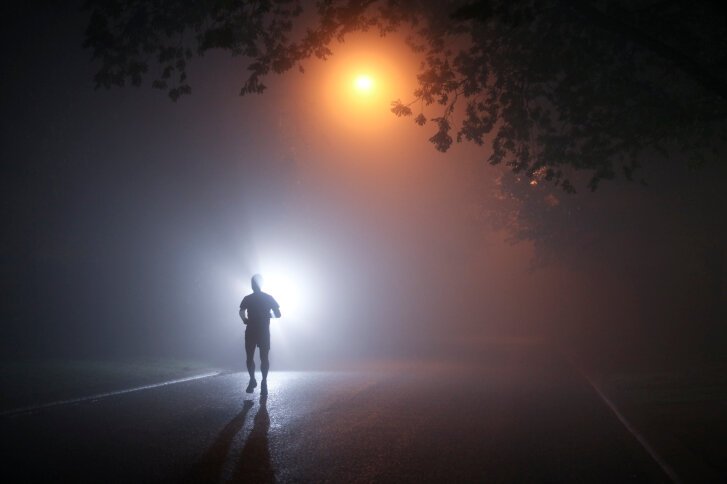
For us runners, first Sunday in November is usually reserved for the New York City Marathon and in the United States at least, it also means the end of Daylight-Saving Time. It is our one day with 25 hours. But with this time adjustment and the autumn months in full swing and the winter ones in the on-deck circle, there are longer nights which present a slew of challenges for runners.

Running safely in the dark

If you can’t run without headphones, do not get into this setting. Jump on the treadmill, instead.

It is paramount to understand that our safety is our individual responsibility. In this litigious world where nobody take responsibility because they think they can sue whoever hurts them, you must be aware that as a runner, it doesn’t matter who had the right of way, who had the obligation to see you, or who will win the argument in court. If you get hit by a vehicle, you are the one getting hurt. Is up to you to make sure you are seen by those who could harm you.

The following are nine recommendations to keep you safe while enjoying your runs in less than ideal lighting conditions:

1.     Do not improvise your routes: When you are running in the dark is not the appropriate time to be adventurous. Select routes you know are safe, well-lit and familiar to you. This is not the time to cross a street and find out there is no sidewalk, or that you are lost.

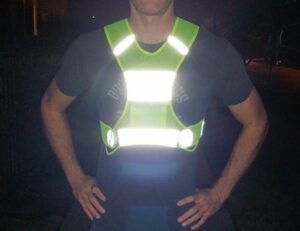
2.     Wear at least one light/reflecting device: You must prepare to be visible at the time you end your run, not just at the start. You can run lit like a Christmas tree, or you can use a reflecting vest, or you can wear blinking lights on your shoes, shorts, or hats. The options are plenty and they fit every budget.

3.     Run against traffic: It can’t be easier than this. By running against traffic you can be alert to any danger ahead of you. Drivers maybe playing with their phones and heading towards you. You won’t see these idiots unless you are facing them. This doesn’t mean to run in the middle of the road, make sure you obey all traffic guidelines.

4.     Rethink your usage of headphones: Running in the dark has its own challenges. Don’t handicap yourself by not having your auditive sense available and/or half of your brain distracted with music or a podcast. If you can’t run without your headphones, jump on the treadmill or choose a well-lit, familiar route where you don’t have to cross any streets.

5.     Run with your phone: Well into the XXI Century, phones are ubiquitous. Not even sure why we still call them telephones. Make sure you run with yours when you are in the dark. It is better to have it and not need it than to need it and not have it.  Sharing your location on WhatsApp or any other app is a good practice. There are so many options to carry a phone these days, that there are no excuses to leave it at home if you are running into the dark.

6.     Always tell someone where you are going and how long you plan to run: Even if you are taking your phone, but especially if you are not, make sure someone knows what your route is and how long do you expect to be gone. If you are going for 5K around the block and it has been two hours, someone should be checking on you.

Running safely in the dark

Reflecting vests are good and affordable options. They also made you seen from both sides.

7.     Run in groups whenever possible: There is always additional safety in numbers. It is easier for a driver to see a group of runners than to see just one. Plus, more eyeballs, more brains and more safety devices together can only increase the safety of your run in the dark.

8.     Carry ID: I am not paid by them, but I do believe RaceID is the best alternative for carrying identification with you. I have been using it for years and they have plenty of unobstructive, affordable options so someone can take care of you if you are ever found in a ditch. Worse comes to worse, carry your driver’s license in a pocket.

9.     Carry pepper spray: Having it is not enough. It must always be accessible. The moment you need it is not the time to figure out where it is or how it works. Mind the wind, or you will pepper spray yourself.

These are by no means all the safety precautions you must take to run safely in the dark. For one, make sure you trust your instincts always, so you don’t have to second-guess yourself when it is already too late. If something doesn’t feel right, get out of there immediately.

Anything else I forgot, or you would like to recommend to your fellow readers?

Skip to content