
Book Review: A Runner’s High

Book Review: A Runner’s High

By Dean Karnazes
Reviewed by: Coach Adolfo Salgueiro

 Since the unexpected success of his first book, Ultramarathon Man, back in March 2005, Dean Karnnzes has become a running celebrity. His superhuman feats of endurance and adventure have inspired thousands of ex-runners to lace up their shoes once again, and new ones to start pounding the asphalt for the very first time.
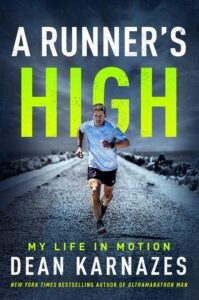
A Runner's High

This book is a good investment in time and money

In “A Runners High”, Karnazes tells a variety of running stories interlaced with his preparation and participation in the 2019 edition of the Western States Endurance Run. This is a 100-Mile race that has become the Boston Marathon equivalent of the ultrarunning world. It takes place in the California Sierra Nevada during the last weekend of June. It ran for the first time in 1977.

The narrative starts with Karnazes preparing to run the Bishop High Sierra Ultramarathon, a 100K race in preparation for his eventual participation in the Western States, where the narration culminates. In the meantime, there are many first-person accounts and running stories that, even if many runners can’t relate, they are told in such a quotidian, non-technical, well described and no aggrandizing way, that if you have run for a few years, you will be able to visualize, identify and even feel the glory and the suffering of the storyteller.

The author also delves into the dynamics of his family and their intersection with his demanding running career and life. His son Nicholas and his parents, as well as their interactions, become important figures in the narration. As a runner, son, and father, I can definitely identify with many of those situations. His wife and daughter also made important appearances, but to a lesser degree.

As the weeks pass by and events take course during the span of a few months, some of Karnazes latest running adventures, the ones that haven’t made it to his previous books, make an appearance. His running of the Silk Road through Uzbekistan, Kazakhstan and Kyrgyzstan is the story I liked the best. It shows how running can become part of US diplomacy. It also takes you through some of the roads least traveled by every-day US citizens. His interaction with the locals and their customs is well told though very illustrative anecdotes.
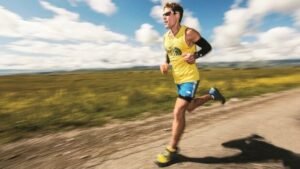
A Runner's High

“We discover who we are through the movement of our bodies” – Dean Karnazes

Then, of course, it comes Western States, where the whole gamut of human emotions show up at one point or another.  From euphoria to misery, and everything in between, take their turn as part of the racing experience. Through these emotions, he masterfully takes the reader through the understanding of the peaks and valleys of ultrarunning, even if he/she has never ventured beyond the thin line that separated “regular” running from ultrarunning.

Not sure if it was the vivid description of the misery he went through or that I don’t feel like the Western States are in my future, but the one thing I can say about this Karnazes book when comparted to his previous ones (which I’ve read them all), is that after finishing this one I didn’t feel the rush to lace up my shoes and go for a long run. Somehow, this experience was not relatable to me, while his other ones, while are not in my future either, were. But that is not a judgment on the book’s value, just a personal assessment.

As usual, Karnazes comes up sometimes with marvelous nuggets of running wisdom that become some of the most quoted in running. This one is the one that blew my mind; thus, I share:

“Running is a conversation, and education, a revolution, an awakening. We discover who we are through the movement of our bodies, and there are lessons to be learned in running alone much as there are in running large races”.

This is a good running book that most runners will enjoy and somehow relate. Entertaining, well-written, funny at times and deep at others without leaving you gloomy or mentally exhausted. A good investment of time and money.

What Motivates Runners

What Motivates Runners

By Coach Adolfo Salgueiro

 I was recently having a conversation with a group of friends regarding the reasons we lace up our shoes three, four, or five times a week. It became obvious that even though most of us may have the same basic reasons, if we dig deeper and list the top five things that motivate us to engage in this sport, the lists will be as unique as the uniqueness of each runner.

What Motivates RunnersWhen it comes to running, we all have a main reason why we do it. The answers can fit into a wide spectrum ranging from “because I like it” through “I just can’t stop”, with infinite shades in between.
As I was recently re-reading “The Science of Running” (a book by Steve Magness, which I highly recommend to anyone wanting to delve very deep into the subject of the title), I was surprised to see a section with an array of scientific studies that classify runners according to their motivations.

Three of them caught my attention, and thus, I share them with you here, so you can find where you fit based on each one of them.

According to a paper titled “Motives for Participation in Recreational Running”, published in The Journal of Leisure Research by Peter Clough, John Shepherd and Ronald Maughan, back in 1989, runners’ motivations could be divided into six groups:

a.    Well-Being
b.    Social
c.    Challenge
d.    Status
e.    Fitness/Health
f.     Addiction

According to this study, while most leisure activities include one or many aspects of the first four aforementioned reasons, the last two separate running from other activities. Interesting to me is the last one. I am sure we all know someone we consider “addicted to running”, but to realize there are scholarly studies that actually classify addiction as a real motivation for the sport, puts such compulsion in a new light. At least for me.

In his latest book, “A Runner’s High”, Dean Karnazes states: “If running is a drug that threatens my life, let me have it”.

Magness also cites a study titled “Motivations for running and eating attitudes in obligatory versus nonobligatory runners”  by Heather Slay, Jumi Hayaki, Melissa A. Napolitano and Kelly D. Brownell, published in 1998 in the International Journal of Eating Disorders.

As the title suggests, runners were separated in two groups based on the reasons they participate in our sport. This study separated those who run because they want from the ones who run because they must. The “Obligator” group is motivated by negative or external factors. These are the runners that if they take a week off will start thinking they are letting themselves down or the pounds will start creeping in by tomorrow. On the opposite side are the ones who just run because they want to. That is where I fit in, and I just prefer it this way.

The third study that caught my attention is a paper titled “A typology of marathon runners based on cluster analysis of motivations”, published in 2003 in the Journal of Sports Behavior by B.M. Ogles and K.S. Masters. In this one, marathoners are separated into five categories based on their motivation:

a.    Running Enthusiasts
b.    Lifestyle Managers
c.    Personal Goal Achievers
d.    Personal Accomplishers
e.    Competitive Achievers

What Motivates Runners

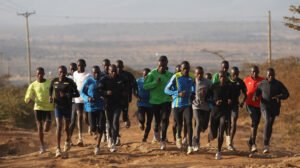
Runners train in Ngong, Kenya, in 2012. The country has produced the world’s best distance runners for decades, and most belong to the Kalenjin people.

Of course, there are many more motivations for running. According to a study by Professor Vincent Onywera in 2006, the main motivator for Kenyan Elite Runners is financial gain. Lower in their list are talent and national tradition.

If you read the recently published book “Out of Thin Air”, by anthropologist Michael Crawley, you will realize that Ethiopian runners have the same financial motivation, even those who are still far of the “elite” label but working towards it.

Financial is not a motivation for 99.9% of the readers of this blogpost. If anyone fits into the 0.1% remaining, please identify yourself.

This blogpost ended up a bit denser on science than I what I originally intended, but I found this subject fascinating. Somehow, I am sure we can all find ourselves in each one of these studies and understand a bit more why we do this. Because if you are a runner, it doesn’t matter what motivates you, as long as it keeps you moving forward.

Any thoughts? Leave me a comment, below.


The Inspirational Story of Marie Bartoletti

The Inspirational Story of Marie Bartoletti

 By Marie Bartoletti

My name is Marie Bartoletti. I am a proud daughter, mother, girlfriend, and athlete. I have done many things in my life, including the completion of 500 marathons.

Marie Bartoletti

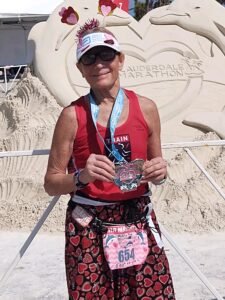
Marie finished the 2021 A1A Marathon on February 14th, 2021, in 4:38:26, her 500th.

I was born on August 2nd, 1957 in Kalamazoo, Michigan, into a large family with four brothers and two sisters. I grew up playing sports and having fun with my siblings. I’ve always had a passion for running and athletics. In my lifetime, I have extended this passion to many areas. I have been a physical education teacher and coach of all types. I have hiked, biked, and ran all over the world, even been on a Wheaties box!

 I have also faced a great deal of struggles. On November of 2015, I had a massive stroke. This has disrupted my life in so many ways but has only pushed me to be stronger. It has been a long recovery process and I take so much pride in my ability to continue overcoming these struggles every day.

 The side effect of the stroke I was most concerned with, was the loss in my ability to speak. It appeared I could understand everything but not respond with my words. This hit me extremely hard as I am a very social, outgoing person. I began to do rigorous therapy and continue to work on my speech to this day.

 The doctors were shocked to find out that I required no physical therapy after my stroke. I was able to complete all the challenges they tasked me with in the hospital. I was so thankful to find this out.  After having already lost so much of my speech ability, I feared losing my physical talents as well. I continued to persevere through these struggles and remain passionate about everything I do.  

 I have run in 181 marathons since my stroke.  This is something that gives me great pride because I enjoy competing in marathons very much!

  My first marathon was Pittsburgh, on May 7th of 1995. This race taught me my first real lessons about how to run marathons. I finished in 4:01:48. My biggest mistake was that I neglected to drink water in preparation for the race. Even throughout the race I turned down fluids. I was in terrible pain and completely worn down after this experience. I committed to never running another marathon again. Clearly that did not stick.

 
Marie Bartoletti

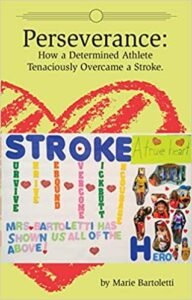
Marie’s inspirational story is written in this book. Directions on how to acquire it are at the bottom of this post.

My next marathon was in South Bend, Indiana. This was the town in which my mother was born, and my brother Tom, lived. I started the trend of traveling for marathons early, this was number two. Throughout the next few years, I continued to run marathons while also competing nationally in tennis, another passion of mine. Fast forward to 2005, I had traveled to Hawaii to achieve my goal of running a marathon in each state. This marathon also was my 50th. In the running world this is called my titanium marathon. I was able to check off both boxes with one race.

  I have gone through many injuries including operations on my bunions, broken ankles, and several concussions. Through each of these injuries I have learned perseverance. Remarkable instances in my life were my 300th and 500th marathons. They both took place at the A1A Marathon in Ft Lauderdale, Florida, on 2/15/2015 and 2/14/2021. 200 races and almost exactly six years apart.

 The 500th marathon, earlier this year, was a major accomplishment for me. I have gone through so much and I was so excited to achieve such a remarkable feat. In 2019 I published a book that tells my life story. I explain how I have persevered through so much and continue to be strong every day. This book is titled “Perseverance: How a Determined Athlete Tenaciously Overcame a Stroke”. I have sold numerous copies due to how inspirational people have found my journey.

 I would have not been able to do any of this without the support of my amazing family and friends. I have two lovely sons who have given me beautiful grandchildren. I am so thrilled to watch them grow up as well. My boyfriend, John, was present when my stroke occurred and has been essential to my recovery throughout the years. I am a devout Catholic and I pray to God and thank him every day for these blessings in my life.

 My 500th marathon was a very prideful moment, but I am most proud of the beautiful life that I am fortunate enough to live every day.

Editor’s Note: This blogpost is just a quick snapshot of Marie’s inspirational story. To find more about it, you can purchase her book by sending $23.75 to:
Marie Bartoletti
5495 Library Rd Apt 20
Bethel Park, PA 15102

2022 UPDATE: During the Miami Half Marathon, I caught up with Marie at about Mile 6. She was pacing the marathon. I have never met her in person. I approached her and as soon as I said hi, she knew who I was. It was a heartwarming experience do exchange a few words during an actual race.

Book Review – 26 Marathons

Book Review – 26 Marathons

By Meb Keflezighi (With Scott Douglas)
Reviewed by Coach Adolfo Salgueiro

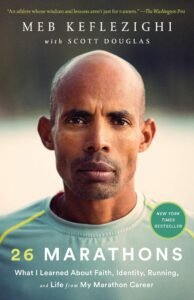
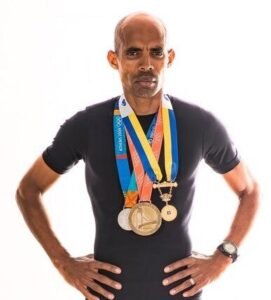
 When we talk about the top US marathoners in the United States during the first fifth of the 20th Century, the name of Meb Keflezighi automatically jumps to the forefront. If you don’t consider him at the top of the list, which you are entitled to, it seems difficult he won’t be on your Top-3 or Top-5. He is the only runner to ever win Boston, New York and earn an Olympic medal. And even though he only won 3 of his 26 career marathons (hence the name of the book), his personality, constant top-level performances and contagious smile, made him an icon on the world stage between 2002-2017.

26 Marathons


A good book, well written and worth the time and the money

In his latest book, Keflezighi goes into detail about each one his 26 marathons. How he trained, what were his life challenges at the time, how he performed and the sports and life lessons he took from each one of them. He enjoys and doesn’t shy away from the glory of his successes, yet at the same time makes himself vulnerable by taking us through his failures and how to deal with them when you are expected to perform at a certain level and you just can’t.

This is a short book, about 250 pages, and a very pleasant read. Succinct chapters allow you to soak in a marathon or two in each sitting, without being overwhelmed by excessive details.

At times it becomes difficult to relate to Meb’s running experiences because 99.9% of runners will never need to ponder if we are ready to respond to Eliud Kipchoge’s surge in the Olympics or how to prepare for what may come to us in the last 10K of the New York City Marathon when you enter First Avenue as part of the leading pack. But that doesn’t matter. We read books about great baseball or football players though we will never be on the field with them at the next World Series or Super Bowl. Meb’s tales from the front are well told and through his words, he does bring us with him to that place we will only see when we are watching a race on TV.

The book is geared towards life lessons on planning, patience, adjustment to goals, change of expectations made on the fly and many other subjects that mean something to us when they come from first-hand experiences from a world-class athlete who has been there not one, but many times.

A leitmotif for Meb’s career was his spouse’s support. He doesn’t hide that his wife, Yordanos, was the family’s backbone that permitted him to achieve his goals. As runners, we all need the support of our wives, husbands or significant-others to achieve what we are looking for, and the Keflezighis show us how.

26 Marathons

Only athlete ever to win Boston, New York and an Olympic medal

I loved Meb’s conclusion about his career as a marathoner. We may not be able to relate to some of his tales from the leading pack, but everyone who has completed multiple marathons, somehow will see himself/herself in this:

“I did twenty-six marathons over fifteen years, one for each mile of the race. I learned that the marathon can hate you or love you. It can make you go though misery or experience great joy. I learned that no matter what it happens, eventually you’ll look back and think, ‘That was a beautiful thing. I’m glad I did it.”

If you want to know more about Meb’s personal life, his childhood in Eritrea, move to the United States, life and career, “Run to Win” is your book. “26 marathons” is a good book, well written and worth the time and the money you will spend on it. But I do think it is important to understand what the book is and what it is not, before you tackle it, so you can be in the right frame of mind when you read it and thus, get the most out of it.

If anyone knows or has access to Meb, please thank him on my behalf for both books and for being an inspiration to the running community throughout his long career. His name is up there with Alberto Salazar, Bill Rodgers, Frank Shorter, Ryan Hall, Clarence De Mar, etc. in the pantheon of great US runners of all time.


20 Book Recommendations for Runners (Part 2)

20 Book Recommendations for Runners (Part 2)

By Adolfo Salgueiro

As a compliment of last week’s post, today I conclude my list of 20 book recommendations for runners. If you haven’t read Part 1 of this blogpost, please click here to do so. This way you won’t miss half of this list.


Book recommendationsIt is important to note that this is a very person list and at no time I am claiming it to be a comprehensive. I  have not read everything there is to read about running and I am aware there are very important books, such as Kathrine Switzer’s Marathon Woman, or The Lore of Running, by Tim Noakes, which is still on my “to read” list.

But if you are looking to learn more about our sport, its history, how to get better, and its most relevant figures and events, this list could be a good tool to get you started.

My 11 through 20 recommendations are as follows:

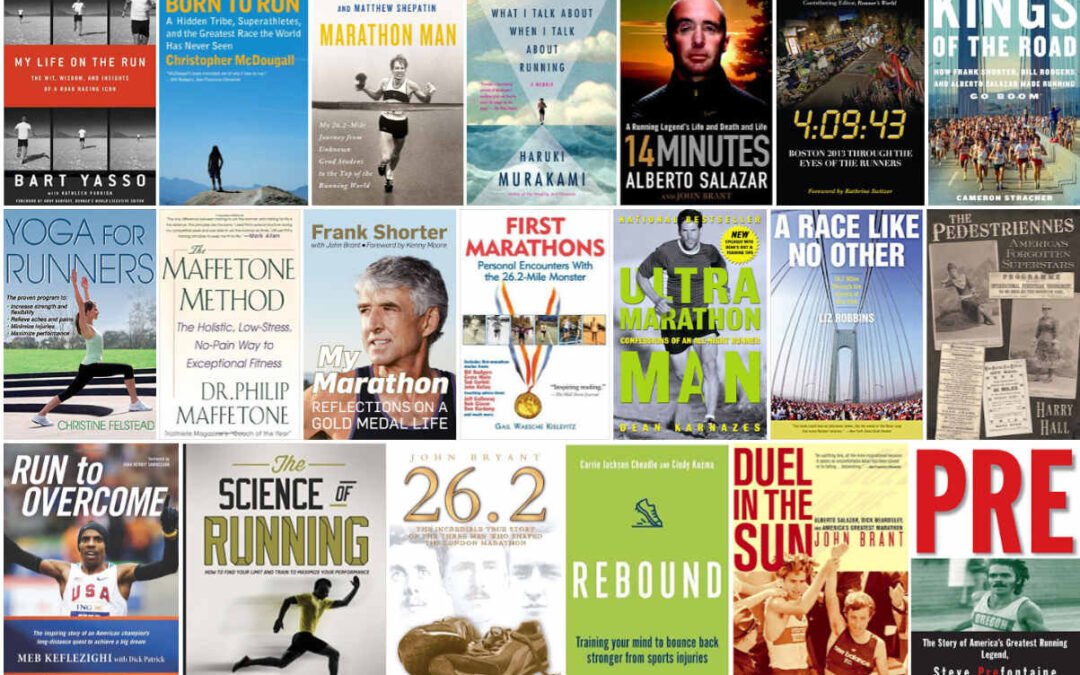
11 – Ultramarathon Man, by Dean Karnazes – The classic book that launched Karnazes celebrity runner career. You will finish the book inspired to lace up and run 100 miles into the horizon.

12 – Duel in the Sun, by John Brant: A detailed recap of the phenomenal 1982 Boston Marathon, where Alberto Salazar and Dick Beardsley fought step-by-step until the final yard.

13 – My Marathon, by Frank Shorter: The inspirational autobiography of a running icon, how he became an Olympic champion and the inspiration for the first running boom.

14 – A Race Like No Other, by Liz Robins: A must read for anyone about to run the New York City Marathon or even if you already ran it. The best book on the subject.

15 – Marathon Man, by Bill Rodgers: An autobiography of one of the most influential runners in history. His triumphs, defeats, personal struggles and legacy, told in a first-person detailed account.

16 – 4:09:23, by Hal Higdon: a blow-by-blow account of the 2013 Boston Marathon bombing, the perpetrators, the runners, the heroes, the scarring and redemption from a tragedy.

17 – What I Talk About When I Talk About Running, by Haruki Murakami: A successful and world-renowned writer tells us about his relationship with running and how it has influenced his life.

18 – First Marathons, by Gail Waesche Kislevitz: A collection of accounts of runners facing the 26.2 monster for the very first time. Inspiring reading even if you are a veteran of the distance.

19 – The Maffetone Method, by Phil Maffetone: The quintessential book to understand the concept of running slow so you can run fast.

20 – Yoga for Runners, by Christine Felstead: I firmly believe in the benefits of yoga for all runners, thus, the title states everything else you need to know.

Skip to content