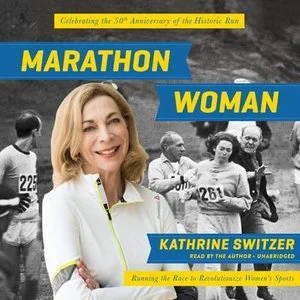
by Coach Adolfo Salgueiro | Jun 18, 2024 | Book Review, Opinion
Written by Kathrine Switzer
Reviewed by Coach Adolfo Salgueiro
I’ve wanted to read Marathon Woman for quite a while. For years. But because I thought I knew the Kathrine Switzer Boston Marathon story, other running books ended up jumping the line. Now that I tackle it, and finished it, I am glad I did. There is so much more to the generic story most of us think we know. There is so much more about this pioneering woman that every runner with the most basic interest in the history of our sport, especially women, should know.
The book was originally published in April 2007, for the 40th anniversary of her historic 1967 Boston Marathon. A new and updated version was released for the 50th anniversary.
Runners with basic knowledge in the history of running may know who Kathrine Switzer is. Yes, she was the first woman that while properly registered, ran the Boston Marathon. Yes, she is the protagonist of that set of three photos where the marathon official, Jock Semple, attacks her while trying to rip her bib. And yes, she is one of the pioneers of women’s long-distance running.
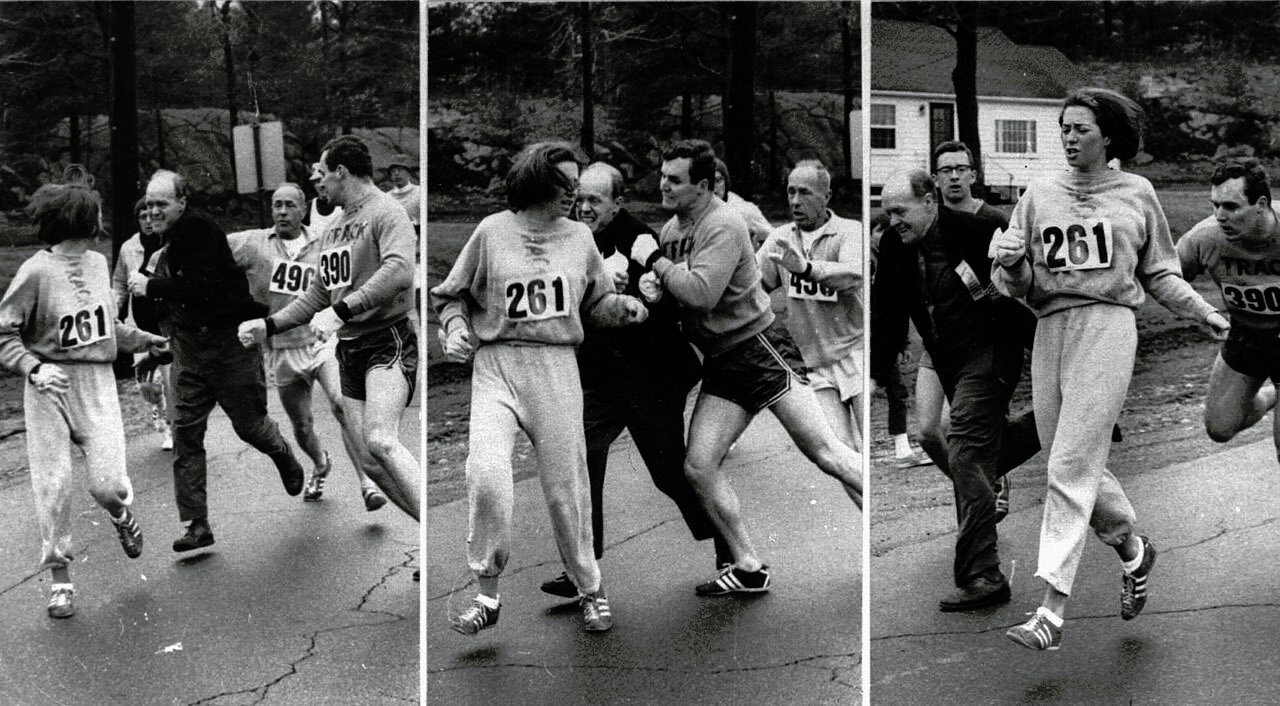
The set of photos by Harry A. Trask that propelled women’s running into a legitimate sport
But that is just part of the story. Only part of her legacy. She did so much more to promote that women were more than able to run beyond 800 meters, that they could run as far as they wished, including marathons at high speed without their uterus falling out. She was the catalyst of the women’s marathon becoming an Olympic event starting in 1984. And she did it not as a banner of feminism but because she believed women could do it, and se set out to prove it through actions. Not just words.
I am not going to go deep into the history of women’s running in the last 50 years. That is what the book is there for. But have this in mind: if you are a woman runner reading this post, next time you are in a race and see that more than half of the field being female, make sure you thank Kathrine Switzer.
I am sure that if Switzer did no endured and persevered through what she did, women would still be running marathons today. Another pioneer would have risen to the occasion. But Switzer was the one who did it, and as such, she should be recognized as a trailblazer in our sport. One of the most influential figures in history.
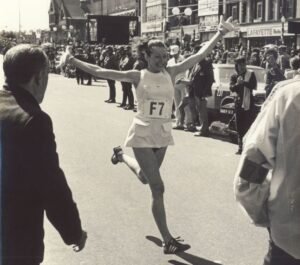
Switzer was more than a curiosity. She won the NYC Marathon, 2nd set up at 2:52 PR in Boston.
In her first-person account the author is very candid, vulnerable, and open about her life, both on and off the asphalt. She starts as a girl who just wants to run but finds no outlet, through her fateful first marathon, her win in the NYC Marathon, her 2:51 PR, the AVON race series for women and finally establishing the female marathon as an Olympic event.
Switzer is funny, intimate, candid and holds no punches while discussing her personal life experiences, especially when it comes to the men she has shared her life with. Her romantic relationships were not the best, yet she was able to persevere and come victorious on the other side, without surrendering as a victim and still making her life’s goal a reality.
You don’t have to be a runner, or a woman for that matter, to enjoy and learn something from Marathon Woman. I highly recommend it. It is worth two particularly important resources: your time and your money.
Have you read Marathon Woman? Let me know your thoughts in the comment box below.
👇Do you want the key takeaways of this blog post? 👇
👇Click below to watch the video summary 👇
https://youtu.be/np-SYR5UuRk

by Coach Adolfo Salgueiro | May 16, 2023 | Article, Book Review, Coaching
Author: Jonathan Beverly
Reviewed by: Coach Adolfo Salgueiro
I first heard from Jonathan Beverly in early 2017, listening to a podcast where he promoted this book. His concepts were remarkably interesting, and I kept his name within my radar. A few months later I met him at the NYC Marathon expo and had the chance to talk to him and purchase the book. I read it right away, and then, again, a couple of years later. A couple of years after that, I read it one more time and decided to finally draft a book review.
Overall, this book is of terrific value, both in terms of time and money.
According to the bio on his website, Jonathan Beverly is a senior running gear editor at Outside magazine. He’s also a writer, photographer, coach and lifetime runner. His passion is to help others experience the joy of training, competing and being fit and fully alive. He is also the author of “Run Strong, Stay Hungry.” He served as editor of Running Times for 15 years. He has coached adults, junior high and high school.
This book touches on multiple aspects of running, all of them slices that when combined, will produce our best stride. The premise is that there is no one correct way to move when you run. There are wrong ways to do so, and some may lead to injury.
“The way we run is unique to our bodies and our experience—says Beverly—I can no more run like Kenenisa Bekele than he could run like me (not that he would want to). Bottom line: there is no perfect form, no one-size-fits-all recommendation.”
Beverly states that most of what he says is neither his nor new. It is a compilation of his conversations with multiple experts in physical therapy, anthropology, podiatry, natural running, etc. This alone makes the content even more valuable as you have the wisdom and knowledge of all these professionals in a 242-page book.
As a heel striking runner for over 40 years, I am reassured by the author’s assessment on how we have become so focused on where the foot lands and what shoe is needed to fix it, that we have forgotten that it all starts above, at the hip. From there, the kinetic chain goes down through the various parts of the leg until finally ends on the soles of the feet. When we focus all our attention on the landing, we are discarding the process that gets us there.
“Your running style is as your voice -he says- Every person has a distinct sound based on his or her physical characteristics, habits and upbringing.”
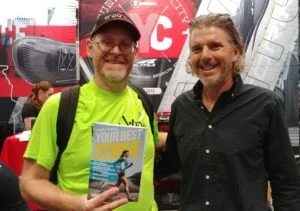
I had the chance to meet the author and purchase the book from him, at the 2017 NYC Marathon Expo
Other subjects discussed include running shoes (there is no magic in them); core exercises, strength training, balance, stability, posture, cues to assess your running form and, of course, how to put it all together.
I like how he spends time talking about the mythology of cadence. Just as with foot strike, there is a lot of misunderstanding here, especially when it comes to the supposedly perfect number of 180, which is anecdotal and has no scientific base. Sure, cadence can help us cure certain issues like overstriding, but it is more the result of our running instead of a driver of efficiency. Trying to improve cadence without addressing the issues that may cause its deficiencies can get runners in trouble. \”Mind your hips, and your cadence (as well as your foot strike) will take care of itself\”, guarantees the author.
Another important topic is the mixing of the training, including shoes, surfaces, speeds, routes and directions to avoid overuse injuries. Biomechanist Simon Bartold is quoted saying: “Your average runner in Manhattan will run in the same track, in the same direction, the same way, every single time they run and wonder why they get injured. You have to mix up the signal.\”
A tip for reading this book is to do so in a place where you can take the time and have the space to do the exercises he asks you to do. You may need to lay on the floor to feel your glutes, or stand up and place your hands in certain areas to feel your pelvis rotating, or kneel to feel your hip extensors doing their thing. So, you may not want to read this one on the bus or at a public place where you’ll feel awkward performing certain moves, unless you bookmark them and come back home to them.
Overall, this book is of terrific value, both in terms of time and money.
by Coach Adolfo Salgueiro | Jan 11, 2022 | List, Personal
By Coach Adolfo Salgueiro
In my New Year Running Resolutions for 2022 post from last week, suggestion #8 was to “read at least one running book”. As much as I believe this is an important resolution, I confess that I kind of threw that one in at the last minute, mostly because I was selecting the running books I want to read this year.
A few readers contacted me letting me know this is a clever idea and they will either pick or have already picked their running book for 2022. As an avid reader, I can’t but be delighted on the reception this suggestion had. Now, one of my readers (and dear friend), asked me that, based on this suggestion, what is “the one book” I will recommend for someone to read in 2022.
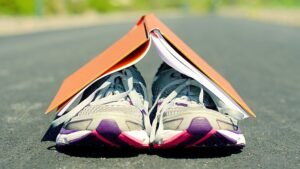
If you want to get better, learning about our sport is as important as putting in the miles. Being knowledgeable is always an advantage
The question was so broad that I didn’t pay much attention to it, at first. But as the week progressed, I kept circling back to it. Sure, there is not a straight answer to it but there must be a way around it. Somehow, this remained in my brain’s backburner and would not go away. So this is what I have come up with:
There is no way to recommend just one book. No one book encompasses everything, nor it can satisfy the curiosity of every reader. In the post, I stated that “If we want to get better at our sport, we must learn about its science, its practices, its history, and its top performers. Personal experience is important, sure, but it is not the wherewithal to become the best runner you can be.”
Based on this, I decided to segment that suggestion and propose one book from each category. So, based on your particular interest, you can have “The One Book”. It is not what was asked but I hope it fits the bill.
Science – The Science of Running, by Steve Magness: If you want to geek out and dig deep into the science of what happens inside your body when you run, this is the book for you. It is dense, full of biology, scientific references and it is not the most fun to read. But if you decide to go through it, you will come out with a deep understanding on the physiology and mechanics of what happens when you run and why.
Practices – Run for Your Life, By Dr. Marc Cuccuzzella: The author has run Sub-3 marathons for over 30 consecutive years. In this book he mixes science and personal experience in an easy-to-read narrative, without geeking out on the science side of things. He explains the importance, the right way, and the approach to human movement so you can do it smarter, stronger, and springier. This book is as much for a sub-3 marathoner as it is for a walker wanting to complete a first 5k.
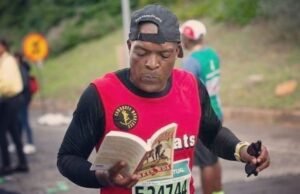
Reading while running is neither safe nor necessary. This is a real photo.
History – Kings of the Road, By Cameron Stracher: This is the story of Frank Shorter, Bill Rodgers, Alberto Salazar, and how they fueled the first running boom after Shorter’s marathon gold in the Munich Olympics (1972). It shows how running went from a niche activity by a bunch of crazies to the foundation of the New York City Marathon. This is the base for what came later, and thus, what we are enjoying, today. These were the pioneers who brought marathoning to the mainstream of participation sports.
Top Performers – There are great bios out there on Rodgers, Shorter, Johnny Kelly, Steve Prefontaine, Haile Gebrselassie and many more. But if you are delving into running bios for the first time, 26 Marathons, by Meb Keflezighi could be a good place to start. Beyond his running acumen, most of us can relate to him because he is a contemporary figure. We can also learn plenty from each one of his 26 incursions into the 26.2 monster.
Special Mention – Born to Run, by Christopher McDougall: An indispensable read for anyone interested in understanding how the human body was built to run, told through superb storytelling. This book has become a classic and there is a good reason for it. Just beware that his praise for minimalistic running shoes and barefoot running has been disproven. But other than that, it is a gem.
What is your book recommendation?
by Coach Adolfo Salgueiro | Jan 4, 2022 | List, Reflection
By Coach Adolfo Salgueiro
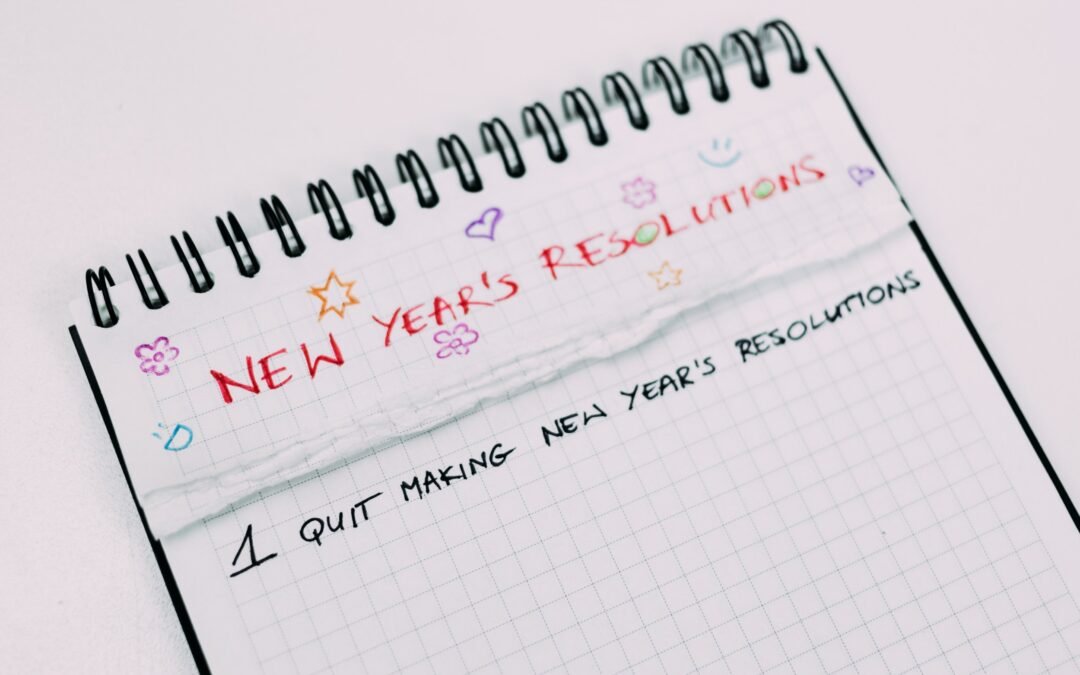
As a new year dawns on us and we focus on what we want to accomplish during the coming 12 months, our running lives should not pushed to the back burner. If we want to make sure that come December, we are not regretting a wasted athletic year, or cramming up the miles, the time to set up the course is now.
Running goals are very individual. Qualifying for Boston may be the goal of a lifetime for someone, while others qualify every year. Finishing your first marathon can be a tough yet achievable goal for you, while others are focusing on their 10th 100-miler. Goals need to be feasible and, mor important, individual.
These are a few running goals you may consider for 2022:
1 – Set up a mileage goal – One thousand miles in a year is an immensely popular and achievable goal. The 4-digit number is more of a psychological barrier than anything else, but it is feasible. The key is to break it (or whatever number you set your mind to) down to small segments you can easily manage. For 1000 miles, this is just 83.33 miles per month, or 4.8 a day if you run 4 times a week (less if you include a weekly long run). If this goal is for you, I recommend you join the 1K Run Club in Facebook, with over 8000 runners from all over the world.
Set up your course for 2022, now, so you are not cramming up, come December
2 – Add one more day of activity per week – If running mileage is not your thing, adding another day to your training is an effective way to increase your activity. If you run 2-3 times a week, that 3rd or 4th day is viable. If you run 5 or 6, this may not be a goal for you, but you can always add a yoga class or a cross training day. The key is to increase your activity as long as you are not sacrificing your recovery.
3 – Add strength training to the weekly routine – It is the most neglected part of every training cycle, yet the most beneficial to make you stronger, faster and deflect injuries. This is usually the first casualty of a busy lifestyle. But consider this: As runners, we pound on our musculoskeletal system with 3-4 times our body weight into each leg, about 800 times per mile. If we don’t prepare our bones, muscles, tendons, and ligaments to take on the workload, we will be rehabbing instead of running.
4 – Set up a PR Goal on a Specific Distance – Setting up for a PR in every distance in the same season is a recipe for injury. Going for a PR in every race, every week is the fastest way to burning out. Set up your main goals for the season and focus on them. If you want to run your best 5K ever, a marathon PR may not be a good mix. Figure out what is important to you and go for it.
5 – Concentrate on running easy on easy days – The biggest mistake runners make is to go to fast on easy days. There is a good reason why easy days are labeled as “easy”. It is because you are supposed to run easy. These are the sessions when you recover so you can go faster later, when you develop the cardiovascular system so you can go faster later, when you prepare your musculoskeletal system to adjust so you can go faster later. Science has determined that you won’t get slower by running slow. Quite the contrary. You must run slow to eventually be able to run fast.

In 200,000 years of history, humans haven’t evolved not to sleep. So hit that pillow in 2022 (Photo: Andrea Piacquadio, Pexels.com)
6 – Focus on Sleeping –Sleeping is the number one device in our recovery tool bag, and it is mandatory. Consider this: The Homo Sapiens emerged about 200,000 years ago and during its evolution, the need for sleep to recover and reset our systems has not disappeared. That alone should tell you why you can’t skip it. So, make sure 7-8 hours of sleep a night is part of your daily training for 2022.
7 – Keep a running log – Sure, Garmin, Runkeeper, Strava, etc., keep track of more parameters you could ever understand or need. But keeping a personal log, either handwritten or in a computer file, on your daily activity, will make a noticeable difference in the understanding of your training.
8 – Read at least one running book – If we want to get better at our sport, we must learn about its science, its practices, its history, and its top performers. Personal experience is important, sure, but it is not the wherewithal to become the best runner you can be. Reading may not be for everybody, but one book a year should be easily manageable. Find a book on a running subject that interests you and give go for it.
Of course, these are not the only athletic goals you may set up for 2022. They are just ideas to help you define what you would like to achieve this year. Pick one, pick two or pick them all, but get started right away.
What are your running goals for 2022?
by Coach Adolfo Salgueiro | Nov 23, 2021 | Book Review, Opinion
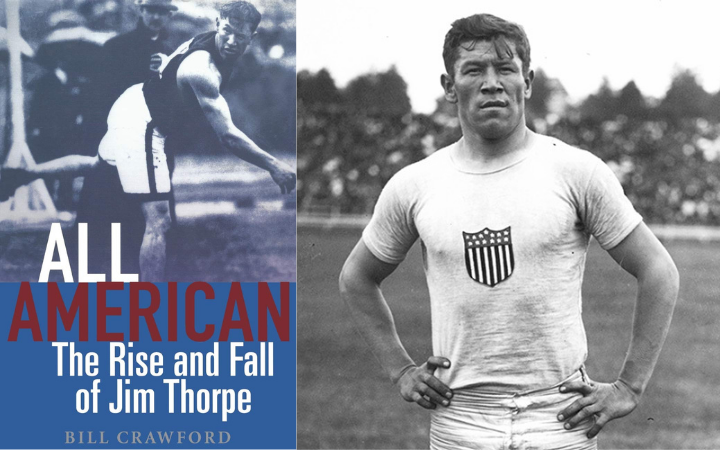
Written by Bill Crawford
Reviewed by Coach Adolfo Salgueiro
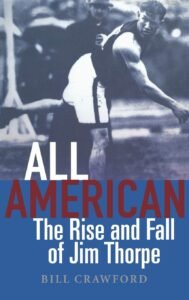
James Francis Thorpe (1887-1953) was a member of the Sac and Fox Nation who became labeled as “The Best Athlete in the World” By King Gustav of Sweden after winning both the pentathlon and decathlon in the 1912 Olympics in Stockholm. He was also a college and professional football player, first President of the NFL (1920) and if that weren’t enough, also played Major League Baseball, among many athletic achievements.
As a lifetime sports fan, the name of Jim Thorpe evoked victory, nostalgia, athletic triumph and unfair treatment by the powerful institutions of sports of the earlier parts of the 20th Century.
As an early fan of sports history, Thorpe caught my attention at a young age mainly because of his Olympic triumphs, and because he also played Major League Baseball, of which I was a big fan at the time. The more I read about this mysterious character, the more the legend of “the best athlete in the world” grew for me. Then, as an adult, you get your hands on a serious biographical text like this one and you get to delve into so much more. I knew he was involved in other sports activities but wasn’t aware of the extent of it. Well, now I am.
The book covers in detail the birth of amateur sports and how the entire concept became established. It was a way for the snobby British of the late 19th and early 20th Centuries to keep the working class from competing against them. To keep the riffraff away. It was not about being paid to compete or win, it was about having to work to make a living instead of dedicating your life to leisure and sports. This forces the question: who was the amateur and who was the pro? I have read other books where this is explained the same fashion, so I tend to believe the theory.
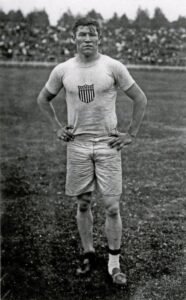
Jim Thorpe at the 1912 Olympics
Bill Crawford’s book should be a bonanza for football fans. Even though it was not his favorite sport, Thorpe was one of the great football players from the early days when the game was just getting established. It goes into plenty of detail on the evolution of the game, its main characters at the college and professional levels, both on and off the field. If you couldn’t care less about football, about sixty percent of this book may not be of your interest. I fall in that category but was able to make the best out of it just because I had so much interest on getting to know more about Mr. Thorpe.
His Olympic prowess and details of his participation at the Stockholm 1912 Olympics are covered in just one chapter. His participation in Major League Baseball is no more than anecdotal. His spectacular riise and fall are explained in detail, which is an important aspect of why his name became the historic figure we all know, today.
In summary, All American is a good book and if you are interested in learning about the man behind the myth, it will be money and time well spent. But if you are looking for a book about running, Olympic triumph and competition, this is not it.