As 2024 approaches (or it is already here depending on when you are reading this post) and we look forward to a blank canvas to fill out with new goals, challenges, and adventures, we quickly turn our heads back to the year that was, to reminisce and reflect on our running year.
We saw marathon world records fall to the point where it seems feasible that 2024 will give us the first sub-2 marathon for men and first sub-2:10 for women. We are just 36 and 114 seconds away from such feats. We saw the 6-star finisher list growing to 8,143 and it is a matter of time before a 7th Major is included. Many of our friends set PRs in their marathons, shorter distances or just lost their 26.2 virginities. But, for many of us, 2023 was a challenging year. One that tested our core as runner beings. I was in that latter group.
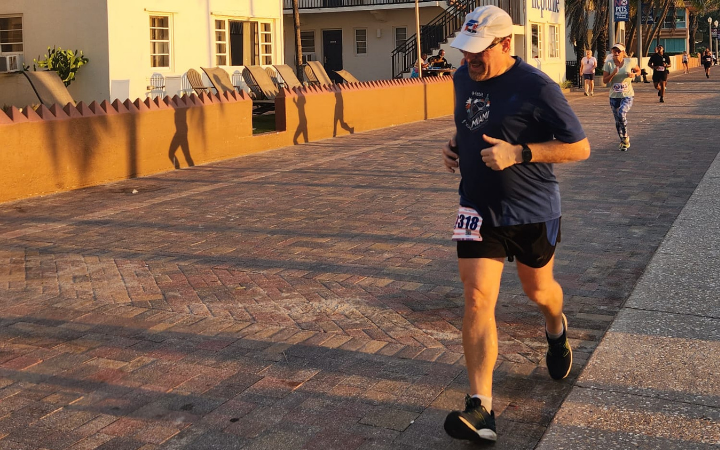
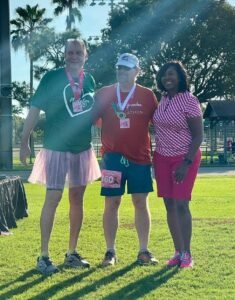
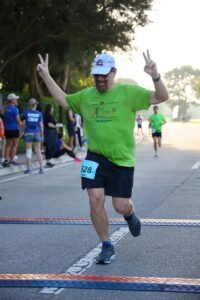
Winning my Age Group at the Plantation F*ck Cancer 5K was one of the few highlight of my 2023 running season.
I completed the 1000-mile challenge with just three days to spare. And sure, it is a nice achievement, but it doesn’t tell the whole story of my 2023. At least I did not get any injury and beyond the normal aches and pains, was able to run throughout the year with no interruption. That alone is a win. Still, it was far from what I expected it to be 12 months ago.
For some reason, it was very difficult to get into the running groove during the year. In my two half marathons early in the season, I was forced to walk after mile 10, finishing in unimpressive times that are embarrassing for me, when compared to what I have done in the recent past. I also had to withdraw from the Marine Corps Marathon because my body could not adjust to the heat and humidity of summer training in South Florida. It was impossible for me to complete more than 8 miles in one run, so I focused on 5 and 10K races until the end of the year. Those are not my favorite distances, as I prefer to go longer, but this was the adjustment that was required, and I am OK with it. I even won my age group in a local 5K, a rare occurrence.
For the first time in the last 15 years if felt little motivation to lace up and run. For the first time in recent memory, I dreaded waking up early on a weekend to go run long. Anxiety from my professional life, which was at an all-time high during the year, crept into my running life and affected me negatively. I gained weight, slowed down and lost the will to dig deep when a run got tough.
My lowest point was one day around September when for the first time ever, or at least that I can recall, I went out for a run and before the first minute was through, I decided I did not want to do this, so I stopped and drove home. Not before stopping at a gas station and stuffing up on cookies and chips. I still look back and can’t believe this happened.
Yet, I kept running. After more than 40 years of being active, I know how you will feel after a good run. The support of my two running groups kept me accountable and sometimes I just forced myself to go out despite not feeling it.
I completed a handful of races with not many results to brag about.
I have tried to pinpoint where the problem lies but I haven’t been able to do so. Maybe it is because I am approaching 60. Maybe two and a half years after my open-heart surgery I must accept I won’t be able to run the same as before. Maybe the anxiety my work life has put me through for the last 18 months is taking a toll on me. Maybe my peak running years are behind me. Maybe it is a combination of everything.
But this difficult year has been an opportunity to analyze life from a different perspective and realize I am still very blessed. My running life is not my life, it is just part of it. My value as a husband, as a father, as a friend, as a son, as a coach or as a professional, is not tied to my marathon PR or my medal rack display at home. I still have a healthy marriage with a wife I adore, a healthy and successful son, both my parents are alive in their eighties and living independently, I have a thriving coaching business, I am part of a phenomenal running community with true friends, and I am injury free. At this stage in my life this is more valuable than running sub-2 in the half once again, or setting up another PR. I call this maturity.
This does not mean I have given up on improvement. I still want to go over 1000 miles in 2024. I still want to run at least 4 or 5 halves and be part of one marathon cycle. I want to get rid of the source of anxiety and lose the extra pounds I added in 2023. I thank God that He is providing me with 12 brand-new, crisp, months to achieve it all.
When it comes to us runners, sometimes experience goes out the window, and we make stupid, rookie mistakes that derail our training, fitness, and/or goal races. Who can forget Daniel Do Nascimento, an Olympian and 2:04 marathoner, going so fast during the 2022 NYC Marathon and collapsing at Mile 21 on a hot and humid day? He also collapsed during the Tokyo Olympics. If he screws up monumentally in the biggest stages, what’s left for us mere aficionados?
Daniel Do Nascimento collapsed in both Tokyo and NYC. Lesson not learned
Failure must be embraced as an opportunity to gain experience, sure, but it doesn’t make it any easier when we screw up and are forced to learn a lesson at an inconvenient time. So, here are eight areas of your running where you could avoid learning the hard way:
1. Starting too fast: The equation is straightforward. The faster you go, the less endurance you have. Racing a half marathon at 5K pace will end in disaster. Starting faster than your race plan is not conducive to PRs but to bonking. Don’t fall for the “I-feel-awesome” fallacy at mile 8 of a marathon. You’d better feel formidable there if you trained for 26. Execute your race plan as designed. The chances of a satisfactory race will multiply exponentially.
2. Expecting linear and/or unlimited improvement: Because the curve of progress is so steep at the beginning of a training cycle, especially for beginners with little to no historical reference, it becomes imperative to understand that each body has a performance ceiling. If we didn’t, we would all eventually be setting world records. The apex of our curve can still move up as we get better, more experienced, and in better shape. But that process may take years, which requires patience. Too much, too fast, too soon is the cardinal sin of running and a sure path to injury.
3. More mileage is not necessarily better: If you are planning to run long distances, you must run a lot of miles. It is inevitable. Now, what “a lot of miles” implies is very personal. It may mean 120 miles for Olympians but just 30 for a newbie looking to finish strong in their first half marathon. If you run beyond your body’s capability, recovery will be affected, and injury, overtraining, cumulative exhaustion and burnout will derail your goal. Figure out what works best for you and apply it.
4. Bad races are part of the deal: You may have done everything right. You were dedicated to your training, you slept enough, hydrated properly, strength trained, didn’t miss a day, and rested. And yet, you had a bad race. Well, nobody can guarantee you a solid performance. That’s why we compete on race day and not just pick up our medals and trophies by showing our training logs. Sometimes it happens, sometimes it doesn’t. Accept it and don’t let it be the measurement of your worth as a person.
5. Not practicing race strategy during training: The place to figure out you can’t stomach that 5th gel shouldn’t be mile 20 on marathon day. Discovering that you don’t have enough pockets to carry all your needs should not be realized on race morning. And so on. Be smart. Go for more than just one dry run during the training cycle.
Not taking care of your rest will inevitably lead to burnout or injury (Photo: Nataliya Vaitkevich, Pexels)
6. Rest days are an integral part of any plan: Even elites take rest days. At the height of their training for a Marathon Major, it may mean 10 easy miles at a pace that would be a PR for you or me. But we are not training to win Boston or London. So, let’s put our goals in perspective and understand what we want to carry out. Let’s not compare ourselves to other runners, and make sure we rest properly, enough so our body doesn’t have to choose a rest day for us, which I may bet would come at an inconvenient time.
7. Squeezing in one more long run: The body usually takes from 10-14 days to adapt to the stress of a particular training session. This is why we taper. Not much of what we do in the two weeks prior to the race will help us. Yet, it can harm us. So, refrain from squeezing in one more long run or an added speed session in during taper. Follow your plan.
8. Trying new things on race day: Is the cardinal sin of racing. This is not the day to find out how these shorts fit, if this brand of gel upsets your stomach, or the responsiveness of this brand-new pair of shoes. You’ve been training for this day. You have sacrificed sweat, time, money, and emotion into this project. Don’t screw it up at the time to see it through.
We would love to hear your advice for fellow runners. Leave a comment below; we appreciate every contribution!
A few months ago, I posted on Facebook that I had signed up for the Marine Corps Marathon, which will take place on October 29th. Up until a few days ago, I was training for it. Today I must announce that I am withdrawing from the race. It is a regrettable yet humbling experience that is currently forcing me to reassess where I am with my running, why I got here, and how to get out of it.
It is not a failure as long as you learn from it so it doesn’t happen again (Photo: Pexels)
It is more than safe for my readers to assume that training was not going as planned. It had become more of a suffer-fest than the enjoyable experience with its usual highs and lows. Things were not clicking. The efforts were mammoth-like. Recovery took too long. I began to dread the long runs. The speed work took so much out of me that I was unable to feel any progress. It was a death spiral.
Maybe I was overtrained or under-recovered. Maybe it was the heatwave currently affecting the entire Northern Hemisphere. Maybe the long runs at 86º temperatures (30ºC) with 100% humidity, where your sweat doesn’t evaporate, were overtaxing my body. Maybe, as running comes in cycles, I am amid a low instead of a high. Maybe, a month away from 58, I must accept that I am not what I was just a few years ago. Maybe the few extra pounds I haven’t been able to shed off were multiplying my effort. Maybe my body is not the same two years after my open-heart surgery. Maybe it is a combination of everything. Who knows?
It was a tough decision, as I was training with two committed runners I am also coaching. Seeing them thrive while the coach could not keep up was embarrassing. It was difficult when we set out for a long run, and I had to turn around earlier because I knew that I just didn’t have it that day, or the next, and the next, too. As if this wasn’t enough, my left knee, the weakest link in my running life (2 surgeries), started hurting again for the first time in years. Deep inside I believed that if I kept going, everything would eventually click. That my body would magically adapt. I know I hung on longer than I should have just because I felt obligated to my runners. But the time of reckoning was inevitable.
As I was suffering, plenty of friends told me that I shouldn’t worry because October in DC has wonderful weather. As much as I appreciate the thought and encouragement, I still needed to train in the hot and muggy South Florida so I could enjoy the good weather in DC, in October.
The updated version of this picture will have to wait.
And that’s the other thing. There is no doubt in my mind that I could have finished the race. But with 11 marathons under my belt, just finishing is no longer a worthy goal. I am not willing to suffer to cross the line in 5:30. I wanted to run a marathon at 58 so I could beat my dad’s age of 57 when he ran his last. I also wanted to run it in 4:30, to beat the 4:43 of his last 26.2. So, God willing, I still have plenty of time to achieve those two goals, hopefully while my dad is still alive, so I can brag about them.
The next steps are to reassess where I am at this point and how I got here. I will start by resting my body. I will keep running but won’t push too hard through the muggy days with longer or faster runs. I will work based on effort and run easily to regain the aerobic capacity I feel I have lost. I will focus on running the best half marathon I can next season. Hopefully, three or four of them until I can put together an effort I can be satisfied with. Maybe I’ll try to set new 55+ PRs in the 5K and 10K. Once I feel I am back, then I will figure out what is next and plan for my next marathon. I know I have at least one more in me.
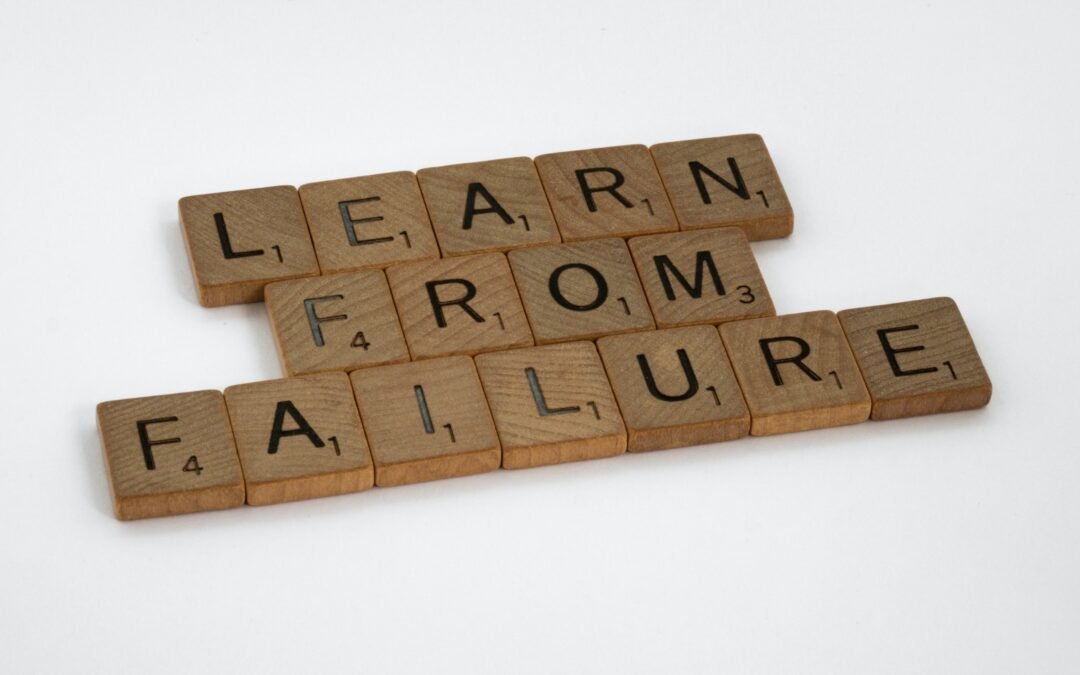
The one thing I know is that I will keep running. Withdrawing from this marathon is a humbling experience that I must learn from. It is only a failure if you don’t learn anything from it and thus, you screw it up again.
Runner’s World Magazine, the reference media outlet for the running community for over 50 years, ran an article on April 27, titled “How to Pace a 5K So You Can Hit Your PR”. It was written by Stephen Sheehan. The expert quoted throughout the narrative was Coach Adolfo Salgueiro, head coach at Foultips.Run.
“I have been a Runner’s World reader since the early 1980s,” Stated Coach Salgueiro. “Being able to contribute to one of their articles is a dream come true. The fact they wanted my expertise on the subject is a statement to the value of the decades of experience and preparation I’ve put into this passion of mine.”
This is the second time Coach Adolfo has been in Runner’s World. A summary on his running career ran back in March 2021.
To read the full Runner’s World article you may click here.
Be aware that Runner’s World has a limit on the number of free articles non-members can read a month. If you have exceeded such a number, you may have to come back next month to read it. Or contact me and I will send you a PDF version.
As a runner who seldom, if ever, runs with music, I usually get deep in my thoughts. This doesn’t necessarily mean that my thoughts are too deep, but they do accompany me through my miles. When you come back from a 2+ hour run alone, you can’t believe how many things crossed your mind. Some thoughts were ephemeral, some were transcendental, some dark and some, just bizarre.
I was pondering this last week and decided to recall some of the thoughts that usually cross my mind when I run alone. Maybe some readers can relate, some may think I am crazy and some may want to add their 2-cents to the list. So, here I go:
1. What a wonderful day for a run. Beautiful weather to get lost in my thoughts and enjoy the sport I love.
2. This sucks! Why am I running today? The weather is awful, I am tired and I don’t want to be here. But I know that when I get back home I will feel better about it, so let’s keep moving.
3. It broke! I’ve been running for at least 45 minutes and this stupid Garmin says it’s only been nine.
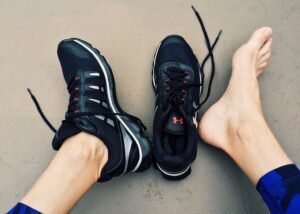
Shoes. Running shoes is the answer to most of our running thoughts (Photo: Pexels)
4. I can’t believe my run is over! It was so quick, and I felt so good. I could have gone longer.
5. Oh no! I’m back to my car/home and my watch says 8.87. I’m not done yet.
6. Who had the brilliant idea of registering for a fall marathon so we could train in the Florida summer?
7. This pace is too fast to qualify as easy. I always point this out to my trainees. Screw it! I feel great!
8. I knew I had to go to the bathroom before I left. Let me find a bush.
9. Almost done! It is the equivalent of once around the park plus twice my neighborhood’s short loop.
10. That was an amazing run. Some people need drugs to feel like this.
11. What a spectacular sunrise! This is why I wake up at 5AM on a Saturday and run long.
12. I am 10 miles in and have 10 to go. Why couldn’t I take a sport for normal people, like billiards or ping pong.
13. No! Not another gel. I think I’ll puke.
14. I get it now! That’s how trigonometry works. Now the world makes sense.
15. Ok, I made it to the bench where I was to take a walk break, but I will run until the next light pole and reassess.
16. I am beat up and ready for a walk. But too many people know me here. It will be embarrassing.
Running math in your head while you run, may not bring exact results (Photo: George Becker, Pexels)
17. Let’s see. It will be ham and mushrooms on that pizza, washed down with a beer. No, with two beers… But I’ll get donuts first.
18. Come on!! Ditch those negative thoughts. I run because I like it, not because I have to.
19. I’ve run nine miles so far. So, I don’t need to do 13. Nine is a ton of miles. But 13 is better. How about we compromise at 11? Stop negotiating with yourself and run those 13!
20. This is the 3rd time I have crossed paths with this runner. I wonder what marathon she’s training for.
21. I will kill it next season. I will set up PR in every distance. I am going to train so hard that I will never feel this crappy again.
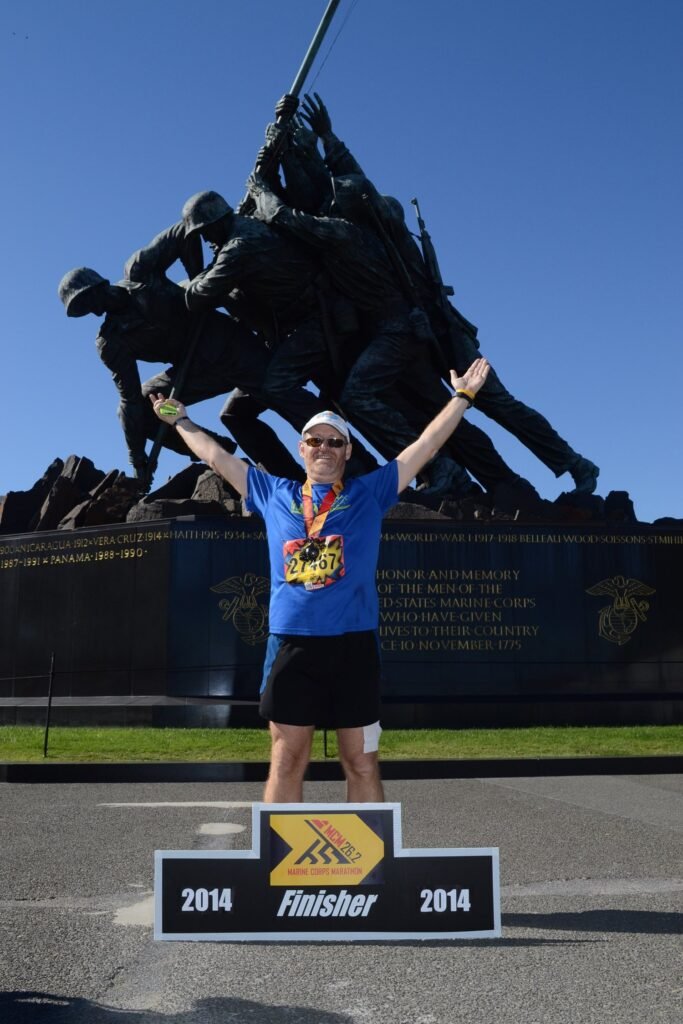
22. It will be so impressive when I cross the finish line in that race. I will smile and raise my arms just like this.
23. If I keep this pace for 26.2 miles, I will set a PR by 22 minutes. WOW!! No… wait a minute. That’s wrong. Maybe I shouldn’t be running math in my head at mile 16.
24. I love these shoes. Maybe I should buy myself another pair.
25. I hate these shoes. Maybe I should buy myself another pair.
26. These shoes are just OK. Maybe I should buy myself another pair.
27. Do I really need another pair of running shoes? Of course, I do!
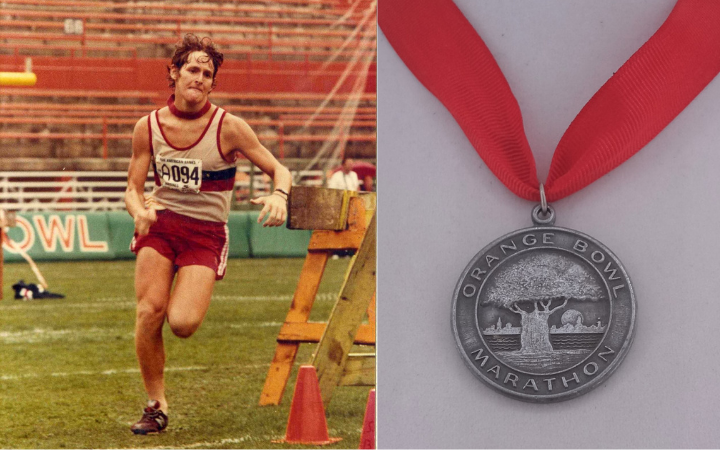
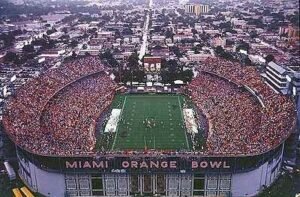
I still can’t believe that it has been 40 years since my first marathon. Four decades since that unforgettable January 22nd of 1983 inside the old Orange Bowl Stadium in Miami. 14,610 days have passed since that unprepared 17-year-old higschooler crossed a finish line that became the gift that kept on giving.
Since I can remember, I wanted to run a marathon. Not sure why. Maybe because I read about the athletics exploits of Abebe Bikila, Emil Zatopek or contemporaries like Frank Shorter and Bill Rogers. Who knows? Somehow, I always loved the extremes. I started running when I was 12 or 13 while living in Caracas, Venezuela, and at 15, ran my first 10K race. Then, a couple of months after turning 17, my dad told me he was running the Orange Bowl Marathon in January 1983, and if I trained, he would take me to Miami. Maybe I just wanted the trip and a few days off school, or it could have been a legitimate attraction for the physical challenge. Regardless, what I know is that 6 weeks later I was lining up at the foot of the iconic home of the Miami Dolphins, who eight days later were taking on the Washington Redskins in the Super Bowl.
The Miami Orange Bowl stadium (1937-2008) seated 72,319, hosted 5 Super Bowls and was home of the Miami Dolphins from (1966-1986)
I’ve written before about that race. So, on this anniversary I don’t want to reminisce about that particular day, but on what the race has meant to me throughout my life. Last year, on the 39th anniversary of the marathon, I wrote a memoir about that day because I didn’t want details to be forgotten. If you would like to read more about it, please click here. I also wrote a post about getting my finisher’s medal 37 years later, back in 2020. If you want to read about it, please click here.
After that magical morning, 40 years ago, even if I never ran another step in my life, I was a marathoner. It is a label that sticks forever. It doesn’t fade away with time, or by forgetting the exact date and finishing time, or by never wearing a pair of running shorts again.
I kept running for a handful of years after my first marathon. By the time I turned 21 I had four under my belt, with a couple of them in the 3:30 range. I ran through my first three years of college and even had escalated disagreemtns with my girlfriend, who at times was fed up with not going out with our friends on Saturday nights because I had a Sunday morning long run. Many a time I had to put my foot down and state that I would drop her before my training. Today I would have handled it in a different way, but that was then.
As I have mentioned in other writings, as I was training to go sub-3 in 1986, I had a devastating non-running injury on my left knee that left me on the sidelines. It was such a demoralizing blow that I stopped running for decades. While not running I discovered the pleasures of sleeping in on weekends. I didn’t want to have the same issues with new girlfriends, so I went out partying on Saturday nights, and on Friday nights, too. I focused on getting my career in sports journalism started, graduating from college and all the stuff “normal” people do when they don’t need to wake up early to run long next day. The day I turned 18, I went to bed at 8PM because I was running 30Km (19 miles) next day as part of my training for the NYC Marathon. What a weirdo!
There is not much to be found online about the 1983 Orange Bowl Marathon. Surprisingly I found this cotton race shirt in eBay for “just” $149,99. Thanks, I’ll pass.
Yet, somewhere deep inside, I always knew I had one more marathon in me. Just one, to remind myself I could still do it, or to fool myself into thinking I was still as good as when I was a teenager, or to revisit old glories, or to show my young son what you can accomplish when you work hard towards a difficult goal. Whatever it was, I still wanted to hit the asphalt and take that 26.2 trip once more. Just once.
But sometimes you cross paths with the wrong people and they clip your wings. At 39, after a 2nd knee surgery in July 2004, I told the doctor I still had one more marathon in me and asked if he thought my knee could take it. He told me in no uncertain terms that I shouldn’t and couldn’t. I was stupid enough to take his word for it.
But one day, out of the blue I started walking for hours at a time, feeling good about it and experiencing the runner’s high once again. I found racewalking and then racewalked four half marathons, transitioning to the 26.2 at the 2012 Philadelphia Marathon. Three years and two more marathons later I realized that I just took the doctor’s word and did not run because he said so, not because I tried and failed. So, I got my running restarted and ran my first marathon since 1985, in 2017. Five years, four marathons and an open-heart surgery later, I am still running and looking towards my next 26.2-mile adventure.
The Marathon Training Academy podcast runs a great tag line: “You have what it takes to run a marathon and change your life”. I certainly had what it took to run it again, and my life hasn’t been the same since I completed that 2017 NYC Marathon after I became a runner for the 2nd time; nor since I racewalked the Philadelphia Marathon in 2012 after a 26 year hiatus, nor after that magical morning at the Orange Bowl Stadium, 40 years ago, this week, when my lifetime love affair with the mythical 26.2 monster got started.