Foultips.Run Head Coach obtains Highest Level of Certification From RRCA

Foultips.Run Head Coach obtains Highest Level of Certification From RRCA

One of only six running coaches in the State of Florida with the highest level certified by the RRCA

PLANTATION, Florida (November 23, 2020) – Foultips.run announced today that Head Coach Adolfo Salgueiro has just obtained his Level II Running Coach Certification from Road Runners Club of America (RRCA). This is the highest certification endorsed by this renowned, national organization, based in Arlington, VA. Founded in 1958, the Road Runners Club of America (RRCA) is the oldest and largest national association of runners and running organizations dedicated to growing the sport of running. At the time of his accreditation, Coach Salgueiro became one of just six running coaches in the State of Florida with an active Level II certification.

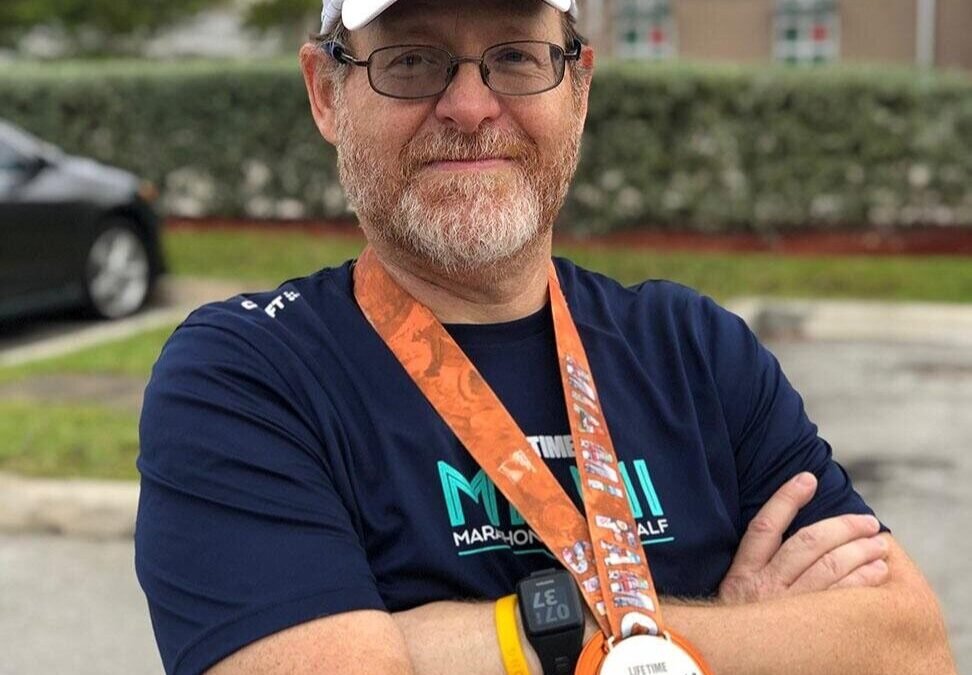
Highest Level of Certification From RRCAAdolfo, 55, started running in his childhood, accompanying his dad in the late 1970s. He caught the running bug in his early teens and ran his first marathon at age 17, completing the distance four times by the age of 20, with a PR of 3:32:08. After a long hiatus, he returned to the asphalt in 2012. Overall he has participated in over 100 races, including 10 full marathons and 40+ halves. He has competed as a runner, racewalker and in the run/walk modality.

He obtained his Level I Running Coach certification in February 2018 and soon thereafter launched Foultips.run, a website through which he effectively offers his running coaching services. Since then, he has helped runners from their first 5K though massive PRs in their marathons. These success stories have been documented on the website through case studies, runners’ testimonies and blog posts.

Coach Salgueiro is a graduate in Mass Communication from Venezuela’s Universidad Catolica Andres Bello. He worked for 17 years in professional baseball, including 8 seasons with the Florida Marlins at the Major league Level. He is also a licensed real estate broker. He has been married to Meki Sicilia since 2007 and has one son.
Highest Level of Certification From RRCA

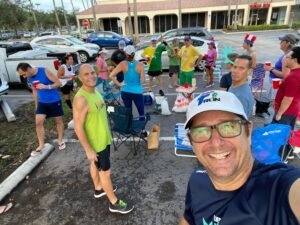
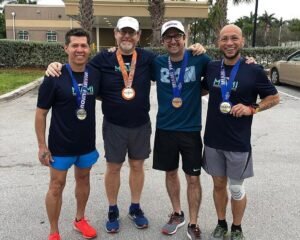
With my runners from the Miami Marathon 2020

Founded in 1958, the Road Runners Club of America champions the development of community-based running clubs and events that serve runners of all ages and abilities in pursuit of health and competition. RRCA’s vision is to see organized running clubs and events established in every community in the United States. The organization has provided a Coaching Certification Program since 1998. The goal of the program is to create a national community of knowledgeable and ethical distance running coaches to work with runners of all ages and abilities. The Level II Coaching Certification curriculum is designed to provide deeper understanding of the scientific, psychological, competitive and managerial aspects of working with individual clients and training groups.

If you want to contact Coach Adolfo, click here.
The Dreaded Piriformis Syndrome

The Dreaded Piriformis Syndrome

By Coach Adolfo Salgueiro

 A few weeks ago I read a social media posting by Mike Wardian, one of the ironmen of our sport, stating he was withdrawing his participation in an important race because of piriformis syndrome. My thought was that if this can happen to the king of recovery, a runner who competes every weekend, guy who is out there achieving superhuman feats, what is there left for the rest of us? Mere mortals that are just trying to do our best with what we have.

In his Instagram post from October 18, Wardian wrote: “Pro tip: don’t get Piriformis Syndrome the day before the race you have been looking forward to for years. It is a pain in the arse & literally brought me to my knees. Unfortunately, I need to withdraw from the #bigsbackyardultra so gutted to be unable to participate”.

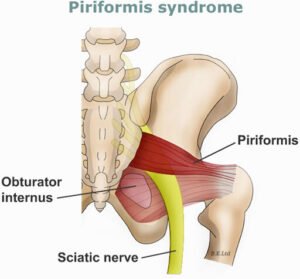
Piriformis Syndrome

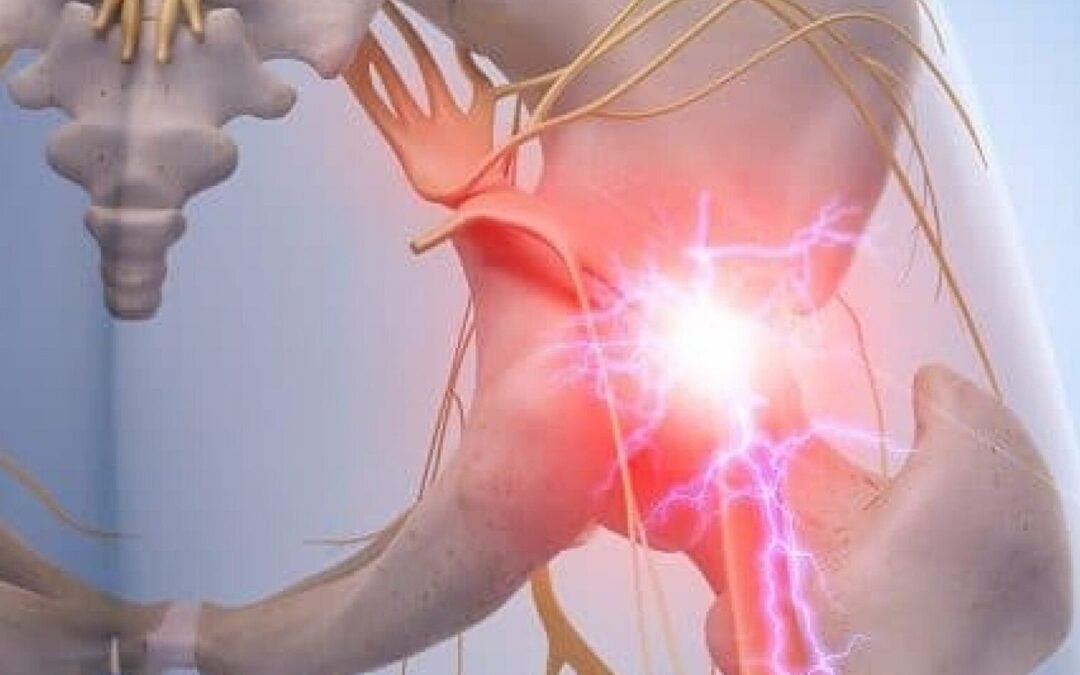
Because it crosses the sciatic nerve, it can become tight from too much sitting or it come become strained from overuse. The tightness or strain will cause it to compress and rub against the sciatic nerve

The piriformis muscle is a small muscle located deep in the buttock (behind the gluteus maximus). It runs behind the hip joint and aids in the external hip rotation or turning your leg outward. Because it crosses the sciatic nerve, it can become tight from too much sitting or it come become strained from overuse. The tightness or strain will cause it to compress and rub against the sciatic nerve.

According to the Spine-Health website, piriformis syndrome is a condition in which the piriformis muscle, located in the buttock region, spasms and causes buttock pain. The piriformis muscle can also irritate the nearby sciatic nerve and cause pain, numbness and tingling along the back of the leg and into the foot (similar to sciatic pain).

In his book “The Athlete’s Book of Home Remedies”, Dr. Jordan Metzl, states the pain is often felt deep inside the buttock muscles and it makes it difficult to sit on the affected buttock.

Diagnosing piriformis syndrome is not an easy task even for the most experienced doctors. According to what I have read, and I am no doctor so please don’t take medical advice from me, there is no specific test for this condition so it is usually diagnosed by eliminating alternative options to the patient’s symptoms or pain.

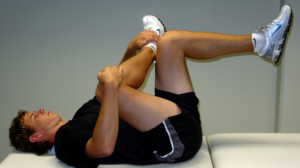
Piriformis Syndrome

A home-based stretch and strengthening routine could help prevent a visit to the doctor.

According to Dr. Metzl, many of the interconnected muscles in this region—piriformis, glutes, hip flexors, hamstrings, quads—support one another, and weakness in one area can mess up the works. If you face an unexplained soreness in the deep buttock area, and if the home-based care doesn’t improve your symptoms in a week, or sooner if the pain is severe, he recommends you see a doctor.

My point with this post is that this is an extremely painful condition that can easily sideline you. I have experienced it on a very mild level, and I do not want to know how much worse it can get. If it can bring a badass like Mike Wardian to his knees, it must be a horrible condition.  I overcame it very quickly with home stretching and strength exercises. If you are diligent in doing these as soon as you feel a, putting it plainly, deep pain in the ass, you may be able to avoid pain and lost time.

While researching for this blogpost, I found the following video. It is about 6 minutes long and it talks about the differences between piriformis syndrome and sciatica, which need to be treated differently. I found it worth my time.

I also found the following video of five sciatica stretches for piriformis syndrome, which I found interesting, especially because they can be done anywhere and with no specific equipment.

I sincerely hope you never have to use the information in this blog post, but if you ever do need it, I hope you will be able to recognize the issue in its early stages so you are not brought to your knees and you don’t miss any miles.


9 Tips to Run Safely in the Dark

9 Tips to Run Safely in the Dark

By Coach Adolfo Salgueiro

For us runners, first Sunday in November is usually reserved for the New York City Marathon and in the United States at least, it also means the end of Daylight-Saving Time. It is our one day with 25 hours. But with this time adjustment and the autumn months in full swing and the winter ones in the on-deck circle, there are longer nights which present a slew of challenges for runners.

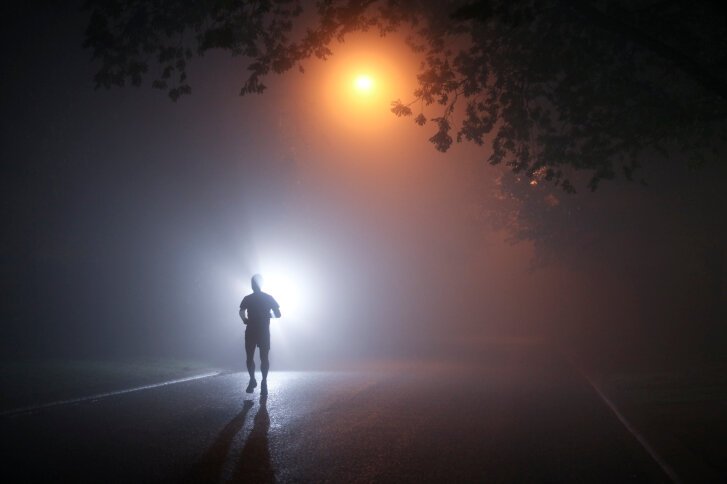
Running safely in the dark

If you can’t run without headphones, do not get into this setting. Jump on the treadmill, instead.

It is paramount to understand that our safety is our individual responsibility. In this litigious world where nobody take responsibility because they think they can sue whoever hurts them, you must be aware that as a runner, it doesn’t matter who had the right of way, who had the obligation to see you, or who will win the argument in court. If you get hit by a vehicle, you are the one getting hurt. Is up to you to make sure you are seen by those who could harm you.

The following are nine recommendations to keep you safe while enjoying your runs in less than ideal lighting conditions:

1.     Do not improvise your routes: When you are running in the dark is not the appropriate time to be adventurous. Select routes you know are safe, well-lit and familiar to you. This is not the time to cross a street and find out there is no sidewalk, or that you are lost.

2.     Wear at least one light/reflecting device: You must prepare to be visible at the time you end your run, not just at the start. You can run lit like a Christmas tree, or you can use a reflecting vest, or you can wear blinking lights on your shoes, shorts, or hats. The options are plenty and they fit every budget.

3.     Run against traffic: It can’t be easier than this. By running against traffic you can be alert to any danger ahead of you. Drivers maybe playing with their phones and heading towards you. You won’t see these idiots unless you are facing them. This doesn’t mean to run in the middle of the road, make sure you obey all traffic guidelines.

4.     Rethink your usage of headphones: Running in the dark has its own challenges. Don’t handicap yourself by not having your auditive sense available and/or half of your brain distracted with music or a podcast. If you can’t run without your headphones, jump on the treadmill or choose a well-lit, familiar route where you don’t have to cross any streets.

5.     Run with your phone: Well into the XXI Century, phones are ubiquitous. Not even sure why we still call them telephones. Make sure you run with yours when you are in the dark. It is better to have it and not need it than to need it and not have it.  Sharing your location on WhatsApp or any other app is a good practice. There are so many options to carry a phone these days, that there are no excuses to leave it at home if you are running into the dark.

6.     Always tell someone where you are going and how long you plan to run: Even if you are taking your phone, but especially if you are not, make sure someone knows what your route is and how long do you expect to be gone. If you are going for 5K around the block and it has been two hours, someone should be checking on you.

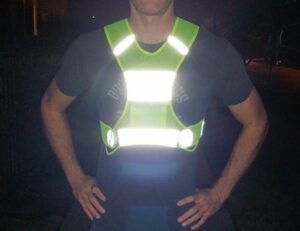
Running safely in the dark

Reflecting vests are good and affordable options. They also made you seen from both sides.

7.     Run in groups whenever possible: There is always additional safety in numbers. It is easier for a driver to see a group of runners than to see just one. Plus, more eyeballs, more brains and more safety devices together can only increase the safety of your run in the dark.

8.     Carry ID: I am not paid by them, but I do believe RaceID is the best alternative for carrying identification with you. I have been using it for years and they have plenty of unobstructive, affordable options so someone can take care of you if you are ever found in a ditch. Worse comes to worse, carry your driver’s license in a pocket.

9.     Carry pepper spray: Having it is not enough. It must always be accessible. The moment you need it is not the time to figure out where it is or how it works. Mind the wind, or you will pepper spray yourself.

These are by no means all the safety precautions you must take to run safely in the dark. For one, make sure you trust your instincts always, so you don’t have to second-guess yourself when it is already too late. If something doesn’t feel right, get out of there immediately.

Anything else I forgot, or you would like to recommend to your fellow readers?

My First Race in Times of Pandemic

My First Race in Times of Pandemic

By Coach Adolfo Salgueiro

 I was really looking forward to last Saturday (October 31st). For the first time since March, seven months ago, I was going to participate in a real race. None of the virtual stuff. A race where everybody was going to be in the same place, running the same distance, on the same course, at the same time. On one side, I was excited for this opportunity, on the other, I was not sure how comfortable I was going to feel given what is going on with the second surge of the Covid pandemic.

Pandemic Running

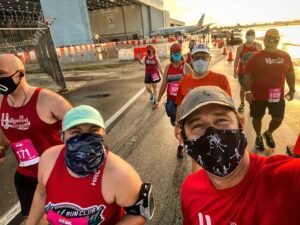
All masked up as we waited in line for our turn on the staggered starting line

But this 5K was on one of the runways of the Miami International Airport, a place where I may never, ever, have the opportunity to run, again, unless I am deplaning on an emergency landing. A tough race to pass, especially when I had been registered since January. The race was originally scheduled for April, but with everything going on, it was postponed. 

A few weeks ago, participants got an email with the updated date, time and rules. Being in an active airport and in the middle of a pandemic, the instructions were strict and written in a straight, harsh tone. Somebody I know said he’d rather not participate because this felt like the “Gestapo 5K”.

The start was set in four waves, so participants could keep their distance. You were given a specific window of 30 minutes to come into the hangar, pick up your bib and get running. Organizers did not want too many people hanging out while waiting to start. The use of a mask covering your nose and mouth was mandatory except for when you were actually racing.

From there, you had to get in a loooong line to enter the runway. Once at the start, there were three lines of 10 cones separated by the appropriate socially distant space. Each runner had to stand by a cone. Once the front three were gone, you were asked to walk to the cone in front of you and about 5 seconds later, you could start the race. I totally understand the reason for this, but it was weird and uncomfortable.

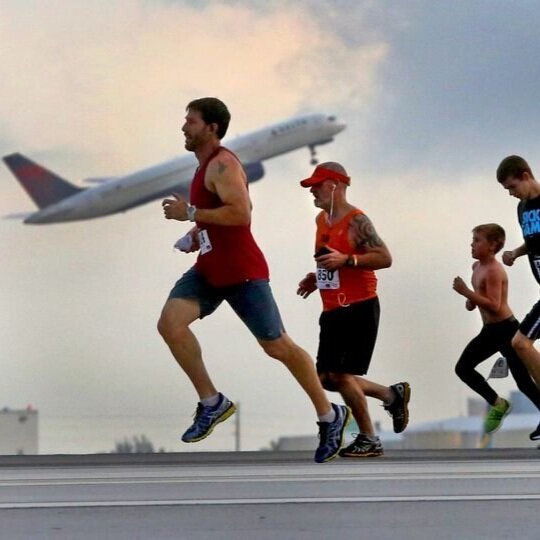
Running on the runway of an active airport (even though this was a taxi way not a landing one), was absolutely amazing. While I was running, I saw four passenger planes taking off maybe 100 feet from where I was, and two landing. We were on the other end of the passenger terminal. Surreal, worthwhile experience.

After crossing the finish line, you were given a medal, a bottle of water or Gatorade, picked up a race shirt and kicked out of there. There was no hanging out, checking for results or award ceremony. Once again, totally understandable but not what a post-race is supposed to feel like.

Because of the stacked start, all runners were timed individually, and the results compiled based on chip time. Fast, middle-of-the-pack, slow runners and walkers all mixed throughout the course. Good it was in an airport runway so there was plenty of space to pass without having to wave around people.

With the Miami International Airport 5K done, my conclusion is that I am happy I participated. I am not a big fan of the 5K distance, but this was a hard to pass course. But this did not feel like a race. For the third time, I understand the reasons why it had to be this way and there was no other way to pull this off safely, but still, it did not feel like a race. If I had been the Race Director, I would have done exactly the same. But the get-in-run-get-out approach was not conducive to a welcoming event. It did not have the right atmosphere; it was not encouraging to sharing the experience with your running buddies and it left my returning to racing expectations, unfulfilled. None of this is the fault of the organizers, it is just the way it is in 2020.

While most races round the world are cancelled for the 2020-21 season, there are still a handful in South Florida that got the necessary city permits and are moving forward. I sincerely hope they can pull it off and that no one gets sick, so these events can continue and runners, hopefully including me, will learn to adjust. But I am not sure when I will participate again, though. This new race style is not worth the risk, at least for me, at least at this time. My goal race is on February 14th, 2021. I will have to reassess by then if virtual or in-person is the way to go.

My Virtual NYC Marathon of 2020

My Virtual NYC Marathon of 2020

By Coach Adolfo Salgueiro

When the New York City Marathon decided to go virtual, I received an invitation to participate in it, not sure why since I did not register even for the lottery. I had no interest. Why would I do a virtual New York when I’ve done it in person twice and it is one of the most amazing running experiences, ever? But the more I thought about it, having a 26.2 on my schedule would give me a tangible goal that, otherwise, there is no chance I would even get close to.

Virtual Marathon

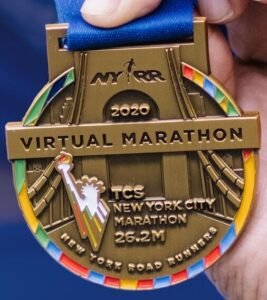
A beautiful addition to the collection that I should be getting soon. This will commemorate my 10th Marathon

Sixty dollars was an affordable price, and a spectacular medal a welcomed incentive. Not sure what else is included, but it is irrelevant. You had between October 17 and November 1 to complete the 26.2. This was just between 8 and 10 weeks away depending on the date I ran it. I settled for October 24th so I could have an extra week of training and a spare one should anything go wrong.

Because of an injury some and health issues I went through last year, I hadn’t run more than 10 kilometers straight during the year. I had gone longer when including walking breaks. Run/walk intervals allowed me to get my fitness and aerobic capacity back. I also had to shed a few extra pounds. So I prepared a NYC plan focusing on steady increment of mileage, management of effort and heart rate control based on full recovery. Finishing time for this one was a secondary consideration. Finishing strong and without injury was more than enough reward.

My plan called for a few running miles at the start and from there on, run half mile and walk another half. Yes, a lot of walking, but I didn’t want to get my heart rate so high that that it would become unsustainable and force me to walk the last 10 miles. As I trained and was able to run more miles, I felt the recovery periods were way too long, so I adjusted. My longest training session was 17 miles, my longest non-stop run was 9 miles. My run/walk intervals got set to .6/.4. I was ready to go.

Virtual Marathon

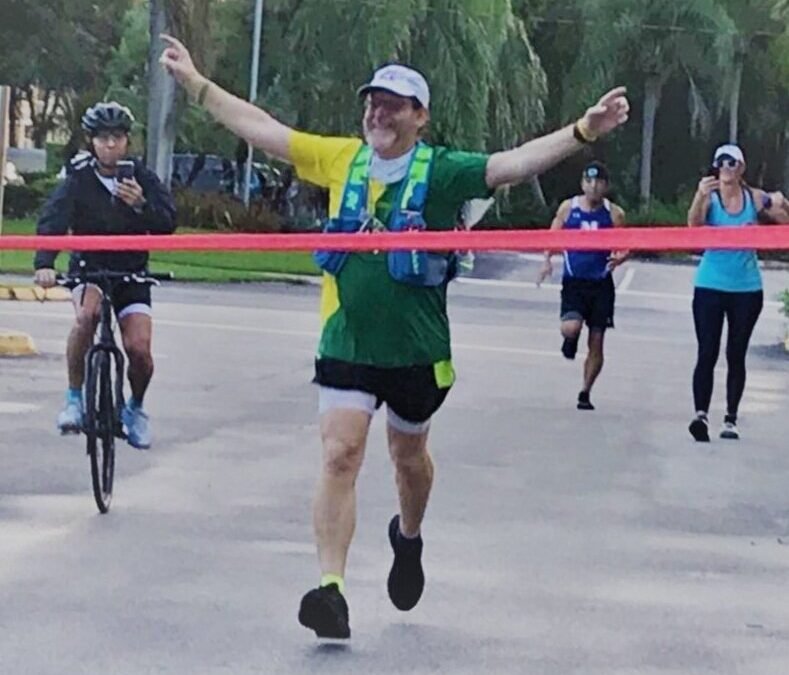
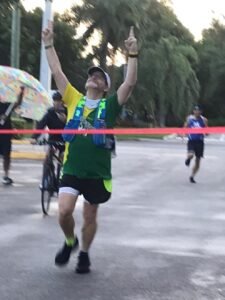
Thanking God as I cross the finish line, surrounded by my running family.

Then, October 24th, 2020 arrived and at 2:26AM I hit the road. I ran the first 6 miles and met with Bill and Rita about 3:30 am for my first water and resupply stop. From there on, I started my run/walk protocol. At first it bothered me to walk when I still felt strong, but I knew it was an investment towards the last miles, and it paid off. At mile 10, I met up with Ted, who accompanied me the next 8 miles. Up to this point my wife followed me in the car, so slow that a cop found it suspicious enough to stop her.

Close to Mile 17, the most amazing thing happened. A caravan of my running buddies passed by with horns, cowbells, yelling and screaming. A shot of adrenaline invaded my body. They were going to our regular Saturday starting spot, where I met them to pick up my last supply cache from Patrick. Once there, I kept going for my last 8.2 miles with a few friends here and there. Ruben stuck with me and ran/walked with me the whole way, sacrificing his training for the day.

I may have missed then entrance to First Avenue from the Queensboro Bridge, but what my buddies from the No-Club Runners had at the finish line was equally impressive. I choked as I ran towards the line through a tunnel of screaming, yelling, cowbells, paparazzi and the support of those who were genuinely elated to share this moment with me. It was not Central Park, but I wouldn’t trade this finish line for it.

Final time accepted by NYRRC was 5:28:14. Almost two minutes below my wildest expectations.

Virtual Marathon

Post-marathon celebration with my buddies from the No-Club Runners. What an amazing bunch of people.

I have been asked if I count this experience as a completed marathon. If I count it as my 3rd time completing NYC? The answer to both questions is yes. The answers are affirmative because this was an established and scheduled race. It did not happen this year because of Covid. This is not a race that popped up to sell you a medal taking advantage of the pandemic. There was a strict time frame on when to do complete the specific distance. This was not a “run what you want, when you want” scheme. On a personal level, it is not like I’ve ran 26.2 so often that I lost count. This is just my 10th time at the distance.

This experience taught me is that I am mentally stronger than I thought. That if I am smart about how to approach certain challenges, adjusting as I work towards them, I can achieve and complete them successfully and safely. That the marathon is still a great adversary, but no unconquerable. And, above all, that I have a running family for which superlative adjectives to qualify them would make no justice to what they mean to me.

Skip to content