So, Tell Me About Your VO2Max

So, Tell Me About Your VO2Max

By Coach Adolfo Salgueiro

It is interesting when you with your running buddies and they start bragging about their VO2Max number. “Mine is 41”, says Runner #1. “Mine is currently at 39 but it has been going up for the last 3 weeks”, comes back Runner #2. “I am down to 43 but have been up to 44 as recently as last month”, chimes in the Runner #3. Funny thing is that if you ask any of them what VO2Max is, you can pretty much bet that none of them will know.
VO2Max

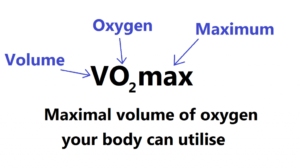
These are the elements that conform VO2Max (British spelling used here)

VO2Max stands for the maximum (Max) volume (V) of oxygen (O2) that your body can utilize at maximum effort. It is obvious that the more oxygen your body can handle, the more efficient it is and the faster you should be able to run. Eliud Kipchoge has been measured at 75 while the fittest of my readers most likely be under 50.

VO2Max is measured as an absolute rate in liters of oxygen per minute (L/min) or as a relative rate in in milliliters of oxygen per kilo of body mass per minute (ml/kg/min). Yes, this is a little bit technical, well, more than a little bit. The point here is to understand that if you can barely grasp the concept and how this parameter is measured, you shouldn’t make it your end-all factor to measure your progress, let alone your value as a runner.

The VO2Max is a valuable tool if you know what you are looking at. But lately it has become overemphasized, primarily because watches now flash the number as if it were a badge of honor.
VO2Max

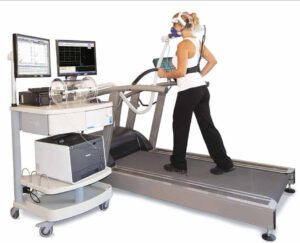
Unless your watch can be hooked to this machine, it cannot measure your VO2Max

VO2Max is tested in a specialized lab. While on a treadmill, with a mask covering your nose and mouth, while running to exhaustion, the machinery measures how much oxygen goes into your body and how much oxygen comes out. The difference between the two numbers while at maximum effort, is the maximum amount of oxygen your body can process at such speed, thus, your VO2Max. Your watch cannot measure this, regardless of how sophisticated and expensive it is.

In conclusion, VO2Max may work or not, I am not a sports scientist nor have read enough to know the extent of its reach. But what I do know is that it is not the end-all parameter to measure your progress or success. To me, a PR on my next 5K or marathon seems a much better way. And, once again, it CANNOT be measure by an equation on your watch.

It is not in the scope of this blogpost to advocate for or against VO2Max. It is not either to explain the science and value of the parameter, which, of course, does have a value.

If you want to learns more about the subject and are ready for a deep technical read, Steve Magness, head coach for the University of Houston, and an authority on the science of running, has a few articles on this, which I highly recommend. You can click on the links below to access them:

Training Adjustments for the Summer Months

Training Adjustments for the Summer Months

By Coach Adolfo Salgueiro

 As summer approaches rapidly in the northern hemisphere, days are becoming hotter and humidity is ramping up with the passing of each day. We became accustomed to the mild spring (even if most of it was indoors due to the current world circumstances) and now we need to adjust to the harsh reality of the hot weather.

Training Adjustments

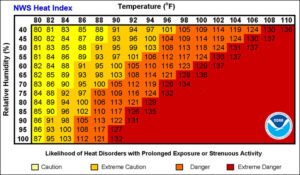
This Heat Index Chart by the National Weather Service, clearly explains the correlation between temperature and humidity. Be aware of it during your summer training. For a better view, click on the image to expand it.

When we run in hot weather, we get exhausted quicker and we must take precautions to avoid bad experiences or, even worse, dealing with dehydration and/or the dreaded heat stroke. Some situations could lead to permanent damage to the body or even, in severe cases, to death.

Adjusting to running in the heat is not just about drinking more water. It is about understanding the processes that will allow you to continue with your training in a safe way. Also, equally important, allowing you to recover quickly so you can keep going.

I have compiled 10 tips for you to be able to run safe during the summer. Especially if you are new to the activity or new to an area where heat is one of the considerations as you lace up your running shoes. These are by no means the end-all precautions to take, but it is a start.

 1.      Slow Down – Running in the heat is not the same as running in comfy weather. Your body is exerting itself at a higher rate to maintain the same level of perceived effort. You will need to run at a slower pace to keep the level of perceived effort. Make peace with this reality and keep moving forward.

2.      Plan your hydration needs ahead of time – Plan your route around places where water is plentiful. If that is not possible, plant water in your route, ahead of time. Remember to consume water before you become thirsty. Once you are thirsty, it may be too late to avoid dehydration

3.      Don’t overdo it with the water – With water intake is not about the-more-the-merrier. Hyponatremia is a life-threatening condition in which too much water in your body dilutes the amount of sodium in the blood. Keep yourself hydrated through your day and make sure your urine is lightly colored.

4.      Dress appropriately – Dress in light colors, which reflect mor light, thus deflect the heat. Avoid long sleeves, long pants, of outfits designed to sweat in excess.

5.      Stay connected– Well into the 21st Century is so easy to keep yourself connected while running. Carry your mobile phone during your runs and let someone know where you are and when are you expected to be back. You an also let a loved one track you in real time.

6.      Be aware of the effect of humidity – If you train in a region of high humidity, make sure you understand that displacing a saturated mass of air requires more effort than doing so with a drier, lighter one. This means additional effort to maintain the same pace as when it is dryer. Make sure to account for this difference. Make peace with it.

7.      Adjust your training schedule – If you are training for a fall marathon, make sure you are flexible on your schedule so you can switch that long run or that speed session to another day or time. Don’t be so strict that you end up hurting yourself because you refuse to push a difficult session for tomorrow.

8.      Opt for shady routes – Be smart with your routes. Plan accordingly, making sure there is plenty of shade, and places to stop should you need it.

9.      Don’t try to be a hero – Do not be afraid of stopping, cutting the run short, taking refuge in a shady place, asking for help, or calling it a day if you feel dizzy. Not only you will live to run another day, but your recovery process will be much easier, and you will be able to be back running, sooner.

Training Adjustments

Chart from www.weather.gov. For a better view, click on the image to expand it.

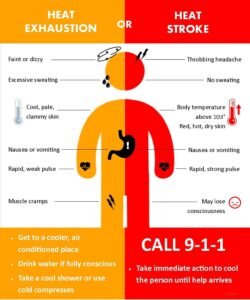
10.   Differentiate heat exhaustion from heat stroke – Being spent because of heat is one thing, heat stroke is quite different and also life threatening. Make sure you learn the symptoms so you may avoid tragedy. Please get familiarizes with the graphic below, which is borrowed from The US National Weather Service.

Conclusion

Running in the summer months is perfectly doable, but you have be smart. Plenty of people from hot and humid climates participate in great autumn races all over the world. New York, Berlin and Chicago, just to name the World Marathon Majors. The key is to plan ahead, be smart and always err on the side of caution, so you will live to run another day.

The Racewalking Alternative. Why Not?

The Racewalking Alternative. Why Not?

By Coach Adolfo Salgueiro

Racewalking

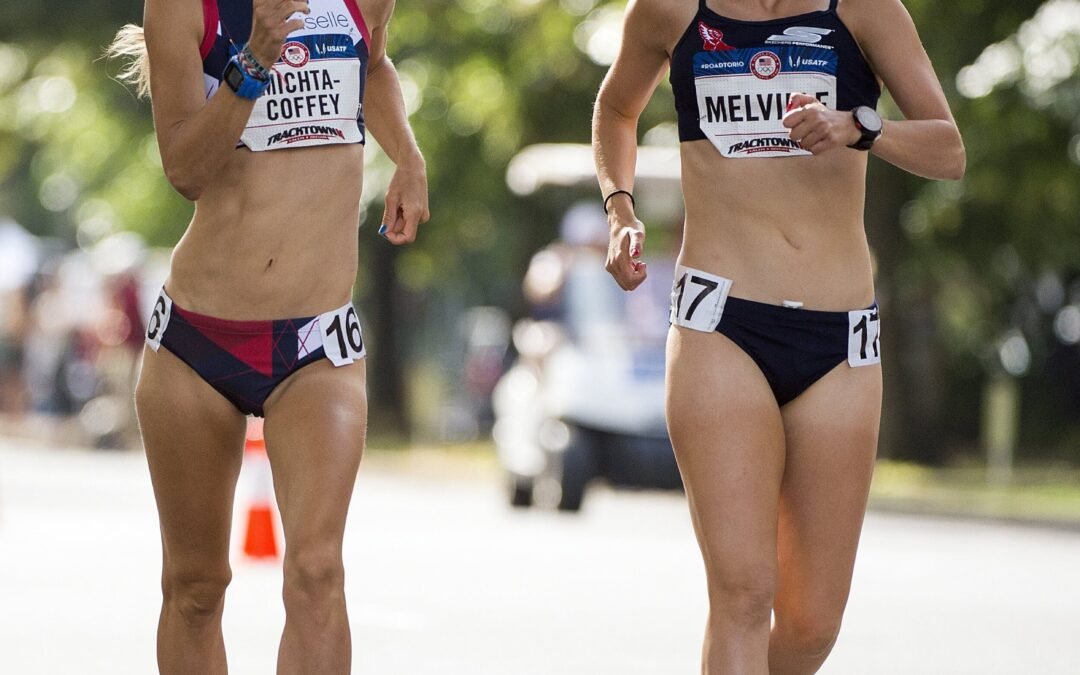
Racewalking can give you a second career on the asphalt.

During Olympic competition we always see those weird-looking racewalkers shaking those hips while keeping short steps and swinging arms like crazy. A select few know about what’s going on, some wonder what it is they’re doing, and the vast majority just laugh out of ignorance. Racewalking has been around since long before the Boston Marathon was a thing and it is an athletic discipline that requires the same training and dedication and any other discipline. Most important for this audience, it can give you a second career on the asphalt.

Personally, racewalking was my segue into running. After my second knee operation, at age 39, I told the doctor I still had another marathon in me, and I wanted to make sure I could do it. He was very clear telling me “your marathon days are over”. Sadly, I took his word and stopped completely until eight years later, when I realized I could still participate even if it was walking. Shortly after, I discovered racewalking, met with a racewalking group and the rest is history.

Racewalking is not just walking fast; it is not power walking either. Racewalking has two basic rules: a – one foot always must be in contact with the ground (as discerned by the naked eye), and b- the front knee must be straight when it makes contact with the ground. There are other techniques and details you need to know but this is what you need in order to get started.

Racewalking is gentler on your knees because you are not dumping the additional weight of a jump on them when you land. That alone can give a second career to both those knees and its owner. It still provides you with cardiovascular benefits if you exert yourself hard enough and you can still enjoy the runners-high we all crave. If that wasn’t enough, you can still participate in races, as there are no limitations against walking, you just need to observe the right etiquette, which in not on the scope of this blog post.

Racewalking

Less stress on your knees

The one thing you will have to adjust when you move to racewalking is switching your mindset. Throwing out the window all your previous PRs, race paces, tempos, age group rankings and being comfortable at the back of the pack. You will have to be content with just racing against yourself and enjoy getting better and progressing. Just realize you are still racing in a 5K, or a half marathon, or even a marathon, which is a better alternative to reading on how your friends via your WhatsApp group.

It is unfortunate that there are not that many racewalking groups out there, given how beneficial this discipline can be to so many. I was lucky enough to find a group and to meet coach Danny Koch, who guided me through 13 half marathons and 3 full marathons before I was able to return to running. Regardless if you find a coach or not, I can recommend “The Complete Guide to Racewalking”, by Dave McGovern, as the go-to book to learn about the philosophy and technique of racewalking.

If your knees can’t handle running anymore yet you still want to remain active and/or competing, I invite you to give racewalking a try. It worked for me so who knows, it may work for you, too.

Amazing Experience Coaching at the 2020 Miami Marathon

Amazing Experience Coaching at the 2020 Miami Marathon

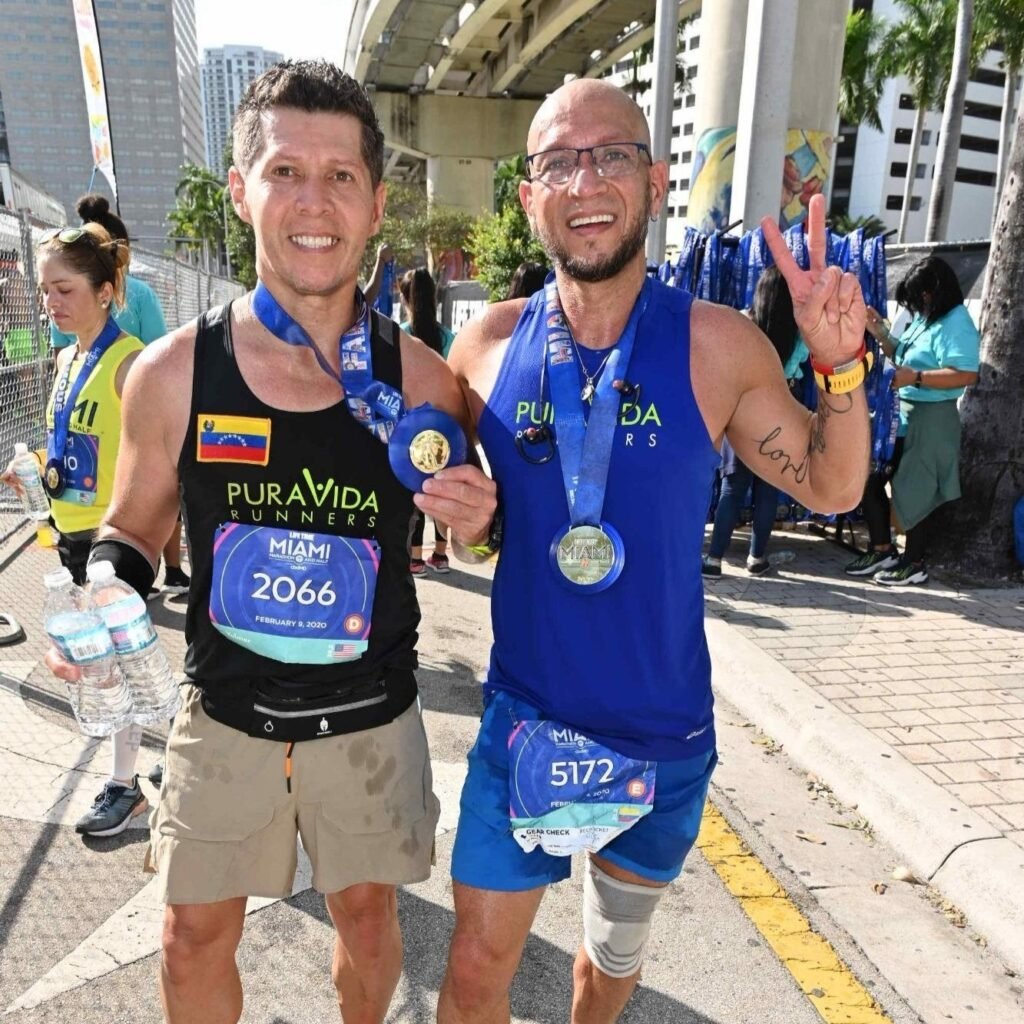
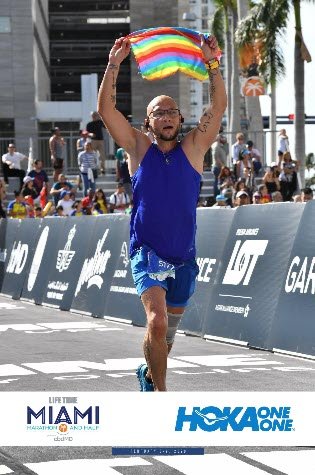
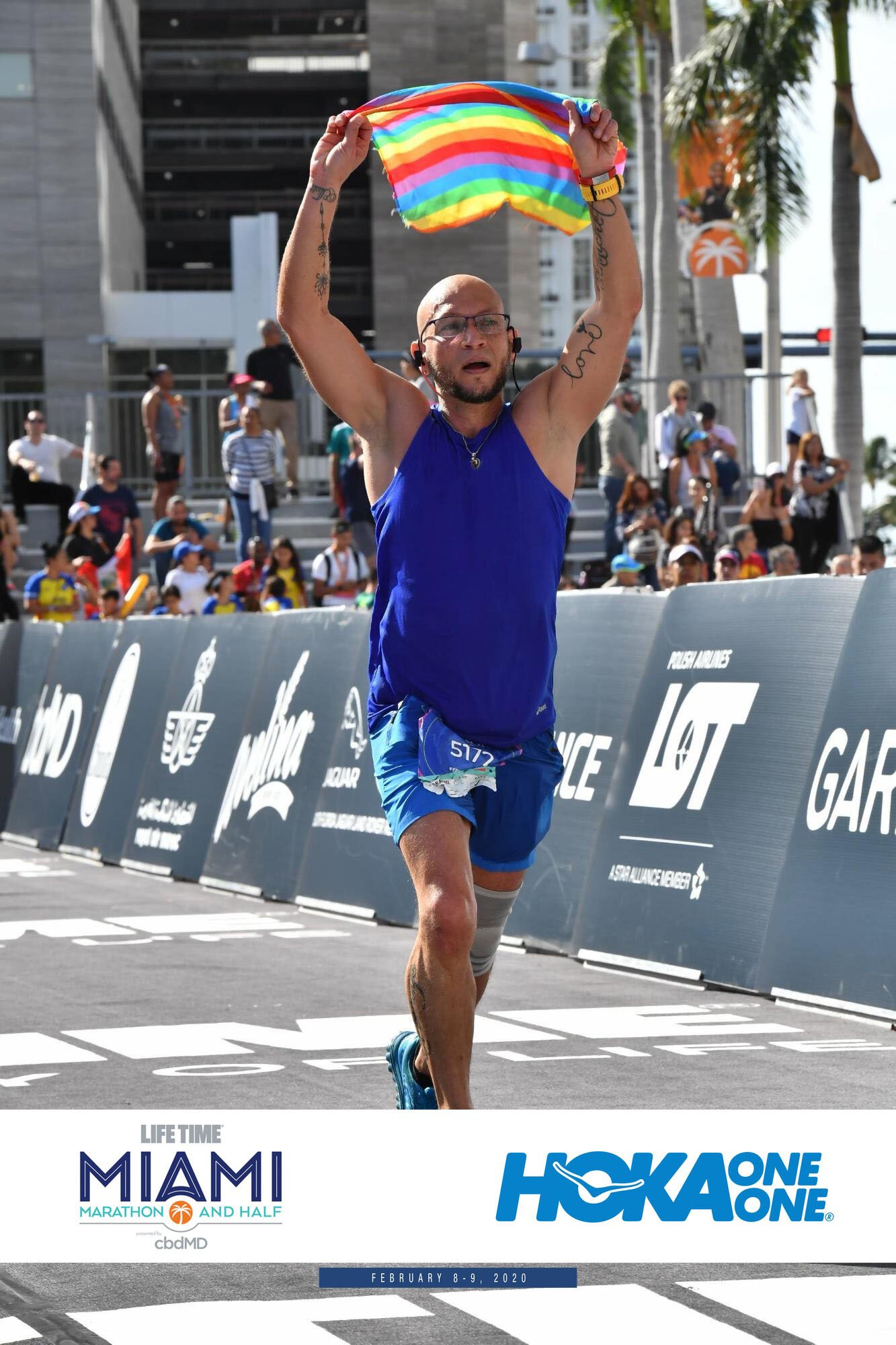
The Miami Marathon and Half Marathon were run last Sunday, February 9th, in Downtown and its surrounding areas. Despite more than a few personal bumps in the road during last year, I was able to keep my streak alive and completed my 9th consecutive Miami half in an irrelevant time. But I still had one of the best days of my running life, as the two runners I trained for the full marathon not only set, but crushed, their PRs by 10 ½ and 11 minutes.

Jhon H, 49, trained very hard to bring his PR down to 3:36:42, an 11-minute improvement from his best previous result, set in this same race back in 2018 (3:47:42). His main issue in his previous marathons had always been the last few miles. Cramping, exhaustion and doubts were creeping in as the dreaded wall approached. So, we set a different program for him. We used the Hansons Brothers method so he could be stronger at the end. After working diligently on his program, he got stronger as he progressed and not only had a negative split but his last 10K were the fastest in the entire race. As he turns 50 next year, I am sure a 3:25 BQ is perfectly achievable.

 Yolmer G (42) also set a massive PR with a 3:43:36. Despite an irregular last month of training when life got on the way,  not only he improved 10:30  from his New York 2019 finish (3:54:06), but he also bettered his register from his first marathon, which was this same Miami, just last year by 32:55 (4:16:31). And his best race is yet to come. A BQ of 3:15 for his age group is attainable.

 As a coach, you can’t ask for better than these two athletes, which in the process have also become close friends. I can’t wait to see what is next for them. I look forward to working with them.

 If you want to take your running to the next level, make sure to contact me via foultips.running@gmail.com to asses your goals and get going.

Massive PR in Miami With New Training Approach

Massive PR in Miami With New Training Approach

By Jhon J. Hernandez

“I ended up with a massive new PR and a finish time of 3:36:42. I was so full of emotion as I crossed the finish line that I could not contain my tears of joy and accomplishment.”

On November 18, 2019, I started training with coach [Adolfo] Salgueiro. I approached him expressing my desire to train with the goal of increasing my running speed and try to qualify to the Boston Marathon. His response was, “yes, we can increase your speed, absolutely. But we don’t have much time to train because the Miami marathon is very close.” He prepared a 12-week training plan with the Hansons Method, which I had never heard of before. I was skeptical because I was accustomed to running at a 9:00 to 9:30 minute/mile pace, and I said to myself, “I will not be able to reach that speed because I am too old and my knee will not respond.”

When I received my training plan for the first 4 weeks, I saw the speed metrics that Coach Salgueiro prepared for me, and immediately my self-doubt kicked in and said this was too fast for my ability. But I also decided to do my best to meet Coach’s speed targets for me, to trust the Coach and embrace the training program that he designed for me.

Tuesdays soon became my favorite training day because I did track, with speed goals from 7:30 pace to 8:00 pace. Since I don’t have access to a track where I live, I improvised a 400-meter training loop in a local parking lot. Coach was always aware of my training, monitoring my progress through Strava, and he was very willing to correct me and happy to answer any questions so I could reach my full training potential. With this plan, my long-distance runs were set for two consecutive days, teaching me to run on tired legs and keeping me on pace for the marathon. I found this new training style perfect for me.

But with just 2 weeks before the marathon (February 9, 2020), I had a problem with the back of my left knee. I don’t know what it was, but it was painful, and it prevented me from continuing with my training. I felt frustrated and defeated. I talked to Coach, and he suggested resting days with care at home, raising my knee, putting ice on it and using the foam roller. We also talked about what other options I might have and whether I should postpone running the marathon. After more than a week of rest, ice and rolling, I tried running again, a mere five days before the marathon. Thank God I felt no pain! I felt strong, and so we continued to plan for my marathon.

On the day of the marathon, Coach gave me his final training instructions: take it slow at the start, do not weave around runners, and if you feel strong enough keep on going, pick up the pace. Since I wanted to try to do negative splits to conserve my energy at the start and to comply with Coach’s race plan, I was especially thankful for my friend Ray, who traveled from Minnesota to Miami to be able to run the marathon with me. Ray helped me a lot in the first 8 miles, monitoring my pacing, keeping me focused on not going out too fast, and staying confident. Together, we did so, and it was a fantastic experience for me because all the hard work that I put in following Coach’s training worked just as it was designed to do.

Taking Coach’s instructions and conserving my energy for the last miles of the marathon was exactly the right race plan for me. And to my great surprise and delight, I ended up with a massive new PR and a finish time of 3:36:42. I was so full of emotion as I crossed the finish line that I could not contain my tears of joy and accomplishment. Yay! I fully trusted coach Salgueiro, and now I can’t wait to train with him again to help me attain that now much closer BQ time.

Skip to content