
By Coach Adolfo Salgueiro
When it comes to running, cadence is one of those parameters everyone can relate to, as the concept is straightforward. Yet, upon deeper inspection, most people have no idea what to do with it. It’s a bit like BMI (body mass index): Okay, it’s 29.6. Great! Now what?
The right running cadence can help reduce fatigue, become a more efficient runner, avoid injuries such as shin splints, and thus allow you to run longer. And while higher cadence can be beneficial, it is not the secret sauce that is missing from your training. And, if you don’t know what you’re doing, cutting your stride indiscriminately is not without its consequences.
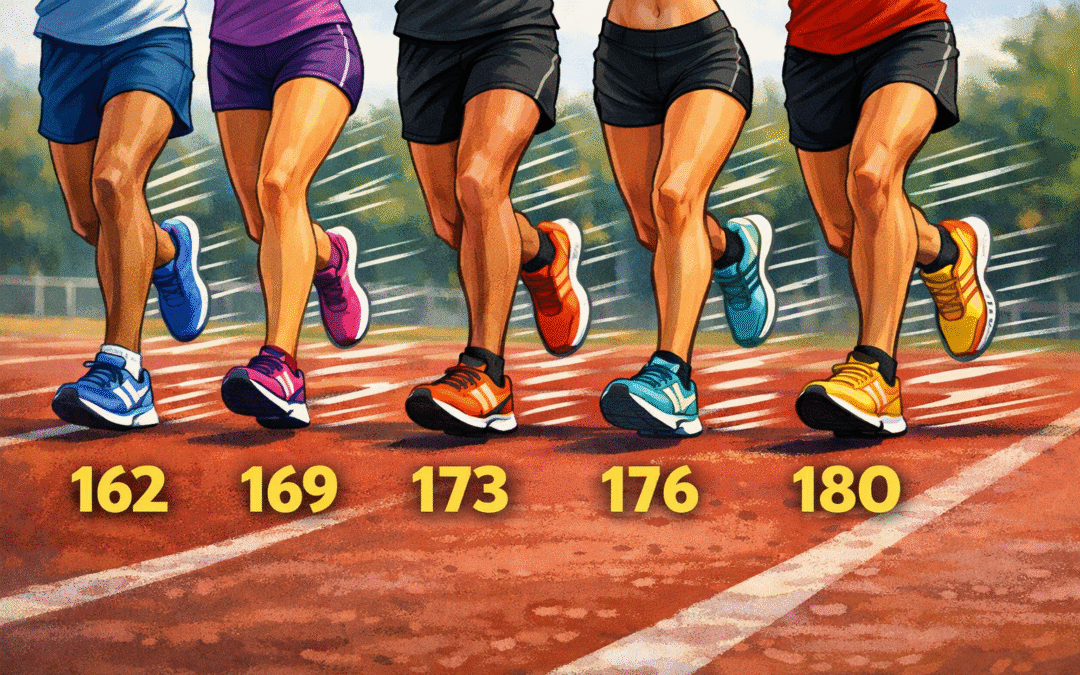
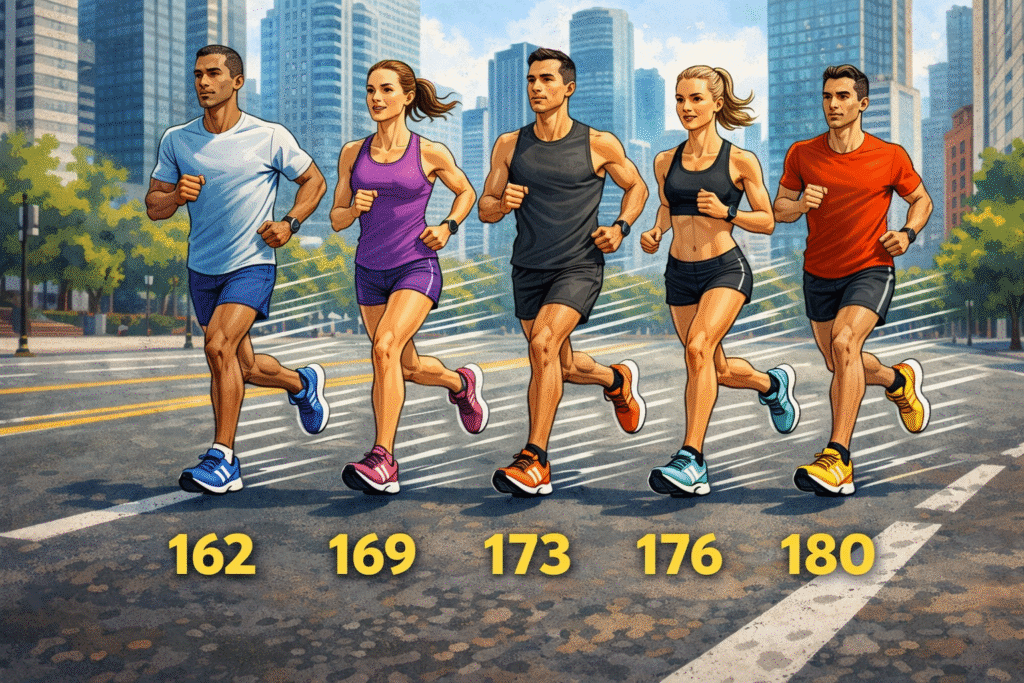
Cadence is a simple, straightforward concept: the number of steps you take per minute. Each step starts when one leg touches the ground and ends when the other does. It measures both sides, and most running watches quantify it as a standard function. While most everyday runners’ cadence is around 160-170ish, it is usually higher for elite and track athletes. There’s even a myth about the “magic 180 cadence.”
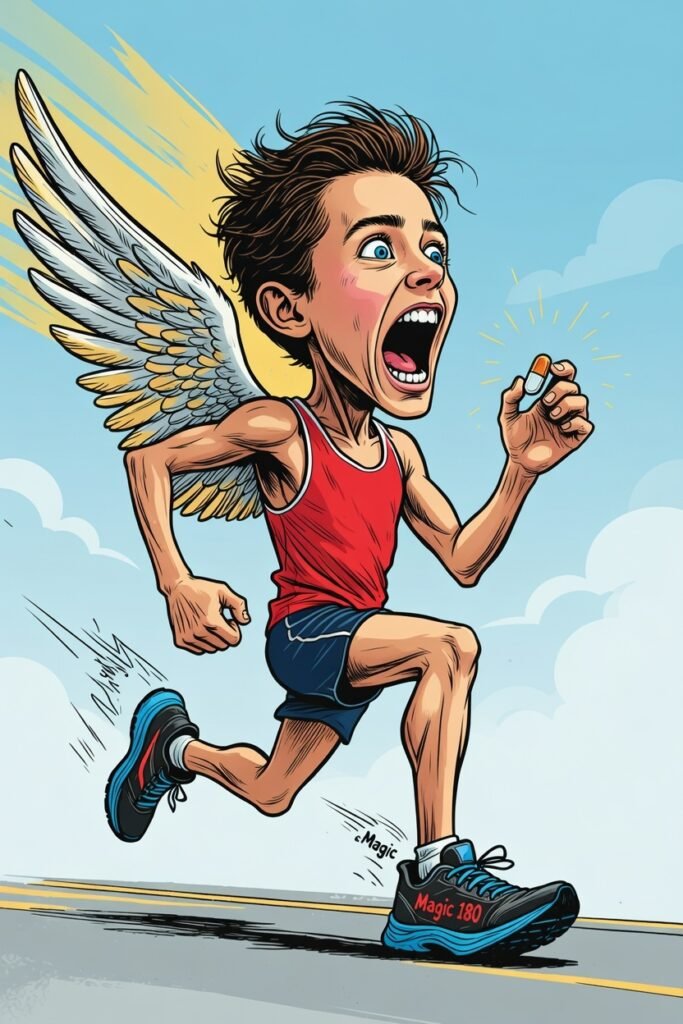
The idea that all runners should aim for 180 steps per minute for maximum efficiency is traced back to observations by exercise physiologist and coach Jack Daniels during the 1984 Olympics. Daniels counted the cadence of elite distance runners and found that most were running at about 180 steps per minute, or slightly higher. His observation was descriptive, not a universal prescription. However, as the finding spread through coaching circles, books such as Daniels’ Running Formula, and running watches that track cadence, the nuance was lost. What began as an observation of elite runners gradually became gospel among many recreational runners.
The problem with 180 is that only a tiny fraction of runners will ever become Olympians. So, while 180 is indeed a great cadence, it depends on factors such as height, weight, leg length, structural issues, and now even shoes. The runner pushing a sub-3 marathon, wearing carbon-plated shoes, has different mechanical requirements than one aiming for his first sub-30 5K. You can’t expect both to run at a 180 turnover.
If you take away one thing from this post, may it be getting rid of that 180 myth. While it is a great cadence, it is not a magic pill that will have you winning marathons next year. Past and present elite distance runners have succeeded without 180. Meb Keflezighi, Galen Rupp, and Frank Shorter won Olympic marathon medals and were all most efficient in the low 170s. Bill Rodgers won four Bostons and four New Yorks between 160 and 170. Paula Radcliffe set the marathon world record, also around 170.
Varying your cadence must have a clear intention; it is not just upping the number for the sake of more-is-better. Changing your mechanics without a purpose is a recipe for injury.
Bryan Heiderscheit, PhD, Director of the Runners’ Clinic at the University of Wisconsin Sports Medicine Center, explains: “Research shows that when runners increase their turnover, they reduce the impact on their knees and hips and often improve their stride mechanics. Increasing turnover will help the chances of your foot landing closer to or underneath your pelvis, reducing overstriding tendencies, and increasing your lower extremity stiffness with less bounce and braking in your steps.”
That said, reducing your stride to increase your cadence while still overstriding won’t help you at all. Quite the contrary. You will be overstriding more often, speeding up your breaking point, and thus increasing your risk of injury.
“If you’re going to increase your step rate, also try to land with your foot closer under your hips,” Heiderscheit says. “You don’t want to keep reaching in front of yourself.” Jonathan Beverly compliments the idea by stating: “My experience as a runner and coach confirms this: A faster cadence comes, in fact, as you learn to run tall, land closer, and push back-all part of the same process.”
In conclusion: Even though cadence is a simple concept, and the benefits of adjusting it are real, not every runner needs to do it, and not every leg malady gets solved by it. Assessing it and making a few adjustments is a good place to start, but if the issues don’t subside quickly, you may want to check with a physical therapist before continuing to adjust your cadence indiscriminately. You don’t want to end up with a stride that is too short for your frame, which will result not only in discomfort but in injury.
There are plenty of exercises and techniques to work properly on your cadence, but they are beyond the scope of this post. But beware: When researching online, make sure the author’s background and credentials are legitimate. Don’t just do what the flavor-of-the-month influencer recommends. They may know what they’re talking about, sure, but they may not.
Want the key takeaways of this blog post? Watch the video summary by clicking here.