If you raced during the GPS watch era, you must have experienced the doubt of considering a race was mismeasured. Typically, it is a matter of not taking tangents or weaving around slower runners as you move. Big, established races rarely mess up this, but it does happen occasionally. The 1981 world record by Alberto Salazar was denied because the NYC Marathon proved to be 152.4 meters (500 feet) short when remeasured.
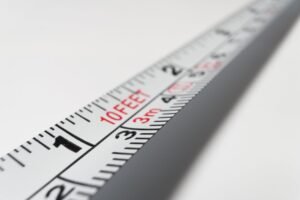
As unsatisfying as it may be, some times race directors make mistakes measuring the course. Even in the NYC Marathon (Pexels)
Let’s get something clear: Your GPS watch is not the authority that certifies a course. Your GPS gives you an approximation, a guideline. No one is going to launch a ballistic missile or set up an oil rig in the North Sea based on the latest Garmin data on your wrist. The technology is amazing, sure, but it is not intended to be military-grade.
No serious race will measure its course with a Garmin. Maybe a local small, local 5k, but nothing beyond that. I once met a runner who just came from the 2022 Berlin Marathon and complained she missed her PR because the course was long. I did not want to get into an argument with someone I barely knew, but if the course is good enough for Eliud Kipchoge to set a world record, it should be ok with you who ran just for fun.
Racecourses can run long or short. I read once that there are acceptable margins of error for them to go long, but not short. Last weekend I participated in a half marathon, and when I got to mile 12.5, with just one kilometer to go, I decided to push. It was the longest kilometer of my life. The course was long, per my GPS, by 0.5 miles. Many runners complained online that their watches were long from 0.4 to 0.7 miles. This is fishy, for sure. A few tenths here or there are normal. Or, if you run through a downtown with a canyon of high-rises, like the start of Chicago or the end of the Miami Marathon, then it is all out of whack. But that was not the case here.
If you are interested in the procedures to measure and certify a racecourse, you can check the certifications procedure manual by USA Track and Field (USTAF) by clicking here.
So, what happens to my PR?
As far as I know, there are no established rules to govern this anomaly. I only speak by what, based on my experience of 100+ races, I would, and do:
If I know the course is short, I will not take it as a PR. It is lying to myself. The first time I won my age group in a 5K was on a short course. As soon as I finished, I realized I lowered my previous mark by 1+ minute. I knew it was not possible. I took my age group win and gladly display my medal at home, but I won’t consider it my PR. I haven’t even gotten close to that one again.
If a race is long, then too bad! I do not adjust my PR. I would take it if I established one despite the extra distance, but I won’t adjust it to where I crossed the half-marathon mark, or to the best 10K during my 10.5K run. The official records won’t adjust. If I am 100% sure the course was long, then I would try again.
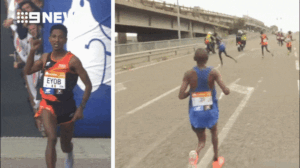
The leading peloton at the 2017 Venice Marathon realized they’ve screwed up and the local wins.
Additional considerations
This may be a stretch for this blog post, but, since we are talking about racecourses, there is another point to consider. As a runner, it is my responsibility to know the path of my race. If you make a wrong turn, there is no time adjustment. If you cut the course (hopefully unintentionally), then it is for you to own the mistake and certainly not adjust a PR based on what it could have been.
Most of my readers won’t be leading the pack in a race, but if you do, make sure you pay attention to your course. In 1994, German Silva was leading the NYC Marathon with half a mile to go when he followed the TV truck leaving the course. He turned around and was able to save the victory. Not so lucky were six runners in the leading peloton of the 2017 Venice Marathon, who followed the lead motorcycle after it made a wrong turn, opening the door for an Italian winner and a conspiracy theory.
I would like to know what your experiences with mismeasured racecourses and screwed PRs are. Let me know in the box below.
AUTHOR’S NOTE: Between the time this article was written and the time it was published, the organization of the mismeasured race that prompted this post sent an email acknowledging the error, apologizing, and vowing it won’t happen again.
As 2024 approaches (or it is already here depending on when you are reading this post) and we look forward to a blank canvas to fill out with new goals, challenges, and adventures, we quickly turn our heads back to the year that was, to reminisce and reflect on our running year.
We saw marathon world records fall to the point where it seems feasible that 2024 will give us the first sub-2 marathon for men and first sub-2:10 for women. We are just 36 and 114 seconds away from such feats. We saw the 6-star finisher list growing to 8,143 and it is a matter of time before a 7th Major is included. Many of our friends set PRs in their marathons, shorter distances or just lost their 26.2 virginities. But, for many of us, 2023 was a challenging year. One that tested our core as runner beings. I was in that latter group.
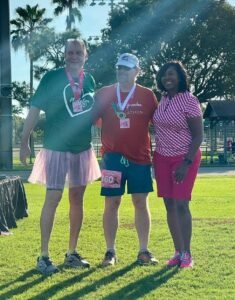
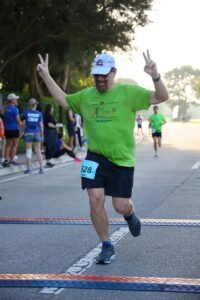
Winning my Age Group at the Plantation F*ck Cancer 5K was one of the few highlight of my 2023 running season.
I completed the 1000-mile challenge with just three days to spare. And sure, it is a nice achievement, but it doesn’t tell the whole story of my 2023. At least I did not get any injury and beyond the normal aches and pains, was able to run throughout the year with no interruption. That alone is a win. Still, it was far from what I expected it to be 12 months ago.
For some reason, it was very difficult to get into the running groove during the year. In my two half marathons early in the season, I was forced to walk after mile 10, finishing in unimpressive times that are embarrassing for me, when compared to what I have done in the recent past. I also had to withdraw from the Marine Corps Marathon because my body could not adjust to the heat and humidity of summer training in South Florida. It was impossible for me to complete more than 8 miles in one run, so I focused on 5 and 10K races until the end of the year. Those are not my favorite distances, as I prefer to go longer, but this was the adjustment that was required, and I am OK with it. I even won my age group in a local 5K, a rare occurrence.
For the first time in the last 15 years if felt little motivation to lace up and run. For the first time in recent memory, I dreaded waking up early on a weekend to go run long. Anxiety from my professional life, which was at an all-time high during the year, crept into my running life and affected me negatively. I gained weight, slowed down and lost the will to dig deep when a run got tough.
My lowest point was one day around September when for the first time ever, or at least that I can recall, I went out for a run and before the first minute was through, I decided I did not want to do this, so I stopped and drove home. Not before stopping at a gas station and stuffing up on cookies and chips. I still look back and can’t believe this happened.
Yet, I kept running. After more than 40 years of being active, I know how you will feel after a good run. The support of my two running groups kept me accountable and sometimes I just forced myself to go out despite not feeling it.
I completed a handful of races with not many results to brag about.
I have tried to pinpoint where the problem lies but I haven’t been able to do so. Maybe it is because I am approaching 60. Maybe two and a half years after my open-heart surgery I must accept I won’t be able to run the same as before. Maybe the anxiety my work life has put me through for the last 18 months is taking a toll on me. Maybe my peak running years are behind me. Maybe it is a combination of everything.
But this difficult year has been an opportunity to analyze life from a different perspective and realize I am still very blessed. My running life is not my life, it is just part of it. My value as a husband, as a father, as a friend, as a son, as a coach or as a professional, is not tied to my marathon PR or my medal rack display at home. I still have a healthy marriage with a wife I adore, a healthy and successful son, both my parents are alive in their eighties and living independently, I have a thriving coaching business, I am part of a phenomenal running community with true friends, and I am injury free. At this stage in my life this is more valuable than running sub-2 in the half once again, or setting up another PR. I call this maturity.
This does not mean I have given up on improvement. I still want to go over 1000 miles in 2024. I still want to run at least 4 or 5 halves and be part of one marathon cycle. I want to get rid of the source of anxiety and lose the extra pounds I added in 2023. I thank God that He is providing me with 12 brand-new, crisp, months to achieve it all.
I originally published this blog post about three years ago under the title “The Trap of Information Overload”. I have coached many new runners since and one of the constants I’ve observed is how they get sucked into the need to track irrelevant parameters just because their watches display them. This is regardless of whether they understand what such parameters are actually measuring. Thus, I have decided to rerun this post, with a few updates. I hope you find it useful.
Is this you while checking your watch during or after every run?
Let’s start by stating that I see nothing wrong with being on Strava, having an Instagram account to share your runs, or checking Facebook every so often to see what your running buddies are up to. It is great to live in an era where we can be in contact with people we haven’t seen in decades, stay connected with that cousin who moved to another country, or your buddies from elementary school you rarely have the chance to see anymore.
It is great to make social media acquaintances with people you’ve never met in person. I follow a Dutch runner named @mistermarathon on Instagram, who follows me back. When I visited Amsterdam a few years back, he took me for a running tour of the city; we had coffee at the Rijksmuseum and had a great talk. A few years later, he visited Florida, and even though I was injured and couldn’t run, we met for coffee and had another enjoyable conversation. It was great!
But there must be a limit. The data overload from social media, from our watches, from WhatsApp groups, and from measuring up to every stranger who follows our social channels is stealing the joy from many a runner. We should run because we like it. So, if something is stealing our bliss, it must go; or at least, its presence must be adjusted.
Yes, a pre-run picture with your buddies is cool, but if you missed it, you could still run. Skipping the recording of one run because your watch has no battery is not an excuse to miss a scheduled training. Checking your favorite elite runner on Strava and matching their training is a recipe for injury. Thinking that an ultrarunner in Germany, Australia, or Argentina is your buddy because he likes your posts on a regular basis is the prelude for a letdown. Wanting to run from New York to Los Angeles because so-and-so did it, is insanity.
Unless you know what a parameter is measuring, let it go!
It all starts with regulating the consumption of information we get from our GPS watches. It is wonderful to have all the information we could possibly need at a wrist flip. But, with certain exceptions dictated by a specific segment of your training program, the usefulness of such information is relatively innocuous. It is just a reflection of what you are doing, not what you are doing. It is not your worth as an athlete or as a human being. You don’t have to pause the watch because you hit a red light, or because you stopped at the water fountain. You don’t have to check your cadence or vertical oscillation every mile unless you are specifically working on it. And don’t get me started on VO2Max: If you don’t know what it measures, don’t dwell on it. You get the point.
I am amazed by the data that the watch keeps track of. NASA didn’t have such access to astronauts on the Moon. Most of it is great for the analysis of my training, for measuring my progress, or for keeping historical data. But your watch should just serve as a recorder of your performance, not direct it.
The more I use Strava or Garmin Connect, the more I’m impressed by what they can do, but I don’t follow or stalk people I don’t know. If I want to know what a friend is doing, I call him or text her. I don’t need to know what Kelvin Kiptum is doing every day, let alone compare his progress to mine. I don’t need kudos from 50 strangers to validate my run.
Theodore Roosevelt, the 26th President of the United States, once said: “Comparison is the thief of joy”, and I agree 100% with him. Equaling it is part of human nature, and the right dosage of it may be healthy. But if we want to enjoy OUR running, we need to concentrate on what WE are doing and what WE can control. WE must center OUR running life on OUR progress, OUR failures, OUR injuries, and OUR parameters.
Most of the data is useless at the time we are running, anyway. It is afterward that we can learn something from it and make the necessary adjustments. If you list the top 100 reasons why you run, I bet that “to show up Alex in Strava”, “to have more Instagram followers than Maria,” or “to improve my likes on Facebook” won’t make the list. So, get back to basics and take advantage of the exciting tech tools available to you, but don’t become a slave to them.
In my last blog post, I wrote about learning the hard way. Within the same theme, today I bring you the story of Javier Mota, a journalist and friend who, despite going out of his way not to consider himself a runner, put together a 1000+ day running streak. Given his accepted stubbornness, he is currently paying the consequences of not listening to his body. With his permission, I am publishing an article he wrote about his experience.
Good and bad consequences after running every day for 3 years and 21 days.
The diagnosis by Dr. Luis Valenzuela from the Meds Clinic in Santiago de Chile, which stopped my 3 years and 21 days of running every day, was forceful:
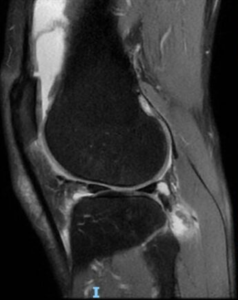
“You obviously have internal femorotibial osteoarthritis, with a degenerative tear of the internal meniscus. Also, chondral lesions in the patella. There is bone edema of the medial femoral condyle and medial tibial plateau due to joint wear and overload.”
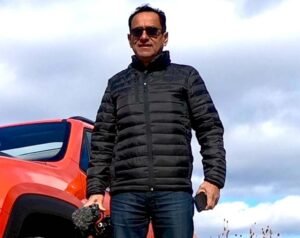
Javier Mota is a renowned automotive journalist and a friend. (Photo: courtesy of Javier Mota)
In simple words, the MRI results showed how badly I messed up my left knee, mainly due to a clear case of the fine line between stubbornness and stupidity.
In hindsight, I should have stopped running when the pain and discomfort began on March 15, 2023, but out of my stubbornness, rather than determination or discipline, I ran 5 additional months in pain, first trying to reach the 1,000-day mark and then, 3 years.
The additional 21 days only confirmed my lack of good sense and probably made things worse.
“Pain is not normal”, another orthopedic doctor once told me during a casual conversation in a bar in St. George, Utah, after I insisted on running for a couple of months despite the discomfort.
Long before that, when I reached the 2-year mark, in August 2022, Dr. Scott Lang, University of Central Florida´s Professor of Family Medicine, warned me: “Never run in pain. If you have muscle pain or joint pain when you run, ice it and rest. If the pain persists for more than a week, see your doctor”.
Obviously, I did not pay attention and on August 21, 2023, at the end of my annual ski trip to Chile, I finally decided to have my left knee checked by Dr. Valenzuela, who after a quick visual and tactile examination, immediately determined that an MRI was necessary.
Of course, between the time that passed from the end of the MRI and the time I received the diagnosis, I went out for the last run (2.75 miles in 30:36) because I sensed the end of the streak was approaching, under medical prescription.
The truth is that the discomfort never reached the point of paralyzing me, although, between March 15 and August 21, 2023, I reduced the distance and speed of each run, thinking that the pain would be reduced. That didn’t happen, but it didn’t get worse either.
This is Javier’s messed up left knee (Foto: Courtesy of Javier Mota)
Dr. Valenzuela attributed this to the fact that through constant exercise for 1,115 days in a row, I was able to build enough muscle mass to absorb most of the impact on my knee.
Now, the next challenge is to dedicate myself with the same intensity to a rehabilitation program and incorporate other athletic activities, without impacting the knees to maintain the physical condition and weight (165 pounds).
Those last two were undoubtedly the biggest benefits of the running streak, which began on August 1, 2020, during the Covid pandemic, thanks to a private Facebook group, to get out of lockdown.
In all, I ran 3,257.3 miles, an average of almost 90 miles per month. The equivalent of driving from Miami to Seattle.
All this, despite the fact that I have never felt like a “real runner”. If I was, I would have followed the 3R advice of the experts to replenish, rest, and recover, and not become a “slave to the streak”, as Running Coach Adolfo Salgueiro warned me. But that’s exactly what I did.
I never warmed up before a run, nor did I stretch at the end. I have never undergone a serious training program to achieve a specific goal. Nor did I pay much attention to the advice not to wear old and worn-out shoes or to buy ones specially molded for my feet. As a consequence, I never improved my time or distance in these 3 years.
And as I said before and I repeat now, I don’t like to run. I think it’s boring, so much so that for the last few months of the streak I tried to entertain myself by picking up trash on the road, sometimes at an astonishing rate of 10+ pieces per mile. Thanks to that, and in a very unscientific way, I verified that the Modelo Especial has indeed become the most popular beer in the United States, given the number of empty cans I have found in recent months during my runs.
I also started stopping to say hello to all the dogs I saw on the trail, perhaps to justify my slower pace and to give my knee a rest, until one of them bit me on the left thigh, something unrelated to the injury, which eventually ended the streak.
Now the benefits
I always appreciated what happens when you run every day. You feel better physically and mentally, you sleep and work better, and you can eat and drink more. And you always feel good after every run, unless you get bitten by a dog.
Also, it was great to receive encouragement from other runners, non-runners and even from companies like New Balance and Apple who sent me products as an incentive to keep the streak alive; and from car brands that celebrated some of the streak’s milestones when they coincided with some of their test driving programs around the world.
One of the 1,021 consecutive runs that lead to the devastating injury (Foto: Courtesy of Javier Mota)
It was also a pleasure to run in 16 countries and over 100 cities.
But what I enjoyed the most was the daily challenge of finding the time and place to run every day, despite the complications of constant travel as part of my job as an automotive journalist.
The longest run (almost 9 miles) was in Munich, Germany, on September 2021, not because I wanted to run that distance, but because I got lost. The fastest run was a 10K at a pace of 7:58 minutes per mile, at home.
On December 31, 2022, I checked out at 11:30 p.m. to complete the daily 5k and then did another one starting right at midnight and ending on January 1st. 2023 to start the New Year.
Several times, I landed at an airport and got out of the car on the way to the hotel so I could run before the end of the day. I also ran inside various airports, before and after flights.
So, in the end, it was a good run while it lasted, but I have a few points to consider now that this is all over:
First, I do not recommend it to anyone! It’s easy to become addicted, even a slave to personal achievement like this one.
And most importantly, as I’ve learned the hard way, it’s essential to recognize that running every day for an extended period, not only can, but surely will cause injury sooner or later.
In conclusion, listen to the experts and to your body; take adequate rest when necessary to prevent exhaustion and possible long-term health problems.
Without a doubt, this streak of three years and 21 days was an extraordinary journey, which some have called “an example of determination, discipline and the pursuit of personal goals”, but it is also important to remember that the physical conditioning process of each individual is unique and must be approached with care and respect for one’s own body.
Maybe I will run again someday, but I will never run every day for 3 years and 21 days.
Javier Mota is a renowned automotive journalist and a friend. You can follow him on Instagram @javiermota, or at his website: https://autos0to60.com/. He made a YouTube video with his original post. If you want to check it out, you can do so by clicking here – https://www.youtube.com/watch?v=G8sdfsl0c9w
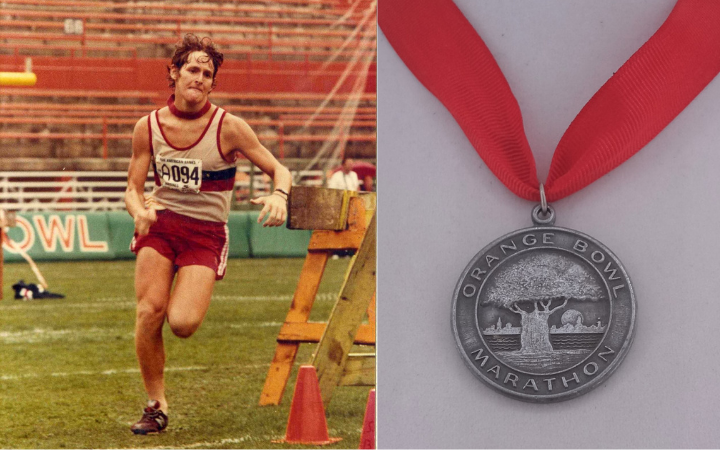
I still can’t believe that it has been 40 years since my first marathon. Four decades since that unforgettable January 22nd of 1983 inside the old Orange Bowl Stadium in Miami. 14,610 days have passed since that unprepared 17-year-old higschooler crossed a finish line that became the gift that kept on giving.
Since I can remember, I wanted to run a marathon. Not sure why. Maybe because I read about the athletics exploits of Abebe Bikila, Emil Zatopek or contemporaries like Frank Shorter and Bill Rogers. Who knows? Somehow, I always loved the extremes. I started running when I was 12 or 13 while living in Caracas, Venezuela, and at 15, ran my first 10K race. Then, a couple of months after turning 17, my dad told me he was running the Orange Bowl Marathon in January 1983, and if I trained, he would take me to Miami. Maybe I just wanted the trip and a few days off school, or it could have been a legitimate attraction for the physical challenge. Regardless, what I know is that 6 weeks later I was lining up at the foot of the iconic home of the Miami Dolphins, who eight days later were taking on the Washington Redskins in the Super Bowl.
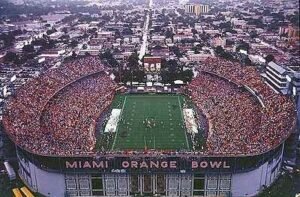
The Miami Orange Bowl stadium (1937-2008) seated 72,319, hosted 5 Super Bowls and was home of the Miami Dolphins from (1966-1986)
I’ve written before about that race. So, on this anniversary I don’t want to reminisce about that particular day, but on what the race has meant to me throughout my life. Last year, on the 39th anniversary of the marathon, I wrote a memoir about that day because I didn’t want details to be forgotten. If you would like to read more about it, please click here. I also wrote a post about getting my finisher’s medal 37 years later, back in 2020. If you want to read about it, please click here.
After that magical morning, 40 years ago, even if I never ran another step in my life, I was a marathoner. It is a label that sticks forever. It doesn’t fade away with time, or by forgetting the exact date and finishing time, or by never wearing a pair of running shorts again.
I kept running for a handful of years after my first marathon. By the time I turned 21 I had four under my belt, with a couple of them in the 3:30 range. I ran through my first three years of college and even had escalated disagreemtns with my girlfriend, who at times was fed up with not going out with our friends on Saturday nights because I had a Sunday morning long run. Many a time I had to put my foot down and state that I would drop her before my training. Today I would have handled it in a different way, but that was then.
As I have mentioned in other writings, as I was training to go sub-3 in 1986, I had a devastating non-running injury on my left knee that left me on the sidelines. It was such a demoralizing blow that I stopped running for decades. While not running I discovered the pleasures of sleeping in on weekends. I didn’t want to have the same issues with new girlfriends, so I went out partying on Saturday nights, and on Friday nights, too. I focused on getting my career in sports journalism started, graduating from college and all the stuff “normal” people do when they don’t need to wake up early to run long next day. The day I turned 18, I went to bed at 8PM because I was running 30Km (19 miles) next day as part of my training for the NYC Marathon. What a weirdo!
There is not much to be found online about the 1983 Orange Bowl Marathon. Surprisingly I found this cotton race shirt in eBay for “just” $149,99. Thanks, I’ll pass.
Yet, somewhere deep inside, I always knew I had one more marathon in me. Just one, to remind myself I could still do it, or to fool myself into thinking I was still as good as when I was a teenager, or to revisit old glories, or to show my young son what you can accomplish when you work hard towards a difficult goal. Whatever it was, I still wanted to hit the asphalt and take that 26.2 trip once more. Just once.
But sometimes you cross paths with the wrong people and they clip your wings. At 39, after a 2nd knee surgery in July 2004, I told the doctor I still had one more marathon in me and asked if he thought my knee could take it. He told me in no uncertain terms that I shouldn’t and couldn’t. I was stupid enough to take his word for it.
But one day, out of the blue I started walking for hours at a time, feeling good about it and experiencing the runner’s high once again. I found racewalking and then racewalked four half marathons, transitioning to the 26.2 at the 2012 Philadelphia Marathon. Three years and two more marathons later I realized that I just took the doctor’s word and did not run because he said so, not because I tried and failed. So, I got my running restarted and ran my first marathon since 1985, in 2017. Five years, four marathons and an open-heart surgery later, I am still running and looking towards my next 26.2-mile adventure.
The Marathon Training Academy podcast runs a great tag line: “You have what it takes to run a marathon and change your life”. I certainly had what it took to run it again, and my life hasn’t been the same since I completed that 2017 NYC Marathon after I became a runner for the 2nd time; nor since I racewalked the Philadelphia Marathon in 2012 after a 26 year hiatus, nor after that magical morning at the Orange Bowl Stadium, 40 years ago, this week, when my lifetime love affair with the mythical 26.2 monster got started.
As a “naked runner” (1), for many years I enjoyed the freedom of not being attached to tech gadgets. Gadgets that most runners use to measure mileage, pace, heart rate and what not. They come in different forms of watches, headphones or wearables. These days most smart phones can track you, just as your significant other does (just joking).
What is it that a naked runner enjoys? This is a good question for a podcast, as it may need a long answer. I can only tell you about my experience. I enjoy the conversational running, the sound of the waves by the beach, the flapping of bird wings and even the occasional “get out of the f*$%ng bike lane!” reminder. With this mindset I’ve ran 5K, 10K, plenty of half marathons and even one marathon without proper training, where my buttocks hit the ground (literally). In some smaller races I even placed in my age group, including a 2nd place in the birthplace of Ricky Martin (San Juan, PR).
However, events involving my close family happened this year and made me reconsider my comfort zone. What I mean by that is that I felt like I got into a comfortable running routine that my body just got used to. It took a doctor’s advice to snap me out of it. He said: “sometimes you have to endure physical pain to obtain unique benefits”.
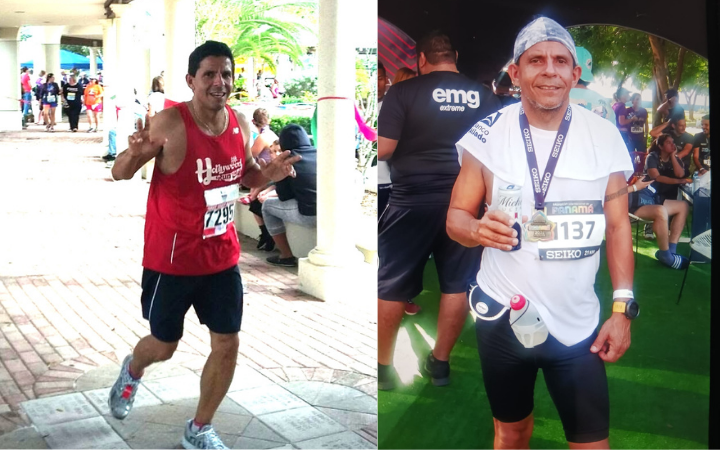
So, I registered for a half marathon in Panama, where the humidity would likely be 100% and my goal was to smash my PR on the distance by almost 10 minutes. To accomplish this, I decided to get a coach with enough experience to turn a “naked runner” into a “dressed runner”.
I needed guidance, arduous work and some luck to transition into this new chapter of my running life.
Fast forwarding to race day, luck ran out. I started to cramp up at mile 7. But suddenly, I recalled on the sacrifices I’ve made to get here. Waking up early, watching and timing my food, pushing my body to a certain pace, trying new goals, sometimes with uncomfortable results. And then, the lessons learned as a “dressed runner” started to pay off.
I looked at my Garmin and I adjusted my pace. I also timed my intake of salt and fluids the way I trained for. At the end, I was able to shave off six minutes from the same race back in 2019. Not what I wanted but I was satisfied with the result.
Was I disappointed at missing my PR? Of course! God willing, I still have 2023 to accomplish it. Now as a “dressed runner”.
I want to thank Coach Adolfo, my running partners Dmitriy, Wayne, Luis and Luis “Chamo”, as well as the rest of my running group for their support during my quest.
*Ruben Urieta is an experienced runner based in Pembroke Pines, Florida. He has completed multiple half marathons and one marathon. He runs with No-Club Runners on Saturday mornings, and he is also a good friend.
(1) – A naked runner is one who runs exclusively by feel, with no assistance from any type of tech gadget or wearable gear. It has nothing to do with running in the nude.