The Hydration Urine Test

The Hydration Urine Test

By Coach Adolfo Salgueiro

We’ve heard about the pee test to figure out how well hydrated we are or not. If the pee it is clear, or pale yellow, then you are hydrated and ready to run; if it is yellow or darker, then you are dehydrated. Sure, this is a quick, easy and free test, but it does have some limits.

Hydration Urine Test

The need for sodium for us, long-distance runners, goes beyond the recommended guidelines

According to Andy Blow, a British Sports Scientist, the pee test is a good tool to gauge the general state of your hydration, but it is not the end-all word on the issue. “The time to look at your pee is when you wake up in the morning—Says Blow, who served as hydration specialist for two Formula 1 teams—because the color of the urine you first produce is a good indication if you are hydrated or not that day. By then, your body had all night to recalibrate itself, move fluids around and get into equilibrium. If you wake up and you feel a little bit thirsty, it is a good indication you are dehydrated.”

The problem of looking at your pee during the day is that you eat, you drink, you do things and the results become skewed. If you had a bottle of water, or two; if you drank a coffee, or two; or a sports drink, your body may be discarding a lot of the fluid it took in, which doesn’t mean you are fully hydrated. Even if your urine is clear as water.

Remember that dehydration doesn’t get solved chugging a gallon of water. If you are in a dehydration state, it may take your body 24-48 hours to recover. You can gulp all the Gatorade you want, yet this will not restore you. The body can’t absorb it all and most of that excess water will be peed out.

Hydration Urine Test

Dehydration doesn’t get solved by chugging a gallon of water (or five)

In a recent interview I heard, Mr. Blow explained that we see with a lot of overhydrated athletes at the starting line of races. They take a lot of water before starting and that has nothing to do with their state of hydration. A recent study showed that a significant percentage of athletes are in an early state of hyponatremia when they start long races on hot days, most likely because they prepare by drinking a lot of water to confront the weather conditions. They end up peeing the excess water, and valuable sodium with it, which eventually leads to trouble.

The best way to address this, according to Blow, is to ingest a much smaller amount of a high-sodium drink. This sodium will make it into the bloodstream and will hold water there as a reservoir so that you have something extra when you start. “This is a lot better than drinking loads and loads of water”, he affirms.

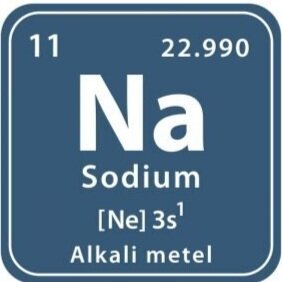
Sprinkling salt in a glass of water will do the trick. The right amount is about 1.5 grams of salt per liter of water consumed. But since it is hard to drink “ocean water”, Andy Blow recommends sodium citrate, which is more palatable. Sodium citrate can be purchased at a nutrition store or via internet. This is about three times stronger that any commercial sports drink.

Understand that a higher consumption of sodium is important for athletes that train a lot AND sweat a lot, like us as long-distance runners. Consuming all this sodium for sedentary people is not recommended. Our salt requirements can be up to three or four times more than those of sedentary people. That is why we crave salty stuff, such a pretzels or potato chips, after a hard training session.

Also, understand that you don’t need to replace 100% of what you are losing. You are supposed to sweat and lose electrolytes. Nothing wrong with that.  You need to find the sweet spot between what you are losing and going hyponatremic; and from there, test what works better for you. Then, go check your morning pee.

7 Bad Running Habits to Quit

7 Bad Running Habits to Quit

By Coach Adolfo Salgueiro

Bad Running Habits

As in any activity, we pick up bad habits in our running lives. Let’s make sure we correct them before they become an issue.

Just as in any activity in the real world, in running we get more experience as we put more miles under our soles, participate in more races or bonk in training. And, just as in any other activity in the real world, we pick up bad habits on the way to achieving such experience. In running, those bad habits can either suck the joy out of our activity or, even worse, get us injured and, thus, sidelined.

Here are seven bad habits in which runners commonly fall into. This is not a comprehensive list by any means, but it is a start so we can have an introspection on our running lives to make sure we will keep active in our sport of choice for many, many years to come.

1 – Comparing yourself to other runners – Our sport is individual, and each runner is its own planet. No two are alike. The fact that Jimmy can run a sub-3 marathon o Billy can run 3500 miles a year, has absolutely nothing to do with what I can achieve. Do not fall into the comparison trap, it will suck the joy out of an activity you are supposed to be doing because we enjoy it.

2 – Skipping days off – Rest and recovery are as integral to a training plan as a 20-mile run before a marathon or an interval training session 5 weeks before your goal race. It is common for us runners to think we are invincible, it comes with the territory, and when we realize we are not, it is usually too late. Do not be afraid of scheduled off days, and make sure to take one or two, days or weeks, when you need them. Running burnout is real thing. Make sure you understand this anecdotally and not first-hand. 

3 – Judging your training by pace alone – Who doesn’t want to run faster or go with the leaders on a group run. Maybe you can, maybe you can’t. What is important to understand is that to be able to run a fast pace, you need to slow down and recover on easy days. Do not fall into the trap of attaching your self-worth as a runner to average pace per mile. Unless you have a training plan with specific goals set for you on a certain day, run by feel and change paces often. Improvement will come on its own.

Bad Running Habits

Small adjustments to make your running life part of your life instead of making it your life, will help you avoid burnout and injury

4 – Skipping warm-ups – Sure, we all want to run fast and do so as soon as possible, but we will be setting up ourselves for failure and/or injury if we started our training runs or races at full speed. You may be able to run a 7, 9 or-11-minute mile at peak performance, but that will not be on your first, and most likely second mile of the day. Your muscles and mind need time to get ready for the activity you are about to undertake, so plan accordingly.

5 – Living your running life through social media – Social media is great for many reasons, and it can be bad for as many reasons. Share your accomplishments and share your failures. Share your good time with running friends and the spectacular sunrises or oddities you may see on the route. Just make sure that you are not running solely to improve your likes or the need to hear strangers telling you great you are. It is the wrong reason for running.

6 – Feeling guilty because you took a day to do something important – Unless you are Eliud Kipchoge or Mo Farah, running should be part of a balanced life, not “your life”. Don’t miss the opportunity of moving in your kid into college or celebrating an important anniversary or milestone because, or taking a weekend away with loved ones when you have a 20-miler that weekend. Your family, professional and running lives need to complement each other.

7 – Jumping into your car right after your run – Once you are done with your run, make sure you take at least 10-15 minutes to cool off, rehydrate, stretch and regain a state of calmness before jumping into your car to go home. Do not sit or lay down at least until you have been able to catch your breath. If you feel you don’t have the time to do this, then finish your run a mile short and walk back to your car.

Did I leave anything out? Let me know, below.

Hydration Basics for Runners

Hydration Basics for Runners

By Coach Adolfo Salgueiro

The basic concepts on hydration have moved like a pendulum through the last century of athletics in general but running in particular. While the earlier runners of the Boston Marathon took it as a matter of pride not to consume water, in later years the thesis of never been able to consume too much came en vogue and was disproven. Now days, we are in the “drink to thirst” phase. The truth is that there is not a one-size-fits-all approach to the matter. What worked for Bill Rodgers in the 1970s, does not work for Eliud Kipchoge, setting the world record and does not necessarily work for you, right now.

Hydration BasicsWhen it comes to hydration, extremes do not work. Not taking any liquids during a marathon is a recipe for disaster that doesn’t require much explanation. The “more is better” can lead to the life-threatening condition known as hyponatremia, whose explanation is beyond the scope of this blogpost.

It is important to understand that if you are running 3-6 miles, 3-4 times a week, your body may have everything it needs to cope with your hydration needs. There should be no need for a hydration strategy per se unless you are running in an oppressively hot and humid environment. A quick 5K around my block is not the same as 5K in the Sahara at noon. But once you are getting up on mileage, or start training for a longer effort, then it becomes imperative that you do something about your hydration needs.

“Hydration is a balancing act—says Andy Blow, British Sports Scientist and founder of Precision Hydration—One thing we can all agree is that once you hit a level of under-hydration, where you lose enough fluids and electrolytes, at some point you will reach serious problems, such as reduced cardiovascular function because your blood gets thicker and thicker as you get more and more dehydrated. Then you dissipate heat less well, you overheat and from there you get into a downward spiral.”

Finding out where in the spectrum you fit; how much you need to drink, how often and what electrolytes you need to replace is your responsibility as a runner. Sure, a coach can and will assist you, but only if you feed him the right data, which is your duty.

Hydration Basics

Hydration Specialist and Sports Scientist Andy Blow

An easy home test to figure out how much you sweat on a specific setting, let’s say on a summer long run; is to weigh yourself naked right before you leave. Run for an hour without consuming anything. As soon as you get home, get naked, wipe yourself off and weigh yourself, again. The difference in weight is how much sweat you lost in an hour. Each gram lost is equivalent to about 1 milliliter of water, as there are other contents in your sweat (in the Imperial measure system, each tenth of a pound is equivalent to 1.6 Fl Oz). This is your sweat rate and the approximate amount of water you need to replace as you run in similar conditions. Yes, it is that simple.

As personal as the sweat rate is, the contents of your sweat are equally individual. You need to know what is in your sweat so you can replace it. If you are caked in salt once the sweat evaporates, then you are losing a lot of salt, 40% of which is sodium, a key electrolyte. So, if this is you, you need to go above the set guidelines for salt intake, as these are not for athletes but for normal, inactive people.

According to Blow, the best approach for hydration on shorter runs (90 minutes or less) is not to have a plan but to drink to thirst. For longer runs, like a 20-miler on a hot summer day, you need to consume not only water but also sodium to compensate what is being secreted and keep your stores as topped off as possible.

There is so much more about hydration. Not all of it can be addressed in just one post. Tim Noakes, the world renowned South African sports physiologist, wrote “Waterlogged”, a book about the topic which is 448 pages long. If you want to dig deeper into the subject, this is my recommended source.

To Fast or Not to Fast?

To Fast or Not to Fast?

By Coach Adolfo Salgueiro

It is an ongoing debate between runners, coaches, scientists and onlookers in general if we should run in a fasting state or not. Despite all the science, studies, anecdotal evidence and articles on the subject, the verdict boils down to a simple two-word answer: It depends.

Fasting

Figuring out what to eat and when is the responsibility of each runner.

It depends on what type of runner you are, how long you are running, when you’re going for a run, what are you trying to accomplish, and so many other factors. There are as many answers as there are runners. And what works for you doesn’t necessarily work for me.

If you run first thing in the morning, you can do a simple A/B testing and figure out what works for you. There are people that can’t function without a coffee and there are people that will have to rush behind the bushes if they have a coffee before running. You can try with an apple, or a banana, or a bagel, or toast, and from there find out what helps you out and what upsets your stomach. A running partner once told me she had a bowl of oatmeal before our long runs. If I had a bowl of oatmeal, I would be the one running for the bushes.

The key to this is not to overdo it. You are just looking to top off your glycogen stores before you hit the road. You are not taking breakfast. Digestion uses a lot of blood, same as running does. So when the body diverts the blood to fuel your running, digestion stops. The rest I will leave to your imagination.

Running on a fasting state, you will teach your body to use its own resources without depending on outside fueling. This is beneficial when you are training for a long effort, usually the half-marathon and above. As you your body adapts to the finite amount of glycogen it has available, it learns to use its stored fat as a source of fuel. This becomes invaluable when you go beyond the 18-20-mile mark, so you can avoid the dreaded wall.

I want to make absolutely clear that I am not saying to go run 18-20 miles just with what you woke up with. You should not neglect your fueling strategy (that is a topic beyond the scope of this blog post). What I am saying is that running in a fasting state will train your body to reach that critical point with something left in the tank.

Fasting

The time of the day in which you run is one of the key variables on fasting or not

The time of the day in which you run is key on deciding if fasting or not fasting is right for you. If you run in the afternoon, you shouldn’t be fasting all day. What you must do is adjust your eating habits so you can fulfill your training without interrupting digestion. Once again: A/B testing. You will have to discover what works best for you. You will have to eat something before your run, but what and when is the key. It could be some fruit, or a sandwich or handful of almonds; either two or three hours before your run. Or maybe its just one hour. It is your responsibility to figure that out.

Even if you prefer running in a fasting state, you must prepare for the task you will be facing. If you are running New York, or Boston, where you may be starting at 11AM, you can’t do it in a fasting state. You must eat something hearty for breakfast with enough time to digest (about 4 hours). You breakfast needs to be a low-waste meal so you can avoid number-2 unscheduled breaks. Astronauts for the first Mercury and Gemini missions, when bathrooms were not available in their spacecrafts, used to eat filet mignon, eggs and toast before launch. You may want to switch the filet mignon for another type of protein but in general, this is a great option. One that needs to be practiced before race day.

My recommendation is to start working on your A/B testing right away. Find the benefits and the drawbacks of fasting or not; of eating and eating what; of eating or not based on how long are you planning to go; on when to eat; on figuring out if coffee, oatmeal, fruit, toast or whatever, works best for you; or not. The time to work on this, is now, not when you are tapering for your marathon or the morning of your goal race.

The Lunge Matrix

The Lunge Matrix

By Coach Adolfo Salgueiro

Lunge MatrixBack in 2017 I started running with a local group on Saturdays and stretching was always initiated with this particular set of lunges. They were five different exercises. Ten of each. Most teammates hated them, but I learned to embrace them. When I asked the head coach what those were, or where they came from, he said his coach told him to do them before every run. A few months later he set a marathon PR and reassured me how much these lunges had helped him out. At that time, he was already preaching to the choir.

As a curious mind, I started searching for the origin of this set of exercises and it led me to something called “The Lunge Matrix”. It was originally developed by a physical therapist named Gary Gray, a specialist in human biomechanics, also founder of the Gray Institute, dedicated to functional movement. The Lunge Matrix has been so effective that now is recommended by multiple running and strength coaches, most of them as the very first thing you would do as you get warmed up before your physical activity. Important to know that it will only add 3 to 5 minutes to your warmup routine.

Lunge MatrixThe Matrix combines a series of strength and stretching movements in a sequence that is easy to follow and rapidly becomes second nature as you get use to performing it. According to Dr. Marc Cucuzzella, “The goal of the Lunge Matrix is to reset your range of motion in all of the planes of movement”. This comes in very handy when you are coming from an 8-hour night of sleep or 8 hours sitting down at the office. Jay Johnson, coach of elite athletes with 20+ years of experiences, states that “after three weeks of doing the Lunge Matrix before your runs, you will not think of taking your first running step until you go through the routine”.

The five lunges on the matrix are the following:

Front lunges
Lunges with a twist
Lateral lunges
45-degree lunges
Backward lunges

You need to make sure to take your time performing these exercises right as you become accustomed to them. Avoid getting into bad habits either by ignorance or plain laziness. Keep the proper posture, the right muscles engaged and do not overdo it. You can start with six of each, then up it to eight and finally to the recommended 10. You do not need more than 10. If you want to do more, perform the set again, at the end of your run, too.

I found this great video on YouTube, which you can find below. It explains the sequence in detail, as well as the posture, the planes of motion and at the end, goes through common mistakes, so you can avoid them.

Three to five minutes well invested towards your running health. Feel free to let me know about your experience with them in the comment box, below. 


The Trap of Information Overload

The Trap of Information Overload

By Coach Adolfo Salgueiro

Information Overload

GPS watches are great, but not all the info is needed right away

Let’s start by stating that I see nothing wrong with being on Strava, having an Instagram account to share your runs or checking Facebook every so often to see what your running buddies are up to. It is great to live in a time when, via social media, we can still be in contact with people we haven’t seen in 30 years, or keeping in touch with that cousin that moved to another country and you rarely have the chance to see anymore.

It is great to being able to make social media acquaintances even though you never met them in person. In my case, I follow a Dutch marathoner named @mistermarathon on Instagram and he followed me back. When I visited Amsterdam, he took me for a running tour of the city, we had coffee and had a great talk. A few years later he visited Florida and even though I was injured and couldn’t run, we met for coffee and had another great conversation. That is awesome.

Now, there must be a limit. The data overload from social media, from our watches, from WhatsApp groups and from measuring up with strangers, is stealing the joy from a considerable portion of the running universe. And the main reason we run is because we like it. So, if something is stealing our joy, it must go or, at least, its presence must be adjusted.

Yes, a pre-run picture with your buddies is cool, but if you missed it, you can still run. Forgetting to charge your watch is not an excuse to skip a scheduled training. Checking your favorite elite runner on Strava and trying to match their trainings is a recipe for injury. Thinking that an ultrarunner in Germany or Australia or Argentina is your buddy because he likes your posts on a regular basis is the prelude for a letdown. Wanting to run from New York to Los Angeles because so-and-so did it, is insane.

It starts with regulating the consumption of information we get from our GPS watches. It is wonderful to have all the information you can possibly want at the flip of your wrist. But, with certain exceptions dictated by a specific segment of your training program, the usefulness of such information is relatively innocuous. It is just a reflection of what you are doing, not what you are doing and definitely not your worth as an athlete. You don’t have to pause the watch because you are at a red light or because you stopped 10 seconds to say hi to another runner. You don’t have to check your cadence every mile unless you are specifically working on it. And don’t get me started on VO2Max, that’s for another post. I think you get the point.

I am amazed by the data the website I synch my watch to, can provide. Most of it is great for analysis of my training, progress and to keep historical data. The more I use Strava, the more my mind gets blown away on what it can do, but I don’t follow people I don’t know. I only follow runners I train, so I can see what they are doing, this way, I can coach them better. If I want to know what a friend is doing, I call him or text him. I don’t need to know what Eliud Kipchoge is doing every day and compare him to my progress. I don’t need kudos on my run from 50 runners I don’t know.

Information OverloadTheodore Roosevelt, the 26th President of the United States, once said that “comparison is the thief of joy”, and I agree 100% with him. Of course, we can’t avoid it all the time, it is part of our human nature. But if we want to get joy out of OUR running, we need to concentrate in what WE are doing and what WE can control. We need to center OUR running life, in OUR progress, OUR failures, OUR injuries, OUR parameters.

Most of the data is useless at the time we are running. It is afterwards that we can learn something from it and adjust. If you list the top-10 reasons why you run, I doubt that “to show up my Mary in Strava” or “to have more Instagram followers than Jimmy”, or “to improve my likes on Facebook” makes the list. Let’s go back to basics. Take advantage of the tools that technology provides but don’t be a slave to them.  

Skip to content