
by Coach Adolfo Salgueiro | Mar 7, 2023 | Article, Reflection
By Coach Adolfo Salgueiro
As the 2022-23 racing season move towards its end, with just a handful of goal competitions left in the calendar, the time to start planning for the 2023-24 season rapidly approaches. The running season usually goes from November-March, with adjustments depending on your latitude and location. This is time to reflect on what happened, what did not happen and why did or did not happen.
The first question that comes to mind after this intro is: Do runners really need time off?

Rediscover the pleasures of sleeping in on a weekend morning instead of going for a long run (Photo Pexels)
It has been discussed for decades, but based on my years of experience, my answer on the matter is a blunt and unequivocal YES!!!. In all caps and with three exclamation points.
Regardless of your age, level of fitness and commitment to the sport, your body cannot keep its peak level of fitness forever. There is such a thing as an upper limit which cannot be surpassed regardless of how much you run, lift or cross train. So, it is imperative that you provide your body with enough time to rest and relax. This will inevitably decrease your fitness, sure, but you must see it as an investment, a process to go through to continue your path of long-term progress.
The key concept is that once you have recovered and you are ready to restart, given that you havenāt overdone the junk food, alcohol and time off, you will be doing so at a higher level of fitness than where you started last season. This may allow you to achieve an even higher level for the upcoming season.
I will define the off-season as the period between your last race of one season and the first race of the following one. Within that period, I have identified four phases to devote individual attention so you can prepare properly for success.
1 – Rest and recovery ā This doesnāt mean you stop all sports activities until next race. Some runners may need a week to a month off just to reset the body and have fun catching up on the pleasures of life that theyāve deprived themselves of during hard training, such as pizza, beer, binging on TV until late or sleeping in. Other runners will want to drastically cut their mileage, or their running days so their bodies can recover and prepare for what is coming up. You must enjoy the process and runningās gotta be fun. Otherwise, a burn out may be on its way and you will no longer run.
2 ā Planning ā This phase may overlap the previous one, or even with the previous racing season. The time has come to figure out what are your goals for next season. I am a firm believer that having multiple races in your schedule is what will allow you to remain focused so you donāt slack off until you realize the race you were shooting for is around the corner, or it is sold out. You donāt want to plan every workout for the next 6-8 months, but you just need to know when you need to be ready and for what goal.

This is the time to enjoy the pizza and the beer, but obviously, donāt overdo it (Photo Pexels)
3 – Build up ā After your recovery time is taken care of, it is time to rebuild your endurance and your speed. This takes time, method and requires patience. Accept you will not start at the same point where you left off. The silver lining is that you will be able to get back there sooner and safer the longer you have been running. Getting back to 50-mile weeks is a quicker process for someone who has been doing it for 10 years than for a runner who just did it last year for the very first time. Put you plan on paper. Block and label the weeks and/months you will need to go through this process. Then, execute.
4 ā Training ā Everything you did between your last race of the season and the start of this phase is what will determine the success of your next season. A 16-week training plan, especially for a marathon, doesnāt mean youāll start running again 16 weeks prior to race day. It means that 16 weeks before race day you must be ready to hit the ground running. By then, your aerobic capacity, your core, your strength program and your speed training should be a work in progress. So, in these 16 weeks you just dial in the variables to achieve your goal at the set date.
Other components such as nutrition, sleep, hydration and recovery are year around elements than need to be addressed continuously and are part of all four phases.
If you take the time to plan ahead, even small injuries, periods of sickness, vacation or any other unexpected surprises life will inevitably throw at you, may be fit into the off-season. Prepare yourself with plenty of time and enjoy reaping the benefits of a well-executed plan.
by Coach Adolfo Salgueiro | Feb 7, 2023 | Article, Coaching, Reflection
By Coach Adolfo Salgueiro
Last week I was talking to a friend who is helping his brother train for his first half marathon. He told me the toughest part of the process is making him understand that the āno pain, no gainā old-school mentality no longer applies to running. The days of alchemy are over. The collective thought has evolved and adjusted to new science studies or discoveries, thus, we understand matters in a new way, one that 5, 10 or 50 years ago was unheard of.
In 1968 Kathrine Switzer had to finagle her way into the Boston Marathon because back then women were thought to be so fragile, they could not endure such physical punishment. The carb depletion pre-marathon protocol was the rage in the mid-1980s, today we know it makes no sense. The āI run through painā approach that showed bravado 20 years ago, displays recklessness, today. And like that, many more running ideas that once we thought gospel, today are barely gimmicks.

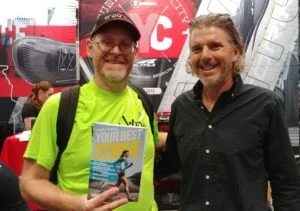
A good book worth the time and the money. Highly recommended.
In his book āDo Hard Thingsā author Steve Magness, one of my coaching role models, talks in depth about getting over of this old-school thinking. He explains how toughness is navigating through your training, not bulldozing through it. This how we avoid overtraining, and even worse, injuries. It is about being smart.
He goes through eight strategies to develop real toughness as a runner. I am not going to go through all of them, of course. If you want to go in depth into them, thatās what the book is for. But I will briefly touch on three that caught my attention and that I now teach my coached athletes.
A ā Our alarms are adjustable: āBeing tough gets easier the fitter you are.ā
What an avant-garde concept! Think about it this way: If you spent the last 10 years on the couch watching TV and eating Doritos but decide to go for a 5K run, most likely you will suffer through it, regardless of your commitment or toughness. But, if you got the running bug, you trained smartly, diligently, and two years later you complete a marathon, it is not because you have multiplied your toughness. You reaped the benefits of your work and got better at it. Just like the first time Bruce Springsteen picked up a guitar, which these days is an extension of his body.
B ā We need hope and control: āThe key to improve mental toughness doesnāt lie in constraining and controlling individuals. It doesnāt lie in developing harsh punishments to teach a lesson. It doesnāt lie in screaming at the person to complete the task in front of them.ā
The era of āI am not done when we are tired, I am done when I am doneā, is done (pun intended). If you are training for a marathon, you need to run 18 miles but you are feeling unwell, stressed at work, just had a fight with your spouse last night, didnāt sleep well, it is a hot/humid summer morning and you are beat up at mile 15⦠whatās best? Calling it a day and be happy you completed 80% of your workout despite the circumstances, or pushing through while destroying yourself, to prove your machismo and then having to take 7-10 days to recover from the effort? ⦠Exactly!

Finishing exhausted after a training session could lead to injury. Be smart and always live to run another day. (Photo: Pexels)
C ā Feelings and Understanding need interpretation: āThe power through mantra only makes sense if you take stock in what you are powering through.ā
I want to make sure my readers understand I am not saying you need to be complacent when training gets difficult. We need to learn how to power through difficult trainings, races, cross training and life. The key is to understand why we are doing what we are doing. If we are trying to run at race pace, then race pace sessions will be difficult. But we need to push through them if we want to understand and teach our bodies how to run at that pace. When we start strength training, or add yoga to our plan, everything will hurt, but thereās a good reason to keep going despite the aches and pains. It is not about suffering for fun; it is about reaping benefits in the near future.
These is my take on three of these principles, I fully recommend the book. āDo Hard Thingsā is a good investment of time and money for any runner out there. And it is not just for runners, but for every person wanting to get better at leaving their comfort zone behind and actually going for what they want, for their life goals, not just the athletic ones.
Please leave me your thoughts nn this blogpost, in the box below.
Ā
by Coach Adolfo Salgueiro | Jan 24, 2023 | Article, Opinion, Personal, Reflection
By Coach Adolfo Salgueiro
I still canāt believe that it has been 40 years since my first marathon. Four decades since that unforgettable January 22nd of 1983 inside the old Orange Bowl Stadium in Miami. 14,610 days have passed since that unprepared 17-year-old higschooler crossed a finish line that became the gift that kept on giving.
Since I can remember, I wanted to run a marathon. Not sure why. Maybe because I read about the athletics exploits of Abebe Bikila, Emil Zatopek or contemporaries like Frank Shorter and Bill Rogers. Who knows? Somehow, I always loved the extremes. I started running when I was 12 or 13 while living in Caracas, Venezuela, and at 15, ran my first 10K race. Then, a couple of months after turning 17, my dad told me he was running the Orange Bowl Marathon in January 1983, and if I trained, he would take me to Miami. Maybe I just wanted the trip and a few days off school, or it could have been a legitimate attraction for the physical challenge. Regardless, what I know is that 6 weeks later I was lining up at the foot of the iconic home of the Miami Dolphins, who eight days later were taking on the Washington Redskins in the Super Bowl.

The Miami Orange Bowl stadium (1937-2008) seated 72,319, hosted 5 Super Bowls and was home of the Miami Dolphins from (1966-1986)
Iāve written before about that race. So, on this anniversary I donāt want to reminisce about that particular day, but on what the race has meant to me throughout my life. Last year, on the 39th anniversary of the marathon, I wrote a memoir about that day because I didnāt want details to be forgotten. If you would like to read more about it, please click here.Ā I also wrote a post about getting my finisherās medal 37 years later, back in 2020. If you want to read about it, please click here.
After that magical morning, 40 years ago, even if I never ran another step in my life, I was a marathoner. It is a label that sticks forever. It doesnāt fade away with time, or by forgetting the exact date and finishing time, or by never wearing a pair of running shorts again.
I kept running for a handful of years after my first marathon. By the time I turned 21 I had four under my belt, with a couple of them in the 3:30 range. I ran through my first three years of college and even had escalated disagreemtns with my girlfriend, who at times was fed up with not going out with our friends on Saturday nights because I had a Sunday morning long run. Many a time I had to put my foot down and state that I would drop her before my training. Today I would have handled it in a different way, but that was then.
As I have mentioned in other writings, as I was training to go sub-3 in 1986, I had a devastating non-running injury on my left knee that left me on the sidelines. It was such a demoralizing blow that I stopped running for decades. While not running I discovered the pleasures of sleeping in on weekends. I didnāt want to have the same issues with new girlfriends, so I went out partying on Saturday nights, and on Friday nights, too. I focused on getting my career in sports journalism started, graduating from college and all the stuff ānormalā people do when they donāt need to wake up early to run long next day. The day I turned 18, I went to bed at 8PM because I was running 30Km (19 miles) next day as part of my training for the NYC Marathon. What a weirdo!

There is not much to be found online about the 1983 Orange Bowl Marathon. Surprisingly I found this cotton race shirt in eBay for ājustā $149,99. Thanks, Iāll pass.
Yet, somewhere deep inside, I always knew I had one more marathon in me. Just one, to remind myself I could still do it, or to fool myself into thinking I was still as good as when I was a teenager, or to revisit old glories, or to show my young son what you can accomplish when you work hard towards a difficult goal. Whatever it was, I still wanted to hit the asphalt and take that 26.2 trip once more. Just once.
But sometimes you cross paths with the wrong people and they clip your wings. At 39, after a 2nd knee surgery in July 2004, I told the doctor I still had one more marathon in me and asked if he thought my knee could take it. He told me in no uncertain terms that I shouldnāt and couldnāt. I was stupid enough to take his word for it.
But one day, out of the blue I started walking for hours at a time, feeling good about it and experiencing the runnerās high once again. I found racewalking and then racewalked four half marathons, transitioning to the 26.2 at the 2012 Philadelphia Marathon. Three years and two more marathons later I realized that I just took the doctorās word and did not run because he said so, not because I tried and failed. So, I got my running restarted and ran my first marathon since 1985, in 2017. Five years, four marathons and an open-heart surgery later, I am still running and looking towards my next 26.2-mile adventure.
The Marathon Training Academy podcast runs a great tag line: āYou have what it takes to run a marathon and change your lifeā. I certainly had what it took to run it again, and my life hasnāt been the same since I completed that 2017 NYC Marathon after I became a runner for the 2nd time; nor since I racewalked the Philadelphia Marathon in 2012 after a 26 year hiatus, nor after that magical morning at the Orange Bowl Stadium, 40 years ago, this week, when my lifetime love affair with the mythical 26.2 monster got started.
Ā
by Coach Adolfo Salgueiro | Jan 17, 2023 | Article, Guest Perspective, Opinion, Reflection
By Ruben Urieta*
As a ānaked runnerā (1), for many years I enjoyed the freedom of not being attached to tech gadgets. Gadgets that most runners use to measure mileage, pace, heart rate and what not. They come in different forms of watches, headphones or wearables. These days most smart phones can track you, just as your significant other does (just joking).
What is it that a naked runner enjoys? This is a good question for a podcast, as it may need a long answer. I can only tell you about my experience. I enjoy the conversational running, the sound of the waves by the beach, the flapping of bird wings and even the occasional āget out of the f*$%ng bike lane!ā reminder. With this mindset Iāve ran 5K, 10K, plenty of half marathons and even one marathon without proper training, where my buttocks hit the ground (literally). In some smaller races I even placed in my age group, including a 2nd place in the birthplace of Ricky Martin (San Juan, PR).
However, events involving my close family happened this year and made me reconsider my comfort zone. What I mean by that is that I felt like I got into a comfortable running routine that my body just got used to. It took a doctorās advice to snap me out of it. He said: āsometimes you have to endure physical pain to obtain unique benefitsā.
So, I registered for a half marathon in Panama, where the humidity would likely be 100% and my goal was to smash my PR on the distance by almost 10 minutes. To accomplish this, I decided to get a coach with enough experience to turn a ānaked runnerā into a ādressed runnerā.
I needed guidance, arduous work and some luck to transition into this new chapter of my running life.
Fast forwarding to race day, luck ran out. I started to cramp up at mile 7. But suddenly, I recalled on the sacrifices Iāve made to get here. Waking up early, watching and timing my food, pushing my body to a certain pace, trying new goals, sometimes with uncomfortable results. And then, the lessons learned as a ādressed runnerā started to pay off.
I looked at my Garmin and I adjusted my pace. I also timed my intake of salt and fluids the way I trained for. At the end, I was able to shave off six minutes from the same race back in 2019. Not what I wanted but I was satisfied with the result.
Was I disappointed at missing my PR? Of course! God willing, I still have 2023 to accomplish it. Now as a ādressed runnerā.
I want to thank Coach Adolfo, my running partners Dmitriy, Wayne, Luis and Luis āChamoā, as well as the rest of my running group for their support during my quest.
*Ruben Urieta is an experienced runner based in Pembroke Pines, Florida. He has completed multiple half marathons and one marathon. He runs with No-Club Runners on Saturday mornings, and he is also a good friend.
(1) ā A naked runner is one who runs exclusively by feel, with no assistance from any type of tech gadget or wearable gear. It has nothing to do with running in the nude.
Ā
by Coach Adolfo Salgueiro | Jan 3, 2023 | Article, List, Reflection
By Coach Adolfo Salgueiro
Happy New Year!!! May 2023 bring you countless, injury-free miles and PRs in all your distances.
As we turn the page onto a brand-new notebook, one where all the pages are still to be written, we set up our running hopes and goals for this new trip around de sun and we must start dialing in and focusing on what we want to accomplish when it comes to our physical activity. This way we can have a roadmap and not improvise along the way. So, come December, we are not regretting a lost opportunity to accomplish something big.

A brand new year to fill in with hopes and goals so, come December, we donāt realize we have wasted 12 good months (Photo: Bich Tran, Pexels)
As we analyze our goals for 2023 and we ponder our fears about coming short, we start by making sure we are well prepared and focused by setting goals that require effort and challenge you to be active for 12 months. Below find six guidelines to set up realistic running goals.
1 ā Set up a bold yet attainable goal: Easy goals that can be achieved with little effort donāt mean much. Unfeasible goals that will not be realized, will leave you in frustration. So, be reasonable. Goals can be accumulative, like running 1000 miles in the year, or 200 kilometers per month, or five times a week. You can also strive towards running a particular distance or have a goal time for a distance. The key is to make it a real challenge, one that will leave you elated when you achieve it.
2 ā Choose your goal race or races for the year, now: Set up a road map so you know how to get from where you are to where you want to go. Select the races where you want to excel and/or set up your PRs and then work toward is with plenty of time. If you want to set up a marathon PR, you must set up enough time aside so to include all the elements of a training plan. If your goal is a 5K or 10K PR, then you need to plan enough speed work, which also requires time. Make sure you are not surprised when your goal race is 4 weeks away and you are not ready.
3 ā Set up a reasonable training schedule that will fit your life: Once you have figured out what you want to accomplish for the year, it is time to get it all into your schedule. Donāt wait until you have time to fit in your training. If you do, you will never train. Write in your running and your cross-training activities into your schedule (actually, write it in, yes!) so, when something comes up, youāll know you are not available, since thereās a previous appointment in your agenda. This simple technique has worked very well for me, so I highly recommend it.

Block off your exercise time in your daily planner, so you wonāt double book it (Photo: Bich Tran, Pexels)
4 ā Donāt just run: Sure, running is what we want to do. Yet, the constant percussion this sport places on our bodies requires us scheduling time for repair and restoration. Incorporating one or two days a week of yoga, swimming, Pilates, elliptical or any other non-impact exercise will go a long way to make you a more resilient runner. And if you donāt have time to ad that to your schedule, then trade in a run for one of them. In the long run, your body will thank you and your racing times will reflect the benefits.
5 ā Include strength training: I procrastinated about this one the entire 2022. Weight work specifically designed for runners and core exercises to help your body withstand the pounding of the long miles are no longer optional. If we donāt prepare our bodies and make them stronger, it is a matter of time before we will have to stop and recover from an injury. My #1 goal for this year is to restart my strength training.
6 ā Upgrade your sleeping habits: If you put all the recovery tools together; the massage guns, the protein shakes, the compression gear, the amino acids and the write-in-your-favorite-here, the sum of them wonāt be as restorative to your body as a good, full night of sleep. Skipping sleep is not a badge of honor, it is a mistake that will not allow your body to recover and with luck, you will end up underperforming. Without luck, you will end up injured.
If you liked this blog post, please give it a like, below; or leave a comment if you want to contribute to the discussion.
Ā
by Coach Adolfo Salgueiro | Dec 27, 2022 | Article, Guest Perspective, Opinion, Reflection
By John Mounteer *
We all run for different reasons, including losing weight, improving our health, making new friends, or competition. I run for all these reasons. As a senior runner (68 years old), one of my motivators is a hope to delay the onset of dementia which is common in my fatherās side of my family. I also enjoy the excitement and competition of races.
As we get older, we inevitably slow down. When I do training runs with my old high school buddies up north, we mostly jog. Theyāve had more health issues than I have, and although they are still mobile, they donāt have much speed left. For most āserious runnersā, getting faster means running and competing with faster people. One of the reasons I enjoy running with younger people when Iām in Florida is that they motivate me to run faster.

John in one of his 27 podium finishes (Photo courtesy of John Mounteer)
Winter in South Florida is a runner paradise, especially compared to the cold, snow and ice in upstate NY where we live in the summers. The humidity is a factor to deal with, but it beats frostbite. The number of fall and winter races here, is extraordinary. Every weekend we have a choice of multiple races at all distances within an hourās drive. We can choose from very competitive, fast, large races with thousands of participants and thousands of dollars in prize money for the top finishers, to a local Fun Run and Walk. There are benefits to both types of events.
Large competitive races have the benefit of letting you know how you measure up against other serious runners your age. This can have two effects: motivation to train harder or despair that youāll never get a spot on the podium. You may have to face the fact that you are a small fish in a big sea. I am a small fish. I was never fast. Even in my high school. cross country team, where the first 5 runners count, I was lucky to place 4th or 5th, way behind the fast guys. My āage percentageā (my finish time compared to other runners of my age and sex) is around 60-66%. That means that at least a third of runners my age, are faster than me, and some are much faster.
In comparison, smaller races allow you to be a big fish in a small sea. Some small races still give medals in each five-year age group, although ten-year groups have become more common. The competition does thin out as you move up the age groups. Iāve run in races where almost everyone who showed up and ran was a winner! It feels good to get a place medal even knowing that youāre not the fastest runner in the area, but you were the fastest in that race that day.
You must do some searching to find the local, smaller races. Since we moved to Florida, Iāve run in dozens of small races, so Iām a lot of email lists and get notices for many of them. So can you by searching your local listings online.

John and Coach Adolfo after the 2022 Tamarac Turkey Trot, in Tamarac, Florida
Iāve been running mostly 5k and some 10k races in Florida for about 10 years, and in that time, by cherry picking small races Iāve gotten 27 age group awards ā ten 1st place, nine 2nd place, and eight 3rd places. And, in really small races I have a 2nd and a 3rd overall. Thatās crazy fun!
Iāve had great luck by searching for a couple of key phrases, ā1st Annualā and āfun runā. Another thing to consider is what other competitive races are occurring on the same weekend. Itās likely that the fast runners will be there and wonāt rain on your parade.
Some might think that ācherry pickingā races is a form of cheating, and maybe it is, but winning medals helps motivate me to keep training. My method also works better in the younger and older age groups where there is less competition to begin with. I donāt recommend that anyone does just easy races. I find that it still important to do the competitive races so that I donāt become complacent, but the feeling of standing on the podium is addicting.
Final words: Pay attention to your body and donāt overdo it while youāre young. Iāve had some injuries, but not as many or as bad as some of my contemporaries who ignored pain and did permanent damage. The secret to being competitive in older age group running is just to make it to next age group. Thanks to all my South Florida running family for keeping me going!
*John Mounteer is a runner who splits time between Upper State New York and Broward County, South Florida. While in Florida, he runs with Hollywood Run Club, Runnerās Depot Run Club and No-Club Runners. He is also a good friend.
Ā