
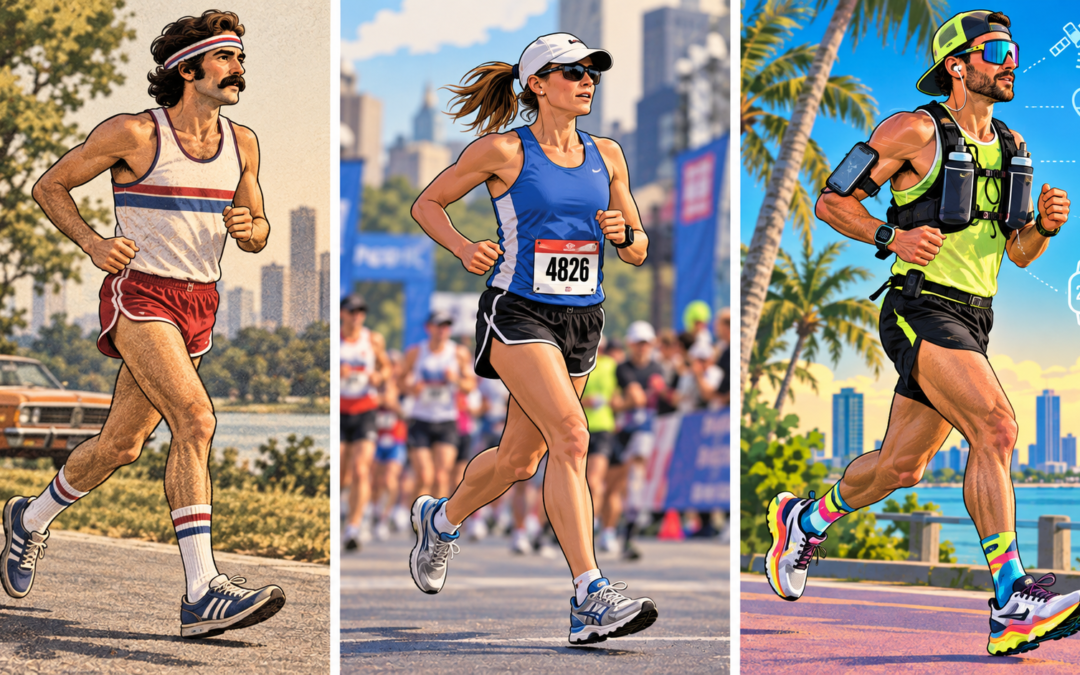
By Coach Adolfo Salgueiro
A couple of months ago, I was at church, and the Pastor wanted to illustrate a Bible teaching, so he asked, “By a show of hands, who here has finished a marathon?” I couldn’t believe it (Drop exploding head emoji here). Three of us lifted our hands. Running and finishing marathons has become so ubiquitous that it’s even used for Bible teachings at church.
Interest in running has become so popular within the last few years that we must conclude that we are well into a running boom. The Third Running Boom.
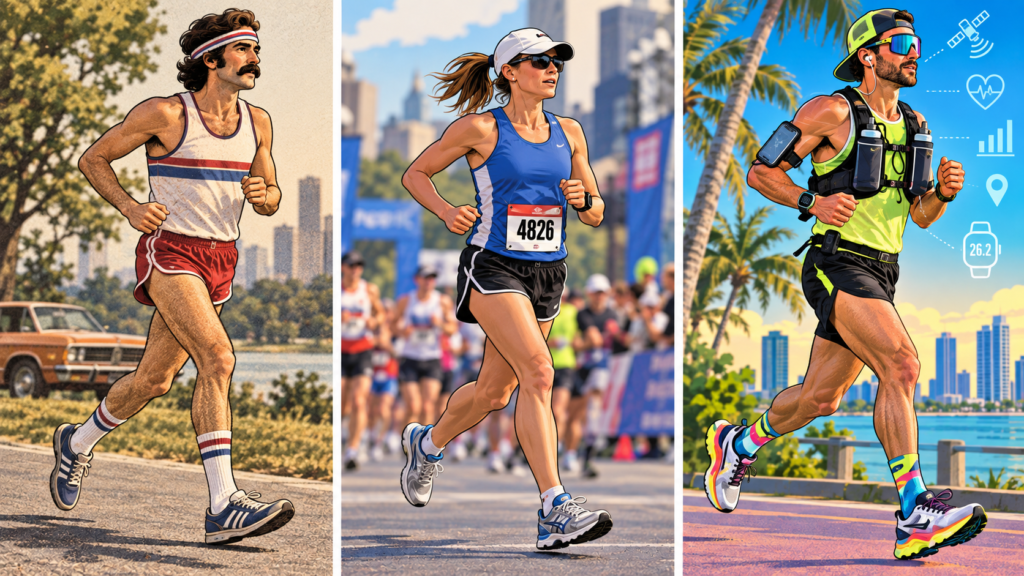
The first running boom happened after the 1968 publication of the book “Aerobics” by Dr. Kenneth Cooper and Frank Shorter’s Olympic marathon gold in 1972. The second boom began in the mid-1990s, fueled by the need to achieve something huge in your lifetime and big-city marathons providing that opportunity even to the humblest of weekend warriors.
Then came COVID, when the only chance for solace and sanity was exercising outside. This, plus the combination of oversharing life via social media and the birth of the motto “if it is not on Strava it didn’t happen,” led a new generation to discover running as a lifestyle. Many people started trading dating apps, bars, and weekend drinking binges for Saturday-morning long runs with their peers. They embraced lifestyle influencers, vlogging their running journeys and validating their efforts through half-marathon or marathon finishes.
The KPIs that confirm the post-COVID boom start with increased global participation in the sport. Up to 785 million worldwide, based on numbers I’ve read. But there is so much more:
► We no longer run in our gym shoes or the first shorts and shirt we find in our drawer. Clothing and shoe brands have invested billions in advertising, and fashion has become part of the allure. Styles, color schemes, and the latest fashion are as important as the achievements.
► Investment in research for nutrition, hydration, books, media exposure, wearable and recovery gadgets has reached levels that the earlier booms couldn’t even fathom in their niche world.
► Awareness of the need for wellness through exercise, nutrition, and a sense of belonging in an increasingly isolating world is bringing the younger generations into a world that was primarily shaped by middle-aged people who got hooked on trying to extend their lifespans by making radical changes to their sedentary lives.
► The change in demographics is revealing. While in 1967 Kathrine Switzer became world famous for defying the Boston Marathon’s “unofficial” ban on women, today the male/female split among participants is approaching 50/50. About 60% of half marathon finishers in the US are female.
► Young adults have embraced the running trend, and now the 18-29 age group is about 21% of race participation. They are no longer a rare breed at the marathon finish lines. They are there either to check off a bucket-list item or to test their limits (while sharing it with the world on Instagram, of course).

According to an article by Matteo Sargenti on The Running Week website, this 3rd boom is very healthy because it’s driven by new people coming in, not older people staying put. Yet two trends threaten its continued growth: A – the constant increase in race registration fees, which leaves out the new entry-level runners needed to sustain the boom. And B – While women continue to raise their participation numbers, their share of marathon finishes has been slipping from its 2017 peak.
Back when dinosaurs roamed the earth, and I was in my late teens and early 20s, I was the only kid running with my dad’s running buddies. I did it because I liked it, not because I was going to meet friends or find the love of my life. 40 years later, clubs packed with 50, 60, or 80 young runners, with millions of social media followers, led by a wannabe influencer, are a dime a dozen. And that is a good thing.
It doesn’t matter why someone in their 20s or 50s wants to run. The positive thing is that they both want to adopt a healthy lifestyle, socialize, test their limits, or inspire strangers through social media. Let’s embrace that our sport is healthy and growing, and reap the benefits of having access to choose from 250 models of running shoes, 50 brands of gels, 25 podcasts to listen to, or laugh at pseudo-influencers talking crap they know nothing about on Instagram.
Please share your thoughts in the comment box below. I read and respond to all of them.
👇Do you want the key takeaways of this blog post? 👇
👇Click below to watch the video summary 👇
Excellent Summarisation