

By Coach Adolfo Salgueiro
The last handful of weekend runs around my South Florida home area have been a brutal prelude to what the upcoming summer may be. If you are in the Northern Hemisphere, it is only a matter of time before it reaches you. It depends on your latitude.

A running buddy recently invited me to join his team for the upcoming “Inferno 25K Club Championship” on July 18th in Southwest Florida. I was honored to be asked, but with that name, on that date, at that location, I happily declined.
Running safely in summer is feasible if you play it smart. You can plan accordingly, continue training for fall races and enjoy the process, or hibernate until October. Your choice. So, get acquainted with the signs of heat injury so you can act quickly for yourself or others.
The information in this blog post should not be considered medical advice. I am not a doctor or licensed healthcare professional. Always consult a qualified medical professional before making decisions related to health or treatment. With that out of the way, let’s go!
Understand the signs and symptoms of heat injuries, including heat exhaustion and heatstroke. Both are serious, but the latter can be fatal. A close friend survived heatstroke after final preparations were being made at the hospital.
According to the Mayo Clinic’s website, heat exhaustion is caused by exposure to elevated temperatures, particularly when combined with high humidity and strenuous physical activity. Without prompt treatment, it can turn into heatstroke, a life-threatening condition that can be prevented by avoiding entering the heat exhaustion zone in the first place.
Heatstroke, the most serious of heat injuries, is a condition caused by your body overheating, usually resulting from prolonged exposure to high temperatures and physical exertion.
Certain conditions and medications can increase your risk of heat-related illness. Ask your doctor whether any part of your medical history or current prescriptions could make you more susceptible to these conditions, given your level of physical activity during the warmer months.
Recognizing the symptoms of heat-related syndromes is crucial to avert tragedy.
Heat Exhaustion Symptoms
The evaporation of your sweat regulates your body temperature. However, when you exercise strenuously or otherwise overexert yourself in hot, humid weather, your core temperature (the body’s heat combined with environmental heat) fails to be regulated, preventing your body from cooling itself. A normal core temperature is around 98.6°F (37 °C). If you don’t address this situation immediately, it may progress to a dreaded heatstroke.
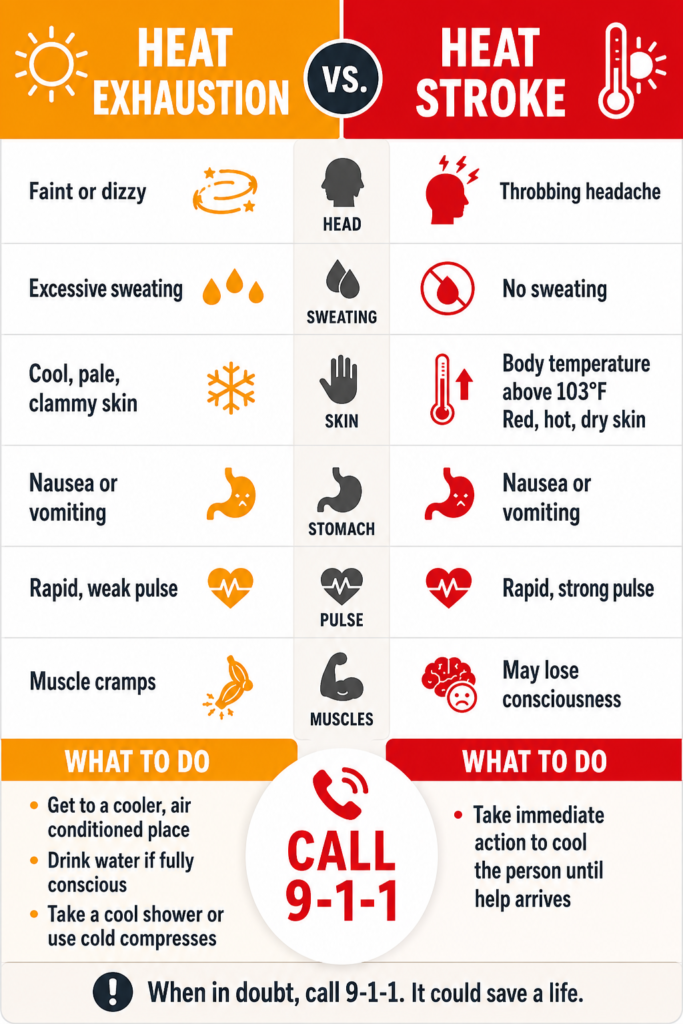
The symptoms of Heat Exhaustion are:
- Cool, moist skin with goose bumps
- Heavy sweating
- Faintness
- Dizziness
- Fatigue
- Weak, rapid pulse
- Low blood pressure upon standing
- Muscle cramps
- Nausea
- Headache
What to do if you feel any of these symptoms? Stop running immediately, move to a cooler place, drink cool water and/or sports drinks, and rest. If these symptoms don’t improve within an hour, contact a medical professional. Avoid an escalation into heatstroke at all costs.
Heatstroke Symptoms
Heatstroke can quickly injure vital organs and requires immediate attention. Delayed treatment may cause extensive damage or even death.
The symptoms of Heatstroke are:
- High body temperature (over 104°F or 40°C),
- Altered mental state or behavior (Confusion, agitation, slurred speech, irritability, delirium, seizures),
- Alteration in sweating (skin feels hot and dry to the touch),
- Nausea and vomiting,
- Flushed skin. (Skin may turn red as the body temperature increases),
- Rapid breathing (rapid and shallow),
- Racing heart rate (Pulse may significantly increase),
- Headache (Throbbing).
How to Prevent Heat Injuries?
Be proactive for yourself and your running mates. Always err on the side of caution. Mayo Clinic recommends:
- Wear loose-fitting, lightweight clothing,
- Protect against sunburn,
- Drink plenty of fluids,
- Take extra precautions with certain medications (ask your doctor),
- Take it easy during the hottest parts of the day,
- Get acclimated to the new weather conditions.
During my seven years of blogging in this space, I’ve written many times about this subject. I urge you to revisit some of these writings, so you may prepare for the upcoming weather conditions. These are the links:
► Adapt Your Training to Your Summer
► How Heat and Humidity Impact Your Running Performance
► 39 Quick Tips for Summer Running
► 11 Tips for Your Summer Running
► Heat Exhaustion vs Heat Stroke
► Training Adjustments for the Summer Months
Have you or one of your running mates ever suffered from a heat-related injury? Please share your thoughts and experiences in the comments box below.
👇Do you want the key takeaways of this blog post? 👇
👇Click below to watch the video summary 👇
Gracias. Realmente muy buena informacion para tener en cuenta con estas temperaturas
Gracias Coach Adolfo,
Yes we must be very careful with the heat in the summer
Early morning or late afternoon
Hydration and if you have a pool or near the ocean a nice dip perhaps even taking up swimming.
Thanks again for the wonderful blog.
Gracias. Un poco tarde en mi vida aprendo que muhas cosas que hice fueron malisimas. Correr a mediodía una hora en Playa Grande por ejemplo. Menos mal que no tuve consecuencias!
Excelente información y de mucha ayuda, espero nunca pasar por algo así ya q lo voy previendo corriendo por la tarde o noche. Pero bueno, cuando no quede de otra, me tocará al sol ,…. Gracias entrenador ,🙌👍
Thanks for the checklist and recommendations, truly appreciated for this coming season!
Thank you very much for sharing this important information. We often don’t remind ourselves how dangerous heat stroke can be. I’ll definitely follow this checklist and plan accordingly for my training during the season!
Awesome check list and I am still waiting for you to join my team. Thanks for the master Yoda knowledge.
Gracias por la información. Muy práctica en estas fechas. 😘