
By Coach Adolfo Salgueiro
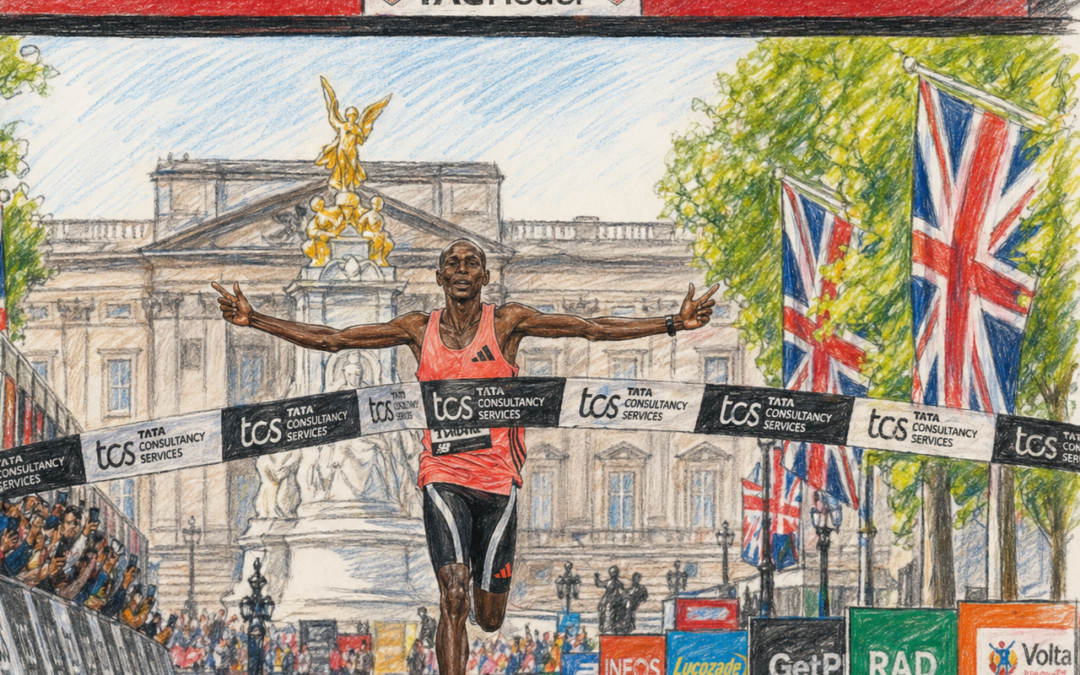
If you have any interest in the sport of running, you already know the mythical 2-hour barrier for the marathon has fallen. As this blog is not for news reporting, and this happened barely 36 hours before this writing, I want to share a reflection and perspective on what these results at the London Marathon mean for our sport.
When I ran my first marathon in 1983, the world record was 2:08:34 (Derek Clayton, 1969). Then, it started falling little by little. First by a few seconds, then surprisingly faster. As it approached the 2-hour mark, Nike put on the Eliud Kipchoge show in 2019, where he ran 1:59:40. Sure, it wasn’t official, and it wasn’t supposed to be. But it proved that a sub-2 was physiologically possible. And now it has happened in competition.
Was it the Super shoes?
Some would like to think that with shoes acting like springs, these new records mean nothing. As a purist, I would love to think that too, but we live in a world where progress, innovation, and new technologies are an intrinsic part of our lives, and we must accept it. If we didn’t, Formula One races would be on horseback, the Tour de France would be on bikes with no gears and iron frames, and running shoes would still be made of leather. The regulatory entities have taken measures to ensure certain basic conditions are met, so it is not a free-for-all. It is a step in the right direction, so we may avoid grey areas bordering cheating.
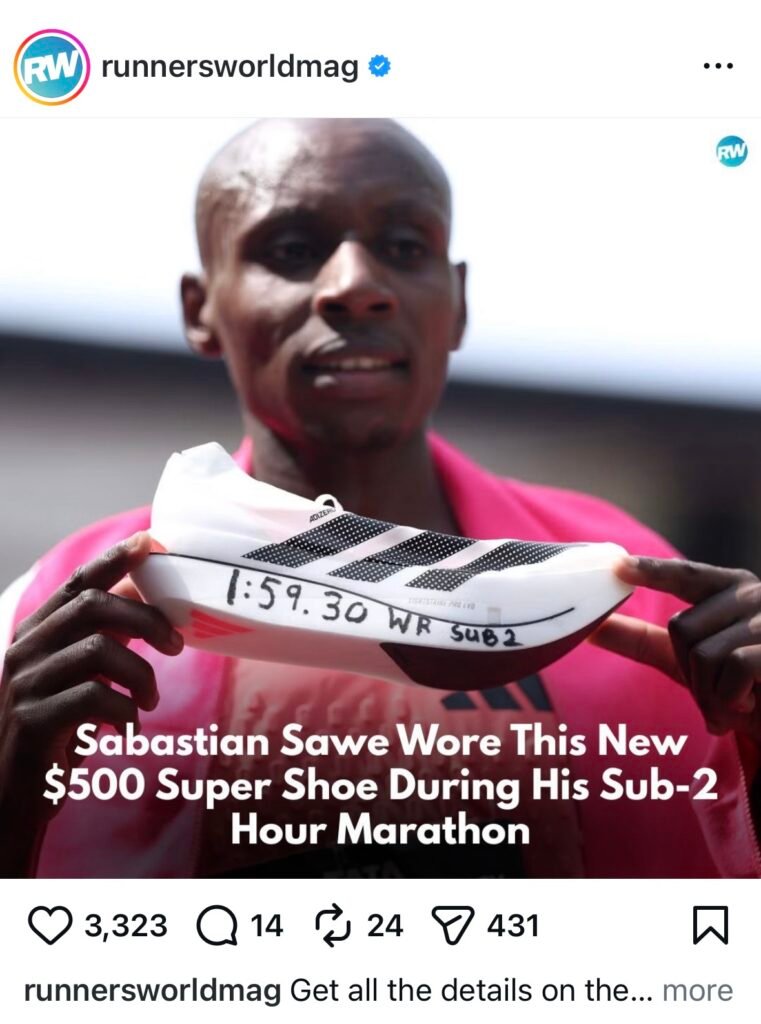
We must understand that super shoes will not make you, or me, a world-record contender. These runners are the best the world has ever seen. These shoes only provide the edge they need to get that little extra that puts them within the realm of possibility. They were already great runners before they tied those $500 Adidas at the start of the 2026 London Marathon.
What’s next?
Back in May 1954, Roger Bannister ran the first sub-4-minute mile. It was a matter of time before he, Wes Santee, or John Landy got there. Bannister did it first. And once it was proven physiologically possible, the sub-4s started piling up. Landy shaved 1.4 seconds off Bannister’s record just 6 weeks later. And two months later, he lowered it again. 72 years later, over 1700 runners have gone sub-4. Still an elite group, but not that exclusive.
Why am I bringing this up? Because it has now been proven possible, expect the record set by Sebastian Sawe to fall again shortly and often. Just as Bannister, Sawe will always be remembered as the first. He is the Neil Armstrong of the Sub-2. Yomif Kejelcha made his marathon debut going sub-2, but 11 seconds behind, so he will always be the Buzz Aldrin of the sub-2. Impressive achievement, but not the first. This will not be an unbeatable record. Quite the contrary, it just established a new benchmark from where to keep improving.
I venture to predict that by the end of the year, after marathons like Valencia or Chicago, the record will fall again. And by the end of 2027, there will be 5 to 10 runners under 2.
Boston: Nike Sign Controversy
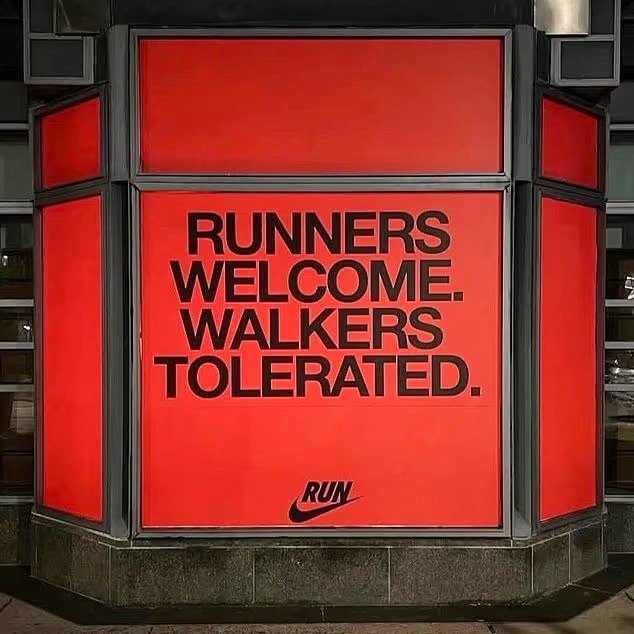
Since I am reflecting on recent events at Marathon Majors, I want to chime in on the Nike fiasco at the recent Boston Marathon. For those who don’t know, Nike set up a huge sign stating “Runners Welcome. Walkers Tolerated”, which sparked severe backlash and was quickly removed.
Was it insensitive? Was it stupid? Did Nike assume responsibility? Can you do something about it if you were offended? Yes, yes, yes, and yes.
First: No race states that you can’t walk. Until then, walk all you want. Orlando Pizzolato won the NYC Marathon in 1984 and walked. Nobody cried foul. Gelindo Bordin slowed down, walked, and was not stripped of his Olympic marathon gold medal in 1988. Want to walk? Walk! And don’t give a s*#% about what Nike has to say about it.
What really bothered me about this fiasco was the “offended professionals” taking it to social media. Those who enjoy feeling upset on your behalf so they can feel morally superior as they fight for “what’s right”. Most of those calling for the pitchforks had no stake in running, Boston, or Nike.
Just like you and me, Nike is protected by the First Amendment to make as many stupid statements as they please. Offended? Act. Don’t purchase a Nike product ever again. Show up at their headquarters in Beaverton and picket. A friend of mine didn’t like it and sold her Nike stock. She didn’t pout on Instagram; she took a stand.
Conclusion: Feel offended? Act or shut up! Pouting on social media is not taking action.
Please share your thoughts in the comment box below.
👇Do you want the key takeaways of this blog post? 👇
👇Click below to watch the video summary 👇
Right on the money like always coach! Amazing times to be living these events… and walkers do get love from me.
Thank you for your comment. We are lucky to be able to see these times during our life time.
You’ve hit the nail on the head once again, Coach — your insight is always spot on. What an incredible time to be experiencing these moments firsthand. As a slow runner/walker myself and for the record, walkers absolutely have my full respect and appreciation.
Thank you for your comment. Slow runners and walkers are always welcome in any race. Nike screwed up but they owned it, and I commend them for that.
Coach Adolfo, i re-read your blog and thank you for picking a side on thos everlasting argument. Are runners better than Walkers? I remembered this bumper sticker to the effect that “Walkers Last Longer”! This tells an another full story but I will leave that to Coach to elaborate, if necessary.
I was a Walker when I started to train for a race because I trashed my knees running my first half marathon in ‘09. To this day “walking” has always been my safe haven during training and during Marathons. Galloway would definitely take issue with the naivety of Nike’s insult on the guise as a meme to many“Walkers”.
Will I boycott Nike products or use a magic marker to desecrate Nike’s logo? No but I won’t be first in line to give them my Pennie’s for their non-appreciative gears for us Walkers .
Once again. These are my thoughts and Chat GPT has no inputs. 🚶♂️
Thank you for reading and commenting. I appreciate your perspective given you are part of the hoard of atheltes who still rely on walking to maintain themselves active in the sport.
Estaremos pendientes para ver si antes de finde 2026 se cumple tu predicción de mas records sb-2
Habra que revisitar este post en Dicimebre a ver en donde estamos.
I truly agree with all the comments above— crossing the finish line is a remarkable achievement for anyone. Due to my knee issues, I’ve had to adapt by alternating between running and walking. While I won’t be supporting Nike anymore, I will continue to keep my existing Nike items, but not purchase new ones.
Thank you for your comment. I see you are willing to take action instead of taking it to social media. Good for you!