As marathon training season arrives, you may be gearing up for the autumn Marathon Majors. Or perhaps you’ve chosen a less hyped, but equally fulfilling, 26.2. So, I invite you to reflect: why do you subject yourself to this fun—yet masochistic—activity? For 99% of the world’s population, it’s the equivalent of self-flagellation.
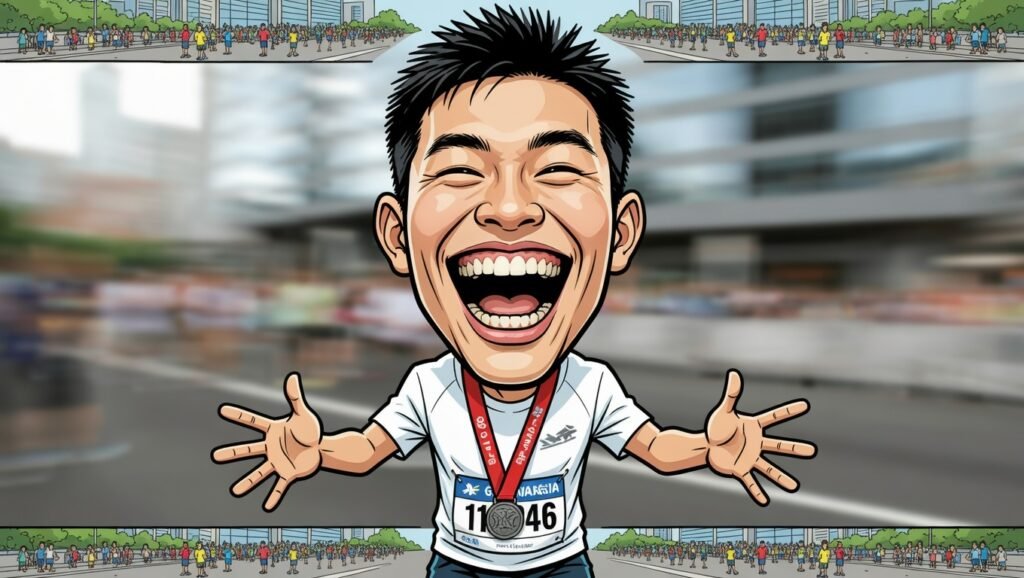
Running a marathon is way more than an Instagram post with a medal and a goofy smile (Image by Grok)
Some run a marathon to challenge their limits. Others just for bragging rights. Some want to fulfill a personal journey: 6-Star, 50 States, or something only you know. Regardless of your reason, it won’t define your legacy, affect your paycheck, or change the respect of your loved ones. Keep it in perspective. Enjoy the process. Suffer through with a smile. Embrace the suck.
Enjoying the process so you avoid burnout is the key to any successful marathon training cycle. Sure, it will be hard, and at some point, you will suffer. Absolutely, you will have to sacrifice certain events because you must train the next day. It is a given that something will eventually hurt. And somewhere during the process, you will question your sanity. But it won’t be a fulfilling process if you burn out. If you do, it will be miserable. Not worth pursuing and easily abandoned. So, let’s avoid that. Here’s how?
Remember why you started ► This is a personal journey, whether it’s your first or your 100th marathon. Make the training a connection to the personal reasons that brought you here. No one is forcing you to do this. Embrace failure (it will happen), grow through the struggle, and own the process.
Trust the Process, not just the pace ► While time goals are worthy and valid and marathon pace training is a key component to the puzzle, trusting the process is more important. Remember that training is about a multitude of stimuli; it is not about perfection. Hit the effort, learn from the session, don’t obsess over splits. If you trust the process, you should hit the pace.
It is your race ► Focus on your progress and don’t let other runners define you. Beating your friend or earning a BQ are legitimate goals. But if you focus only on those, you’ll drain your joy, push too hard, or skip recovery. This is your experience, and nobody else’s.
It is about consistency ► Consistency beats perfection every time. Miss a workout? Move forward. Focus on the next one. Flexibility is important, but don’t mistake it for complacency. Obsessing over a missed long run is stressful and unproductive, especially if you did complete the other 14 of 16 in your program. Life happens.
Fueling for a marathon goes beyond race day (Image by Grok)
Fuel your body properly ► Running a marathon requires a ton of fuel, not just on race day, but throughout training. This is not the time to lose weight, try a new detox fad, or fear carbs. Make sure your body has enough energy to perform and repair, so you can keep moving forward.
Remain resilient through strength training ► Strength training supports running. It protects your muscles, improves durability, and reduces the risk of injury. What more do you need to be convinced? Don’t think you can skip legs just because you’re already running. You don’t want to find out why the hard way.
Respect and prioritize recovery as part of training ► Rest days and easier weeks bring adaptation. Fitness grows when training and recovery are combined. Massage and therapies are a waste if you don’t prioritize sleep. Recovery gadgets are useless if you think they can replace the rest day you need. Be smart. You are not a machine. You are not indestructible.
Make sure to have fun ► As I said at the start, remember the reason you started. Don’t let social pressures take over the fun and fulfillment of the journey. Don’t be afraid to go easy on easy days. Run with friends and laugh. Give yourself permission for that post-run beer. Remember, your finish time is not what defines you as a human being.
Running a marathon is a formidable achievement. The 26.2 is a remarkable adversary. The challenge of training is what makes it special. So, be present, be purposeful, and above all, enjoy the process. Finishing a marathon is way more than an Instagram post showing a medal and a goofy smile.
Please share your thoughts on this subject in the comment box below.
Running works just like your day job: push too hard for too long without proper rest, and burnout is inevitable. The fact running provides great health benefits doesn’t preclude you from getting there if you overdo it.
The most successful professionals aren’t the ones working the most hours—they’re the ones who work smart, stay focused, complete their tasks, and maintain a well-rounded life. The same mindset applies to our running journey. To thrive as runners, we must balance training, recovery, and personal life to stay healthy, motivated, and injury-free.
Here’s a list of areas where opposite forces must balance out so we can have a healthy life where running is an important component of it:
Tread carefully around the fine line between growth and burnout:
Working hard is awesome. The feeling of a runner’s high after a solid workout is exhilarating. Setting up that PR and/or climbing the podium in front of all your friends validates your sacrifices. However, the human body can only be at its peak for a limited time. It requires rest and recovery to keep itself functioning properly. Don’t overdo it.
Pay attention to detail without overthinking everything: Unless your livelihood depends on your running performance, it is important to keep the reason you are a runner present. Enjoy the journey and have fun with it. These days, our watches and wearables measure everything. Vertical oscillation, VO2Max, and critical power won’t help you if you don’t know what they are. Don’t let the mumbo-jumbo take away your enjoyment. Once it’s gone, you will start looking into golf or checkers.
Invest emotionally while still knowing when to let go: Bad runs are part of the equation. Failure, injuries, lack of motivation, and others are also factors. Once we know and accept this, we can use these peaks and valleys as growth opportunities instead of measuring our value as a runner or a person. If your spouse/friend won’t love you because you are not a Sub-3 marathoner, maybe it’s time to reevaluate that relationship, not your running.
“Pain is inevitable. Suffering is optional.” – Haruki Murakami
Pushing with intensity without causing harm: Training consists of two equally important elements: work and rest. It is impossible to perform at your best if you skip or skimp on one of those elements. Working hard is essential. It feels great to nail that workout and start dreaming about what’s possible. But if you do it again tomorrow and the next day and refuse to take a day off when your body screams for it, you will harm yourself physically. Then you won’t be able to run, which is what you originally wanted anyway.
Running is important but there are more important things in life: We have all sacrificed something at one point so we can run long tomorrow. But one thing is skipping happy hour on Friday; another is missing your son’s wedding because he chose to marry on Friday night, and you have 20 miles to tackle the next morning. Keep your running and your competitive schedule in perspective, and always know what’s most important. Allow a friend/spouse to keep you in check and be able to have uncomfortable conversations if necessary.
Believing in yourself without becoming arrogant: You must be confident to perform at the level you have trained for. But your next race is not a dog fight. You earn bragging rights if you beat your training buddy or if you win a friendly wager. Enjoy that PR. Share it on Instagram and get tons of likes. But don’t become a jerk because of it. No need to belittle your friends or opponents. Don’t become “that runner” we all know.
In Conclusion
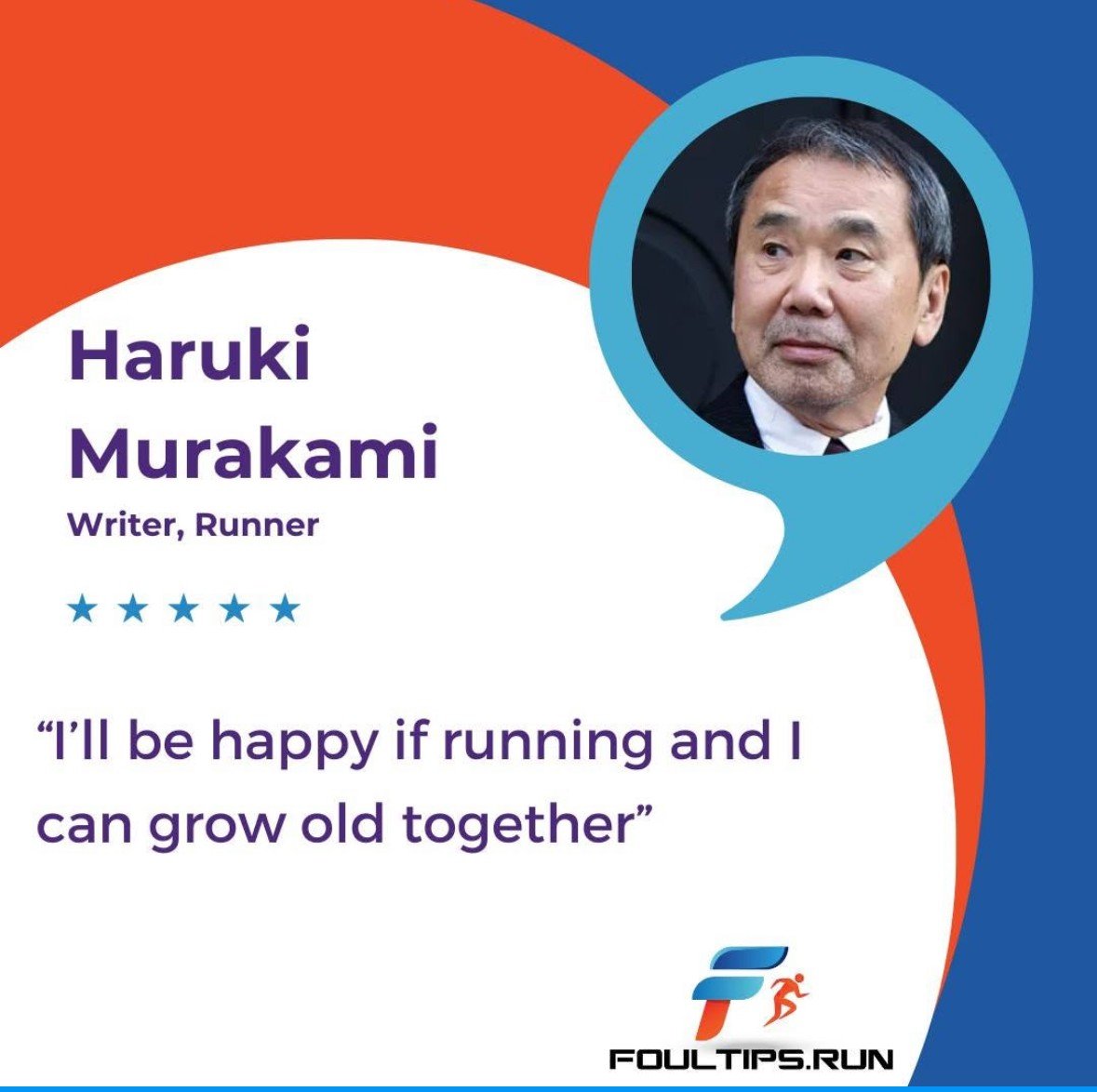
Running is awesome. It can add so much to our lives. It provides health, social interaction, distraction, me-time, and more. So, if you want to be like Japanese novelist Haruki Murakami, who says: “I’ll be happy if running and I can grow old together”, make sure you keep opposing forces well balanced. It does require work and even the occasional intervention. But it is worth every step and sweat drop.
How do you balance opposing forces to avoid burnout? Share your tips or stories in the comments below—your experience might be exactly what another runner needs to hear.
As in any activity, we pick up bad habits in our running lives. Let’s make sure we correct them before they become an issue.
Just as in any activity in the real world, in running we get more experience as we put more miles under our soles, participate in more races or bonk in training. And, just as in any other activity in the real world, we pick up bad habits on the way to achieving such experience. In running, those bad habits can either suck the joy out of our activity or, even worse, get us injured and, thus, sidelined.
Here are seven bad habits in which runners commonly fall into. This is not a comprehensive list by any means, but it is a start so we can have an introspection on our running lives to make sure we will keep active in our sport of choice for many, many years to come.
1 – Comparing yourself to other runners – Our sport is individual, and each runner is its own planet. No two are alike. The fact that Jimmy can run a sub-3 marathon o Billy can run 3500 miles a year, has absolutely nothing to do with what I can achieve. Do not fall into the comparison trap, it will suck the joy out of an activity you are supposed to be doing because we enjoy it.
2 – Skipping days off – Rest and recovery are as integral to a training plan as a 20-mile run before a marathon or an interval training session 5 weeks before your goal race. It is common for us runners to think we are invincible, it comes with the territory, and when we realize we are not, it is usually too late. Do not be afraid of scheduled off days, and make sure to take one or two, days or weeks, when you need them. Running burnout is real thing. Make sure you understand this anecdotally and not first-hand.
3 – Judging your training by pace alone – Who doesn’t want to run faster or go with the leaders on a group run. Maybe you can, maybe you can’t. What is important to understand is that to be able to run a fast pace, you need to slow down and recover on easy days. Do not fall into the trap of attaching your self-worth as a runner to average pace per mile. Unless you have a training plan with specific goals set for you on a certain day, run by feel and change paces often. Improvement will come on its own.
Small adjustments to make your running life part of your life instead of making it your life, will help you avoid burnout and injury
4 – Skipping warm-ups – Sure, we all want to run fast and do so as soon as possible, but we will be setting up ourselves for failure and/or injury if we started our training runs or races at full speed. You may be able to run a 7, 9 or-11-minute mile at peak performance, but that will not be on your first, and most likely second mile of the day. Your muscles and mind need time to get ready for the activity you are about to undertake, so plan accordingly.
5 – Living your running life through social media – Social media is great for many reasons, and it can be bad for as many reasons. Share your accomplishments and share your failures. Share your good time with running friends and the spectacular sunrises or oddities you may see on the route. Just make sure that you are not running solely to improve your likes or the need to hear strangers telling you great you are. It is the wrong reason for running.
6 – Feeling guilty because you took a day to do something important – Unless you are Eliud Kipchoge or Mo Farah, running should be part of a balanced life, not “your life”. Don’t miss the opportunity of moving in your kid into college or celebrating an important anniversary or milestone because, or taking a weekend away with loved ones when you have a 20-miler that weekend. Your family, professional and running lives need to complement each other.
7 – Jumping into your car right after your run – Once you are done with your run, make sure you take at least 10-15 minutes to cool off, rehydrate, stretch and regain a state of calmness before jumping into your car to go home. Do not sit or lay down at least until you have been able to catch your breath. If you feel you don’t have the time to do this, then finish your run a mile short and walk back to your car.




 Tread carefully around the fine line between growth and burnout:
Working hard is awesome. The feeling of a runner’s high after a solid workout is exhilarating. Setting up that PR and/or climbing the podium in front of all your friends validates your sacrifices. However, the human body can only be at its peak for a limited time. It requires rest and recovery to keep itself functioning properly. Don’t overdo it.
Tread carefully around the fine line between growth and burnout:
Working hard is awesome. The feeling of a runner’s high after a solid workout is exhilarating. Setting up that PR and/or climbing the podium in front of all your friends validates your sacrifices. However, the human body can only be at its peak for a limited time. It requires rest and recovery to keep itself functioning properly. Don’t overdo it.