By Coach Adolfo Salgueiro
I joke (partially) with my running buddies that the day I ran against Eliud Kipchoge in Berlin (2017), he needed a world record to beat me. Sure, I started in wave 4 and was 15 miles behind when he crossed the finish line, and while I certainly had no chance of beating him, the statement is still 100% true.

Consider this: what are your chances of standing in the huddle in a Super Bowl, strategizing the next play? When will you face Shohei Ohtani on an MLB field? How about your odds of standing with or against Lio Messi during the World Cup? Driving in an F1 Grand Prix? US Open. Golf or tennis?… Anyone?
But running is different. When the marathon’s 2-hour mark was broken, a runner I trained was there. When Kipchoge broke his last world record (Berlin 2022), another runner I trained was there. During the epic battle between Alberto Salazar and Rodolfo Gomez at the 1982 NYC Marathon, my dad was there. A close friend crossed the finish line in Boston, 10 minutes before the bombing. The last time the immortal Bill Rodgers won a marathon (Orange Bowl 1983), he had to beat me, too.
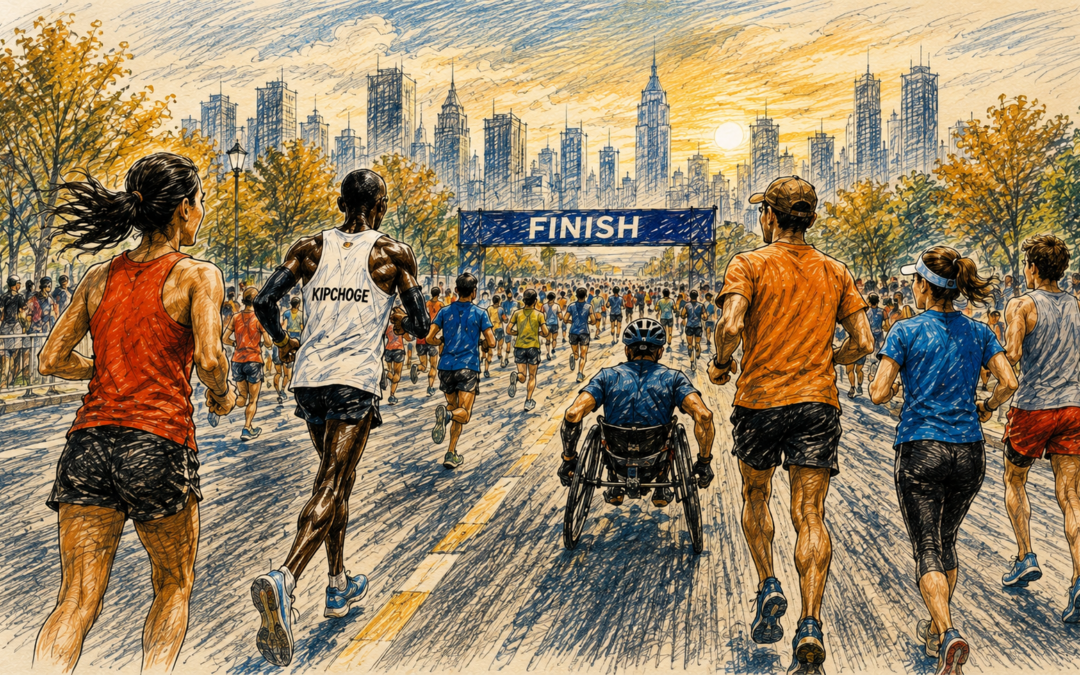
So, you get the point. Running is the most democratic of sports. The one with the most open access, equal opportunity to participate, low barriers of entry, and outcomes driven mostly by effort rather than status.
Remember dreaming of running, or lacing your shoes for the first time? Or how you felt after a long hiatus? Remember the struggle to finish that first long run? Have you checked the back of the packers at a race? Have you taken the time to watch the videos of the last finishers at a big-city marathon? Is there any other sport where regular people, even with a variety of disabilities, can beat the odds by finishing the biggest and most iconic races in the world?
Sure, only a selected few will run in the Olympics or the world championships, but even you, dear reader, can run the mythic Boston Marathon, even if you don’t qualify. We know you have a better chance of hitting the Powerball than the London Marathon Lottery, but the chance is there, and you still have charity entries. And if you are not into multitudinous mega races, there are local 5Ks everywhere, every week.
In his book “When Running Made History”, literature professor and former elite runner Roger Robinson said: “Being a runner (this sounds naive but isn’t) gives you direct and unfiltered access to all other runners. That’s one thing that makes running so remarkable; it is an intensely competitive sport that is also an egalitarian community. Just put your shorts and shoes on and if you’re fast enough, you can run with, befriend, and, if so inclined, interview the greatest celebrities on earth.”
Think about it: when it comes to running, you don’t need an opposing team or a field. Let alone a golf course. You don’t need a court, like tennis, basketball, or pickleball. You don’t even need a group of friends or a rival. All you need is the will to run. Everything else, everything, is extra.
You can run in the crappiest of shoes, or even barefoot. You can run in jeans and cotton socks if that is all you have. You don’t need a watch, you don’t need company, and you don’t need a dedicated surface or place. The comfort of a good pair of running shoes, a tech shirt/shorts, moisture-wicking socks, and a running path with good friends will surely make it more enjoyable, but as for requirements, none beyond your willingness to go out for a run.
Biologist and 2:22 marathoner Bernd Heinrich wrote in Why We Run: A Natural History: “Running is perhaps the most fundamental of all sports… it is the most democratic and most competitive of all sports because individual merit can prevail despite economic equality. It is a sport for everyone, the whole world over.”
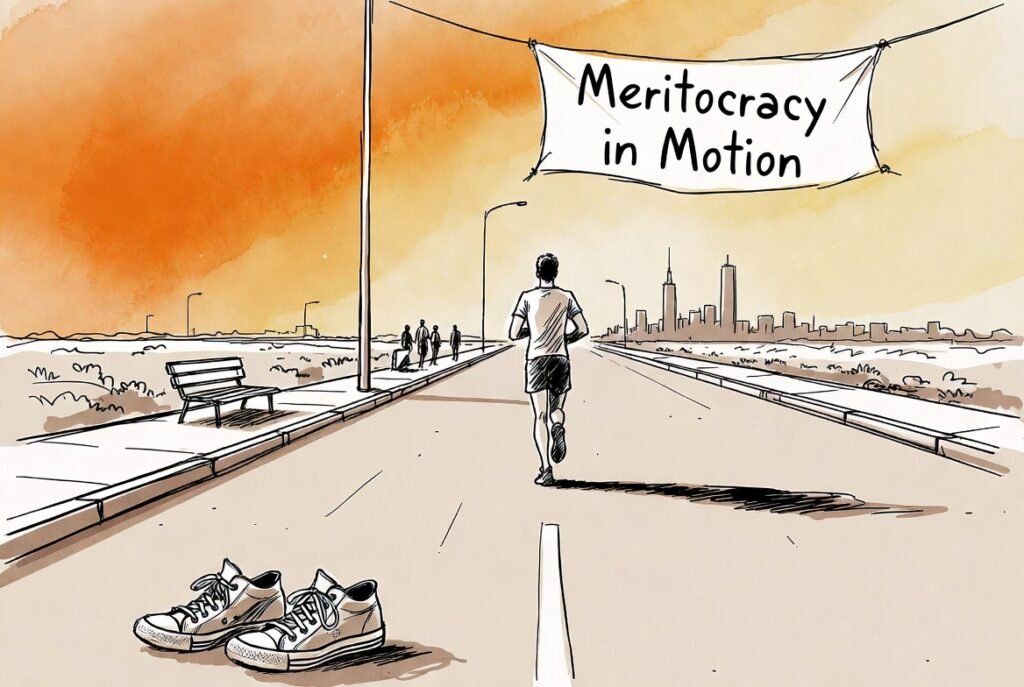
Meritocracy in action. What a beautiful concept!
The great running author and philosopher George Sheehan said, “Life is a positive-sum game. Everyone from the gold medalist to the last finisher can rejoice in a personal victory.”
Fred Lebow, the father of the NYC Marathon, said, “In running, it doesn’t matter whether you come in first, in the middle of the pack, or last. You can say, ‘I have finished.'”
Beyond the health and social benefits, running is a sport where you can only get out as much as you put in. The one sport where we have the chance to participate in the biggest local, national, and international competitions. The one we can practice at a moment’s notice, just when we need it. Yes, need it. The one where the winner and the last one across the finish line get the same medal. The one where we can make friendships to last a lifetime.
Let’s go for a run, then. What are you waiting for?
👇Do you want the key takeaways of this blog post? 👇
👇Click below to watch the video summary 👇
Great read, miss running with you. Thanks for sharing.