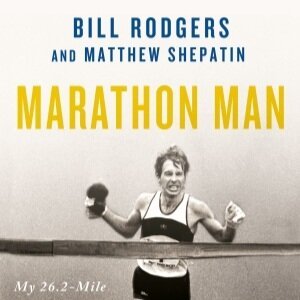
Book Review: Marathon Man

Book Review: Marathon Man

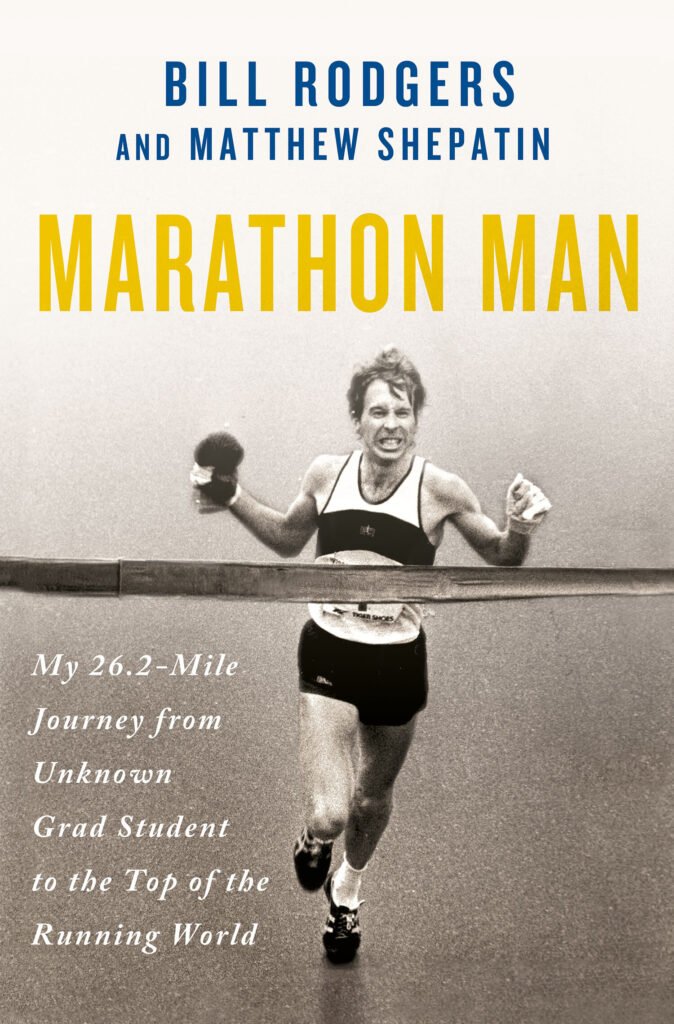
Book Authors: Bill Rodgers & Matthew Shepatin

Reviewed by: Coach Adolfo Salgueiro
 

Marathon ManIn the few years after Frank Shorter won the Olympic gold medal in the 1972 Olympic marathon, officially starting the running boom in the United States, there was no marathoner more famous or more accomplished than Bill Rodgers. A small town, easy going, aloof, simple man, who decided to quit the party, smoking and drinking scene to discover his gift for running and embraced it to the fullest. He won the Boston Marathon four times and is the only man with four victories in the New York City Marathon. He also was an Olympian in 1976.

 Rodgers was an above average runner during his high school years. Faster than whatever you or I can run a mile to 5K, but not enough to be a legend or anything close. But in college he happened to room with Amby Burfoot, whose dream was to one day win the Boston Marathon, which he did in 1968. Burfoot was tutored by Young Johnny Kelley, the 1957 Boston champion, who in turn had been tutored by Johnny “The Elder” Kelley, winner of two Bostons plus a record seven second places.

 Rodgers trained with Burfoot in 1968 and even kept pace with him in long 20+ milers after a night of drinking and partying. Yet, he never thought of running long distances competitively.

 In Marathon Man, Rodgers treats us with a first person account of his journey from an ordinary citizen, a teacher and an ok runner to the most decorated long distance US runner in history. This is not your typical “look-how-great-I-am” biography, it is a journey with many ups and downs; with struggles, both physical and financial; it is a story of both DNFs and breaking finish line tapes.

 Most of the book is centered on Rodgers’ win of the Boston Marathon on April 21st, 1975. Fifteen of the 21 chapters start with an exquisitely detailed account of the race, enriched throughout with the lore of this, the most famous footrace in the history of footraces. From there one, the second part each one of those chapters are flashbacks to his life starting eight years before that day and finishing at the start of that particular race. Two chronicles of the same story are happening simultaneously, which provides incredible dynamism to the narrative. Once he wins, he focuses on his Olympic experience and his first New York City win. The latter one was the one that happen to put that marathon in the map.

 Bill was not just an airheaded runner. He stood for and by certain political beliefs, becoming a conscientious objector to the Vietnam War and paying consequences. He had clashes with the AAU and voiced his displeasure at them taking away the monies athletes won while not allowing them to make a living off their talents. There are also plenty of insights about the early days of the running boom. This is great stuff for anyone who enjoys or has enjoyed long distance running or followed it 30-35 years ago.

 On a personal note, Rodgers has always intrigued me because when I started running as a teenager he was the top dog. He won the very first marathon I ran, (Orange Bowl 1983) and I had the chance to see him fly by twice throughout the course. After my second Marathon (New York 1983), my dad bought me a Bill Rodgers set of short and singlet, which I used only for my top races, including my 3rd and 4th marathons (Caracas 1984 and 1985), where I had my two best times. My 5th Marathon (Philadelphia 2012) was won by Rodgers way back when. So somehow he’s been a presence during most of my long distance endeavors.

 This is a fascinating biography about a fascinating character narrated in a fascinating way. Worth not only every penny but also every minute you’ll invest reading it.


To Fast or Not to Fast?

To Fast or Not to Fast?

By Coach Adolfo Salgueiro

It is an ongoing debate between runners, coaches, scientists and onlookers in general if we should run in a fasting state or not. Despite all the science, studies, anecdotal evidence and articles on the subject, the verdict boils down to a simple two-word answer: It depends.

Fasting

Figuring out what to eat and when is the responsibility of each runner.

It depends on what type of runner you are, how long you are running, when you’re going for a run, what are you trying to accomplish, and so many other factors. There are as many answers as there are runners. And what works for you doesn’t necessarily work for me.

If you run first thing in the morning, you can do a simple A/B testing and figure out what works for you. There are people that can’t function without a coffee and there are people that will have to rush behind the bushes if they have a coffee before running. You can try with an apple, or a banana, or a bagel, or toast, and from there find out what helps you out and what upsets your stomach. A running partner once told me she had a bowl of oatmeal before our long runs. If I had a bowl of oatmeal, I would be the one running for the bushes.

The key to this is not to overdo it. You are just looking to top off your glycogen stores before you hit the road. You are not taking breakfast. Digestion uses a lot of blood, same as running does. So when the body diverts the blood to fuel your running, digestion stops. The rest I will leave to your imagination.

Running on a fasting state, you will teach your body to use its own resources without depending on outside fueling. This is beneficial when you are training for a long effort, usually the half-marathon and above. As you your body adapts to the finite amount of glycogen it has available, it learns to use its stored fat as a source of fuel. This becomes invaluable when you go beyond the 18-20-mile mark, so you can avoid the dreaded wall.

I want to make absolutely clear that I am not saying to go run 18-20 miles just with what you woke up with. You should not neglect your fueling strategy (that is a topic beyond the scope of this blog post). What I am saying is that running in a fasting state will train your body to reach that critical point with something left in the tank.

Fasting

The time of the day in which you run is one of the key variables on fasting or not

The time of the day in which you run is key on deciding if fasting or not fasting is right for you. If you run in the afternoon, you shouldn’t be fasting all day. What you must do is adjust your eating habits so you can fulfill your training without interrupting digestion. Once again: A/B testing. You will have to discover what works best for you. You will have to eat something before your run, but what and when is the key. It could be some fruit, or a sandwich or handful of almonds; either two or three hours before your run. Or maybe its just one hour. It is your responsibility to figure that out.

Even if you prefer running in a fasting state, you must prepare for the task you will be facing. If you are running New York, or Boston, where you may be starting at 11AM, you can’t do it in a fasting state. You must eat something hearty for breakfast with enough time to digest (about 4 hours). You breakfast needs to be a low-waste meal so you can avoid number-2 unscheduled breaks. Astronauts for the first Mercury and Gemini missions, when bathrooms were not available in their spacecrafts, used to eat filet mignon, eggs and toast before launch. You may want to switch the filet mignon for another type of protein but in general, this is a great option. One that needs to be practiced before race day.

My recommendation is to start working on your A/B testing right away. Find the benefits and the drawbacks of fasting or not; of eating and eating what; of eating or not based on how long are you planning to go; on when to eat; on figuring out if coffee, oatmeal, fruit, toast or whatever, works best for you; or not. The time to work on this, is now, not when you are tapering for your marathon or the morning of your goal race.

No Fall Races. Now What?

No Fall Races. Now What?

By Coach Adolfo Salgueiro

A couple of weeks ago we mentioned the Abbott World Marathon Majors, whose Series XIII was crippled by the pandemic that has swept the world. And we can pout all we want but the reality is that, most likely, we will not see any racing at least until the Fall of 2021. If your race hasn’t been called yet, be patient and it soon will. It is the new reality so, lets adjust and move forward with our lives, and on with our running.

Fall Races

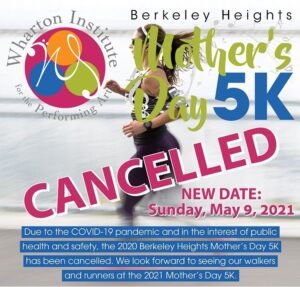
Images like this one are a-dime-a-dozen these days. But we need to keep in mind why we started running.

As Dr. George Sheehan brilliantly said: “Racing is the lovemaking for the runner. It is difficult to pass up”. I couldn’t agree more. It is a test against ourselves, a friendly competition against our friends, an opportunity to bonk and learn a lesson, the thrill of seeing a finish line on the horizon and crossing it, the justification for a beer with friends at 9AM, and many, many more reasons.

One of the characteristics of races is that with something on the calendar we remain focused on our training, especially during the miserable days of summer. Why run 20 miles in mid-August, starting at 4AM if you are not running a marathon in the Fall? But there is a say that has been doing the rounds in social media: “Races have been cancelled, running has not”, and if we want to keep moving forward toward the main reason that got us lacing up our shoes for the first time, we better keep moving forward, now, so when races resume we are not starting from scratch.

These are a handful of guidelines/suggestions that will assist you in refocusing and repurposing your running during these uncertain months of no-races:

1 – Don’t forget your main running goal: There is a reason why you started running. It could be to have an active social life, or to lose weight, or to get off the couch or to enjoy alone-time away from your professional or domestic setting. Whatever it was, it still applies, today.

2 – Don’t forget your racing goals: You still want to break 30 in the 5K, or BQ or set a PR in your next half marathon. You won’t get ahead by sleeping in, missing runs, or lamenting cancelled races. You can still get prepared now so you can crush that goal when racing resumes.

3 – Follow a plan: It is good to take a couple of months off after a grueling racing season. Run less, have fun, take extra days off. But you shouldn’t remain in a perpetual off-season. Set plans, goals and benchmarks to move forward, even if those are not racing or PR related.

4 – Work on your weak areas: This is the perfect time to get in the habit of strength training, core workouts, balance drills, yoga (even if it is online), stretching, etc. Make the most of your raceless time.

5 – Challenge your running partner: If you have a running partner, set up a buddy challenge. Who can run the fastest 10K six weeks from now? who can go under a certain time a half marathon? or whatever makes you tick. Just be smart so no one gets injured.

6 – Virtual Racing: Yes, the suck. No, it is not the same. But if you need a challenge in your calendar, this is a better-than-nothing option. PRs will not officially count but, remember the “P” stands for personal. And, you may even add a nice medal or shirt to your collection.

7 – Remember that running slow, makes you faster: Multiple studies have shown that running at a slower heart rate effort will develop your aerobic system, thus, make you faster. Document yourself about this and enhance your running engine during the down time.

8 – Above all, don’t be stupid: Yes, sounds harsh, but it is imperative you don’t injure yourself. Imprudent runners will end up nursing their wounds while their buddies return to racing.

These are just eight suggestions to keep you motivated during the pandemic. I bet you can find 100 more. If you do, please share it in the comments section. And make sure these difficult times don’t get to you.

The Journey of a Six-Star Finisher

The Journey of a Six-Star Finisher

By Starr Davis

Editorial note: Last week we talked about the Abbott World Marathon Majors Series. This week, my friend Starr Davis tells her account of achieving the milestone despite some physical problems she encountered along her journey.

For me, 2018 was the year of comebacks. In October 2017, I began having hip issues. Surgery was recommended to remove a bone spur and repair/replace the labrum. My surgeon and I decided because I had amazing marathons ahead of me, we would postpone surgery until after I finished them. Then, he would be able to repair any additional damage. We weren’t sure if this would end my running career. From October through December 2017, I ran the Chicago, Marine Corps, Berlin and Havana marathons, plus a 50K Ultra Marathon.

Six-Star Finisher

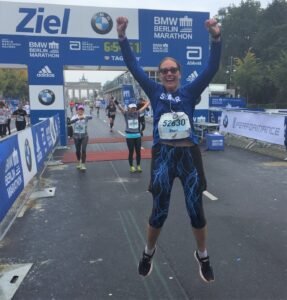
Starr at the iconic finish line of the Berlin Marathon.

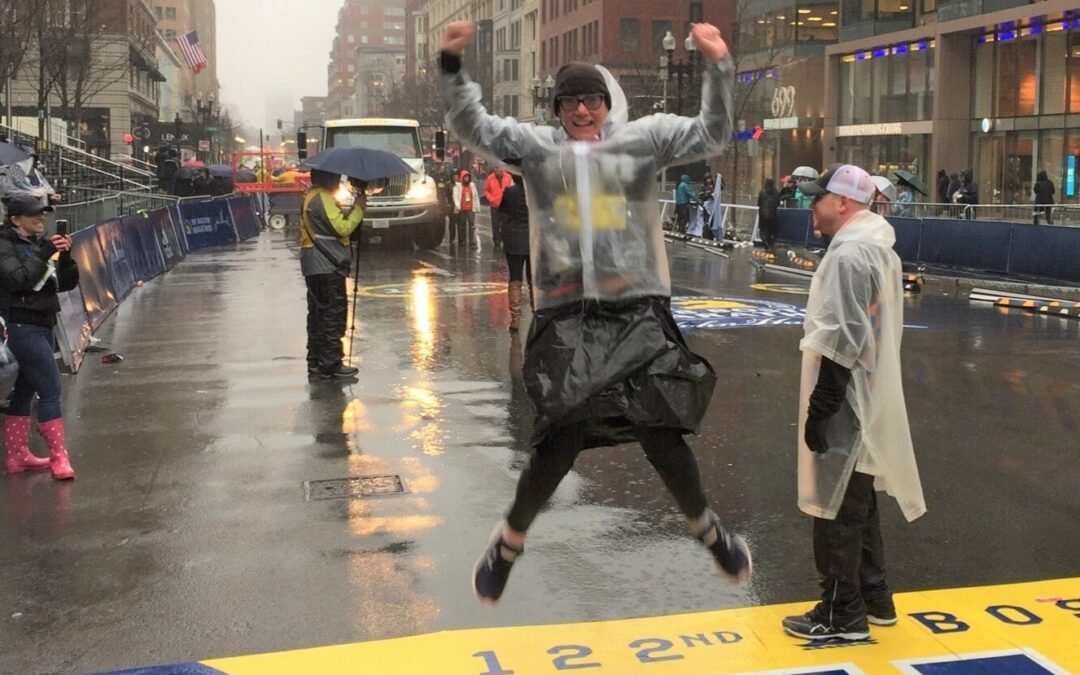
Still postponing surgery, in April 2018, I was able to complete both the Boston and London Marathons. Boston was a challenge as temperatures were in the 30’s with constant rain.  I wound up in 11 medical tents with hypothermia symptoms. However, because I had raised $6500 for charity from friends and I knew this was my one opportunity to do Boston, I finished the race.

Six days later, I ran the London marathon. The temperature was in the 80s. Between the contrast in weather and my hip, I wound up walking the marathon from mile 8. But I was totally overjoyed to complete two races in 6 days.

Three weeks later, I had hip surgery. I was truly fortunate that it was not as major as anticipated—the labrum wasn’t torn but had a bone spur sticking out of it that was labor intensive to remove. Of course, when I woke up, my first question was “when can I run?” I had been offered a sponsorship race entry to the NYC Marathon in November, and I really wanted to do it. I was told that running it would be impossible, but I should be able to walk it.

Six-Star Finisher

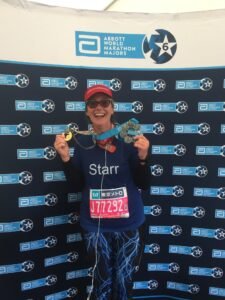
Receiving the coveted Six Starr medal after finishing Tokyo in 2019

Twenty-four weeks after surgery, I was able to walk the NYC marathon. My body had done so much better than I expected. There were hours and hours of therapy and minimal training. I feel so blessed to have been able to have the “perfect” conditions. I was joking with doctors that Boston was too cold and wet; London was too hot and finally, New York was “just right.” He has now nicknamed me “Goldilocks.”

I ran the Tokyo Marathon just March 3rd of this year, and it was epic, albeit miserable race conditions. It was 43 degrees with constant rain—but it was 8 degrees warmer than Boston and rain was coming straight down instead of at an angle.

Let’s focus on the good things. After Tokyo, I became an Abbott World Marathon Majors Six Star Finisher. What does that mean?  I am one of 4,989 people in the world who have successfully completed the six major world marathons: Berlin, Chicago, New York, Boston, London and Tokyo.  Of these finishers, 1,376 are women and 929 are from the USA.  I’m so over the moon that I was able to successfully complete this, especially as a 50-year old who overcame crazy health challenges.

That stretch of 19 months of running was amazing for me—they’ve given me the opportunity to meet amazing new people, travel to great locations and most importantly, change my attitude of what can be accomplished. I have changed my eating habits and developed a better relationship with myself. It’s amazing what running some miles can do for you.

Starr Davis is a lifelong educator who has a passion for helping others grow in their career. She earned the coveted Six-Starr medal in 2019. She lives in South Florida and is a newly retired marathon runner.

The Abbott World Marathon Majors Series

The Abbott World Marathon Majors Series

By Coach Adolfo Salgueiro

Most of my readers may already know about the Abbott World Marathon Majors Series. After all, if you are reading this, most likely you are a runner and may have even completed at least one of the races, if not more. But for those who don’t know about it, or just would like to refresh their knowledge on the subject, I am hereby writing this quick blogpost.

The Abbott World Marathon Majors was established in 2006 with the five, highest-profile races in the globe: New York City, Berlin, Boston, London, Chicago, Then, in 2013, the Tokyo Marathon was added. It is a championship-style group of races in which the Marathon World Championship is awarded. Each series consists on seven races, starting and ending with the same race and then moving on to the next one. The series also includes the Olympic Marathon and the IAAF World Championship on the years those take place. The last completed series was the XII, which started in Berlin 2018 and finished in Berlin 2019. Series XIII has been crippled by Boston going virtual, Berlin and New York cancelled, and London hanging by a thread. Not sure what will the World Marathon majors do about it.

Abbott World Marathon Majors

Abbott Laboratories is the title sponsor for the World Marathon Majors Series

The 12 Abbott World Marathon Major Series have been won 11 times by a Kenyan and one by an Ethiopian on the men’s side, and 8 times by a Kenyan, three by a German and one by and Ethiopian on a Women’s side. The current champions are Eliud Kipchoge and his compatriot Brigid Kosegi on the female side. Five runners have won more than one series, with Kipchoge leading the way with four.

But 99.9% of the runners will never, ever get close to scoring a single point on the Abbott World Marathon Major rankings, so what is it in it for them? Abbott has developed a successful marketing campaign in which by crossing the line of any of their runs, you earn what is known as “a star”. Once you complete all six, then you earn the “The Six-Star Medal”, a commemorative piece to memorialize your cumulative achievement. It is one of the most coveted medals in the sport, since it is something you can’t purchase, and it requires an immense investment of time, effort, and money.

Obtaining the Six-Star medal is not about just having the resources to travel to all six destinations or being physically able to complete six marathons. Marathoning has become so popular in the last decade and the Abbott World Marathon Major Series has become so big, that securing a spot in the races is usually the first obstacle for may runners. For Boston you need to qualify and only the faster times get to the starting line, unless you raise funds for charity, which has challenges of its own. London is extremely popular and hitting that lottery could be as difficult as hitting the Power Ball. For New York, Tokyo and Chicago, there are usually over 100 wanna-runs for each spot available. It is said the “easiest” lottery to hit is Berlin, but if that is the perception, more and more runners will gravitate towards that one, making it tougher to hit a spot.

Having earned the Six-Star medal usually makes you a celebrity in your local running community. Fellow runners want to take pictures with you and your medals. It is a cool think to have in your hand. A friend of mine got hers and brought it to our local running store. You feel like you are holding an Olympic medal. It is that cool.

Next week I will post the experience of an actual Six-Star Medal member, Starr Davis, who overcame a series of physical obstacles to earn her medal. Hopefully, you will earn yours, soon and tell us all about it.

For more information on the Abbott World Marathon Majors Series, visit their website by clicking here.

Abbott World Marathon Majors

These are the six World Marathon Majors. How many Stars do you have so far?

Skip to content