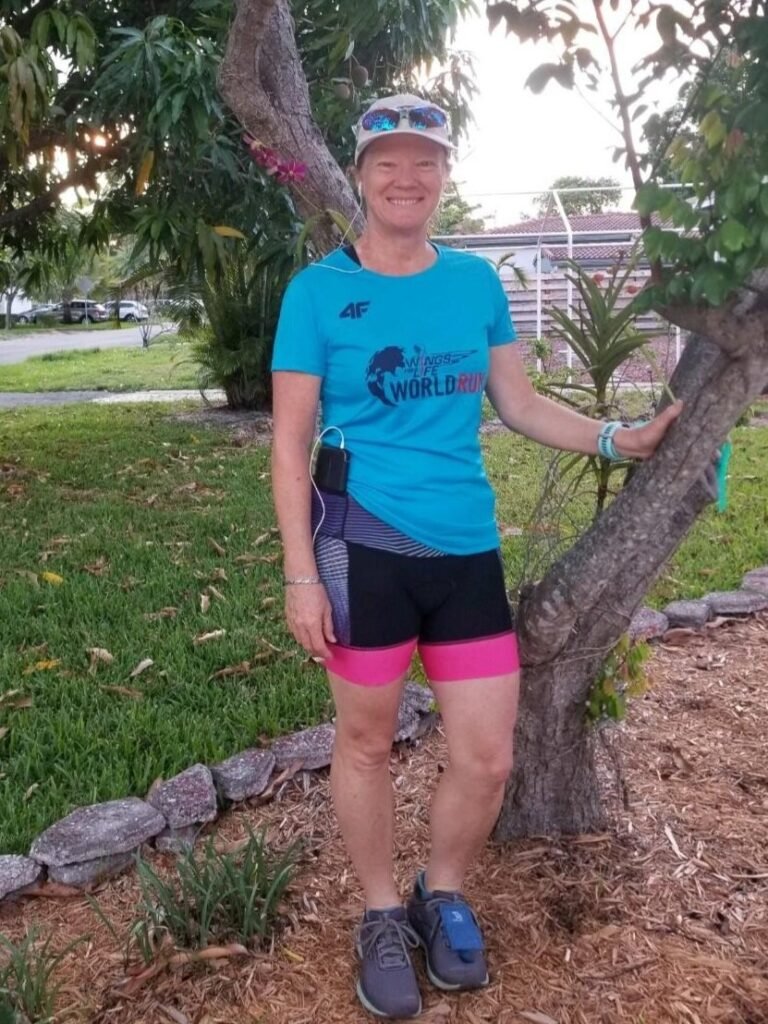

Stephen Siller Tunnel to Towers Run. NYC, September 25, 2011

Stephen Siller Tunnel to Towers Run. NYC, September 25, 2011

By Rita Shea-Van Fossen

NOTE: Rita is a good friend who on 2011, on the 10th anniversary of the September 11 attacks, ran the Tunnel to Towers Run. This is the story of her experience. It is a bit long, but worth the read.
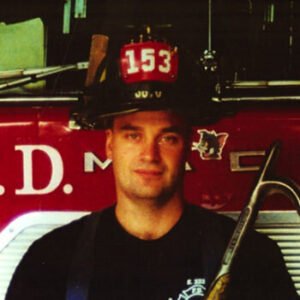
Tunnel Towers Run

Stephen Stiller

What an AMAZING event!!!! I can honestly say the BEST 5K (actually, 3.3 miles) I have ever had the privilege of running. As a \”true\” runner, it has all the makings of a race you would hate – an outrageously expensive entry fee ($50 early registration for a 5K with no tech shirt – but a good cause!), way too many people – half of which are registered as walkers and most have probably not run a race before, no corrals to organize this mass of humanity and clearly the organizers were not runners. All of that didn\’t matter – it was still the best 5K ever and what an honor to run in the steps of and among true American heroes! If you ever get the chance – RUN THIS RACE!!
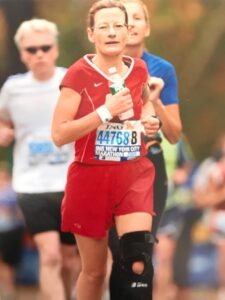
 

Tunnel Towers Run

Rita has ran 2 marathons and 13 halves, but her favorite distance is 10 miles.

For those who do not know the story of this race, on September 11, 2001, after just after finishing an overnight shift at his firehouse in Brooklyn, Stephen Siller was on his way to play golf with his brothers when he heard on his scanner news of the World Trade Center disaster. Stephen immediately turned his car around and drove to the Brooklyn Battery Tunnel. With traffic at a standstill, Stephen got out of his car, strapped on 80 pounds of gear and ran through the tunnel. He eventually met up with his squad members as they rushed into the World Trade Center. Stephen Siller and ten other members of his Squad perished while saving the lives. Stephen is survived by his wife, Sarah, and their five children. The Stephen Siller FDNY “Let Us Do Good” Children’s Foundation pays tribute to all firefighters and everyone lost on September 11. The foundation has donated over four million dollars to various charities, including a burn center and Freedom Alliance’s Scholarship Fund, which provides scholarships to the children of members of the U.S. military who have been killed or permanently disabled in the line of duty. This race traces Stephen\’s steps and raises money for the charity named for him.

I am a native New Yorker (Queens) and knowing a few people who either just escaped or lost their lives on 9/11, this race has always been on my and hubby Bill\’s radar. This past summer, Bill twisted my arm and said, \”Why don\’t we do the Tunnel to Towers this year\”. I am so glad he did!! This is a race I will tell my grandchildren about (definitely a \”rocking chair memory\” as my mother-in-law would say).

Bill & I had a 4:30 AM wake-up call to make the 9:30 AM start of the race (you had to be on the shuttle bus or ferry by 7:30 AM due to the tunnel closure). We took the Path train out of Newark Penn Station (which is about 30 min. from our house). The Train reminded me of Broad Street Run in Philly. Three guys who were going to work and thousands of runners, more than half in their fire-fighting equipment on the train. The Linden (NJ) Fire department was on our train, a good 20-30 guys all in their gear. When we got to the World Trade Center stop a mass of humanity snaked around in an organized fashion to the buses. We saw fire fighters from London (yes, as in England), Ft Lauderdale, Long Beach, Louisville, KY; all over New York, New Jersey and Connecticut. We were just starting to feel what this race is all about. The bus ride to Brooklyn however reminded me, and several women I was sitting with, of the NYC marathon, being shuttled hours ahead of time to get to the start to wait around.

In Red Hook, Brooklyn still more walking to get to the start, but that was fine as it was a beautiful morning. Bill & I made our way to the start area about an hour or so before the start. We saw several the wounded warriors that were profiled on a national CBS special a few days before the race. After getting chased out of the start area we walked up the street a bit and took a seat and waited for the race to start. About 45 minutes before the race started, they did a ceremony honoring those who lost their lives on 9/11 and the soldiers lost since. I was almost in tears during the ceremony. Very moving and very appropriate for the day of remembrance & celebration. They had huge screens and speakers set up for almost a mile up to the starting line so folks could see the pre-race ceremonies.

At 9:00 they had a Rolling Thunder group and NYC\’s finest on motorcycles started the race with a handful of wounded warriors, some of whom are recipients of the Stephen Siller Foundation. Then 1600 cadets from West Point went through the Tunnel, another ceremony with some songs and the National Anthem, and then the start – more than 30,000 for a 5K. When this event started 10 years ago, 2,000 ran. This year was the largest ever! We figured the race would be like the 1st mile of Broad street, far from PR time and we would be lucky to run at all with all the people around. Since we were near the front, we were able to run right away when we hit the starting line. I was going to stay with Bill, but he just said \”go ahead\” – It felt good to stretch my legs a bit, so I headed off. The race snakes around for the first .3 of a mile or so, and you go right into the tunnel. Very cool coming into the Tunnel. They had the electric signs welcoming the runners and they had speakers set up and \”Proud to be an American\” blasting! Kids were darting for speed, but most people were singing & whenever the chorus hit. People were shouting and your body actually vibrated from the cheers – it was amazing! The tunnel is about 2 miles of the run and I settled in, just wanting to enjoy a new experience, running in a tunnel! It was hot and humid, but I couldn\’t complain because you kept passing people in full firefighting attire, complete with oxygen tanks! Downhill in the tunnel was awesome, and when you hit the straight away you just saw this mass of humanity in front of you! It was great and I barely felt the uphill side, which surprised me. They had music through most of the tunnel. 

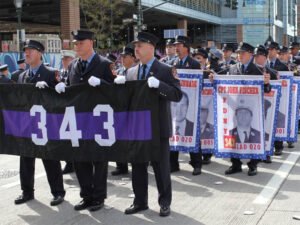
As you come out of the tunnel, that is when it was utterly amazing. You see the WTC site in front of you. They have firefighters and police in their dress blues, all lined up for almost half a mile each with banners for the 343 fire fighters who died on 9/11 and guys in kilts and bag pipes. Runners were high fiving the guys and thanking them for their service. I gladly joined in. I don\’t know who was enjoying it more: those of us running or the people holding the banners and cheering us on.
Tunnel Towers Run

Banners for the 343 fire fighters who died on 9/11 are displayed for almost half a mile

My friend, Kate, lost her husband, Robert McPadden, a NYC fire fighter, that day. As I was going past, I noticed Bob\’s banner. I stopped, pulled my cell phone out and asked the young fire fighter holding the banner if I could take his picture. The young man didn\’t know Bob, but he was very gracious with this old lady stopping in the race and taking his picture. After that, I kept high-fiving, especially to the guys near the back of the line. Bill said when he passed them, there was a young woman running who stopped in front of one of the firemen and planted a big old kiss on the lips of the guy. The two fire fighters around him asked if he knew her and apparently, he didn\’t. He was as shocked as anyone. These are the reasons I LOVE NY!!

After the fire fighters, there was a water stop and you turned a corner towards the Hudson River. You’d think you are almost done, but there’s still about a mile to go. We went by the new 9/11 memorial and a 2nd memorial along the river. When I hit the river I looked to my left & there was a NYC fire boat with water guns flowing in front of the Statue of Liberty. An amazing site!

I felt good & kept running as you snaked around the esplanade and to West and Liberty streets to the finish. They had cheerleaders, bands, people rooting for you. Great support and motivation. I had about .3 to go as I passed one of the wounded warriors (with 1 leg) who was profiled on the local CBS affiliate that week. I gave him and his posse a cheer. The finish line was on West Street, which is where the party really began. I did 30:17 for 3.38 miles, so right at a 9 min/mile – a nice run for me. Bill did 37 Min and was more than happy with his run.

If you want to feel proud to be an American, something I know I needed, especially in those days, this is the race to run or volunteer for. Definitely a feel-good event and one that I am so happy I got the chance to do.


Rita Shea-Van Fossen, PhD is a Associate Professor of Management at Nova Southeastern University and ran her first 5K at 39.  She has run two marathons (NJ and NYC) and 13 half marathons, but her favorite distance is 10 miles. Despite claiming to hate running, she keeps running for the health benefits and to spend time with her awesome running friends.     

500 Consecutive Days on the Run

500 Consecutive Days on the Run

By Lucy Chabot Reed

My return to running started on Feb. 16, 2019. That was the day of the Chris Hixon Memorial 5K. I couldn’t remember the last time I ran 3.1 miles, but it didn’t matter. Chris Hixon was killed in the Marjory Stoneman Douglas shootings and his wife, Debbie, had been a colleague of mine. Having a high-school-aged daughter myself, my heart was broken for Debbie, for the MSD kids, for all kids, for my country. This 5K was something I could do.

500 Days

Lucy learned about streaking in Runners World magazine. She started and hasn’t stopped.

I ran/walked that 5K in an hour. Well, just under an hour because as we approached the finish line, the seconds were counting up and my friend and I sprinted for the finish — if you can call it a sprint — and we finished in 59:37. We celebrated!

A few months later, lounging on my bed, I read my very first copy of Runner’s World magazine. The cover story was about the magazine’s annual running streak, set to begin on Memorial Day and run through the Fourth of July — 41 days of running one mile every day.  

Nutty, I thought. Who has the time to run every day? Who would want to? One sentence in that story jumped off the page: Run one mile every day for a year and watch your body change. 

OK. That got me. I was at the heaviest weight I’d ever been (except when I was pregnant) and was eager for my body to change. I was willing to invest the year, and I couldn’t wait for Memorial Day to begin. I started the next day, April 27, 2019.

The first few days were more walking than running, but I did them. And they hurt a little. Why was I doing this again?

So I turned to the #RWrunstreak Facebook page and read about all the crazy streakers running through ice and snow, hitting 500 days, celebrating comma day, streaking for four years! They inspired me and kept me going. When streakers completed their runs with icicles hanging off their eyelashes, no way was I going to let a little warm South Florida rain break my streak.

I soon discovered that my streak worked best if I didn’t think about it first. So I woke up every morning, drink a glass of water, put on my running clothes and sneakers, and walk out the door. Before I can think too much about it or reason with myself to stay in bed, I’m running.

I also discovered — much less easily — that the same philosophy is true of everything in my life. If I stop analyzing things before I do them and just get started, I soon discover things get done. Every day, no matter what, I deserve those 10-15 minutes to myself, to get my heart beating, to be thankful that I can actually get up on my still healthy legs and move them the way I want. I didn’t consider myself a runner. I was just taking part in this gimmick, this streak. But I do consider myself a runner now. I’m not fast or graceful and stuff hurts most of the time, but I run, and that’s all it takes to be a runner.

My body has changed since I started running every day. Not right away, and to be honest, it wasn’t until I changed my diet (no sugar, no dairy) that the pounds fell off. I’ve lost 25 pounds this past year. It was running every day that made me want to stick to a food plan that makes me feel better.

Yesterday, Monday, September 7th, I celebrated Labor Day with my 500th consecutive day of running. Yes, every day. I don’t look too far out. I just run today, every day. It’s a habit now, like brushing my teeth. I don’t think about it; I just do it. And I can’t imagine a day when I won’t.

Post script: This story was written a few days before the completion of the 500 milestone. When I wrote to Lucy a couple of days prior to publication to confirm the streak was still alive, this was her answer: “Yup! I am out of town for the day and forgot my sneakers, so I ran my mile in my Birkenstock sandals this morning!! I\’ll do whatever it takes to keep my streak alive”.

Lucy Chabot Reed is a Fort Lauderdale-based journalist of more than 30 years. She started running in high school but only dabbled in it until starting her run streak. She now competes in triathlons. 


7 Bad Running Habits to Quit

7 Bad Running Habits to Quit

By Coach Adolfo Salgueiro

Bad Running Habits

As in any activity, we pick up bad habits in our running lives. Let’s make sure we correct them before they become an issue.

Just as in any activity in the real world, in running we get more experience as we put more miles under our soles, participate in more races or bonk in training. And, just as in any other activity in the real world, we pick up bad habits on the way to achieving such experience. In running, those bad habits can either suck the joy out of our activity or, even worse, get us injured and, thus, sidelined.

Here are seven bad habits in which runners commonly fall into. This is not a comprehensive list by any means, but it is a start so we can have an introspection on our running lives to make sure we will keep active in our sport of choice for many, many years to come.

1 – Comparing yourself to other runners – Our sport is individual, and each runner is its own planet. No two are alike. The fact that Jimmy can run a sub-3 marathon o Billy can run 3500 miles a year, has absolutely nothing to do with what I can achieve. Do not fall into the comparison trap, it will suck the joy out of an activity you are supposed to be doing because we enjoy it.

2 – Skipping days off – Rest and recovery are as integral to a training plan as a 20-mile run before a marathon or an interval training session 5 weeks before your goal race. It is common for us runners to think we are invincible, it comes with the territory, and when we realize we are not, it is usually too late. Do not be afraid of scheduled off days, and make sure to take one or two, days or weeks, when you need them. Running burnout is real thing. Make sure you understand this anecdotally and not first-hand. 

3 – Judging your training by pace alone – Who doesn’t want to run faster or go with the leaders on a group run. Maybe you can, maybe you can’t. What is important to understand is that to be able to run a fast pace, you need to slow down and recover on easy days. Do not fall into the trap of attaching your self-worth as a runner to average pace per mile. Unless you have a training plan with specific goals set for you on a certain day, run by feel and change paces often. Improvement will come on its own.

Bad Running Habits

Small adjustments to make your running life part of your life instead of making it your life, will help you avoid burnout and injury

4 – Skipping warm-ups – Sure, we all want to run fast and do so as soon as possible, but we will be setting up ourselves for failure and/or injury if we started our training runs or races at full speed. You may be able to run a 7, 9 or-11-minute mile at peak performance, but that will not be on your first, and most likely second mile of the day. Your muscles and mind need time to get ready for the activity you are about to undertake, so plan accordingly.

5 – Living your running life through social media – Social media is great for many reasons, and it can be bad for as many reasons. Share your accomplishments and share your failures. Share your good time with running friends and the spectacular sunrises or oddities you may see on the route. Just make sure that you are not running solely to improve your likes or the need to hear strangers telling you great you are. It is the wrong reason for running.

6 – Feeling guilty because you took a day to do something important – Unless you are Eliud Kipchoge or Mo Farah, running should be part of a balanced life, not “your life”. Don’t miss the opportunity of moving in your kid into college or celebrating an important anniversary or milestone because, or taking a weekend away with loved ones when you have a 20-miler that weekend. Your family, professional and running lives need to complement each other.

7 – Jumping into your car right after your run – Once you are done with your run, make sure you take at least 10-15 minutes to cool off, rehydrate, stretch and regain a state of calmness before jumping into your car to go home. Do not sit or lay down at least until you have been able to catch your breath. If you feel you don’t have the time to do this, then finish your run a mile short and walk back to your car.

Did I leave anything out? Let me know, below.

The Importance of Embracing Failure

The Importance of Embracing Failure

By Coach Adolfo Salgueiro


Embracing FailureA few days ago I got a meme where two people are having a conversation. Maybe a job interview. The meme is the first illustration of this blog post. They talk about the key to success and how to accumulate experience to make right decisions. What was the key? Wrong decisions. Why? because failure is not the opposite of success. It is part of it.

This meme got me thinking on how this applies to our sport of running. It applies to life in general, for sure, but that is beyond the scope of this blog. As runners we are always pushing our limits, both in training and races. We strive for that PR. We sweat to hit the splits on each interval. We suffer the day we feel great but the training plan ordains an off day. We can’t sleep the night before an important 20-miler but still wake up ready for action. Yet.. then… sometimes… we fail.

Common knowledge teaches us to “listen to our bodies”, but as runners, we rarely do. We even struggle with what “listen to your body” actually means. What we need to remember is that the body is a machine. An exceptionally complex, fine-tuned machine, but a machine, nevertheless. This means that it doesn’t always perform at its highest potential. Sometimes it needs maintenance, sometimes a part breaks down, sometimes you forgot to add oil or coolant. Even the best F1 cars fail to finish races due to mechanic failure.

We must understand that failure is an intimate part of our running life. Is not if we will have a bad run or a bad race, it is a matter of when. And we cannot hold this one bad day as the defining moment of our day, our training plan, or our life. Running great Dean Karnazes tells the tale of his failed attempt at Badwater in his book Ultramarathon Man, and he is not ashamed of it. Alberto Salazar also opens himself about facing death after overdoing it in a race in his book 14 Minutes. The key is, as they both tell us, what do you take from those experiences, and then how you apply what you learned while moving forward.

Imagine if we were not going to run another marathon because we hit the wall that one time. Imagine how many people would participate in your local 5K if the failed to set up a PR or place in their age group, last year. How many runners would you see on the track on any given afternoon if they could not hit their splits last week? Not very deep thoughts, sure, but so simple, so real, and so close to us all.

Embracing FailureThomas Edison said: “I didn’t fail. I just found 10,000 ways that won’t work”. This also translates to your 800 repeats, your first-mile pace in that 5K when you bonked, and your stupid decision of pushing too hard at mile 8 on that marathon because you were feeling so good.

As runners, it is imperative to have a short-term memory when It comes to failure so we can keep moving forward. Some need of more encouragement than others. The key is to remember that we run because we enjoy it. We are choosing the suffering. Nobody is forcing us to put ourselves in a position where we may and will eventually fail. We just must extract the lessons from what happened, put them into practice, move on and forget whatever happened that day. If we learned nothing from bonking on that long run, if we learned nothing from going out too fast the first half of that race, if we learned nothing from that day we got dehydrated; then we are bound to repeat those mistakes, and very soon.

Always remember that experience is what we get when we don’t obtain what we originally set out to get. So make sure you take advantage, and even embrace, your running failures. They will be visiting you soon enough and you should be prepared to deal with them.

Hydration Basics for Runners

Hydration Basics for Runners

By Coach Adolfo Salgueiro

The basic concepts on hydration have moved like a pendulum through the last century of athletics in general but running in particular. While the earlier runners of the Boston Marathon took it as a matter of pride not to consume water, in later years the thesis of never been able to consume too much came en vogue and was disproven. Now days, we are in the “drink to thirst” phase. The truth is that there is not a one-size-fits-all approach to the matter. What worked for Bill Rodgers in the 1970s, does not work for Eliud Kipchoge, setting the world record and does not necessarily work for you, right now.

Hydration BasicsWhen it comes to hydration, extremes do not work. Not taking any liquids during a marathon is a recipe for disaster that doesn’t require much explanation. The “more is better” can lead to the life-threatening condition known as hyponatremia, whose explanation is beyond the scope of this blogpost.

It is important to understand that if you are running 3-6 miles, 3-4 times a week, your body may have everything it needs to cope with your hydration needs. There should be no need for a hydration strategy per se unless you are running in an oppressively hot and humid environment. A quick 5K around my block is not the same as 5K in the Sahara at noon. But once you are getting up on mileage, or start training for a longer effort, then it becomes imperative that you do something about your hydration needs.

“Hydration is a balancing act—says Andy Blow, British Sports Scientist and founder of Precision Hydration—One thing we can all agree is that once you hit a level of under-hydration, where you lose enough fluids and electrolytes, at some point you will reach serious problems, such as reduced cardiovascular function because your blood gets thicker and thicker as you get more and more dehydrated. Then you dissipate heat less well, you overheat and from there you get into a downward spiral.”

Finding out where in the spectrum you fit; how much you need to drink, how often and what electrolytes you need to replace is your responsibility as a runner. Sure, a coach can and will assist you, but only if you feed him the right data, which is your duty.

Hydration Basics

Hydration Specialist and Sports Scientist Andy Blow

An easy home test to figure out how much you sweat on a specific setting, let’s say on a summer long run; is to weigh yourself naked right before you leave. Run for an hour without consuming anything. As soon as you get home, get naked, wipe yourself off and weigh yourself, again. The difference in weight is how much sweat you lost in an hour. Each gram lost is equivalent to about 1 milliliter of water, as there are other contents in your sweat (in the Imperial measure system, each tenth of a pound is equivalent to 1.6 Fl Oz). This is your sweat rate and the approximate amount of water you need to replace as you run in similar conditions. Yes, it is that simple.

As personal as the sweat rate is, the contents of your sweat are equally individual. You need to know what is in your sweat so you can replace it. If you are caked in salt once the sweat evaporates, then you are losing a lot of salt, 40% of which is sodium, a key electrolyte. So, if this is you, you need to go above the set guidelines for salt intake, as these are not for athletes but for normal, inactive people.

According to Blow, the best approach for hydration on shorter runs (90 minutes or less) is not to have a plan but to drink to thirst. For longer runs, like a 20-miler on a hot summer day, you need to consume not only water but also sodium to compensate what is being secreted and keep your stores as topped off as possible.

There is so much more about hydration. Not all of it can be addressed in just one post. Tim Noakes, the world renowned South African sports physiologist, wrote “Waterlogged”, a book about the topic which is 448 pages long. If you want to dig deeper into the subject, this is my recommended source.

Skip to content