
By Coach Adolfo Salgueiro
Last week, as I was driving to meet my running friends for a 6AM Saturday long run, it was very dark. I passed a cyclist pedaling in the middle of the right lane, dressed in dark colors, with no light and big headphones covering his ears. My first thought was: This is a tragedy in waiting, and it will be his fault.
So, once again, as fall sets in and light begins to fade earlier, I find myself writing about a running cardinal rule: My safety is my responsibility. Nobody is out there looking for me except, maybe, the group of friends I’m running with, who simultaneously must look out for themselves.
It is paramount to be purposeful about our safety, vigilant about our surroundings, and aware of our physical place within the context of where we decide to run.
Please consider the following guidelines to keep you safe while enjoying your runs in less-than-ideal lighting conditions:
1 – It is irrelevant who is right: it doesn’t matter who had the right of way, who had the obligation to see you, or who will win the argument in court. If you get hit by a vehicle, you are the one getting hurt. You must make sure those who could harm you see you.
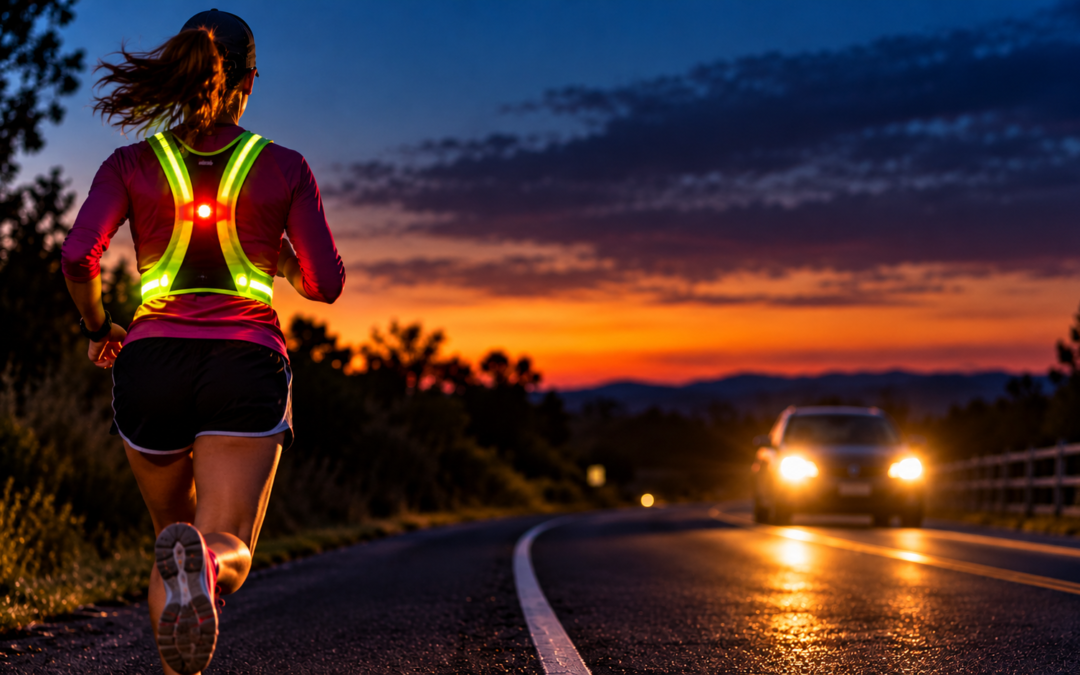
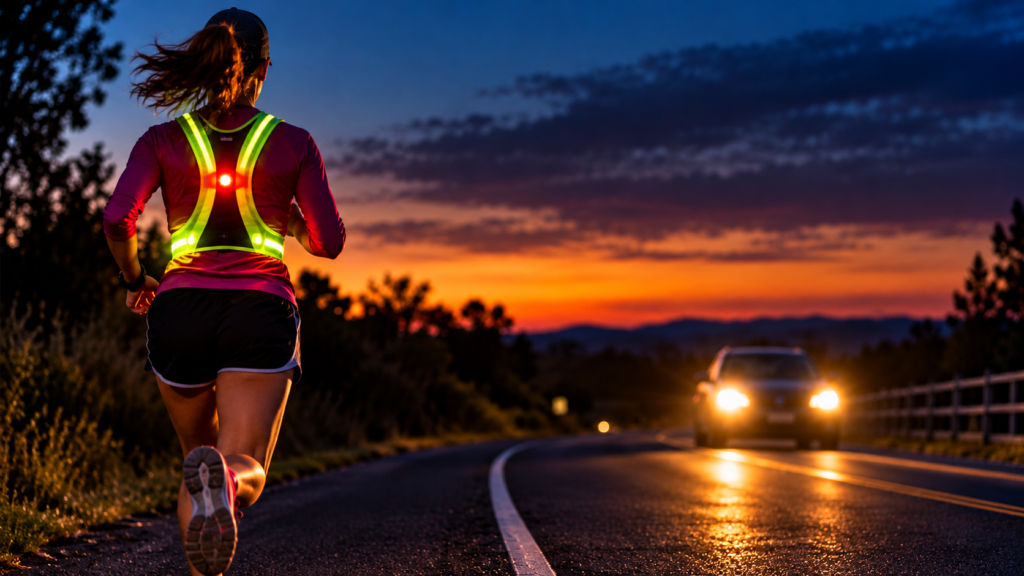
2. Wear a light and/or reflective device: Plan to be visible at the time you end your run, not just at the start. You may run lit like a Christmas tree, wear a reflective vest, or wear blinking lights on your shoes, shorts, or hat. The options are plenty, and they fit every budget. Purchasing a light will always be cheaper than a hospital stay.
3. Run against traffic: It can’t be easier than this. By running against traffic, you can spot any danger right in front of you. Drivers may be distracted by their phones as they head toward you. You won’t see these idiots unless you are facing them. Even if you are running against traffic, you must obey all traffic guidelines.
4. Rethink your usage of headphones: Running in the dark has its own challenges. Don’t handicap yourself by dedicating half your brain to music or podcasts. If you can’t run without your headphones, jump on the treadmill or choose a well-lit, familiar route where you don’t have to cross any streets.
5. Do not improvise your routes: The dark is not the setting to be adventurous. Choose roads you know are well-lit and familiar. This is not the time to cross a street and find out there is no sidewalk on the other side or realize you are lost in an unfamiliar neighborhood.
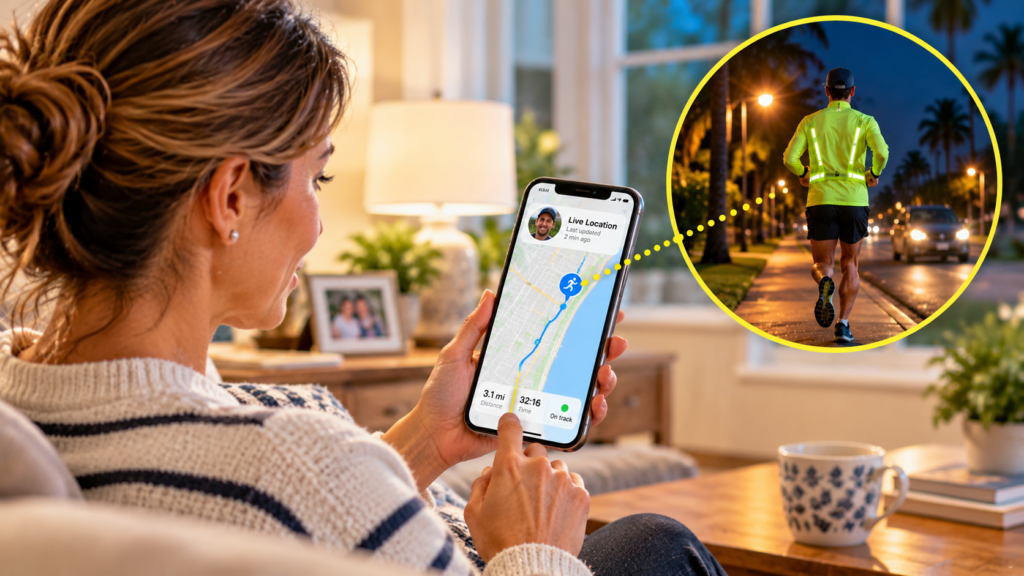
6. Carry your phone: It is better to have it and not need it than to need it and not have it. Share your location with someone who will check in on you periodically. With so many apps for that, there is no excuse not to do it. Having nowhere to carry it is also unacceptable, since countless options fit every preference and budget.
7. Let someone know where you are going and how long you plan to run: Even if you are taking your phone, but especially if you are stubborn and you don’t, make sure someone knows what your route is and how long you expect to be gone. If you are going for a 5K around the block and it’s been two hours, someone better be checking on you.
8. Run in groups whenever possible: There is safety in numbers. It is easier for a driver to see a group of runners than to spot just you. Plus, more eyeballs, more brains, and more safety devices can only increase the protection of your run in the dark.
9. Carry ID: RoadID is, to me, the best alternative for carrying identification. I’ve used it for years, and they have plenty of unobtrusive, affordable options so anyone can assist you if you are ever found in a ditch. Worst case, carry your driver’s license in a pocket.
10. Know how to use your pepper spray: Having it is not enough. You shouldn’t be figuring out where it is or how it works when the dog is ready to bite you. There are plenty of stories out there about runners pepper-spraying themselves.
11. Trust yourself: You shouldn’t be second-guessing or negotiating with yourself at decision time or when it is already too late. If something doesn’t feel right, get out of there immediately. It is better to be overcautious and wrong than to face Godzilla around the corner.
This is not a comprehensive list. These are just generic thoughts to get you started. Anything else I forgot, or anything you’d recommend to your fellow runners?
👇Do you want the key takeaways of this blog post? 👇
👇Click below to watch the video summary 👇
Excellent advice! If that guy in Ecuador who was hit by a car and died had followed this advice he would still be running
That was indeed a horrible accident that could have been totally preventable, especially when you had a supporting vehicle. Thanks for th einput.
Very useful and important points Coach.
Thank you, Luis. Most of these tips are common sense and easy to implement, and affordably so. But somehow we all need to be reminded of the obvious.