
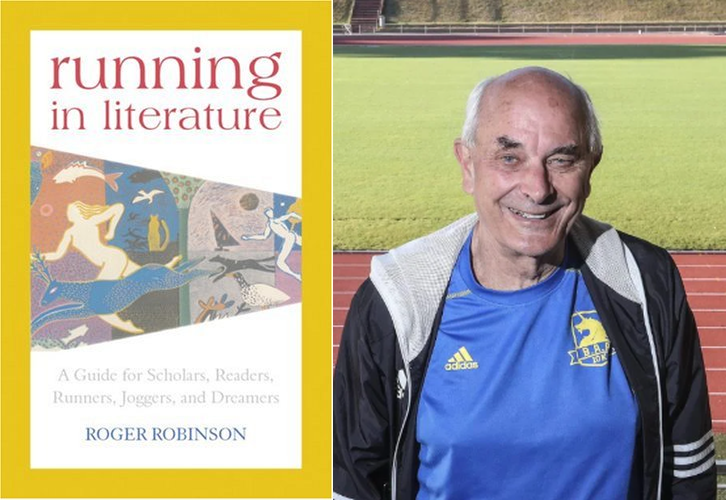
Book Review – Running in Literature
Written by Roger Robinson
Reviewed by Coach Adolfo Salgueiro
As explained in detail in Born to Run, the 2011 masterpiece by Christopher McDougall, the human body was designed to run. Not for sport, not for pleasure but for survival of the species. So it can’t be a surprise when we find out that the concept of running has been a leitmotif of the written word since human beings started recording themselves for posterity.

Roger Robinson
From the eldest classics in Greek literature through the publishing of Born to Run and beyond, we can taste the influence of our favorite sport in the daily life of all civilizations, all races, all social strata, in all continents and through every delimited period of humanity.
The sub-title of this book is “A Guide for Scholars, Readers, Joggers, and Dreamers”. It was published in 2003. The author is Roger Robinson, a former world-class runner for over 30 years. An essayist, critic, editor and academic who has held teaching positions at Victoria University in New Zealand. His writing as a literary critic has appeared in significant journals and anthologies and he is an avid sportswriter for magazines and book. He is also married to Kathrine Switzer.
In the early chapters, Robinson goes through Greek and Roman literature and how running was an important part of classics such as The Odyssey and The Iliad as well as how philosophers and writers like Plato and Pindar boarded the subject. And who can forget the classic Aesop fable of The Tortoise and the Hare? The author also spends an entire chapter on the running references in The Bible. Christian runners may be familiar with Paul’s references in 1 Corinthians 9, but there are many more, such as in 2 Samuel, Jeremiah, and Psalms.
I was amazed to learn that until Henry VI, by William Shakespeare, there was a 1500-year gap on mentions of running as a competitive sport in Literature. The last one was the Paul in 1 Corinthians reference. But the developments in technology, such as the printing press and the streamlining of the processes to manufacture paper, made the written word affordable and widespread, so literature, including running literature, started its grown spurt towards what it is today.
This is a jewel that any book-loving and/or history-loving runner should read
As the sport of pedestrianism developed during the late 18th and early 19th Centuries, we see the publishing of the first running book, in 1813. The author was Walter Thom. As titles of old books usually go, this one, with 32 words on it, is very comprehensive: “Pedestrianism, or an Account of the Performance of Celebrated Pedestrians During the Last and Present Century; With a Full Narrative of Captain Barclay’s Public and Private Matches and an Essay on Training”. Quite a mouthful.
As we approach our times, and especially the Post WWII years when the access to literature and affordability of books became common, and as the first and second running booms arrived, a wide array of novels, poems, magazines and books came to market, some with much success, enough to become cult classics. Later, as the running scene exploded, more and more runners wanted to delve into de minutiae of the sport, its history, its science and the insight only the highest performers could offer through their memoires, so non-fiction and history books started showing up on the shelves.
The author dedicates chapters to the best fiction and non-fiction running books, and offers a short, personal review on each one of his selections. These are good recommendations for anyone wanting to dig deeper into the history and/or literature of our sport.
This is a very comprehensive book that covers over 3000 years of literature, so it is full of references and a collection of rotating protagonists that makes it very dense. This is not a pejorative reference on the book, just a warning so you will take your time to read it and digest it properly. This way you can get the most enjoyment and benefit from your time with this jewel that any book-loving and/or history-loving runner should read.

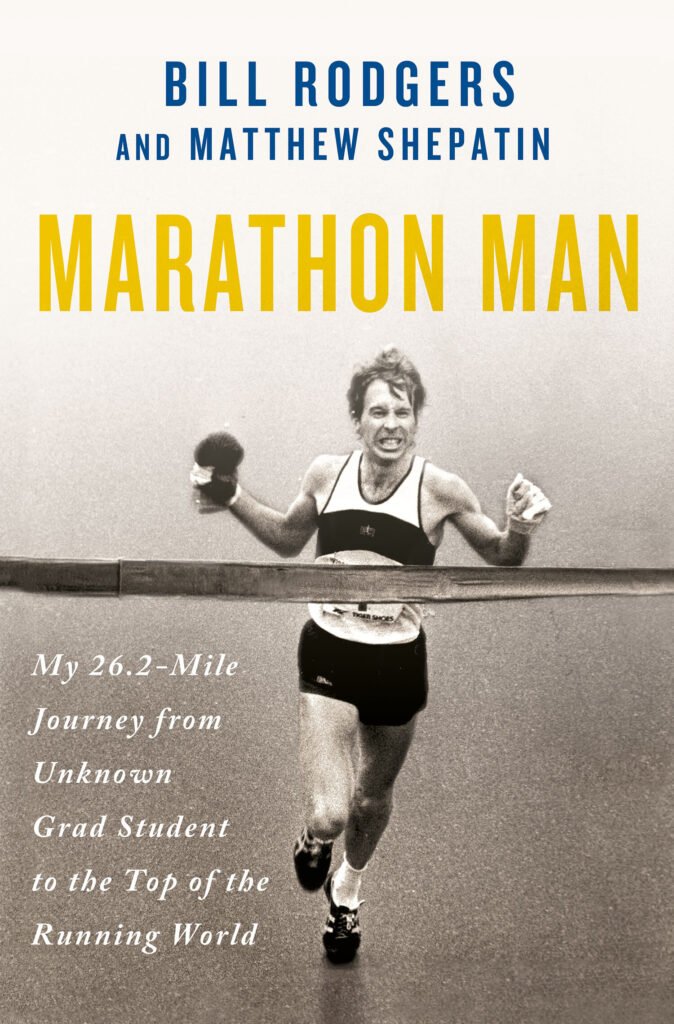 In the few years after Frank Shorter won the Olympic gold medal in the 1972 Olympic marathon, officially starting the running boom in the United States, there was no marathoner more famous or more accomplished than Bill Rodgers. A small town, easy going, aloof, simple man, who decided to quit the party, smoking and drinking scene to discover his gift for running and embraced it to the fullest. He won the Boston Marathon four times and is the only man with four victories in the New York City Marathon. He also was an Olympian in 1976.