The Post Covid-19 Running Scene

The Post Covid-19 Running Scene

By Adolfo Salgueiro
 

Post Covid-19 Running Scene:

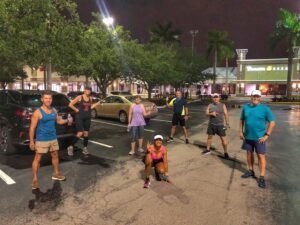
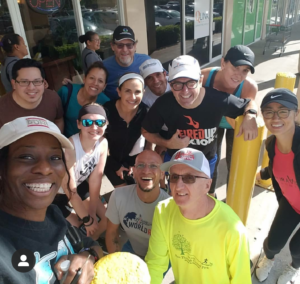
The new normal for the pre-run picture

After 28 days in quarantine and strictly running around my home, I ventured out on a Saturday to the site where I usually meet my friends for long runs. At the other side of the parking lot I saw David and we had a nice chat from about 25 feet. Further down the road I crossed paths with Alfredo, who gave me an enthusiastic hi and we had a quick talk. Later, Andy caught up with me and offered me an elbow.

For day 35 I accepted an invitation from a group of friends and met at the parking lot of our local running store. We were 10 people, all super happy to see each other after a hiatus. We opened our arms 6-feet apart from each other to send virtual hugs, blew kisses from a distance and used the wide angled lens to fit everyone in the pre-run mandatory picture.

With the latent possibility of Covid-19 returning in the fall, with the valid proposition of not having a vaccine for about a year and a half, and with the 2020 Berlin Marathon already in limbo, I started thinking:

What will the Post Covid-19 running scene will be like?

I believe social distancing will become the new norm. There is no way around it. Covid-19 will not be the last new virus we will experiment in our lifetime but, hopefully, nations will now be ready to avoid another pandemic. The pre-run group pictures, large groups of runners, high-fiving, sweaty hugs and large post long-run breakfasts, unfortunately, may become a thing of the past.

What will happen with racing?

This is one of my biggest worries. Very few run just so we can race, but most of us love to race in order to celebrate our training. Social distancing cannot work with the Marathon Majors, or the Miami, Los Angeles or Philadelphia Marathons which regularly gather over 20,000 runners. Even 1,000 runners seem like too much right now. Keeping participants 6-feet apart at the start means corral areas longer than 3 or 4 miles for huge races as well as logistic nightmares at finishing areas, even for smaller races. What about water stops, volunteers or spectators? Sure, we still have our local 5Ks, with just 200 or 300 runners, but is that the celebration of your training? Maybe virtual races will become more than just a way to increment the size of your medal rack. I hope we don’t have to get there.

Will we continue enjoying our running without the social component?
Post Covid-19 Running Scene:

What will happen to the post long-run breakfasts with friends?

I passionately believe that most of us run because we love it. If we didn’t, we would be practicing another sport. Yet, the social benefits of our activity of choice are undeniable. Some of my dearest friends were met while running. When my fellow team members put together a birthday celebration after one of our runs, I realized how much they meant to my life. I look forward to the post long-run breakfast every Saturday morning. The post run burgers-and-beers on Thursday nights has become such a highlight in my week that I once asked my doctor to push back a medical procedure because I had a scheduling conflict. Sure, we can run without friends, but I can’t fathom missing this aspect of running

What will the “new normal” be like?

I wish I knew. It is impossible to know, as even Dr. Anthony Fauci and the CDC are still trying to figure out this pandemic. What I do know is that we will overcome this, and we will create and adjust to a “new normal”. It is not like there is an option. We did so in our daily lives after 9-11. We adjusted our financial outlook and behavior after the Great Recession. We became more vigilant after the Boston Marathon bombing. And these are just 21st Century examples. Humanity has proven its resiliency and will find a way. I hope and pray that you, reader, are openminded enough to adjust to the new reality that it is already being created around you.

Always moving forward!
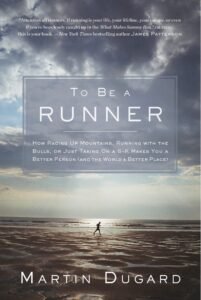
Book Review: To Be a Runner

Book Review: To Be a Runner

Book Author: Martin Dugard
Review by Coach Adolfo Salgueiro


To Be a Runner

As soon as I heard about the author of this book, I knew the name sounded familiar. I checked my book log and yes, back in 2004 I read his New York Times bestseller “Into Africa”, about the epic adventures of Explorer Dr. David Livingstone and his search for the source of the Nile back in 1866, and Henry Morton Stanley’s quest to find him after two years of silence. This was his first of multiple NYT bestsellers. A great book, but this is not what this post is all about.

The author is a well-known writer; accomplished, lifelong runner and successful high school coach. According to the book, he has run a 2:41 marathon and in Athlinks.com you can see a 3:05 in New York back in 1993. He run in High school, college and kept alive his love for the sport despite a few hiatuses here and there when life got on the way. He has also participated in triathlons, adventure racing, Spartans and multiple other competitions.

The book is structured in nine sections, each one with three, four or five small essays touching on an experience, a thought, a goal or just rambling about whatever. Each essay is no more than five or six pages so even if you are not an avid reader, you can go through the book with ease and really enjoy it.

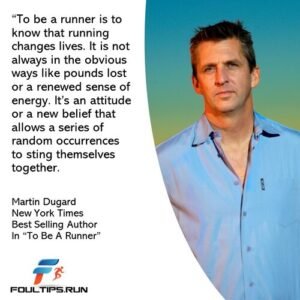
From running with the bulls in Pamplona, to high school running meetings and from adventure racing to getting back into shape or breaking a personal best; there is a chapter here for everyone. As an accomplish writer, Dugard has many amazing running quotes in this book. If you have followed my Instagram feed, @foultips, you have appreciated my love running quotes. I lifted more than a handful of the from this book, which you will find at the bottom of this writing.

I highly recommend “To Be a Runner”. It is worth the time and the money. My only suggestion is to read just one chapter a day, takin your time to enjoy it, digest it and feel empathy for the thought conveyed. I made the mistake of reading it during the quarantine, so I rushed through it and did not get the most out of it. So it is back in the “to read” pile for a second round.

To Be a Runner

The Racewalking Alternative. Why Not?

The Racewalking Alternative. Why Not?

By Coach Adolfo Salgueiro

Racewalking

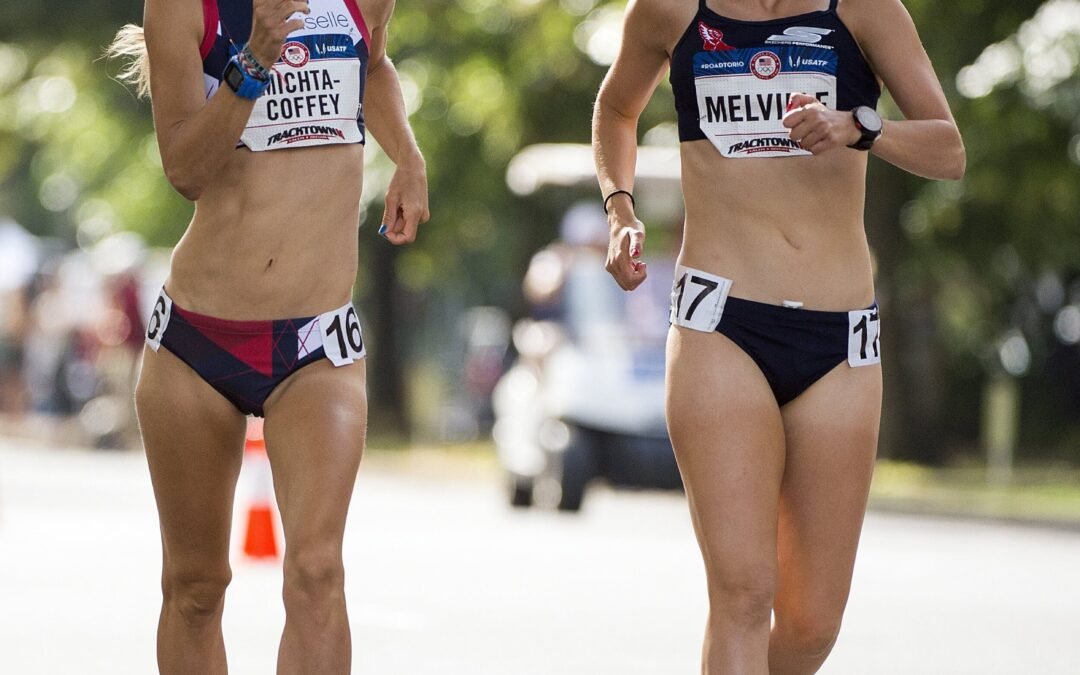
Racewalking can give you a second career on the asphalt.

During Olympic competition we always see those weird-looking racewalkers shaking those hips while keeping short steps and swinging arms like crazy. A select few know about what’s going on, some wonder what it is they’re doing, and the vast majority just laugh out of ignorance. Racewalking has been around since long before the Boston Marathon was a thing and it is an athletic discipline that requires the same training and dedication and any other discipline. Most important for this audience, it can give you a second career on the asphalt.

Personally, racewalking was my segue into running. After my second knee operation, at age 39, I told the doctor I still had another marathon in me, and I wanted to make sure I could do it. He was very clear telling me “your marathon days are over”. Sadly, I took his word and stopped completely until eight years later, when I realized I could still participate even if it was walking. Shortly after, I discovered racewalking, met with a racewalking group and the rest is history.

Racewalking is not just walking fast; it is not power walking either. Racewalking has two basic rules: a – one foot always must be in contact with the ground (as discerned by the naked eye), and b- the front knee must be straight when it makes contact with the ground. There are other techniques and details you need to know but this is what you need in order to get started.

Racewalking is gentler on your knees because you are not dumping the additional weight of a jump on them when you land. That alone can give a second career to both those knees and its owner. It still provides you with cardiovascular benefits if you exert yourself hard enough and you can still enjoy the runners-high we all crave. If that wasn’t enough, you can still participate in races, as there are no limitations against walking, you just need to observe the right etiquette, which in not on the scope of this blog post.

Racewalking

Less stress on your knees

The one thing you will have to adjust when you move to racewalking is switching your mindset. Throwing out the window all your previous PRs, race paces, tempos, age group rankings and being comfortable at the back of the pack. You will have to be content with just racing against yourself and enjoy getting better and progressing. Just realize you are still racing in a 5K, or a half marathon, or even a marathon, which is a better alternative to reading on how your friends via your WhatsApp group.

It is unfortunate that there are not that many racewalking groups out there, given how beneficial this discipline can be to so many. I was lucky enough to find a group and to meet coach Danny Koch, who guided me through 13 half marathons and 3 full marathons before I was able to return to running. Regardless if you find a coach or not, I can recommend “The Complete Guide to Racewalking”, by Dave McGovern, as the go-to book to learn about the philosophy and technique of racewalking.

If your knees can’t handle running anymore yet you still want to remain active and/or competing, I invite you to give racewalking a try. It worked for me so who knows, it may work for you, too.

Winter, Pandemic and a Runner’s High

Winter, Pandemic and a Runner’s High

By Bernardo Garcia Carrillo

Pandemic Running

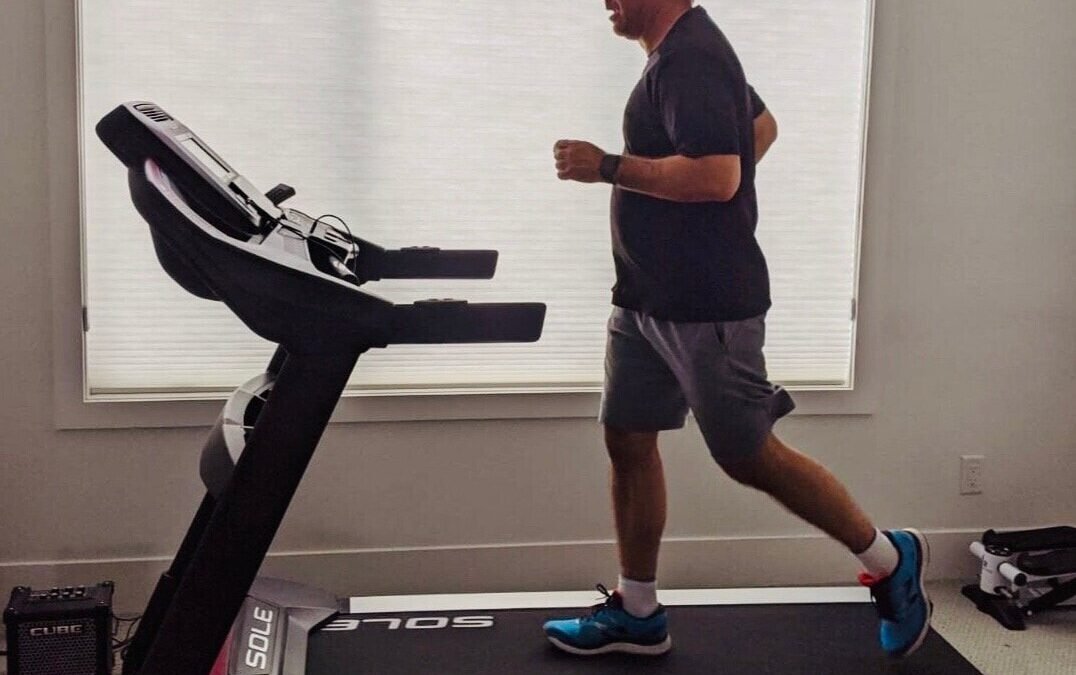
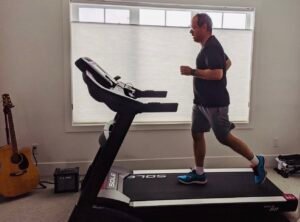
Bernardo running on his home treadmill during the Canadian winter

Let’s say you’re going through your second winter since you moved to Canada.  It’s -30C (-22F) outside, you’re not that tough (I’ve seen people running outside at -4F) and you have no choice but to use the dusty treadmill.  You don’t love it but you’re not fond of gyms, either so you stay home and run in front of the TV.  It can be quite boring even if you’re watching a good show.

Then, the new reality of the pandemic hits us all and we are forced to spend even more time indoors.  You’re thankful that you are staying healthy and that spring is finally arriving… and then you go out for the first run in the open, after a very long time, at the end of a long winter. Your head is suddenly filled with heavy thoughts.  

And this is what you find:

  • Pandemic Running

    View out of Bernardo’s window on March 30th, 2020

    The sun and the wind in your face feel as good as ever.

  • It’s lunchtime during isolation and you can smell what they’re cooking in nearly every house you pass by.  It’s a feast!

  • You’re enjoying yourself so much that you just don’t want to keep track of distance, time, pace or heart rate.

  • When you finally check your watch you realize that your performance is way better than it was the day before on the treadmill. 

  • You feel like you have wings on your feet, which comes as a surprise as you’re supposed to put more effort when you run on the asphalt than the treadmill.

Bear in mind that I’m not what you can call an avid runner.  I have never been really that consistent, but in days like this I can fully understand Adolfo’s passion about running.  I remember something he told me a while ago about this thing called “runner’s high”. I think it makes sense now.

Bernardo Garcia Carrillo lives in Calgary, Canada. He has been training under Coach Adolfo Salgueiro since 2016.


Book Review: Staying the Course: A Runner’s Toughest Race

Book Review: Staying the Course: A Runner’s Toughest Race

Book Authors: Dick Beardsley and Maureen Anderson
Review by Coach Adolfo Salgueiro


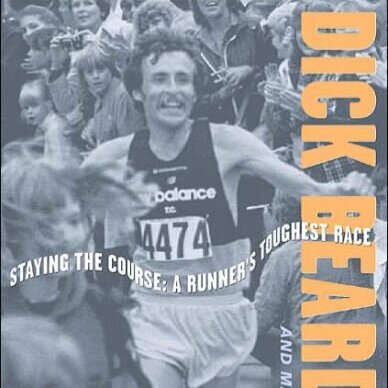
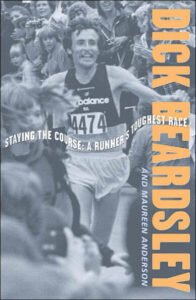
Staying the CourseWhen you examine the greatest runners from the First Running Boom, names like Frank Shorter, Alberto Salazar and Bill Rodgers, dominate the conversation, as they should. A name that is usually left out yet should be at least part of the discussion is Dick Beardsley. A 2:08:53 runner when running 2:08 made you a world class athlete, which Beardsley was.
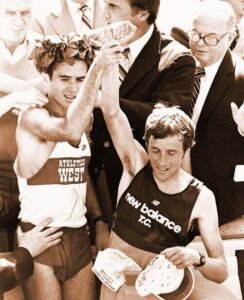
Born in 1956 in Minnesota, started running in high school and then a little bit in college. He grew up in a home with alcoholic parents and had a knack for running, which always gave him the natural and addictive runner’s high. He jumped into his first marathon and just like that ran a 2:48. Little by little he realized there was some talent to work with and started getting better as he competed more. He holds a Guinness record of setting PR in his first 13 marathons.

In this well-crafted memoir, Beardsley takes the reader through his trials and tribulations of going from a good runner to world class in just a few years. He takes you through every race and every triumph in a way that any runner will not only enjoy but also relate, regardless of their marathon PR. The stories of looking at his old racing outfit hung by the hotel window at mile 25 of his 1981 Grandma’s Marathon win, or how he got his first sponsorship deal with New Balance and how he stood by them when another company tried to poach him the day before the 1982 Boston Marathon, are uplifting stories from someone who came from nothing to a household name.

Staying the Course

Duel in the Sun in Boston 1982

His 1982 battle with Alberto Salazar, known as “The Duel in the Sun” is considered by many not just one of the best Boston Marathons but one of the best marathons ever. The detail on his preparation and the perspective from the front of the pack takes you right in there, as if almost 40 years later, you were spectating from the press truck.

But the sweet life, fame and fortune, were not to last. After holding the fourth-best time ever in the marathon, in Boston, none the less, a farm accident almost killed him opened the door to the world of painkillers and addiction. A series of accidents and misfortunes kept sending him back to the emergency and operating rooms where more and more drugs kept him hooked. Suddenly, obtaining painkillers became the focus and center of his life. Until he got caught forging prescriptions.

In the second part of the book, Beardsley and his coauthor go in extreme detail on how difficult it was to go through this phase of his life. The strain it caused on his family, his finance, his running, his relationships and his life. How big is the fall when you are coming from the top.

Years later, Beardsley has dedicated his life to working with people hooked on the grip or drugs, alcohol and painkillers. His perennial upbeat personality has been a perfect fit to his new mission. He is constantly making appearances and giving interviews about overcoming his toughest battle in life.

Staying the Course is a good book for anyone interested in learning about one of the great runners for the First Boom and in addition you can get an inspirational story about overcoming addiction and becoming a useful member of society once again.

The book was published in 2002, so it doesn’t cover part of his remarkable story and heartbreaks, like the divorce from Mary, who went through so much while staying by his side; or the suicide of his son, who was a veteran from the Iraq war. It is remarkable to see he hasn’t relapse. If ever comes a revised edition of this book, I am interested in knowing in more detail what has happened since 2002.


Skip to content