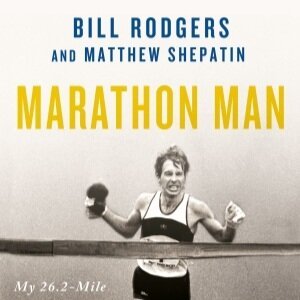
Book Review: Marathon Man

Book Review: Marathon Man

Book Authors: Bill Rodgers & Matthew Shepatin

Reviewed by: Coach Adolfo Salgueiro
 

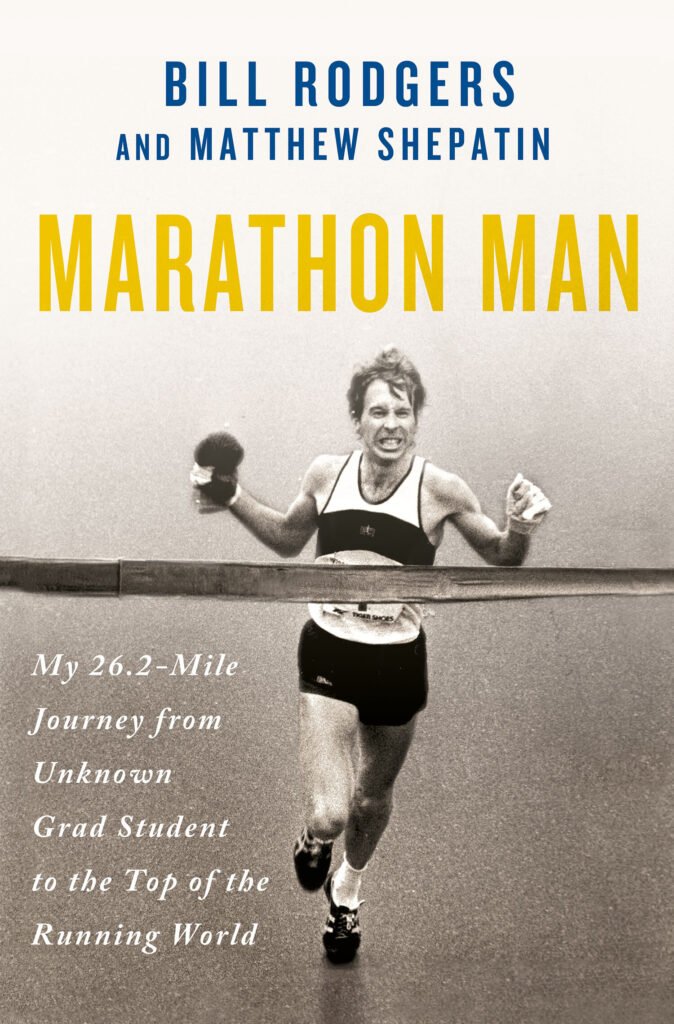
Marathon ManIn the few years after Frank Shorter won the Olympic gold medal in the 1972 Olympic marathon, officially starting the running boom in the United States, there was no marathoner more famous or more accomplished than Bill Rodgers. A small town, easy going, aloof, simple man, who decided to quit the party, smoking and drinking scene to discover his gift for running and embraced it to the fullest. He won the Boston Marathon four times and is the only man with four victories in the New York City Marathon. He also was an Olympian in 1976.

 Rodgers was an above average runner during his high school years. Faster than whatever you or I can run a mile to 5K, but not enough to be a legend or anything close. But in college he happened to room with Amby Burfoot, whose dream was to one day win the Boston Marathon, which he did in 1968. Burfoot was tutored by Young Johnny Kelley, the 1957 Boston champion, who in turn had been tutored by Johnny “The Elder” Kelley, winner of two Bostons plus a record seven second places.

 Rodgers trained with Burfoot in 1968 and even kept pace with him in long 20+ milers after a night of drinking and partying. Yet, he never thought of running long distances competitively.

 In Marathon Man, Rodgers treats us with a first person account of his journey from an ordinary citizen, a teacher and an ok runner to the most decorated long distance US runner in history. This is not your typical “look-how-great-I-am” biography, it is a journey with many ups and downs; with struggles, both physical and financial; it is a story of both DNFs and breaking finish line tapes.

 Most of the book is centered on Rodgers’ win of the Boston Marathon on April 21st, 1975. Fifteen of the 21 chapters start with an exquisitely detailed account of the race, enriched throughout with the lore of this, the most famous footrace in the history of footraces. From there one, the second part each one of those chapters are flashbacks to his life starting eight years before that day and finishing at the start of that particular race. Two chronicles of the same story are happening simultaneously, which provides incredible dynamism to the narrative. Once he wins, he focuses on his Olympic experience and his first New York City win. The latter one was the one that happen to put that marathon in the map.

 Bill was not just an airheaded runner. He stood for and by certain political beliefs, becoming a conscientious objector to the Vietnam War and paying consequences. He had clashes with the AAU and voiced his displeasure at them taking away the monies athletes won while not allowing them to make a living off their talents. There are also plenty of insights about the early days of the running boom. This is great stuff for anyone who enjoys or has enjoyed long distance running or followed it 30-35 years ago.

 On a personal note, Rodgers has always intrigued me because when I started running as a teenager he was the top dog. He won the very first marathon I ran, (Orange Bowl 1983) and I had the chance to see him fly by twice throughout the course. After my second Marathon (New York 1983), my dad bought me a Bill Rodgers set of short and singlet, which I used only for my top races, including my 3rd and 4th marathons (Caracas 1984 and 1985), where I had my two best times. My 5th Marathon (Philadelphia 2012) was won by Rodgers way back when. So somehow he’s been a presence during most of my long distance endeavors.

 This is a fascinating biography about a fascinating character narrated in a fascinating way. Worth not only every penny but also every minute you’ll invest reading it.
Book Review: Run for Your Life

Book Review: Run for Your Life

Run for Your LifeBook Author: Mark Cucuzzella
Review by Coach Adolfo Salgueiro

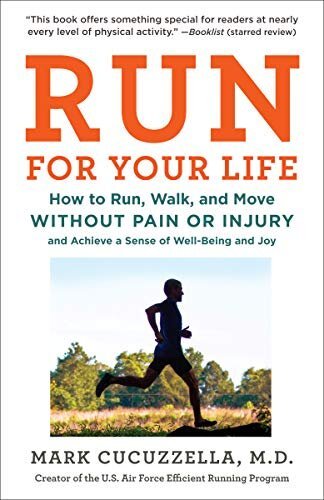
I read about Mark Cucuzzella for the first time through mentions on another book I have read a couple of years ago. To the author he seemed to know what he was talking about. Then, in the Marathon Training Academy podcast I heard an interview of the author about his “Run for Your Life” book and I knew I had to read it. It took a bit longer than I wanted to get my hands on it but once I got it, I consumed it with passion.

Cuccuzzella is a doctor and a runner who is passionate about both. His bio on Google Books reads as follows: Dr. Mark Cucuzzella, Air Force Reserve lieutenant colonel, practices family medicine in Ranson and Martinsburg, West Virginia. He is a professor at the West Virginia University School of Medicine and conducts Healthy Running Medical Education courses. He has run competitively for almost four decades, with more than one hundred marathon and ultramarathon finishes, and he continues to compete as a national-level masters runner with an active streak of thirty straight years under a three-hour marathon. Cucuzzella owns the first minimalist running and walking store, Two Rivers Treads, in his hometown of Shepherdstown, West Virginia.

The book is divided into three parts and an Appendices section. The parts are: Before the Starting Line, The Body in Motion and Running is for Everyone. Each one touches in form a different perspective, the importance, the right way, and the approach to human movement so you can do it smarter, stronger and springier. This book is as much for sub-3 marathoners as it is for walkers wanting to complete their first 5k.

Run for Your Life

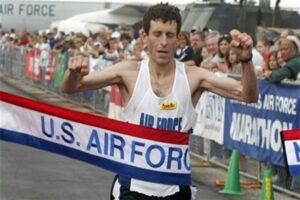
Dr. Cucuzzella has run sub-3 marathons for 30 years in a row

Each one of the 19 chapters concludes with a short section of drills to address what was taught in the previous pages. Such drills are not just strengthening or stretching exercises, but approaches, mental exercises or adjustments in your mechanics, your approach to exercise on your everyday life. It also has a companionship website where the recommended exercises and drills are explained in video format and additional scientific resources are available.

Dr. Cucuzzella is a firm proponent of the minimalist shoe. He gives a scientific-based explanation on why this is the way to go, as well as the right way to transition there. As interesting and well supported as his theory is, I don’t see myself switching to a minimalist shoe anytime soon, although it has made me reassess my selection of footwear, which I have already discussed with the manager of my local running store.

Part II was the key section of the book for me. It is about the science of running. The part the brain controls, the engine that builds endurance, nutrition, recovery, injury prevention, flexibility; how to make your muscles, tendons and ligaments work on your behalf and biomechanics of our gait. His explanation is so well adjusted for non-doctor readers and so solidly and convincingly based on science, that I have already adopted a few of his recommended adjustments and have seen amazing improvements on my step, which are confirmed in the way my running shoes have started wearing out.

This book is worth the money and the time invested in reading it. It is not about how many miles to run on Saturday and how many 400 reps you need to do on Wednesday. Once you are done with the book, make sure to keep it handy because it will become a consultation volume for years to come.

I someone knows Dr. Cucuzzella, please send him a big thank you on my behalf. There are many great running books out there. This is certainly one of them.

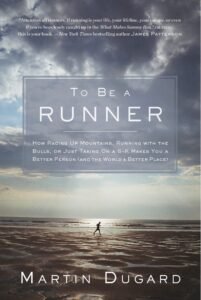
Book Review: To Be a Runner

Book Review: To Be a Runner

Book Author: Martin Dugard
Review by Coach Adolfo Salgueiro


To Be a Runner

As soon as I heard about the author of this book, I knew the name sounded familiar. I checked my book log and yes, back in 2004 I read his New York Times bestseller “Into Africa”, about the epic adventures of Explorer Dr. David Livingstone and his search for the source of the Nile back in 1866, and Henry Morton Stanley’s quest to find him after two years of silence. This was his first of multiple NYT bestsellers. A great book, but this is not what this post is all about.

The author is a well-known writer; accomplished, lifelong runner and successful high school coach. According to the book, he has run a 2:41 marathon and in Athlinks.com you can see a 3:05 in New York back in 1993. He run in High school, college and kept alive his love for the sport despite a few hiatuses here and there when life got on the way. He has also participated in triathlons, adventure racing, Spartans and multiple other competitions.

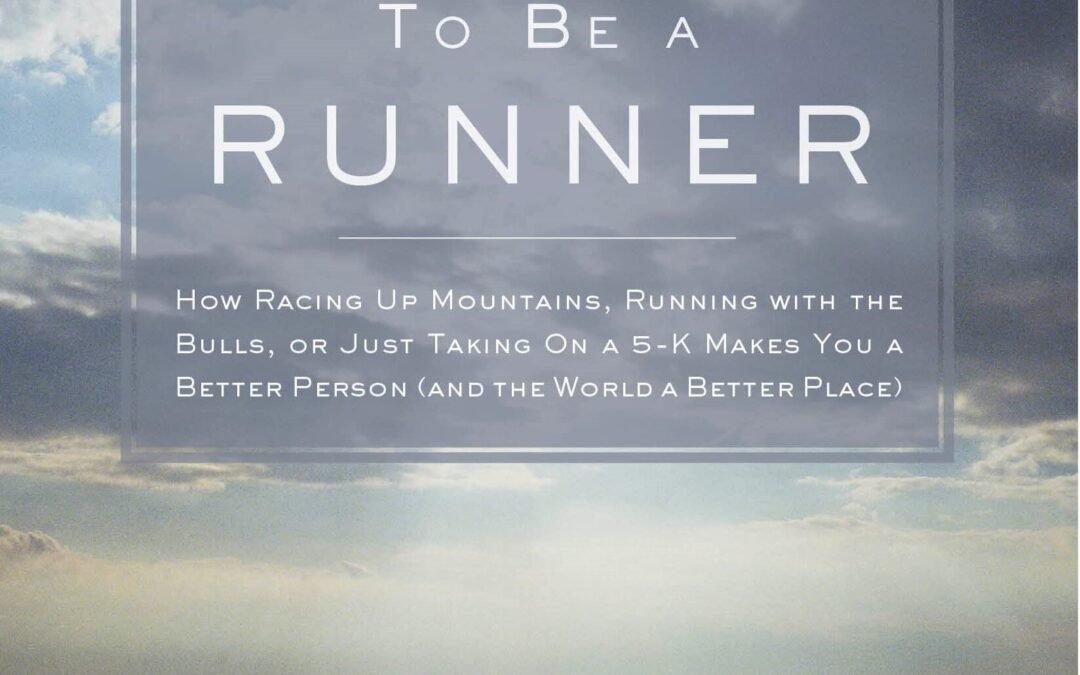
The book is structured in nine sections, each one with three, four or five small essays touching on an experience, a thought, a goal or just rambling about whatever. Each essay is no more than five or six pages so even if you are not an avid reader, you can go through the book with ease and really enjoy it.

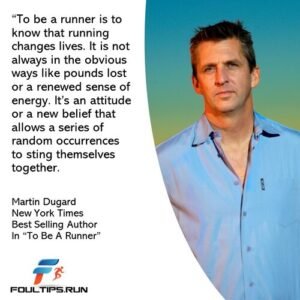
From running with the bulls in Pamplona, to high school running meetings and from adventure racing to getting back into shape or breaking a personal best; there is a chapter here for everyone. As an accomplish writer, Dugard has many amazing running quotes in this book. If you have followed my Instagram feed, @foultips, you have appreciated my love running quotes. I lifted more than a handful of the from this book, which you will find at the bottom of this writing.

I highly recommend “To Be a Runner”. It is worth the time and the money. My only suggestion is to read just one chapter a day, takin your time to enjoy it, digest it and feel empathy for the thought conveyed. I made the mistake of reading it during the quarantine, so I rushed through it and did not get the most out of it. So it is back in the “to read” pile for a second round.

To Be a Runner

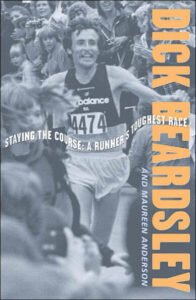
Book Review: Staying the Course: A Runner’s Toughest Race

Book Review: Staying the Course: A Runner’s Toughest Race

Book Authors: Dick Beardsley and Maureen Anderson
Review by Coach Adolfo Salgueiro


Staying the CourseWhen you examine the greatest runners from the First Running Boom, names like Frank Shorter, Alberto Salazar and Bill Rodgers, dominate the conversation, as they should. A name that is usually left out yet should be at least part of the discussion is Dick Beardsley. A 2:08:53 runner when running 2:08 made you a world class athlete, which Beardsley was.
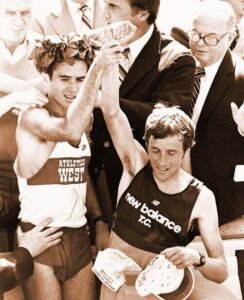
Born in 1956 in Minnesota, started running in high school and then a little bit in college. He grew up in a home with alcoholic parents and had a knack for running, which always gave him the natural and addictive runner’s high. He jumped into his first marathon and just like that ran a 2:48. Little by little he realized there was some talent to work with and started getting better as he competed more. He holds a Guinness record of setting PR in his first 13 marathons.

In this well-crafted memoir, Beardsley takes the reader through his trials and tribulations of going from a good runner to world class in just a few years. He takes you through every race and every triumph in a way that any runner will not only enjoy but also relate, regardless of their marathon PR. The stories of looking at his old racing outfit hung by the hotel window at mile 25 of his 1981 Grandma’s Marathon win, or how he got his first sponsorship deal with New Balance and how he stood by them when another company tried to poach him the day before the 1982 Boston Marathon, are uplifting stories from someone who came from nothing to a household name.

Staying the Course

Duel in the Sun in Boston 1982

His 1982 battle with Alberto Salazar, known as “The Duel in the Sun” is considered by many not just one of the best Boston Marathons but one of the best marathons ever. The detail on his preparation and the perspective from the front of the pack takes you right in there, as if almost 40 years later, you were spectating from the press truck.

But the sweet life, fame and fortune, were not to last. After holding the fourth-best time ever in the marathon, in Boston, none the less, a farm accident almost killed him opened the door to the world of painkillers and addiction. A series of accidents and misfortunes kept sending him back to the emergency and operating rooms where more and more drugs kept him hooked. Suddenly, obtaining painkillers became the focus and center of his life. Until he got caught forging prescriptions.

In the second part of the book, Beardsley and his coauthor go in extreme detail on how difficult it was to go through this phase of his life. The strain it caused on his family, his finance, his running, his relationships and his life. How big is the fall when you are coming from the top.

Years later, Beardsley has dedicated his life to working with people hooked on the grip or drugs, alcohol and painkillers. His perennial upbeat personality has been a perfect fit to his new mission. He is constantly making appearances and giving interviews about overcoming his toughest battle in life.

Staying the Course is a good book for anyone interested in learning about one of the great runners for the First Boom and in addition you can get an inspirational story about overcoming addiction and becoming a useful member of society once again.

The book was published in 2002, so it doesn’t cover part of his remarkable story and heartbreaks, like the divorce from Mary, who went through so much while staying by his side; or the suicide of his son, who was a veteran from the Iraq war. It is remarkable to see he hasn’t relapse. If ever comes a revised edition of this book, I am interested in knowing in more detail what has happened since 2002.


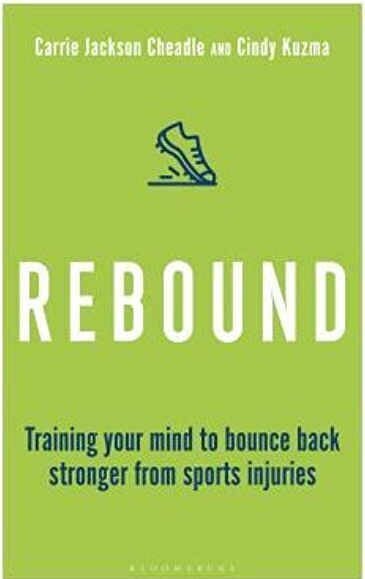
Book Review: Rebound. Training your mind to bounce back, stronger, from sports injuries

Book Review: Rebound. Training your mind to bounce back, stronger, from sports injuries

Book Authors: Carrie Jackson Cheadle and Cindy Kuzma
Reviewed by Coach Adolfo Salgueiro


The year 2019 was for me one of those you couldn’t wait for it to end. You just hoped that a change of digits at the end of the date will magically make you leave all your woes behind. A new page has turned, hopefully bringing you better health. Not one but two inguinal hernias and a couple more non-running injuries, kept me on the sidelines for the last 8 months of the year. I couldn’t do much more than walk during that time.

A Must book for any injured athlete

When you are injured, your self-worth as an athlete suffers. There is no consolation even if the injury had nothing to do with your sporting activity, like mine. It was just your lot. Your performance if affected anyway, and it is difficult to cope with it. It becomes a mental challenge when your buddies start off their group run and you are left in the dust walking, so you can keep yourself active. It sucks, even if the fact you are just walking is already a triumph.

Here is where the book “Rebound”, comes in. Written by Carrie Jackson Cheadle and Cindy Kuzma, it takes injured athletes through all the mental and psychological stages of injuries. This way, you can gain some perspective on the reality that they are facing.

The severity of an injury can cost you from the next race to your career or every stop in between. “Rebound” will guide you through the process so you can manage your new reality an injured athlete in a non-self-destructive way and enhancing your probability of a successful recovery and return to action. Like they state in no uncertain terms: Recovery is now your sport.

Since injuries affect you more than just physically, the book structure guides you through the psychologic aspects of injuries and recovery. It also includes practical suggestions to continue moving forward while avoiding depression or despair, especially for those individuals whose identities are intricately woven with their athletic performance.  Each chapter is anchored by a background story from a real-life athlete who has been through the issue treated in the chapter, who was able to rebound and return to action. This makes your situation relatable, and thus, solvable.

It is unfortunate for me that I got my hands on this book towards the end of my recovery. At that time, I had already suffered plenty and was in the last stages of my recovery. After reading it, I understand how beneficial would have been to have it the day I was told I needed surgery, so it could guide me through the process. As athletes, most of us will all get injured as we keep going, it is a matter of time. From 75-95% of runners (depending on the stats you read), will become injured at some time. I invite you to read the book now, so you can be prepared for when your number is called, or you can purchase it and have it handy for when your turn comes. If not you, somebody you already know will benefit from it.

Skip to content